Get my articles & resources in your inbox plus a free AUTISM & ME ACTIVITY BOOK for age 6+! Sign up

Get my articles & resources in your inbox plus a free AUTISM & ME ACTIVITY BOOK for age 6+! Sign up
When your child doubts themselves, knowing what to say can be hard.
Find practical ways to build self-belief, handle setbacks and tackle new challenges.
I’m Dr Lucy Russell, a child clinical psychologist with over 20 years’ experience in the NHS and private practice. At Everlief Child Psychology, the clinic I co-founded, we have supported more than 5,000 families.

Choose the question that matters most to your family today.
Build your child’s confidence through everyday opportunities to learn, succeed and handle setbacks.
Know what to say when your child puts themselves down.
Reduce the pressure to be perfect and help your child tackle challenges.
Teach your child to express their needs and set boundaries respectfully.
Sign up to receive these printable activities by email.

Help your child recognise their strengths and feel proud of who they are.
Printable cards for ages around 5–12, with activities adaptable for teenagers.

Help your child learn from mistakes and tackle new challenges with greater confidence.
A free printable with 18 questions for children and teenagers.
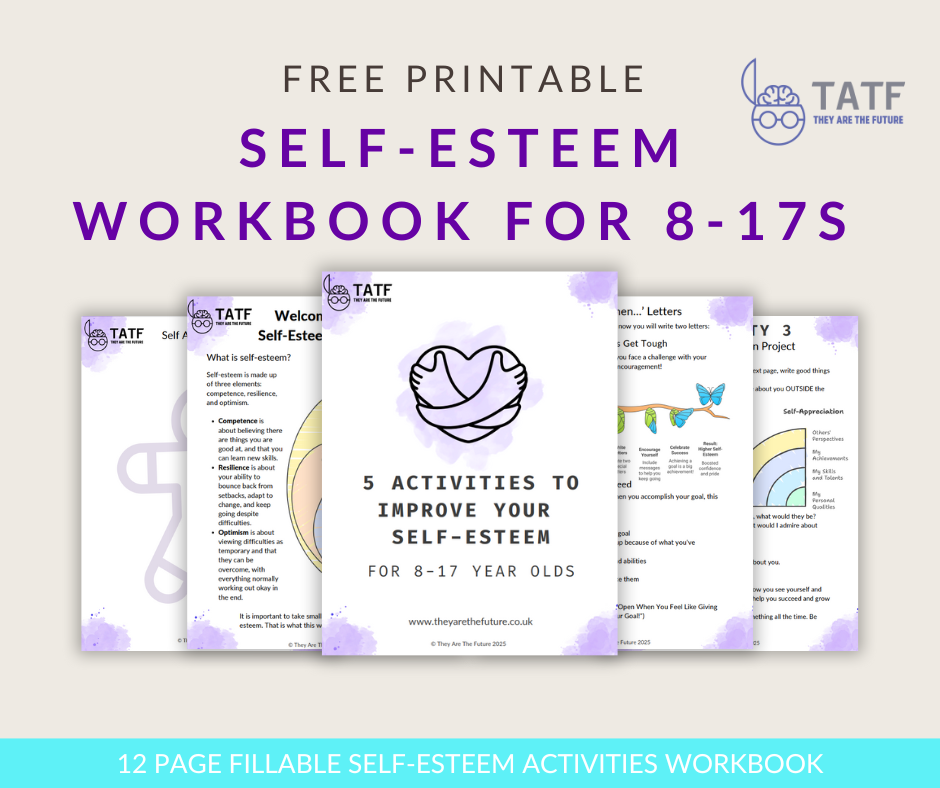
Help your teenager challenge negative self-beliefs and build confidence through practical activities.
A free 12-page printable with five activities to try together.
Choose a guided workshop or ready-to-use activities for your child.

UK & INTERNATIONAL FAMILIES · VIDEO WORKSHOP
When praise doesn’t sink in, help your child build self-worth from the inside. Discover what matters to them, then turn those values into everyday actions.
Watch together with your child aged 8–17, using printable values and strengths activities.
UK & INTERNATIONAL FAMILIES · PRINTABLE BUNDLE
Help your child handle setbacks, speak up and feel better about themselves.
Eleven printable activities covering strengths, values, boundaries, self-care and more. Clear guidance for ages 8–17, including autistic children and those with ADHD.
Self-esteem grows from three things: competence, resilience (bouncing back from setbacks) and optimism. Give your child chances to learn new skills and succeed at things that are a manageable stretch. Praise their effort and the strategies they use, and point out their strengths when you notice them. My article on the three pillars of self-esteem in children and teenagers explains how to build each one.
Listen first, and let your child know you’ve heard how they feel before offering a different view. Then help them look at the thought more closely: is it completely true, and what would they say to a friend who felt this way? Over time, you can teach them kinder, more realistic things to say to themselves, such as “I can’t do this yet”. My article on helping your child with negative self-talk has phrases you can use.
Perfectionist children often set very high standards, worry about making mistakes and put off starting tasks in case they can’t do them perfectly. Talk openly about mistakes as part of learning, including your own, and help your child set goals that are realistic. Praise effort and progress, and celebrate when a task is finished, even if it isn’t perfect. My article on parenting a perfectionist child shares eight strategies to try.
Being assertive means saying what you think, feel or need clearly and respectfully. Practise simple phrases together at home, such as “Please stop, I don’t like that” or “Can I have a turn next?”, and role-play situations your child finds hard. Notice and praise them when they speak up, even in small ways. My article on how to teach assertiveness to children explains the key skills and how to practise them.
Teenagers are often very self-critical, especially when they compare themselves with others online and at school. Spend time together doing things they enjoy, listen when they want to talk, and help them notice what they value and what they are good at. Encouraging them to question harsh thoughts about themselves helps too. My free teen self-esteem activity book has five practical activities you can try together.
Explore more guidance below, with new articles added as they’re published.