Get my articles & resources in your inbox plus a free AUTISM & ME ACTIVITY BOOK for age 6+! Sign up

Get my articles & resources in your inbox plus a free AUTISM & ME ACTIVITY BOOK for age 6+! Sign up
When school isn’t working well for your child, you need a clear way forward.
Explore learning, homework, school anxiety and transitions for children aged 5–17.
I’m Dr Lucy Russell, a child clinical psychologist with over 20 years’ experience in the NHS and private practice. At Everlief Child Psychology, the clinic I co-founded, we have supported more than 5,000 families.

Choose the question that matters most to your family today.
Understand pastoral care and who can help your child feel safe and supported.
Understand what makes attendance difficult and explore supportive next steps.
Plan ahead for new routines, people and places with practical transition ideas.
Help your child with ADHD break homework into small, manageable steps.
Use the spinner straight away. Sign up to receive the printable worksheets by email.

Click to spin and get a movement activity for your child to try.
Use these short, active breaks between tasks to help your child refocus. Free to use at home or school, with no signup needed.

Help your child learn from mistakes and tackle new challenges with greater confidence.
A free printable with 18 questions for children and teenagers.

Help your teenager manage anxious thoughts and practise strategies for coping with anxiety.
Step-by-step activities to use at home, alongside support with school.
Choose focused help for the school challenge your family is facing.
UK & INTERNATIONAL PARENTS · SHORT COURSE
Identify what makes school difficult for your child and build a practical plan.
For families facing attendance difficulties, exhaustion or unmet needs at school.
UK & INTERNATIONAL PARENTS · SHORT COURSE
Help your child start tasks, stay organised and keep going.
A practical course for parents of children aged 5–17, with neurodivergent needs in mind.
UK & INTERNATIONAL FAMILIES · PRINTABLE PACK
Explore practical strategies for exam nerves, sleep and the exam morning.
A printable pack for ages 10–18 and the adults supporting them.
Start by talking to your child’s class teacher or form tutor, and share what you are noticing at home. Most schools also have a pastoral team (staff who look after children’s wellbeing) and a SENCo (the special educational needs coordinator), who can help plan extra support. Teachers want the best for your child, and things go best when you work on it together. My article on pastoral care at school explains who can help and what to ask for.
Difficulty getting to school is usually a sign that something is making school feel too hard, such as anxiety, sensory overload, friendship worries or learning needs that haven’t been spotted yet. Listen to your child, try to work out what is behind it and share this with school, so you can agree small, realistic steps together. A calm, predictable morning routine helps too. My article on school refusal and anxiety explains supportive next steps.
Change is easier when your child knows what to expect. Visit the school or look at photos together, talk through the new routine and find out who your child can go to if they need help. Keeping other parts of life predictable during the first few weeks helps too. My article on starting a new school or year group shares seven practical strategies.
Getting started is often the hardest part, especially for children with ADHD. Agree a regular time and place, then split the task into tiny steps your child can tick off one by one, with a quick movement break in between. Seeing their progress builds momentum. My article on the micro-chunking homework strategy shows you exactly how to set this up.
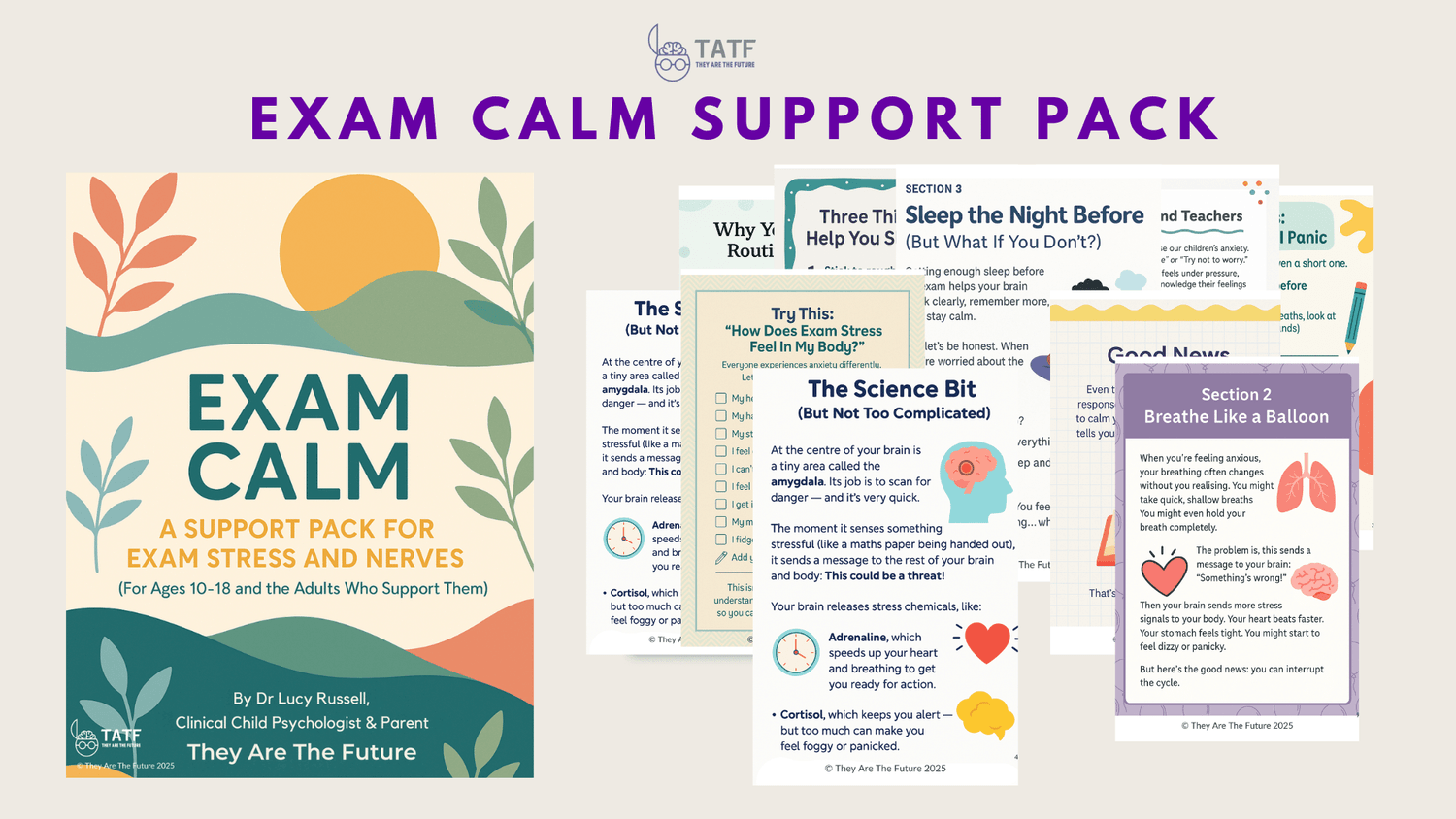
Some nerves before exams are normal and can even help with focus. Help your child plan revision in short, manageable chunks, keep sleep and meals regular, and practise a simple calming strategy, such as slow breathing, well before the exams start. On the day itself, a calm, familiar morning routine helps. My Exam Calm Support Pack has practical strategies for exam nerves, sleep and the exam morning, for ages 10 to 18.
Explore more guidance below, with new articles added as they’re published.