Get my articles & resources in your inbox plus a free AUTISM & ME ACTIVITY BOOK for age 6+! Sign up

Get my articles & resources in your inbox plus a free AUTISM & ME ACTIVITY BOOK for age 6+! Sign up
When your child’s emotions or behaviour become difficult to manage, you need clear answers.
Find practical support for children aged 5–17, including autistic children and those with ADHD.
I’m Dr Lucy Russell, a child clinical psychologist with over 20 years’ experience in the NHS and private practice. At Everlief Child Psychology, the clinic I co-founded, we have supported more than 5,000 families.

Choose the question that matters most to your family today.
Explore how stress and unmet needs can affect your child’s reactions.
Recognise what builds up before a meltdown and explore ways to help.
Explore ways to hold boundaries when your child finds limits difficult.
Understand signs of low mood and when your child might need more support.
Choose a printable below and sign up to receive it by email.

Spot what fills your child’s stress cup and what helps empty it.
For parents exploring stress, outbursts and their child’s everyday needs.

Help your child notice anger building and recognise their early warning signs.
Explore what helps at different levels, before emotions become overwhelming.

Decide which behaviours to address, let go and encourage.
Create a clearer family plan, with examples and a template to complete.
Choose practical guidance and activities that fit your family.

UK & INTERNATIONAL PARENTS · SHORT COURSE
Understand what builds up before outbursts and explore practical ways to help.
Five short video lessons and a workbook, for parents of children aged 7–13.

UK & INTERNATIONAL PARENTS · PRINTABLE BUNDLE
Explore feelings beneath behaviour, emotional regulation, boundaries and communication.
Printable worksheets with parent guidance, for families of children aged 5–17.
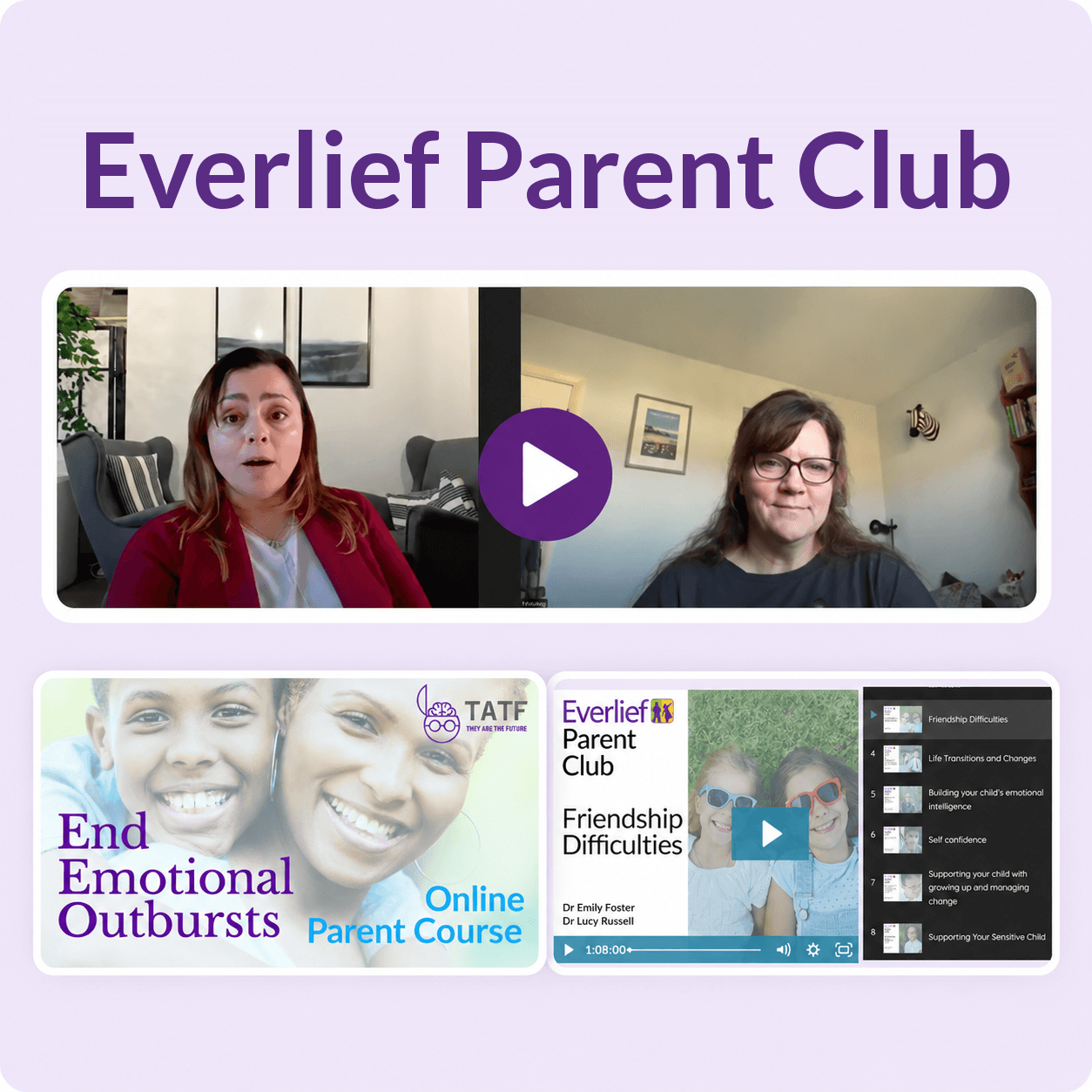
UK PARENTS · MEMBERSHIP
Dip into recorded webinars and short courses whenever you need practical ideas.
Explore emotions, behaviour, routines and everyday family challenges.
£9.99 per month. Cancel any time.
Difficult behaviour is often a sign that your child is under more stress than they can manage. Tiredness, hunger, changes at school, friendship worries and sensory overload can all build up, like water filling a cup, until it spills over. Looking at what fills your child’s cup, and what helps empty it, shows you where to start. My article on the stress behind your child’s behaviour explains how to work this out together.
Start by noticing what tends to come before a meltdown, such as transitions, noise, tiredness or a demand that feels too big. Reducing those triggers where you can, keeping your own voice calm and building in time to rest all help. A simple plan for the early warning signs means you can step in before your child becomes overwhelmed. My article on how to prevent meltdowns in children of all ages takes you through five practical steps.
Keep yourself as calm as you can, use as few words as possible and make sure everyone is safe. Explanations are hard for your child to take in while their feelings are running high, so save the talking for later, when they feel calm again. Afterwards, think together about what built up beforehand and what might help next time. My short course End Emotional Outbursts shows you how to spot the build-up and respond, for parents of children aged 7 to 13.
Give a short, clear reason for the boundary, then stay calm and consistent, even if your child protests. Acknowledge how they feel (“I can see you’re really disappointed”) while keeping the boundary in place. Save a firm no for the things that are most important to you, and offer choices elsewhere, so your child still has some control. My article on what to do when your child won’t take no for an answer has more ideas.
Signs of low mood include seeming sad or irritable much of the time, losing interest in things they used to enjoy, pulling away from friends and family, and changes in sleep or appetite. Every child has difficult days, so look at how long the changes last and how much they affect everyday life. If you are worried, talk to your GP (family doctor). My article on low mood and depression in children explains what to look out for and how to help.
Explore more guidance below, with new articles added as they’re published.