
Parenting Strategies for ADHD Kids: What to Say and Do When Things Get Hard

ADHD parenting can involve repeated reminders and daily struggles, leaving you worried or worn out as parenting stress builds up. I’m a child clinical psychologist with more than 20 years’ experience and a parent myself, and I lead Everlief Child Psychology, where we help families of children with ADHD through assessments and follow-up care.
Small, consistent changes to how you give instructions and how you set up your child’s day can make a real difference. Below, I share the parenting strategies for ADHD kids that I recommend most often in clinic. Giving one clear instruction at a time, making routines visible, bringing rewards closer, building on your child’s strengths and working with school. Pick the strategies which fit best with your family, and start with one or two before adding more.
Key Takeaways
- For an ADHD child, use short instructions and predictable days rather than repeated reminders.
- Give feedback quickly, with rewards your child values.
- Adapt tasks around your child’s ADHD strengths and support needs.
- Agree practical adjustments with school that fit your child’s ADHD.
Five practical parenting strategies for ADHD kids
ADHD can affect executive function (the skills your child uses to plan and pay attention) and emotional regulation (managing big feelings), so your ADHD child may need extra help with these skills.
1. Give one clear instruction
In my experience, an authoritative parenting style (warm but firm) works best here. Get their attention, say “Shoes on, please”, then pause. Break tasks into steps and calmly check they understand, because ADHD can make multi-step instructions hard to hold in mind. When you stay calm and steady, your child can borrow that calm until they can find it for themselves, which is called co-regulation.
2. Make routines visible
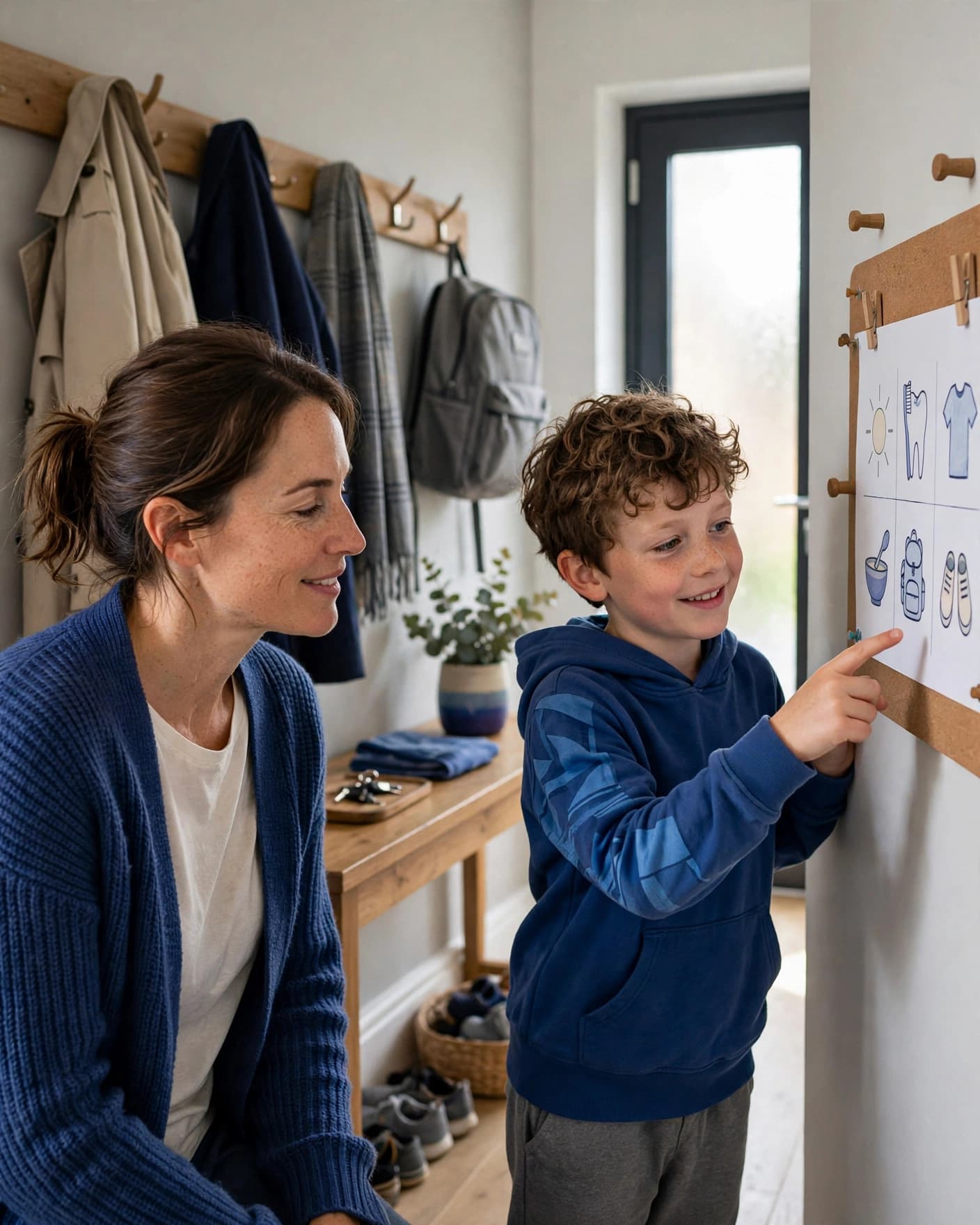
Keep days steady and consistent with visual schedules, such as a visual morning checklist. Clear structure means your child knows what is coming next. Prepare ahead and give warnings before transitions, which are often hard with ADHD. Predictable evenings also make sleep easier. My free ADHD worksheets for kids will help you and your child plan each day and build on their existing strengths.
3. Bring rewards closer
ADHD can make delayed rewards feel too distant. Use positive reinforcement, a core behaviour management approach, with small same-day rewards and consistent, specific praise. Give praise within seconds: “You put your shoes on first time, brilliant!” Specific praise also builds your child’s self-esteem, not to mention your parent-child relationship.
4. Keep your child moving and build on what they love
Encourage movement breaks and physical activity, as moving helps children with ADHD use up restless energy and often makes it easier for them to concentrate afterwards. Encourage your child’s strengths and interests too, as these give them a sense of being good at something and a reason to feel proud of themselves. Many children with ADHD can focus for hours on something they love but find it very hard to start or stay with tasks that feel boring, so split homework into short chunks with movement breaks between them. Celebrate each bit of progress as your child develops, and try not to make the mistake of comparing their progress with other children’s.
5. Work with school
Ask your child which parts of school feel hardest, then share what helps. Ask about school accommodations, such as clear instructions, visual reminders and suitable movement breaks, and agree reasonable adjustments together. Reasonable adjustments are changes that help your child take part in lessons, and I recommend reviewing these school accommodations every term.
Turning strategies into your child’s plan
ADHD symptoms can look different from child to child. Notice what triggers difficulties, what helps and what makes things harder. Choosing words under pressure can be difficult.
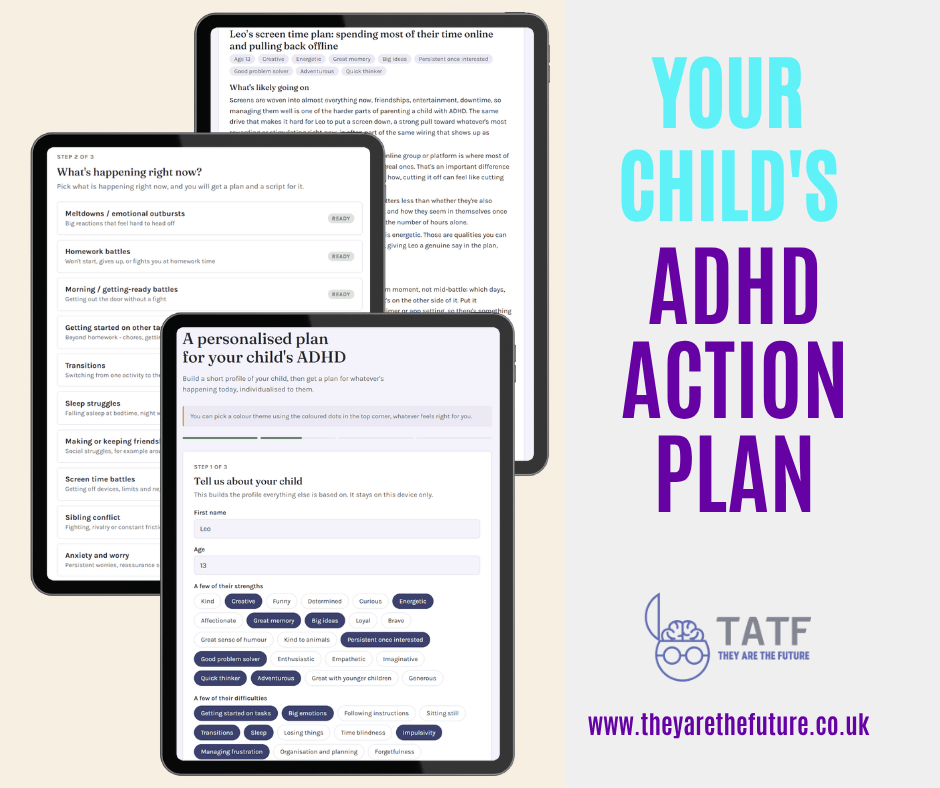
I created Your Child’s ADHD Action Plan, an online tool that builds a plan around your child with ADHD. Build a short profile covering age, strengths and difficulties, then choose today’s challenge, such as meltdowns, homework, mornings, sleep or screen time.
You get possible explanations, words for the moment, ideas for next time and a one-page profile for school, useful when requesting reasonable adjustments. You can come back to it whenever a different difficulty comes up, and use it for another child too.
Try it with one tricky moment in mind.
If ADHD-related difficulties seriously affect home life, learning or relationships, speak to your child’s doctor or school about assessment and support. The NHS has clear information on ADHD in children and teenagers.

NewA new tool from me, Dr Lucy Russell
Your Child’s ADHD Action Plan
Tell my new online tool about your child and what’s happening today. In about two minutes you get a plan built around them: what’s likely going on, what to say in the moment and what to try next time.
Early access price: £17 ($21 USD). One payment, lifetime access.
Frequently Asked Questions
Many parenting approaches for ADHD can help with daily life and work alongside medication, but they cannot replace clinical advice or treatment. In the UK, NICE (the National Institute for Health and Care Excellence) recommends that parents of children with ADHD aged five and over are offered information and help. If you are unsure, talk to your child’s doctor.
Progress varies and takes practice. Try one manageable change consistently, then adjust together if needed.
Charts and rewards are optional tools for ADHD, so drop them if they add stress. Clear, supportive boundaries and natural consequences are part of positive discipline. Ask your child about simpler reminders, choices or specific praise.
Start with one small change
Choose one ADHD strategy to try first. Look after yourself too. Self-care, even five minutes of mindfulness (slow breathing while you notice how you feel), can ease parenting stress and makes co-regulation easier. Make time for self-care too, because looking after your own mental health also benefits your parent-child relationship. Compassionate ADHD parenting, in an authoritative style that is warm but firm, helps your child build skills and confidence over time.
Every child with ADHD progresses at their own pace, so measure progress against where your child was a year ago rather than comparing them with others.
Dr Lucy Russell is a UK clinical psychologist and Clinical Director of Everlief Child Psychology. She qualified as a clinical psychologist from Oxford University in 2005 and worked in the National Health Service for many years before moving fully into her leadership and writing roles.
In 2019 Lucy launched They Are The Future, a support website for parents of school-aged children. Through TATF Lucy is passionate about giving practical, manageable strategies to parents and children who may otherwise struggle to find the support they need.
Lucy lives with her family, rescue cats and dog, and also fosters cats through a local animal welfare charity. She loves singing in a vocal harmony group and spending time in nature.
