
ADHD Kids Books: 8 Brilliant Books for Children, Teens and Parents

The right ADHD kids books can make a real difference to your child’s confidence. Children with ADHD often hear a lot about what they’re doing wrong, whether that’s being reminded to focus, sit still or stop interrupting. Over time, these reminders can leave them feeling ashamed of the things they find hard.
As a clinical psychologist specialising in ADHD and autism, I think self-understanding is really important. Neurodivergent children need to understand their difficulties, but they also need to recognise their strengths.
I’ve put together eight books worth exploring, including a guide to ADHD in girls for teenage readers. Some help young readers understand their ADHD symptoms, while others offer coping skills for everyday challenges. I’ve also included two excellent books for parents.
Best ADHD Kids Books for Younger Readers
These books for kids explain ADHD through stories, relatable examples and practical ideas, without making ADHD symptoms something to feel shame about.
1. All Dogs Have ADHD by Kathy Hoopmann (All Ages)
This has been my go-to recommendation in clinic for many years. It’s light-hearted, easy to dip into and suitable for all ages. Photographs of dogs illustrate ADHD characteristics such as hyperactivity and difficulty keeping their focus, and the dogs are energetic, easily distracted, impulsive and sometimes rather chaotic!
What I like most is how it helps normalise ADHD. The pictures make these experiences instantly recognisable (with plenty of humour along the way), which makes it a lovely way to start a conversation, especially with reluctant readers.
Best for: All ages, particularly visual learners, animal lovers and anyone who enjoys humour.
Find out more about All Dogs Have ADHD
2. My Amazing ADHD Brain by Emily Snape (Ages 4+)
This colourful picture book introduces Pip, a little monster with ADHD. Pip explains what ADHD means, including the exciting bits and the frustrating bits, with plenty of humour alongside practical ideas for self-regulation and staying organised.
Best for: Younger readers who are beginning to understand their ADHD.
Find out more about My Amazing ADHD Brain
3. My Unique ADHD World by Joanne Steer and Claire Berry (Younger Readers)
This is a thoughtful book that helps children with ADHD explore their own individual ADHD profile. Pictures and everyday examples help your child make sense of ADHD, and there are spaces for writing or drawing so they can explore their own experiences, including what feels easy and what feels hard.
I really like this approach because every child with ADHD is different. In my experience, two young people with the same ADHD diagnosis can have completely different strengths and challenges.
Best for: Kids who want to understand and explain their ADHD to others.
Find out more about My Unique ADHD World
4. Can I Tell You About ADHD? by Susan Yarney (Ages 7+)
The story is told by Ben, a boy with ADHD, so readers hear about it from a child’s point of view. Ben describes his everyday challenges, his ADHD diagnosis and the things that help him, as well as how adults and other people can support him. It’s useful for siblings, classmates and teachers too, and it can open up conversations about social skills.
Best for: Helping your child explain their ADHD to friends and family.
Find out more about Can I Tell You About ADHD?
A Free ADHD Activity Book for Your Child
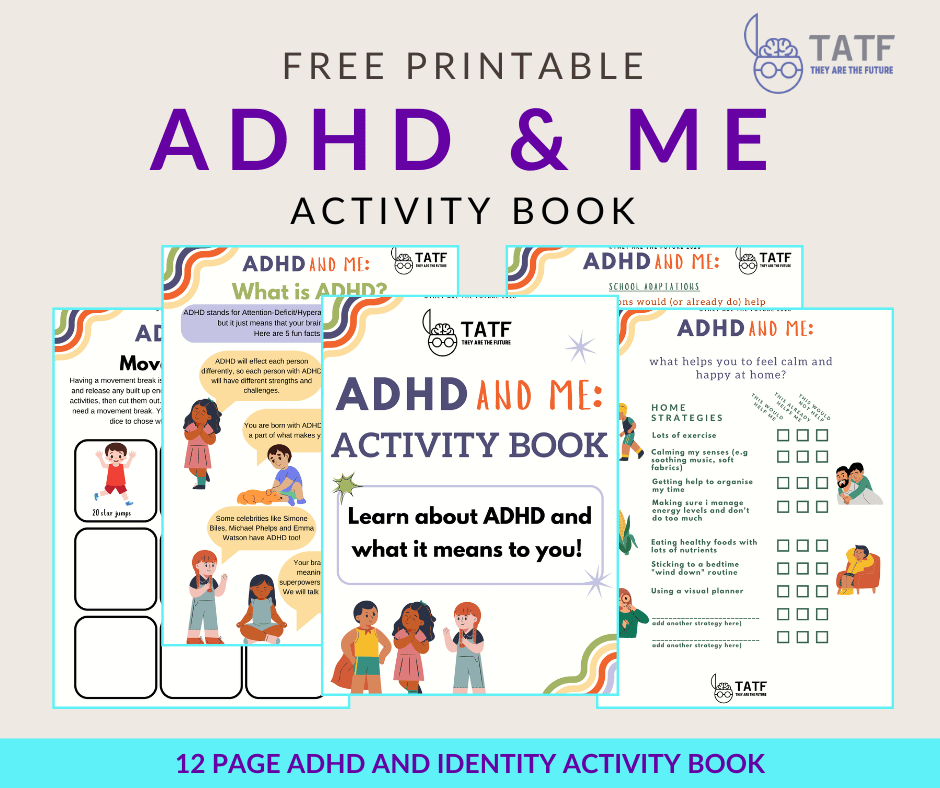
Reading about ADHD is helpful, but giving children the chance to explore their own ADHD can be even more powerful. That’s why I created my free ADHD & Me Activity Book.
It’s a colourful, 13-page printable designed to help your child understand how their brain works and recognise their individual qualities. It also encourages conversations about areas where they might need support. You can complete the activities together or let your child work through them independently.
Get your free ADHD & Me Activity Book here
Best ADHD Books for Teenagers
5. The ADHD Teen Survival Guide by Soli Lazarus (Teenagers)
Teenagers often face a whole new set of ADHD challenges. Homework, time management, emotional regulation and growing independence can all become more complicated.
This illustrated guide covers these issues with practical suggestions and insights from teenagers with ADHD. I value the inclusion of young people’s voices, because teenagers are much more likely to engage with advice that reflects their own experiences.
Best for: Teenagers who want practical strategies for everyday life without feeling lectured.
Find out more about The ADHD Teen Survival Guide
6. The Teenage Girl’s Guide to Living Well with ADHD by Sonia Ali (Teenagers)
ADHD in girls can sometimes be overlooked, particularly when their difficulties are less outwardly obvious. This book explores ADHD in girls, with help for managing time, understanding emotions and looking after yourself, and self-esteem is a central theme throughout.
Quizzes and activities encourage teenagers to think about their own experiences, alongside ideas to try in daily life. I recommend it for girls who struggle with confidence or feel misunderstood.
Best for: Understanding ADHD in girls and helping teenagers build independence.
Find out more about The Teenage Girl’s Guide to Living Well with ADHD
Best ADHD Books for Parents
Understanding ADHD can change the way you respond to your child’s difficulties. In particular, learning about executive functions (such as planning and managing impulses) can help you offer more effective support. These two books are a practical starting point for parenting a child with ADHD.
7. Raising an ADHD Child by Fintan O’Regan and Zoe Beezer
This handbook looks at supporting a child with ADHD both at home and at school. It explores executive function, communication, behaviour management and working with professionals, and there’s also guidance on overlapping conditions, including autism.
Best for: Parents who want clear explanations and practical ideas for home and school.
Find out more about Raising an ADHD Child
8. Step-by-Step Help for Children with ADHD by Cathy Laver-Bradbury and colleagues
This evidence-informed parenting guide offers a structured six-step programme covering attention, organisation, emotional regulation and everyday behaviour challenges. The updated second edition also explores sleep (one of my specialist interests) and other important aspects of wellbeing.
Best for: Parents who prefer a structured, practical approach.
Find out more about Step-by-Step Help for Children with ADHD
How to Choose the Right ADHD Book
My advice is to start with your child’s interests and current needs, especially if they’ve recently received an ADHD diagnosis. Some children love colourful picture books, while others prefer practical activities or hearing from young people their own age. It’s worth asking your local library whether you can borrow a book before buying.
You don’t need to read everything together, and if it suits your child better, you can focus on one illustration or a short conversation at a time. Above all, help your child understand that ADHD explains some of their experiences, while keeping the focus on understanding them as a whole person.
And if you’d like a free starting point, download my ADHD & Me Activity Book. It’s designed to help children understand themselves and recognise their strengths.
Frequently Asked Questions
My Amazing ADHD Brain is aimed at children aged four and over, and My Unique ADHD World is another good option for younger readers, with pictures and space to write or draw. All Dogs Have ADHD is a light-hearted illustrated choice that I recommend for all ages.
The ADHD Teen Survival Guide offers practical suggestions written with teenage readers in mind. The Teenage Girl’s Guide to Living Well with ADHD focuses on ADHD in girls, including self-esteem, emotions, time management and self-care.
Raising an ADHD Child covers ADHD at home and at school, including executive function, communication and working with professionals. Step-by-Step Help for Children with ADHD offers a structured six-step programme for everyday challenges.
My free, 13-page ADHD & Me Activity Book includes activities to help your child think about how their brain works, recognise their strengths and talk about where they may need support.
Start with your child’s interests and current needs, then choose a format that suits them, such as a picture book, practical activities or experiences from other children. You don’t need to read the whole book together, as a single illustration or a short conversation can be a good starting point.

NewA new tool from me, Dr Lucy Russell
Your Child’s ADHD Action Plan
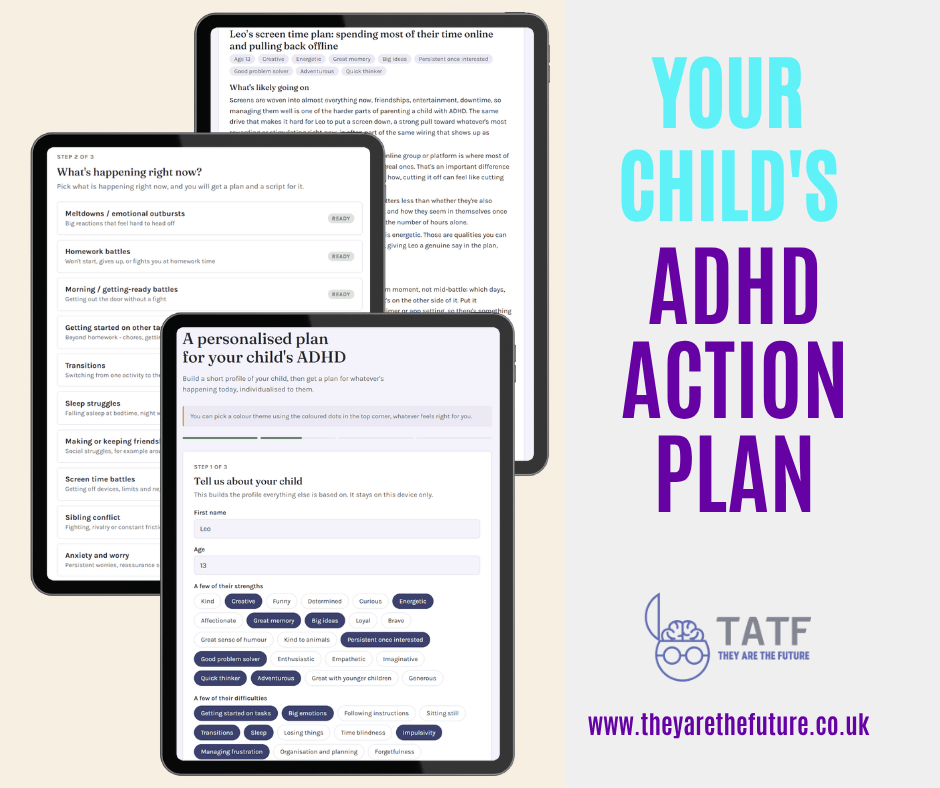
Tell my new online tool about your child and what’s happening today. In about two minutes you get a plan built around them: what’s likely going on, what to say in the moment and what to try next time.
Early access price: £17 ($21 USD). One payment, lifetime access.
Dr Lucy Russell is a UK clinical psychologist and Clinical Director of Everlief Child Psychology. She qualified as a clinical psychologist from Oxford University in 2005 and worked in the National Health Service for many years before moving fully into her leadership and writing roles.
In 2019 Lucy launched They Are The Future, a support website for parents of school-aged children. Through TATF Lucy is passionate about giving practical, manageable strategies to parents and children who may otherwise struggle to find the support they need.
Lucy lives with her family, rescue cats and dog, and also fosters cats through a local animal welfare charity. She loves singing in a vocal harmony group and spending time in nature.
