
Micro-chunking Homework for ADHD Kids (A No-Tears Routine with Tick Boxes)

It’s the after-school moment you know too well, when starting the homework routine feels impossible. Your child is tired, snack crumbs on the table, shoes kicked off, and there’s a worksheet that looks like a mountain. You mention homework, their face drops, and the tears start to hover.
When your child has ADHD, homework can feel less like “a bit of practice” and more like an impossible ask that hurts academic performance and sours their perspective of school. Not because they’re lazy or being difficult, but because starting, planning, and staying with a task can be genuinely hard when their brain is overloaded.
This is where micro-chunking homework helps. In my years working with families of ADHD children I have lost count of the number of times this strategy has been a game-changer.
You split homework into tiny, doable steps that create quick wins, then you use tick boxes to make their progress visible. It’s one of the most practical ADHD homework strategies you can use at home. Below you’ll get a ready-to-use routine, plus two short real-life style examples you can copy.


NewA new tool from me, Dr Lucy Russell
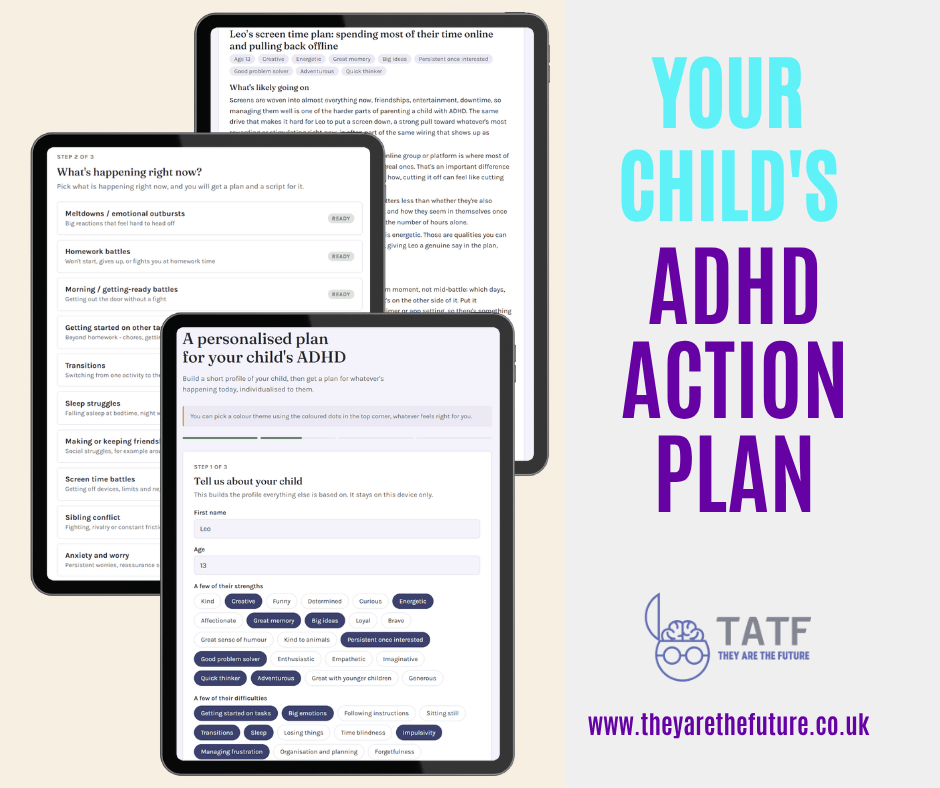
Your Child’s ADHD Action Plan
Tell my new online tool about your child and what’s happening today. In about two minutes you get a plan built around them: what’s likely going on, what to say in the moment and what to try next time.
Early access price: £17 ($21 USD). One payment, lifetime access.
Micro-chunking homework: why tiny steps work for ADHD brains
Big homework tasks often hit ADHD “executive functions” first. Executive functions are the brain skills that help your child start, plan, hold instructions in mind (working memory), manage focus and concentration, and keep going when something is boring or tricky. If those skills are under strain, your child can freeze (white noise can sometimes help as an environmental support), argue, avoid, or melt down.
Micro-chunking, a way to break down assignments, works because it takes the threat level down. “Finish the worksheet” is vague and heavy. “Do questions 1 to 3” is clear, short, and feels possible. You’re also helping with task initiation, which is often the hardest part.
Tick boxes add a second boost: visible progress. Each tick is a tiny reward and a form of positive reinforcement. For many children with ADHD, that clear “I did it” signal matters more than praise alone, because it’s concrete and immediate. Checklists like these also build organizational skills to help manage their workload.
Chunk length varies, but most children do best with 2 to 15 minutes, supporting better time management. Younger kids often need 2 to 8 minutes. Many teens do better with 8 to 15 minutes, as long as the chunk is still specific (not “write the whole paragraph”). If you’re unsure, go shorter. Starting is the goal.
If you want a simple explanation of why working memory can make school tasks harder, this guide from the Child Mind Institute is helpful: https://childmind.org/article/how-to-help-kids-with-working-memory-issues/
A quick example: Sam, aged 9, sits down and stares at his maths sheet. He’s not refusing, he’s stuck and overwhelmed. He says, “I can’t,” then tries to leave the table. You write: “1) Write name, 2) Do Q1, 3) Do Q2, 4) Do Q3,” with four big tick boxes. Sam ticks the first box in 20 seconds. He still sighs, but he starts. Three questions later, he’s warmer to the idea of “just one more chunk.”
What counts as a good micro-chunk (and what is still too big)
A good micro-chunk is small, clear, and measurable. Your child should know exactly when it’s finished.
Rules of thumb you can use:
- If it takes longer than 10 to 15 minutes, it’s probably too big.
- If your child needs to decide what to do next, it’s too vague.
- If your child sighs, argues, delays, or “can’t find a pencil,” make the step smaller.
Examples by age:
- Ages 5 to 7: write your name, read the first question, circle the key word, do 1 question.
- Ages 8 to 11: do questions 1 to 3, write one sentence, find the page number, highlight three facts (tailored to different learning styles).
- Ages 12 to 14: write the title and date, plan three bullet points, write one paragraph starter sentence, answer part (a) only.
- Ages 15 to 17: find two quotes, write one PEEL sentence, write the first 80 words, complete the first slide only.

Why tick boxes reduce tears: progress you can see
Tick boxes lower conflict because the plan is on paper, not in your head. You stop sounding like you’re constantly “moving the goalposts”, and your child stops feeling nagged. This visible progress boosts homework completion and improves homework accuracy over time.
Keep it simple:
- Use large boxes your child can tick easily.
- Keep it to one page only.
- Use short words: “Read,” “Write,” “Do Q1.”
- Let your child do the ticking, it’s part of the reward.
Praise works best when you focus on specific praise for effort and completion of a chunk (not speed, not neatness), which encourages ongoing homework completion. Try: “You started even though it felt hard, that’s strong work.”
The no-tears homework routine with tick boxes (copy this tonight)
You’re aiming for calm structure and managing time, not a perfect evening. Think of this like putting a handrail on the stairs. Your child still has to climb, but they’re less likely to slip.
- Decompress first (10 to 30 minutes). Many children need food, movement, and quiet before they can think. If homework always explodes, this is often why.
- Set up the space (2 minutes). Create a dedicated workspace by clearing only what you need and using color-coded folders to keep papers organized. This helps minimize distractions, and a cluttered desk can make focus harder, especially for teens. This article about clutter may help if mess is part of the daily struggle.
- Choose the first micro-chunk together. Give two simple options, like “maths first or spelling first?” Choice helps buy-in.
- Time-box with a visual timer. Set it for the chunk length, often 8 to 12 minutes. When the timer ends, you stop and tick, even if it’s not perfect.
- Body double (quietly). Sit nearby doing a calm task (emails, folding laundry, a book). Your presence can help your child stay with it without you talking.
- Break, then repeat. Short break, then the next chunk. Keep breaks screen-free if you can, because returning from screens is hard for many ADHD brains.
- Pack away and close the loop (2 minutes). Put homework back in the bag, tick the final box, and do the small reward.
If you want a wider set of ADHD homework strategies, including ideas for reducing stress and power struggles, you might also like my article about homework struggles and this UK overview by Clinical Partners.
Teen example: Aisha, 14, refuses homework most nights and says it’s “pointless”. You agree on a deal: just one timer, just one sentence. You write the micro-chunk as “Open document, write one sentence that answers the question,” and suggest assistive technology like speech-to-text if typing feels overwhelming. You sit nearby as a “body double”, doing a calm task. The timer is set for 10 minutes. She writes a messy sentence, ticks the box, and stops. The next day she’s more willing, because she’s already proved she can start without it becoming a two-hour battle.
Your 30 to 45 minute micro-chunk checklist (with built-in breaks)
This structured schedule provides a clear 30 to 45 minute block. Copy this onto paper or a notes app, then keep it visible.
- [ ] Set-up (2 min): clear desk, pencil ready, water on table
- [ ] Choose first job (1 min): subject A or subject B
- [ ] Chunk 1 (8 to 12 min): ______________________________
- [ ] Break (3 to 5 min, no screens): water, stretch, toilet
- [ ] Chunk 2 (8 to 12 min): ______________________________
- [ ] Break (3 to 5 min): quick snack or movement
- [ ] Chunk 3 (optional, 6 to 10 min): ______________________
- [ ] Pack up (2 min): homework in bag, desk clear
- [ ] Quick reward (2 to 5 min): ___________________________
Adjustment note: younger children often need 2 to 8 minute chunks. Writing tasks usually need shorter chunks than maths questions.
Breaks and rewards that actually help (without turning it into bribery)
A reward isn’t a bribe when it’s predictable and linked to completing the routine. You’re building a habit loop: do a few ticks, then rest. Build a simple reward system with these ideas.
Non-screen movement break ideas:
- drink of water and a quick snack
- wall push-ups or star jumps
- a short walk to the window and back
- stretch on the floor for 30 seconds
Movement breaks like these reset focus without screens. Simple rewards:
- sticker or points towards a weekly choice
- choosing the music while you cook
- 5 minutes of a preferred activity after the checklist is finished
Keep your tone neutral during breaks. No debates about “how long is left”. The boxes show the plan.

Troubleshooting: when micro-chunking still goes wrong
Even strong ADHD homework strategies from parent training need tweaking. These approaches work alongside other interventions like stimulant medication. If it goes wrong, it doesn’t mean it’s failed, it means you’ve found the next barrier.
Quick fixes for common problems (arguing, perfectionism, shutdowns)
- Arguing about the checklist: offer two choices, “Do chunk 1 at the table or on the floor with a clipboard.”
- Perfectionism: set a “good enough” rule, “We’re aiming for finished, not flawless.”
- Working very slowly: shrink the chunk, “Just do Q1,” then tick, then another timer.
- Tiredness after school: move homework later, or do one short chunk before dinner and stop.
- Forgetting tasks: ask school for written homework, then copy it onto the checklist together.
- Meltdown mid-way: pause, regulate first (water, breathing, movement), then restart with an easier chunk.
A simple script you can use: “Let’s make this smaller. We’re only doing the next box, then we stop for a break.” These micro-chunking habits also help your child build essential study skills for broader academic success.
If homework is regularly too much: plan with school, not just at home
If homework is consistently overwhelming, it’s fair to ask for changes through teacher communication. You can request:
- reduced quantity of school assignments (for example, odd questions only)
- chunked deadlines for long tasks
- extra time or alternative formats for school assignments
- clear written instructions
- a daily report card to track progress
Share your tick-box routine with the teacher so that home and school match. When adults use the same structure, your child has less to juggle.
Micro-Chunking as an ADHD Homework Strategy: What Do You Think?
Micro-chunking is simple, but it’s pretty powerful: tiny steps, short timers, tick boxes, calm breaks, then pack away. As (in my opinion) one of the most effective ADHD homework strategies, you’re not trying to force motivation in your child. You’re making starting easier, leading to smoother homework completion, and letting momentum do the rest.
Try it tonight with one subject only, and keep the first week basic. If your child does three small chunks without tears, that counts. Progress beats perfection, every time. With practice, this homework routine becomes a familiar path your child can follow, even on the hard days, boosting academic performance and long-term growth. What do you think?!
Dr Lucy Russell is a UK clinical psychologist and Clinical Director of Everlief Child Psychology. She qualified as a clinical psychologist from Oxford University in 2005 and worked in the National Health Service for many years before moving fully into her leadership and writing roles.
In 2019 Lucy launched They Are The Future, a support website for parents of school-aged children. Through TATF Lucy is passionate about giving practical, manageable strategies to parents and children who may otherwise struggle to find the support they need.
Lucy lives with her family, rescue cats and dog, and also fosters cats through a local animal welfare charity. She loves singing in a vocal harmony group and spending time in nature.