
Personality Development in Childhood: Work With Your Child’s Temperament to Help Them Thrive

You’ve probably noticed it already, your child has a “way” about them. Maybe they’re cautious in new places, or they’re the one who chats to everyone in the queue. That’s the early shape of personality development, and it doesn’t come from one big chat or a single parenting technique. It grows through everyday experiences, relationships, boundaries, and practise.
The good news is you don’t have to turn your child into someone else to impact their personality development positively. You can help them build up positive traits like confidence, self-control, kindness, and courage while still honouring their nature.
I’m Dr Lucy Russell, clinical child psychologist and mum of two (one teen and one adult).
In this guide, you’ll get ten practical things you can start this week, with simple phrases to say in the moment. You’ll also see some short, real-life style examples, because it’s easier when you can picture it at home, not just in theory.

What personality development in childhood really means (and what it does not)
Personality development in childhood is the gradual patterning of how your child thinks, feels, and behaves over time. It’s the “usual way” they respond to stress, fun, change, feedback, friendship, and failure. It’s not fixed at age 7, and it isn’t fully “done” in the teen years either.
Some parts of your child’s make-up are inborn. Their temperament (their default speed, sensitivity, and energy) often shows up early. But many parts of personality are shaped through learning, practise, and experience, such as self-control, confidence, persistence, empathy, and how they handle strong feelings.
Change tends to be slow and a bit messy. During puberty, you might see leaps forward, then sudden dips. That’s normal. Your goal isn’t to push them into being loud, quiet, tough, or “easy”. It’s to support healthy growth so they become more themselves, not less.
If you want a simple way to think about it, personality is like a tree. Temperament is the tree type. Your daily parenting is the soil, water, light, and gentle staking that helps it grow straight.
Nature, nurture, and the role of temperament
Temperament is your child’s natural style of reacting. One child might be slow to warm up, another highly active, another very sensitive to noise or criticism. None of these are “bad”, they’re starting points.
The same temperament can lead to very different outcomes depending on support, boundaries, and practise. A sensitive child can grow into a thoughtful, empathetic teen with the right coaching, or into someone who avoids everything if they’re repeatedly shamed for overreacting.
A helpful overview of temperament, in plain language, is here: https://raisingchildren.net.au/newborns/behaviour/understanding-behaviour/temperament
Quick tip: work with your child’s temperament, not against it. Aim for “small stretches”, not personality makeovers.
What to focus on at ages 5 to 11 vs 12 to 17
Ages 5 to 11: you’re laying foundations. Routines matter, emotional language matters, and basic social skills matter. Think “repeatable practise”, like taking turns, calming down, and trying again.
Ages 12 to 17: you’re supporting identity and values, while giving more independence with limits. Big feelings are common, and so is pushback. Your focus shifts to problem-solving, responsibility, and staying connected even when they’re prickly.
If you’d like to read more on how early personal, social and emotional skills develop in the early years, this is a useful UK resource from Bracknell Forest.

Ten things you can do to positively impact your child’s personality development
Everyday parenting habits that build confidence, self-control, and kindness
- Show warmth and attention daily (connection before correction).
Give a few minutes of full attention, no phone, no fixing. It tells your child, “I matter”, which supports confidence and co-operation. It also lowers the need for attention-seeking behaviour.
Try saying: “I’ve got ten minutes just for you, what shall we do?” - Set clear rules and explain the why (safe limits).
Rules aren’t just about behaviour, they build security. When your child understands the reason, they’re more likely to take it in, not just fight it. This supports self-control over time.
Try saying: “The rule is shoes off inside, it keeps the floors safe and clean.” - Praise effort and strategies, not labels (build persistence).
Labels like “You’re so smart” can backfire when things get hard. Praise what they did, how they kept going, and what helped. This builds persistence, and a steadier sense of self.
Try saying: “You kept trying different ways, that’s what helped you get there.” - Offer age-appropriate choices (grow independence).
Choices build decision-making muscles, and reduce power struggles. Start small, then widen the choices as they show they can handle it. This supports confidence without rushing them.
Try saying: “Do you want to do homework before snack or after snack?” - Model calm coping skills (kids copy your regulation).
Your child learns more from what you do than what you explain. If you can pause, breathe, and reset, they start to copy that pattern. It’s one of the strongest routes into long-term self-control.
Try saying: “I’m getting wound up, I’m going to take three slow breaths.”
Case example: Nine-year-old Mya “went from 0 to 100”; she used to shout and slam doors pretty much every day after school. Her mum Deidra stopped matching Mya’s shouty volume, kept her voice low, and used a simple plan: snack, ten minutes of quiet time, then chat. After a few weeks, the explosions became shorter and less frequent, because the after-school stress had somewhere to go.
If you want extra support with confidence and self-belief, you might find the practical ideas in my article about confidence-building helpful.
Skills that shape how your child behaves with others and handles setbacks
- Use positive discipline that teaches repair (what to do next time).
Consequences can be useful, but the real growth comes from repair. Help your child practise what they’ll do differently, and how they’ll put things right. That shapes character and empathy.
Try saying: “What’s one thing you can do to make this right, and one thing for next time?” - Build predictable routines (reduce stress, support self-regulation).
Routines free up mental energy. When mornings and evenings are predictable, your child has fewer surprises to manage, and you’ll see more steady behaviour. Keep routines simple and consistent.
Try saying: “First brush teeth, then story, then lights out, the same each night.” - Practise empathy and helping at home (kindness is trained).
Kindness isn’t just a trait, it’s a habit. Give small, real responsibilities that help others, and notice the impact. This builds a sense of contribution, which supports confidence too.
Try saying: “When you put the cutlery out, it helps us eat together faster.”
If you’d like a structured way to talk about strengths (including kindness), my free printable strengths cards can be a lovely prompt.
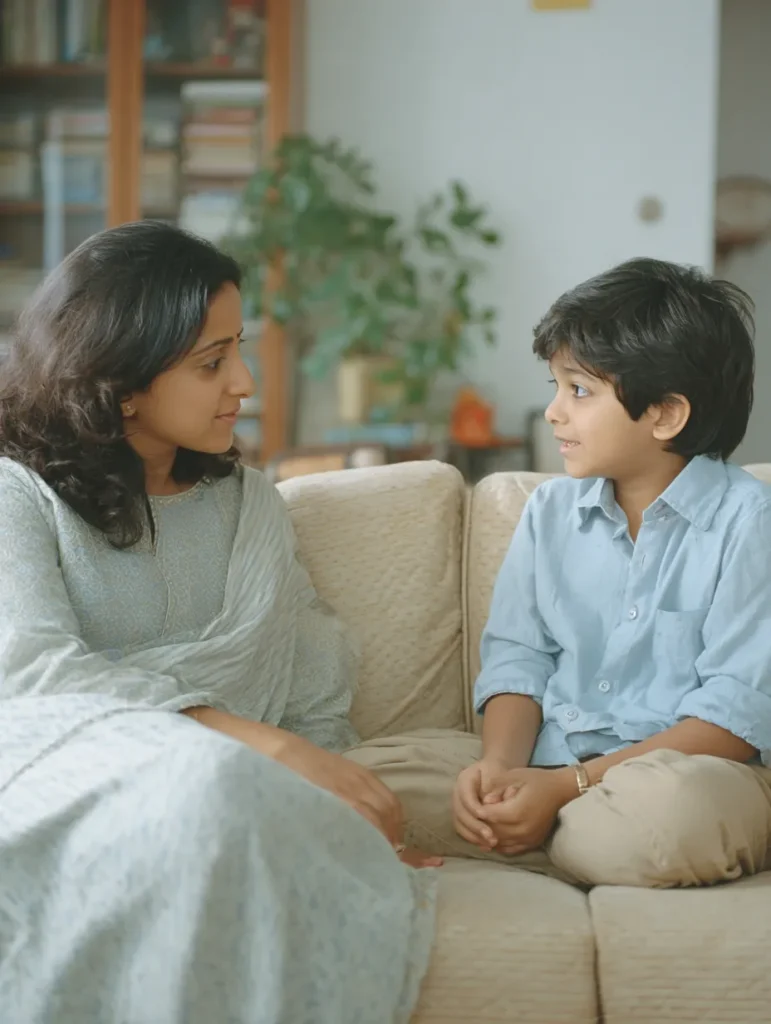
9. Talk about feelings in everyday moments (emotional vocabulary).
You don’t need a deep “feelings chat” every time. Name feelings when they’re small, and your child will find it easier to name them when they’re big. This supports emotional control and better relationships.
Try saying: “It looks like you’re disappointed, did you really want that to go differently?”
10. Be consistent, but stay flexible when life is hard (firm and fair, not rigid).
Consistency builds trust. Flexibility shows humanity. If your child is ill, grieving, overwhelmed, or sleep-deprived, it’s fair to adjust expectations while keeping a clear baseline. That teaches compassion and realism.
Try saying: “The rule stays, but we’ll make it easier tonight because you’re exhausted.”
Teen case example: Fifteen year-old Finley kept arguing about homework and screen time and it made family life stressful. Dad James decided to create a weekly plan: Finley chose when to do study blocks, but had to show a finished checklist by Sunday evening. With more responsibility inside clear boundaries, Finley felt respected, and the arguments eased. A supportive parenting approach like this can be built step-by-step.
For a deeper, research-based look at how parenting and individual traits interact over time, this open article is a great place to start.
Personality Development in Childhood: My Final Thoughts
Your child’s personality development is shaped by repeated, everyday experiences, not one perfect talk, and not a single “right” response. Warmth, boundaries, repair, routines, and emotional coaching add up, even when progress looks slow.
Pick two tips from the list and practise them for two weeks, then add another. Keep it boringly consistent, because that’s what helps habits stick.
This week, write down one rule you’ll explain calmly, one routine you’ll protect (even loosely), and one calm-down phrase you’ll model out loud. Setbacks are normal, and consistency matters more than perfection.
Dr Lucy Russell is a UK clinical psychologist and Clinical Director of Everlief Child Psychology. She qualified as a clinical psychologist from Oxford University in 2005 and worked in the National Health Service for many years before moving fully into her leadership and writing roles.
In 2019 Lucy launched They Are The Future, a support website for parents of school-aged children. Through TATF Lucy is passionate about giving practical, manageable strategies to parents and children who may otherwise struggle to find the support they need.
Lucy lives with her family, rescue cats and dog, and also fosters cats through a local animal welfare charity. She loves singing in a vocal harmony group and spending time in nature.
