
Helping ADHD and Autistic Children Start Tasks: Practical Strategies That Work

For many ADHD and autistic children, getting started on tasks can feel like pushing a boulder uphill. What looks like reluctance or defiance is often a real brain challenge called “task initiation difficulty.” This means their brain struggles to begin activities, and it’s very common in children with ADHD and autism.
As a clinical psychologist working with neurodivergent children, I’ve seen how the right support strategies can transform this daily struggle into moments of success.
This article shares proven approaches that help children overcome the hurdle of getting started.

Why Starting Is So Hard
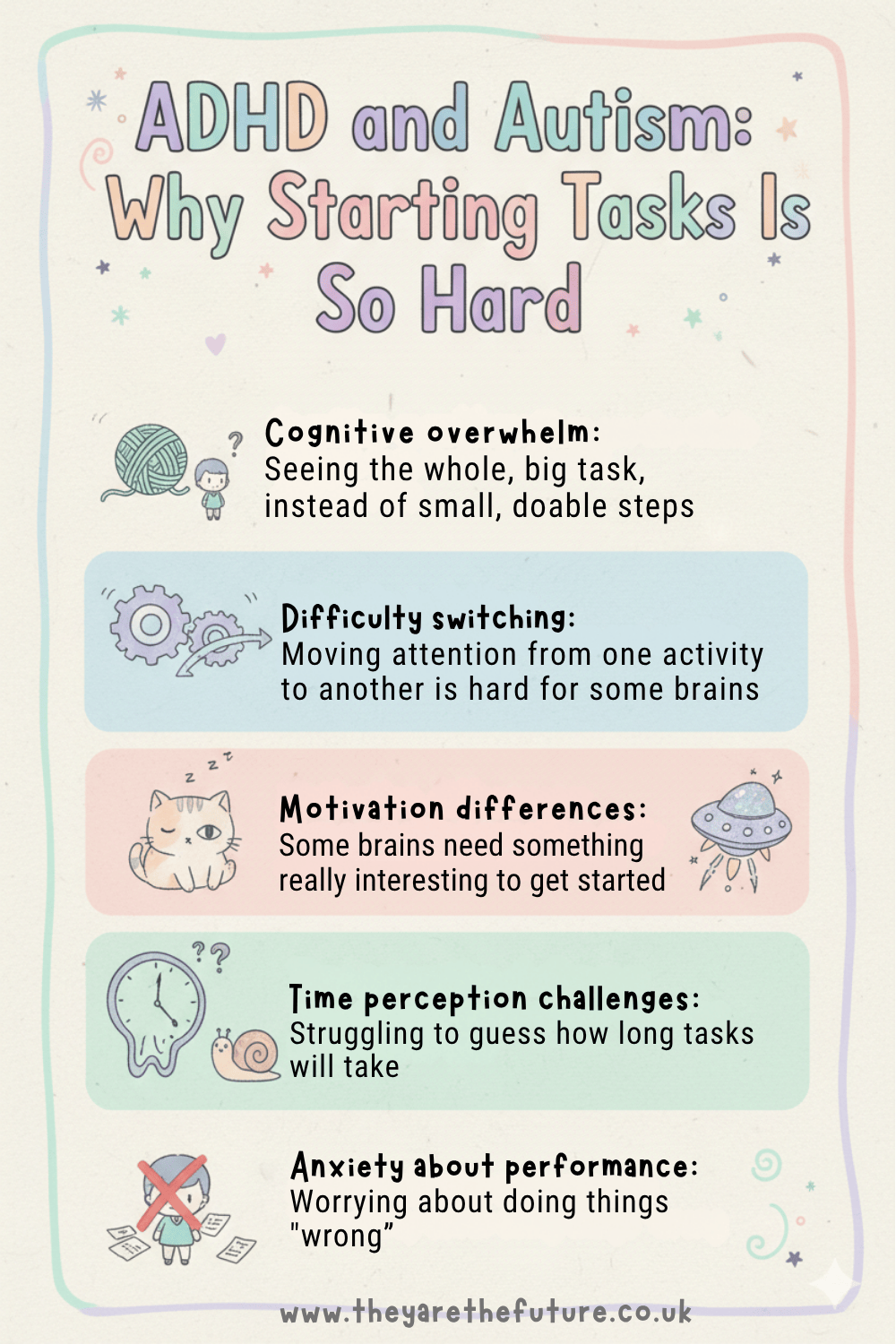
Task initiation difficulties come from differences in executive function. That’s the brain’s management system that helps us plan, organize, and begin activities. For children with ADHD and autism, several things make starting harder:
- Cognitive overwhelm: They see the whole big task instead of small, doable steps
- Difficulty switching: Moving their attention from one activity to another is hard
- Motivation differences: They need to find something really interesting to get started
- Time perception challenges: They struggle to guess how long tasks will take
- Anxiety about performance: They worry about doing things “wrong”
Understanding these causes helps us move beyond “just try harder” to strategies that actually work with how their brains function.
Practical Strategies That Make a Difference
1. Break Tasks into Tiny Steps
Large tasks feel overwhelming. The smaller the first step, the more likely they’ll begin.
Try this: Instead of “Start your homework,” try “Let’s just get your maths book out of your bag.” Once this tiny step is done, the next small step feels easier.
Research from University College London shows that breaking tasks into chunks reduces the mental effort needed and makes starting much easier.
2. Create Visual Task Maps
Many children with autism and ADHD think in pictures. They benefit from seeing tasks broken down visually.
Try this: Create simple flowcharts or checklists showing exactly what needs to happen, with boxes to tick off. For younger children, use pictures instead of words.
A visual map turns a vague instruction into a clear plan they can follow.
3. Use Special Interests as Entry Points
Special interests aren’t distractions. They’re powerful tools that can help with starting.
Try this: Connect tasks to topics they love. If they’re fascinated by dinosaurs, maths problems can feature dinosaurs, writing tasks can explore prehistoric times, and science projects can connect to paleontology.
This uses their existing interests rather than relying on rewards that may not work as well.
4. Try the “Five-Minute Rule”
Getting started for just five minutes often breaks through the biggest barrier.
Try this: Ask them to work on the task for just five minutes, with the real option to stop after that. Many children will keep going once they’ve started.
This makes the task feel smaller and more manageable while building their confidence.
5. Create Clear Starting Signals
Children benefit from clear signals that it’s time to start.
Try this: Create consistent routines for different activities. A specific song for homework time, a visual timer for morning routines, or a particular phrase that signals it’s time for chores.
These consistent cues become shortcuts that help their brain know it’s time to begin.
6. Set Up a Starting-Friendly Environment
The physical space around them really matters.
Try this:
- Reduce visual and auditory distractions in work areas
- Keep materials where they can see and reach them easily
- Use colour-coding to organize materials by subject or activity
- Create specific spaces for specific tasks
Research from the Autism Research Centre at Cambridge University shows that these environmental changes can reduce starting barriers by up to 40%.
7. Use Movement to Get Ready
Physical movement can help their brain shift into “ready” mode.
Try this: Add brief movement breaks before tasks that need focus. Simple activities like star jumps, wall pushes, or stretches can help their nervous system settle and prepare for work.
Occupational therapists who work with ADHD and autism often recommend activities that use muscle pressure (like wall pushes) as effective preparation for challenging thinking tasks.

Supporting the Emotional Side
Starting challenges often come with emotional struggles too.
Reduce Worry About Tasks
Many children develop performance anxiety that makes starting even harder.
Try this: Focus on the process, not perfection. Tell them clearly that mistakes are expected and okay. The phrase “This is practice, not a test” can really help reduce anxiety about getting started.
Build Confidence in Starting
Children who repeatedly struggle to start tasks often start believing they can’t do things.
Try this: Notice and praise when they do start, no matter how small: “You got your pencil out right away. That’s great starting!” This helps them build a more positive view of themselves.

When to Get Professional Help
Consider talking to a professional if:
- Starting difficulties really impact daily life despite using these strategies consistently
- Emotional distress around starting tasks is severe or getting worse
- Starting challenges are affecting school performance or family relationships
Occupational therapists, psychologists, and ADHD/autism specialists can provide personalized assessment and help.
A Compassionate Perspective
Most importantly, remember that task starting difficulties come from real brain differences, not laziness or defiance. When children feel that we understand their struggle and are working with them (not against them), they’re more likely to develop the confidence to tackle the challenge of starting.
With consistent support, many children with ADHD and autism develop effective personal strategies for task starting that help them throughout their lives.
Related Articles
How to Create a Visual Planner: Transform Daily Life for Your Neurodivergent Child
Creating a Stress-Free ADHD Morning Routine For Your Child
Sensory Processing in Autism: An Essential Parent Guide
Dr Lucy Russell is a UK clinical psychologist who works with children and families. Her work involves both therapeutic support and autism assessments. She is the Clinical Director of Everlief Child Psychology, and also worked in the National Health Service for many years.
In 2019 Lucy launched They Are The Future, a support website for parents of school-aged children. Through TATF Lucy is passionate about giving practical, manageable strategies to parents and children who may otherwise struggle to find the support they need.
