
Using the Zones of Regulation to Help Your Child With Emotions

It’s not often that a psychological tool is so universally helpful for understanding children’s emotions, both for parents and teachers.
If you don’t know about the Zones of Regulation and you’re a parent, I promise it will be worth it to read this article and get started with this system.
I’m a child clinical psychologist and I have been supporting families with their children’s emotions and behaviour since 2001, both in the NHS and private practice.

So What Is Zones of Regulation?
In the Zones of Regulation, your child’s emotional states are divided into four different coloured zones.
Each zone represents how they’re feeling and coping at any given moment.
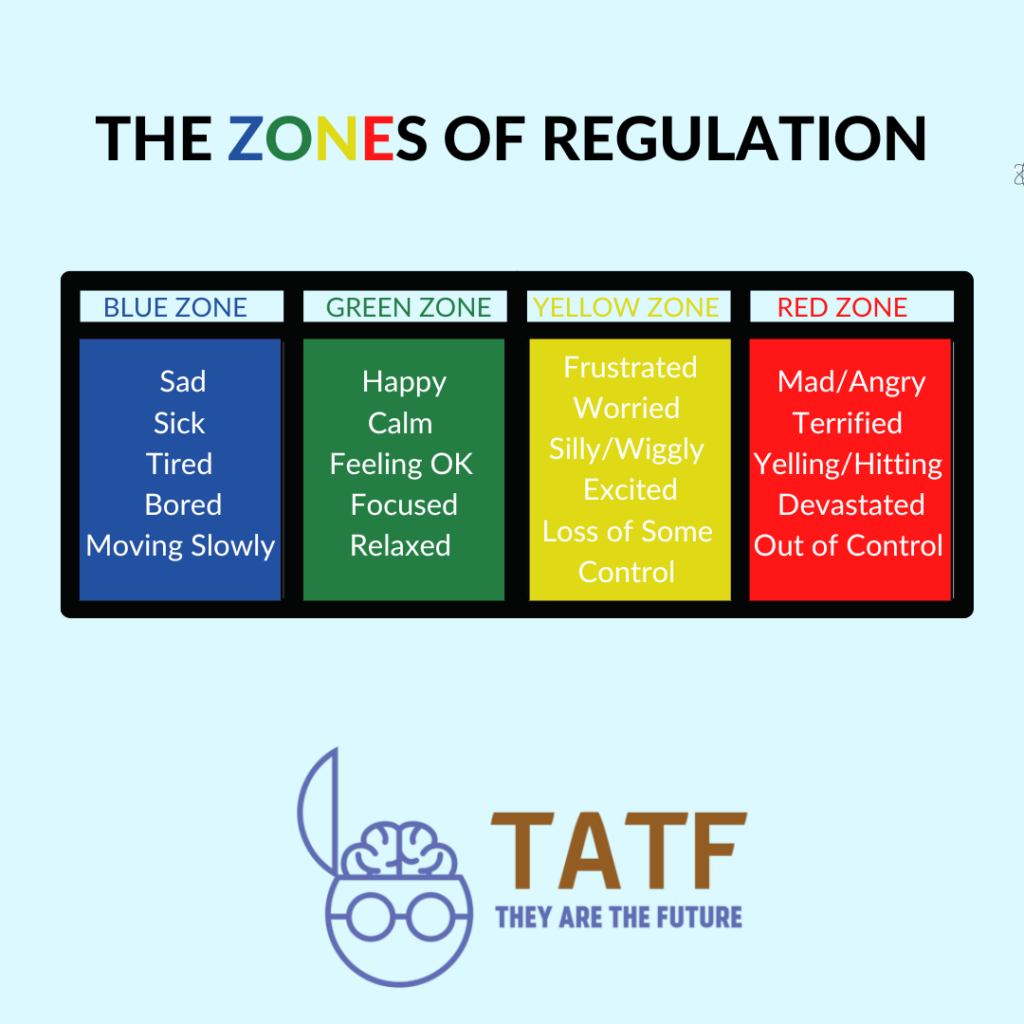
The Green Zone: Ready to Learn and Engage
This is when your child is:
- Feeling calm and focused
- Managing daily challenges well
- Able to interact and learn
- Generally content
Sixteen-year-old Ryan describes this state as “when my brain and body are working together nicely.”
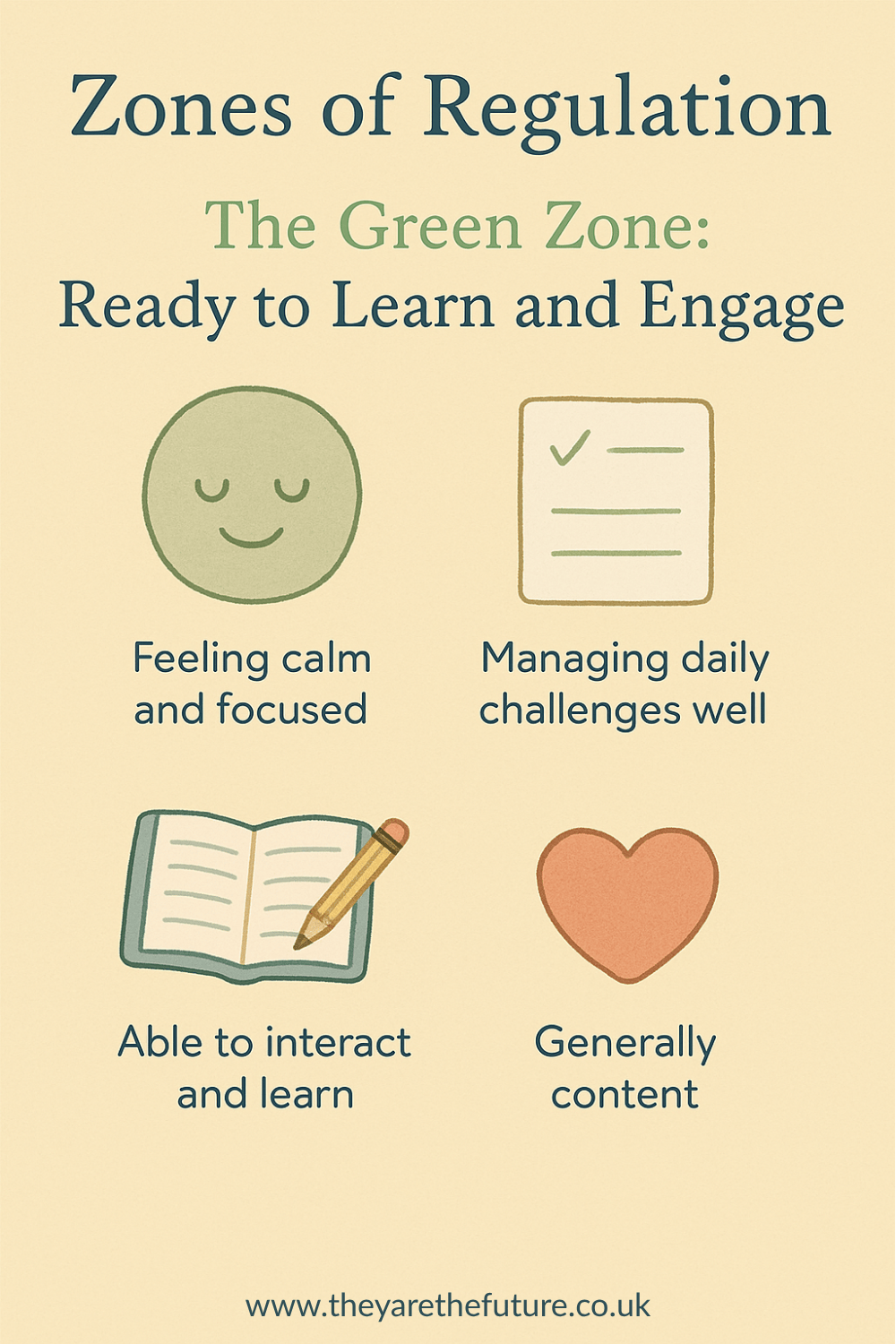
The Yellow Zone: Starting to Feel Wobbly, Agitated or Silly
Signs include:
- Feeling anxious or worried
- Getting frustrated
- Becoming over-excited
- Losing some focus
- Having a harder time than usual
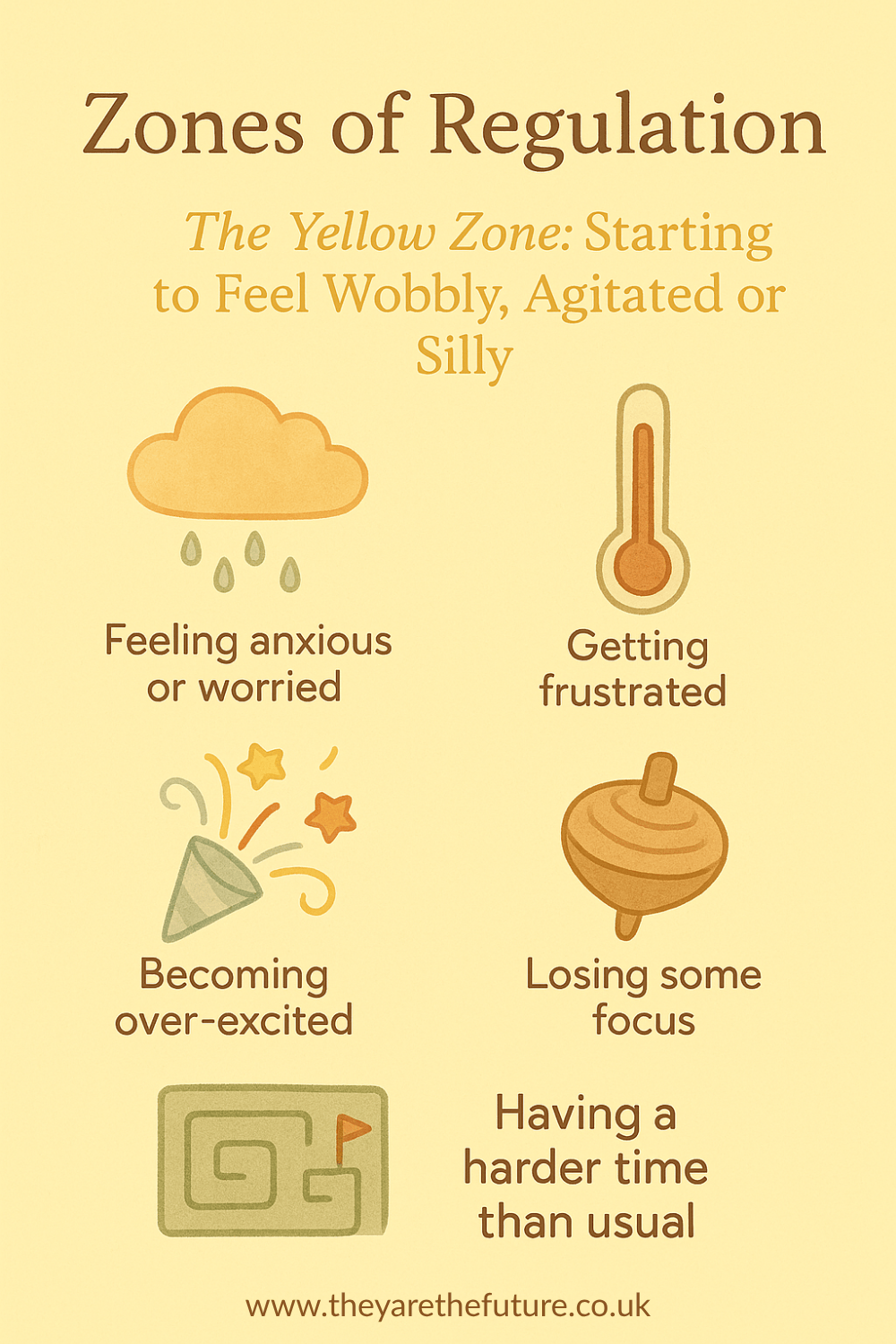
The Red Zone: Intensely Overwhelming Feelings
You might notice:
- Very strong emotions
- Feeling extremely frustrated
- Finding it hard to control reactions
- Needing immediate support and space
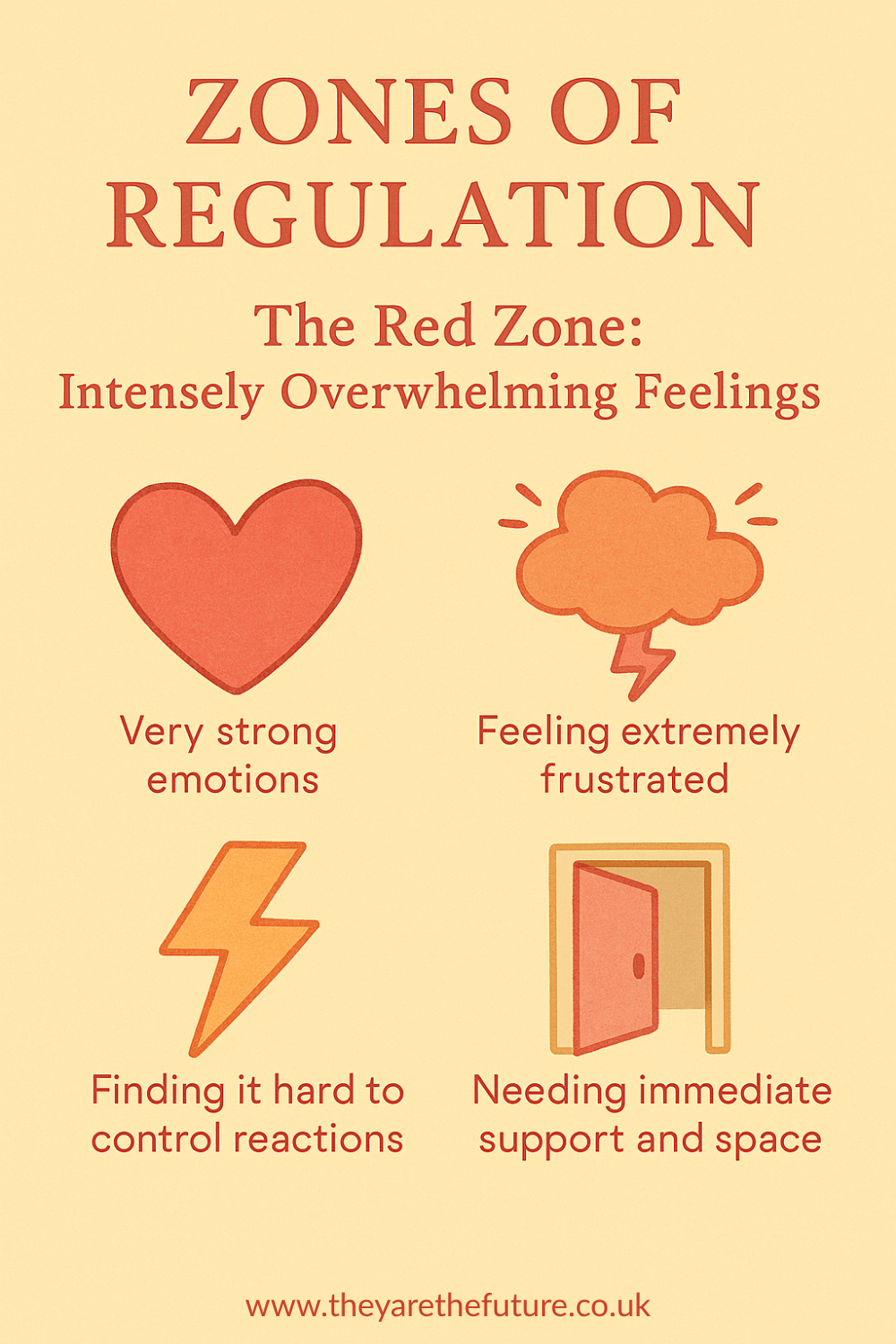
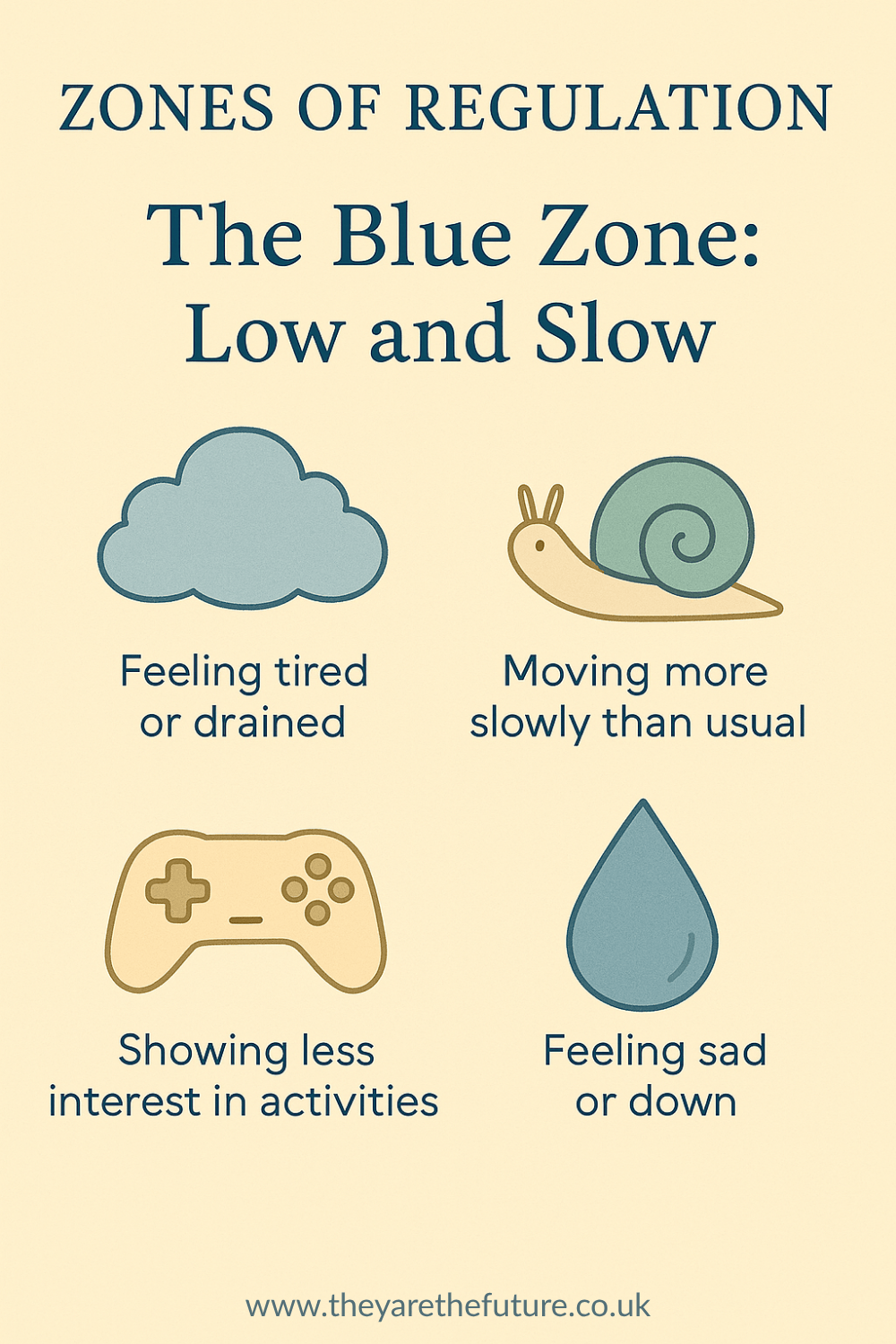
The Blue Zone: Low and Slow
Look for:
- Feeling tired or drained
- Moving more slowly than usual
- Showing less interest in activities
- Feeling sad or down
Real Life Examples: A Day Across the Zones
Let me tell you about Mei, age 8. Her mum kept track of one typical day:
7am: Blue Zone (still waking up, moving slowly)
9am: Yellow Zone (busy school arrival, lots of sensory input)
11am: Green Zone (favourite science lesson)
1pm: Red Zone (lunch crowd overwhelm)
3.30pm: Green Zone (afterschool computer club)
6pm: Blue Zone (exhausted, a bit sad)
TAKE THE QUIZ!
Zones of Regulation: Your Practical Support Guide
Supporting the Yellow Zone
When your child is starting to feel unsettled:
- Movement can help massively, giving the body the sensory feedback it needs.
- Create a calm-down box like Kayla (age 12): noise-cancelling headphones, squishy toys, favourite book
- Set up a quiet corner like Benjamin (age 14): beanbag, weighted blanket, doodling, and his favourite playlist on Spotify.
- Use Sofia’s (age 10) “pause and plan” approach: take a break and do something completely different before things escalate into the red zone
Working with the Blue Zone
- Follow Hassan’s (age 6) “gentle wake-up routine”: extra time, minimal demands, just 5 steps using a visual planner.
- Use Nina’s (age 13) “energy map” to plan activities when energy is low. A gentle walk or stretching routine can help the body to feel more energised.
- Use Priya’s (age 7) wisdom: “Sometimes I just need to be quiet and that’s okay”.
During Red Zone Moments
- Ensure everyone’s safety
- Reduce demands and language
- Provide space when needed
- Wait for calmer moments to problem-solve
Supporting the Green Zone
- Notice what helps your child stay regulated
- Build on successful strategies
- Celebrate these moments without creating pressure
Looking Ahead
Sometimes kids move through all the zones in one day, and that’s completely normal. It’s important that you understand and help them through each one.”
Your role isn’t to keep your child in the Green Zone all the time, it’s to help them understand and navigate all their emotional states.

Need More Support To Help Your Child With Behaviour and Emotion Regulation?
A visual planner is an essential tool but if your child is still having outbursts, please do take a look at my short on-demand course, End Emotional Outbursts.
This online course is for parents of 7–13-year-olds who are struggling with emotional and behavioural outbursts. It’s designed to give you practical, down-to-earth tools you can start using in your home, even if you only have ten minutes a day.
You’ll learn:
- Why children have meltdowns and what’s happening in their nervous system
- What’s filling (or overflowing) your child’s “emotional cup”
- Simple steps to reduce outbursts and help your child feel calmer and more in control
You get immediate access to five bite-sized video lessons and PDF guides, delivered straight to your inbox. Most families complete it in under a week, and many see a difference in that time, but you get lifetime access so you can take as long as you need.
Parents often tell us this course helped them feel more confident, reduced rows and conflicts at home, and gave their child tools they’ll use for life.
Click here to join End Emotional Outbursts – just £30 for lifetime access.
Related Articles
Emotions & Feelings Activities for Children
Mood Cards To Print: Help Children Understand Their Emotions
Worry Jar Activity: Managing Big Feelings (Free Workbook)
Dr Lucy Russell is a UK clinical psychologist who works with children and families. Her work involves both therapeutic support and autism assessments. She is the Clinical Director of Everlief Child Psychology, and also worked in the National Health Service for many years. In 2019 Lucy launched They Are The Future, a support website for parents of school-aged children.
Through TATF Lucy is passionate about giving practical, manageable strategies to parents and children who may otherwise struggle to find the support they need.
Lucy is a mum to two teenage children. She lives in Buckinghamshire with her husband, children, rescue dog and three rescue cats. She enjoys caravanning and outdoor living, singing and musical theatre.
