
ADHD Child Behaviour Control: Can Children Learn Self-Regulation?

If you’re raising (or teaching) a child with ADHD, a neurodivergent condition, I’m sure you’ve had moments where you think, “They know the rule, so why can’t they stop?” That question matters, because it shapes how you respond, and how a child starts to see themselves, affecting their self-esteem.
Here’s the balanced, hopeful answer: yes, a child with ADHD can learn to control their behaviour better, but it usually takes teaching, practice, and the right support. It’s not about being stricter, or expecting a child to “try harder” all day long.
I’m Dr Lucy Russell, a child psychologist specializing in ADHD and autism in my busy clinic, Everlief Child Psychology. In this post, you’ll learn what “control” really means for ADHD, why punishment alone makes child behaviour worse, and practical strategies that work at home and school.

Can a child with ADHD control their behaviour, and what “control” really means?
When people say “control your behaviour”, they often mean “stop it instantly and don’t do it again”. With ADHD, that’s rarely realistic, especially in the moment.
ADHD can make self-control harder because weaknesses in executive functions mean the brain’s “pause button” can be slower to kick in. You might see:
- Hyperactive and impulsive actions (speaking, grabbing, constant motion, reacting before thinking)
- Inattentive symptoms, such as attention that slips off the task
- Feelings that go from 0 to 100 quickly
- Difficulty switching gears (stopping, starting, transitioning)
These struggles can occur in both the combined and the inattentive presentation of ADHD. This is why the difference between “won’t” and “can’t yet” matters so much. A child might want to behave well, and still struggle with self-regulation consistently. Child behaviour becomes less of a character issue, and more of a skills and support issue.
The good news is that skills can be learned. With steady adult responses, clear structure, and practice, many children do develop better control over time. If you want a deeper look at how evidence-based support helps, this review of evidence-based psychosocial treatments for ADHD gives a useful overview.
Self-control is a skill, not a switch you can flick
A simple way to explain self-control to a child is: pause, think, choose. That pause is the tricky part for ADHD, especially when the situation is noisy, rushed, or emotionally loaded.
You might also notice your child can cope in one place and fall apart in another. That doesn’t mean they’re being manipulative. It often means the setting is doing some of the work for them.
A quick example: Sam, aged 9, keeps it together at school all day. The moment they get home, they have emotional outbursts over the “wrong” snack or a small request. What this tells you is not that Sam is “saving the bad behaviour” for you, it’s that school used up their coping energy, and home is where they finally let go.
TAKE THE QUIZ!
The developing brain: why self-control takes time to mature
Here’s something that might ease your frustration: the part of your child’s brain responsible for self-control is still under construction, and won’t be finished until at least their mid-twenties.
The prefrontal cortex – at the front of the brain – handles planning, impulse control, and rational decision-making. It starts a period of rapid development from puberty onwards, but this process takes years.
This means that expecting a 7-year-old, or even a 14-year-old, to consistently “think before they act” is asking them to use brain equipment that isn’t fully built yet.
With ADHD, this developmental delay can be even more pronounced. Research suggests that children with ADHD may show a developmental lag of around 2-3 years in certain brain regions compared to neurotypical peers.
What does this mean in practice? Your 10-year-old with ADHD might be functioning more like a 7 or 8-year-old when it comes to impulse control and emotional regulation. This will help you set realistic expectations and respond with teaching rather than frustration.
The good news is that the brain’s plasticity means skills can be strengthened through practice, even before the prefrontal cortex is fully mature. Every time your child pauses, thinks, and makes a better choice, they’re building those neural pathways stronger. Progress might be slower than you’d like, but it is happening.
Connection Before Correction: Why punishment alone usually backfires for ADHD behaviour
Long lectures, delayed punishments, and “You’ve lost your iPad for a week” often don’t connect with the moment that triggered the behaviour. Many kids with ADHD struggle to link a consequence hours later with a decision made in a flash.
What tends to work better is:
- A calm adult who holds a clear limit
- Consistent consequences that match the behaviour (short, immediate, fair)
- Teaching the missing skill to interrupt negative behaviour patterns (what to do next time)
- Repairing the relationship afterwards
This is the heart of “connection before correction”. When your child trusts you, they’re more likely to accept coaching and boundaries. If you need a practical framework for child behaviour at home, you may find my article on behaviour management strategies and clear boundaries helpful.

What helps ADHD behaviour control at home and at school (strategies that actually work)
You don’t need perfection for managing disruptive behavior. You need repeatable, doable strategies, especially on busy days.
A useful rule of thumb is to aim for far more praise than criticism. Some families and schools use a 5 to 1 ratio as a guide, not a target to stress over, just a reminder to notice what’s going right.
These approaches are also reflected in clinical guidance for professionals like me, including the NICE (National Institute for Health and Care Excellence) ADHD management recommendations, which emphasise tailored support across home and school.
Start with prevention: routines, clear rules, and fewer words
Prevention is underrated. When your child knows what’s coming, they spend less energy guessing, arguing, or bracing for surprises.
Try:
At home
- Build a predictable daily routine for mornings and after-school using visual timetables (a simple checklist beats repeated reminders). This guide to creating a calm ADHD morning routine can give you a starting point.
- Give clear instructions one at a time, then pause.
- Use “first, then” language: “First shoes on, then screens.”
At school
- Put the day plan where the child can see it.
- Keep classroom rules short and concrete as part of effective classroom management, especially for children with special educational needs.
- Give a private prompt before correction (a gesture, a sticky note, a quick “remember our rule”).
A small shift that often helps: get close, use a calm voice, and ask the child to repeat back the instruction.
If you’re a parent and following directions is a battle in your house, these tips on helping ADHD children follow instructions can make daily requests feel less tense.
Use positive reinforcement and immediate feedback to shape child behaviour
With ADHD, immediate feedback is powerful. It makes the link between effort and outcome clear.
Specific praise works best. It answers: what did you see, and why does it matter?
You can say:
- “You started your homework within two minutes, that was focused.”
- “You stopped and took a breath, that helped you stay kind.”
- “You put your phone away when I asked, thank you for co-operating.”
Rewards do not have to be big. They can be points in reward systems towards a privilege, choosing dinner, extra football in the garden, picking the music in the car.
Mini-story: Teacher, Mrs Holmes, notices that Maya blurts out answers. Instead of constant telling-off, they agree a simple signal and a points card. Each time Maya raises her hand and waits, she gets a tick and quick praise. After ten ticks, she chooses a classroom job for the day. Within two weeks, the blurting drops a lot, not because Maya suddenly “got better”, but because the right behaviour started paying off quickly.
If you want a broader view of what tends to help across studies, this article on improving evidence-based psychosocial interventions for ADHD explains why consistent reinforcement and practical supports matter so much.
Plan for difficult moments: resets, movement breaks, and calm consequences
When a child is escalated into emotional outbursts, this isn’t the time for teaching. It’s the time for reducing fuel.
In the hot moment, try:
- Lower your demands: fewer words, simpler steps.
- Offer a short reset: a drink of water, a two-minute breather, a quiet corner.
- Build in movement with physical activities: wall press-ups, a quick walk to the kitchen, carrying books to the office at school.
Transitions are a common trigger. Warnings help: “Five minutes”, then “Two minutes”, then “Time to switch”.
Consequences, when needed, work best when they’re:
- Short
- Immediate
- Linked to the behaviour
- Free from shaming
For example: if your child throws a controller, the controller is put away for the rest of the day, then you practise a calmer exit next time. Always avoid physical punishment. Keep the focus on safety, repair, and learning.

When to get extra support, and how to work as a team around behaviour
Sometimes, good strategies aren’t enough on their own, or you’re dealing with a level of distress that needs more help. Getting support is a sensible next step.
You can also remind yourself of something important: child behaviour always improves faster when the adults around the child are working from the same plan.
Red flags that mean you should get more help
Consider extra support if you’re seeing:
- Behaviour that risks safety (running off, dangerous impulsivity)
- Aggression that’s escalating, potentially linked to oppositional defiant disorder as a co-occurring condition
- Frequent exclusions, detentions, or school refusal
- Sleep falling apart for weeks
- Your child seeming very distressed, ashamed, or hopeless
- Family life feeling like constant crisis
Start with your GP, your child’s paediatric team (if you have one), the school SENCO, a qualified psychologist, or child psychiatrist. Support groups can also be valuable resources for families; your school or doctor will know if there are local groups available to you.
In the UK, NICE guidance suggests a joined-up approach with evidence-based options like behavioural interventions and parent training programmes, which may include stimulant medication as part of a comprehensive management plan if strategies alone are not enough. The NICE ADHD management page can help you understand what care pathways often look like.
Make a simple home school plan that the child can succeed with
Keep it small. One target behaviour is plenty. Align it where possible with structured school support for special educational needs, such as an individual education plan.
Try this structure:
- Choose one behaviour (for example, “hands to self”, or “start work within 2 minutes”).
- Agree the same wording at home and school.
- Pick one reward your child actually cares about.
- Do a daily check-in (even 30 seconds can be enough).
- Add a repair step after problems: apologise, fix, practise.
For older children, therapeutic approaches like cognitive behavioural therapy can complement this approach. Consistency beats intensity. A simple plan done every day usually wins over a big plan that collapses by Thursday.
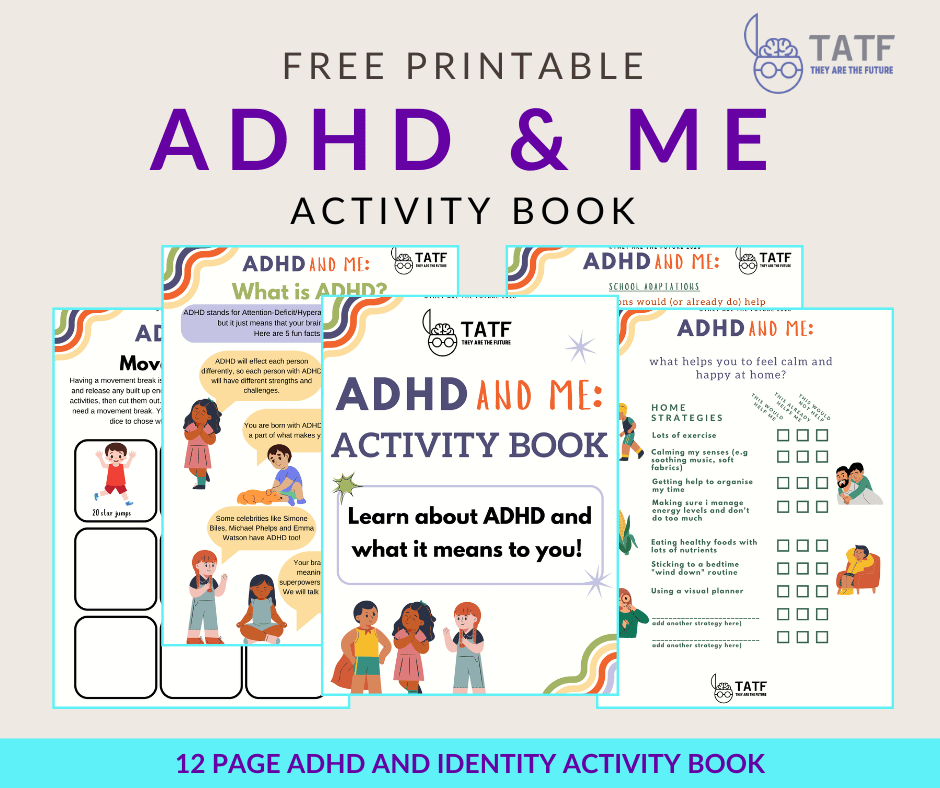
ADHD Child Behaviour Control: Final Takeaways
So, can a child with ADHD control their behaviour? Yes, they can learn stronger ADHD child behaviour control over time, but they need support that teaches skills, not shame that piles on pressure. Progress can be uneven, and that’s normal, especially when your child is tired, hungry, or overloaded.
To get started this week, pick one small goal, increase specific praise, and plan transitions with short countdowns. Keep your expectations realistic, given that vital areas of your child’s brain may take longer to mature when compared with other children. If you keep the focus on learning and connection, child behaviour often shifts in quieter, steadier ways than you expect, building your child’s self-esteem in the long term.
Dr Lucy Russell is a UK clinical psychologist and Clinical Director of Everlief Child Psychology. She qualified as a clinical psychologist from Oxford University in 2005 and worked in the National Health Service for many years before moving fully into her leadership and writing roles.
In 2019 Lucy launched They Are The Future, a support website for parents of school-aged children. Through TATF Lucy is passionate about giving practical, manageable strategies to parents and children who may otherwise struggle to find the support they need.
Lucy lives with her family, rescue cats and dog, and also fosters cats through a local animal welfare charity. She loves singing in a vocal harmony group and spending time in nature.
