Get my articles & resources in your inbox plus a free AUTISM & ME ACTIVITY BOOK for age 6+! Sign up

Get my articles & resources in your inbox plus a free AUTISM & ME ACTIVITY BOOK for age 6+! Sign up
Build better sleep habits with practical steps for children and teenagers aged 5–17.
Find help with bedtime routines, night-time anxiety, sensory needs, autism and ADHD.
I’m Dr Lucy Russell, a child clinical psychologist with over 20 years’ experience in the NHS and private practice. Children’s sleep is a particular passion of mine, as my daughter had significant sleep difficulties in her first few years. At Everlief Child Psychology, the clinic I co-founded, we have supported more than 5,000 families.

Choose the sleep challenge you would like help with first.
Help your child feel safer at bedtime and manage night-time fears.
Build a predictable wind-down routine that takes your child’s ADHD needs into account.
Make practical changes to daytime habits, evenings and your teenager’s sleep environment.
Adapt bedtime and the bedroom to help your child feel comfortable.
Use the calculator straight away. Sign up to receive the printable resources by email.

Enter your child’s age, wake-up time and usual time to fall asleep.
Get suggested bedtimes and wind-down times for ages 5–17. No signup needed.

When every night feels different, it’s hard to know what needs to change.
Use this simple diary to spot patterns and see whether changes improve sleep. It also gives you a clear record to share with your child’s doctor. For ages 5–17.
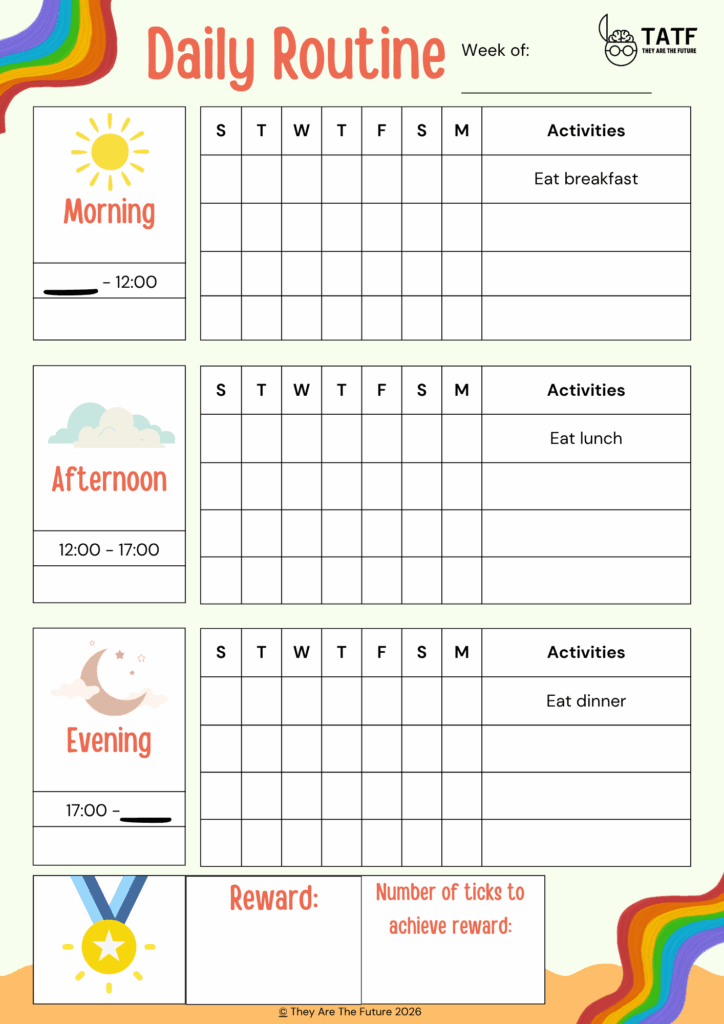
Make bedtime steps clear and predictable with a visual evening planner.
Includes morning, afternoon and evening worksheets for children with ADHD.
Choose in-depth sleep guidance or focused help with morning and bedtime routines.
UK & INTERNATIONAL PARENTS · COURSE
Poor sleep can affect your child’s mood, mental health and progress at school. Sleep for Success shows you how to help them sleep longer and better.
Learn why your child finds sleep difficult and what to change. Turn restless nights and tired mornings into better sleep and brighter days.
UK & INTERNATIONAL PARENTS · SHORT COURSE
Create a clear evening wind-down and morning routine together with your child.
A three-day short course with practical planners, video lessons and lifetime access.
The amount of sleep children need changes with age and varies a little from child to child. As a rough guide, primary school-aged children usually need around 9 to 12 hours a night, and teenagers around 8 to 10 hours. My free bedtime calculator suggests a bedtime and wind-down time for your child, based on their age, when they need to wake up and how long they usually take to fall asleep.
Make time to listen to your child’s worries during the day or early evening, so there is less on their mind at bedtime. A predictable routine, a night light or a comforting object, and calm reassurance all help your child feel safe. If your child needs you nearby to fall asleep, small, gradual steps help them build the confidence to fall asleep on their own. My article on night-time anxiety in children covers common fears and what to try.
Many children with ADHD find it hard to switch off at night. Plenty of physical activity during the day, less screen time in the hour before bed and a short, predictable wind-down routine all help. Showing the bedtime steps visually means your child can follow them with fewer reminders from you. My article on creating an ADHD sleep routine explains what helps.
During puberty, teenagers’ body clocks naturally shift later, so they feel sleepy later at night and find early mornings hard. Daylight and movement in the morning, regular mealtimes and keeping the bedroom mainly for sleep can all help. Encourage your teenager to think through any worries earlier in the evening, well before they go to bed. My article on sleep problems in teenagers and pre-teens has practical changes to try.
Some children are very sensitive to noise, light, textures or temperature, which makes it harder to relax and fall asleep. Notice what bothers your child, then adapt the bedroom, for example with blackout blinds, bedding they like the feel of or calming background sound. Calming sensory activities before bed help too. My article on sensory sleep strategies shares six ideas to try.
Explore more guidance below, with new articles added as they’re published.