
Fear of the Dark in Kids: Building Bedtime Confidence

Fear of the dark in kids is a common developmental challenge. It’s defined as a heightened state of anxiety or distress that children experience when nighttime approaches. This fear can transform a routine bedtime into an overwhelming event, but understanding why it happens is the first step toward resolution. Such worries are extremely common, especially in the primary school years.
Night-time fears often grow when imagination is strong, life feels unsettled, or your child needs more closeness at bedtime.
You are not doing anything wrong. One study confirmed that night-time fears are a normal phase of development for around 73% of children aged 2 to 12.
The aim is to help your child feel safe first, then slowly build their confidence.
Key Takeaways
- Fear of the dark is a normal developmental phase affecting around 73% of children aged 2 to 12, often linked to imagination (shadows, monsters) and life changes.
- Prioritise emotional safety with consistent bedtime routines, validation of feelings, comfort objects, and dim lighting before introducing gradual steps towards independence.
- Use small, manageable exposure like moving your presence from bedside to doorway, daytime shadow play, and positive reinforcement to build confidence steadily. This must be at your child’s pace.
- Seek professional help if fears escalate to phobias, significant sleep disturbances, or persist with anxiety in daily life. CBT based approaches can provide effective support for more complex cases.
- Protect your own wellbeing with clear plans and boundaries to meet your own needs during bedtime challenges.
Here’s My Video Summarising The Gradual Exposure Technique For Fear of the Dark in Children
Understanding Your Child’s Fears
Darkness takes away visual reassurance. When your child cannot see clearly, their active imaginations fill in the gaps. That can mean monsters under the bed, monsters in the closet, intruders, or a feeling that something bad might happen.
These nighttime fears have formal names such as nyctophobia (fear of the dark), scotophobia (fear of dark spaces), or lygophobia (a less common term for fear of darkness). A recent study of nighttime fears in children found that the fear of the dark in kids often overlaps with monsters, real dangers, and separation worries.
The influence of overactive imagination
Shadows, silence, and being apart from you can make ordinary worries feel much bigger. In daylight, your child may laugh at the idea of monsters. At bedtime, the same thought can feel completely real.
The impact of life transitions
Moving house, changing school, illness, grief, family stress, or overload can all feed fear of the dark at night. If bedtime fear sits alongside wider worries or separation anxiety, your child may also struggle with sleep, reassurance-seeking, or clinginess. That usually means they need more comfort and predictability.
Developing a Supportive Bedtime Strategy
You don’t need to force independence, as every child should achieve this at their own pace. If your child is distressed, leaving them alone usually backfires.
Establishing a consistent bedtime routine with a warm, predictable response helps their nervous system settle, and then you can reduce your help in small steps towards independent sleep.
Cultivating safety in body and mind
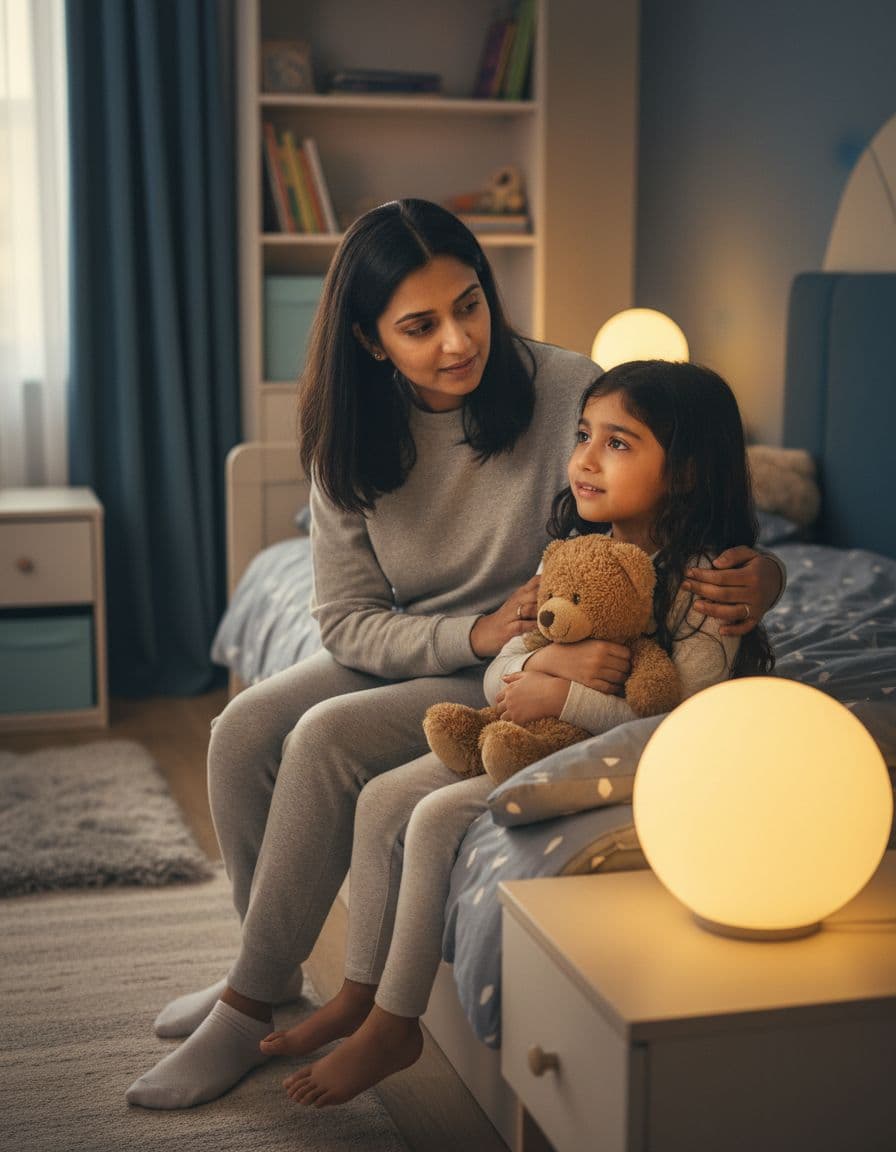
Keep bedtime calm and repetitive. Use dim lighting, comfort objects (Often referred to as transitional objects), simple deep breathing exercises, and simple words such as, “I know you’re feeling scared, and I am here with you.” Validate the feeling, while staying clear that they are safe.
Gradual exposure techniques
Start where your child can cope. You might sit beside the bed, then by the door, then agree to check in with them every few minutes. The secret is that gradual withdrawal must go at your child’s pace. They decide when you will move on to the next step.
If they become overwhelmed, slow down. This gradual withdrawal acts as a form of exposure therapy supported by helpful parental intervention. The APA guide on helping children overcome fear of the dark explains why gradual exposure works best when it feels manageable for children struggling with a fear of the dark.
Practical Action Plan For Fear of the Dark in Kids
| Strategy | What To Do | Why It Helps | Simple Example |
|---|---|---|---|
| Predictable bedtime routine | Keep the same steps and order each night | Reduces uncertainty and calms the nervous system | Bath, story, cuddle, lights dim, then sleep |
| Limit scary content | Avoid frightening TV, games, or stories before bed | Prevents imagination from amplifying fear at night | Switch to calm shows or reading before bedtime |
| Use a night light | Provide a soft, warm light if needed | Maintains visual reassurance without overstimulation | Use a dim amber night light, not bright white |
| Build coping thoughts | Teach simple, calming phrases | Helps your child feel more in control | “I am safe. You are nearby.” |
| Daytime practice | Introduce gentle darkness play during the day | Builds confidence in a safe context | Shadow puppets or exploring a dim room together |
| Praise brave steps | Notice effort rather than perfect nights | Reinforces progress and strengthens confidence | “You stayed in bed longer. That was brave.” |
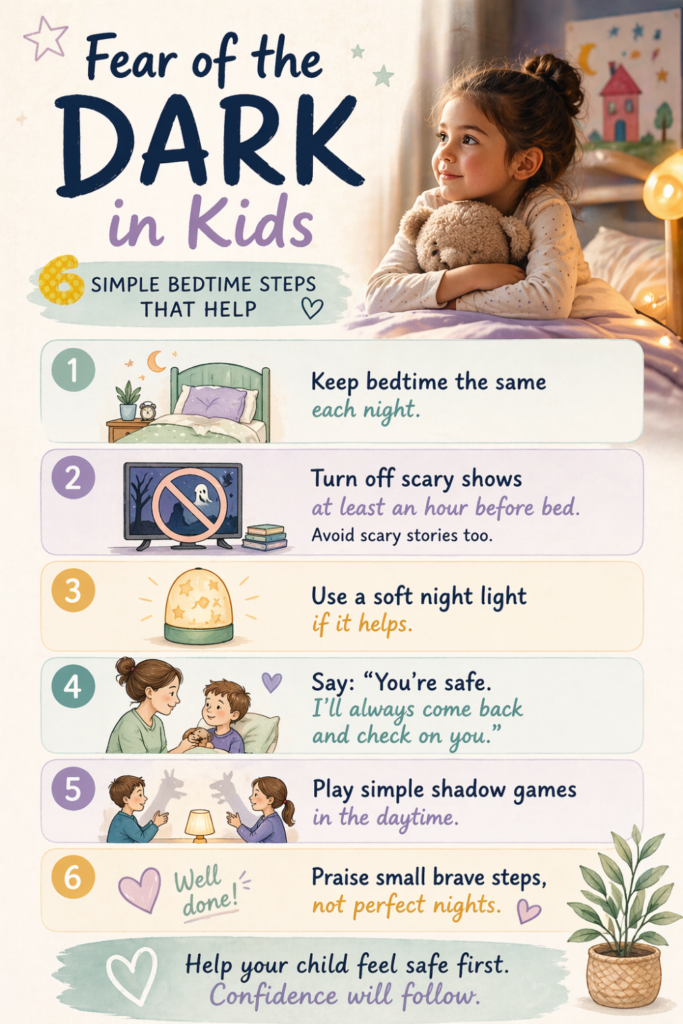
Bedtime steps to reduce fear
- Keep the bedtime routine predictable.
- Avoid scary content before bed.
- Use night lights if needed, managing their brightness and duration to support healthy melatonin production.
- Develop coping skills, such as the affirmation “I am safe”.
- Practise short daytime darkness challenges, such as playing with shadow puppets.
- Use positive reinforcement to praise brave steps, not perfect nights.
Many parents find children’s books and tools to be helpful, comforting bridges for kids managing nighttime anxiety.
Books featuring characters navigating darkness – like The Dark by Lemony Snicket – can validate your child’s feelings. Tools like dim, warm-toned night lights or a consistent comfort object provide the extra security they need to settle. Always choose resources that focus on courage and calm rather than emphasizing the fear itself.
Example of steady progress
Nine-year-old Katie needed her parent beside her until she slept. First, the chair stayed by the bed. A few nights later it moved to the door. After two weeks, Katie managed with short check-ins because she stayed calm and connected.
When to Seek Professional Guidance
Seek support from a paediatric psychologist or mental health professional if the fear escalates into a full-blown phobia of the dark, causing panic, long bedtime battles, sleep disturbances, exhaustion, refusal of sleepovers, or anxiety in other parts of life. Get help sooner if there has been trauma, or the fear stays strong into the teen years.
Self-Care for Parents
Bedtime struggles can swallow your whole evening. As the saying goes, you can’t pour from an empty cup, so gentle boundaries are necessary to protect your parental energy levels. For example, you may decide to explain to your child that you will stay upstairs until 8.30pm, but after that you need to go downstairs to get something to eat and have a rest. A clear plan actually helps your child feel safer, and addresses bedtime struggles more effectively in the long-term. My article about child sleep solutions for children age 5+ will give you strategies to help you keep that balance.
Fear of the dark in kids usually improves when you combine emotional safety with small, steady steps outside their comfort zone. For older children or persistent cases, cognitive behavioural therapy (CBT) is a highly effective professional approach to explore. Stay patient, stay predictable, and get support if progress stalls.
Frequently Asked Questions
Is fear of the dark in children normal?
Yes, it is extremely common, affecting around 73% of children aged 2 to 12. This fear often stems from active imaginations filling in gaps in the dark, amplified by shadows, silence, underlying stress or family changes. It typically improves with steady parental support and reassurance, combined with gradual steps towards independence.
How long does fear of the dark last?
For most children, fear of the dark is a temporary developmental phase that naturally subsides as they grow and gain confidence. While it can persist for a few months during times of change or increased stress, most kids gradually outgrow these worries with consistent support and patience.
How can I help my child feel safe?
Start with a calm, predictable routine using dim lights, comfort objects, and simple affirmations. Validate their feelings without dismissing them, then practise breathing exercises together to settle their nervous system.
What are the best gradual steps?
Begin where your child can cope, such as sitting beside the bed, then moving to the door or short check-ins. Combine with daytime challenges like shadow puppets, and praise brave efforts. Always go at your child’s pace.
When should I seek professional help?
Get support if fears turn into phobias with panic attacks, long bedtime battles, sleep issues, or refusal of sleepovers. Earlier intervention is wise if linked to trauma or wider separation anxiety.
How do I manage my own routine?
Bedtime fears can drain your evenings, so set gentle boundaries and follow a clear plan to preserve your energy. Remember, your calm presence is key, but self-care ensures you can support your child effectively.
Dr Lucy Russell is a UK clinical psychologist and Clinical Director of Everlief Child Psychology. She qualified as a clinical psychologist from Oxford University in 2005 and worked in the National Health Service for many years before moving fully into her leadership and writing roles.
In 2019 Lucy launched They Are The Future, a support website for parents of school-aged children. Through TATF Lucy is passionate about giving practical, manageable strategies to parents and children who may otherwise struggle to find the support they need.
Lucy lives with her family, rescue cats and dog, and also fosters cats through a local animal welfare charity. She loves singing in a vocal harmony group and spending time in nature.
