
School Night Routine Magic: 5 Steps to Better Kids’ Wellbeing and Peaceful Evenings

As a clinical psychologist (and mum), I’ve helped countless families transform their evenings from chaotic battlegrounds into peaceful, connecting moments. The secret is a well-crafted school night routine that works with your child’s natural rhythms, not against them.
In this article, I’ll share five evidence-based steps to create a school night routine that supports your child’s wellbeing whilst giving your family the calm evenings you deserve. You’ll discover why consistent routines matter so much for children’s development, practical strategies you can implement tonight, and how to adapt these approaches for different ages and needs.

Why Your School Night Routine Matters More Than You Think
When families come to me feeling overwhelmed by stress and chaos after school, I often start by explaining the big impact that consistent routines have on children’s developing brains. Research shows that predictable evening routines support your child’s sleep quality, emotional regulation, and even their ability to learn and concentrate the next day.
Children thrive on predictability. When they know what comes next, their nervous systems can relax, making it easier for them to transition from the stimulation of the day to the calm needed for restorative sleep. This is particularly important for neurodivergent children, who may find transitions especially challenging.
A well-structured night before school routine also builds independence. When children know the sequence of tasks and can participate in preparing for tomorrow, they develop confidence and self-reliance that serves them well beyond bedtime.
Step 1: Create Consistent Timing That Works for Your Family
The foundation of any effective school routine begins with age-appropriate sleep schedules. Research from the American Academy of Sleep Medicine provides clear guidelines:
- School-age children (6-12 years): 9-12 hours of sleep per night
- Teenagers (13-18 years): 8-10 hours of sleep per night
Start with what time your child needs to wake up, then count backwards to find the right bedtime. Make sure they get enough sleep for their age. Don’t forget – bedtime isn’t just when the lights go off. Your child needs time to relax and actually fall asleep.
If you need to change your current bedtime, take it slow. Move bedtime earlier by just 10-15 minutes every few nights. Big sudden changes can mess up your child’s sleep pattern and make things harder for everyone.
This advice is just as important for teens as for younger kids!

Making Timing Work for Teens
Teen school routines need extra thought. During the teenage years, your child’s brain actually changes how it handles sleep. Their body (circadian rhythm) naturally wants to stay up later and wake up later. This isn’t them being difficult, it’s biology!
Teen brains produce a hormone called melatonin (which makes you sleepy) much later in the evening than younger kids. So while a 10-year-old might feel tired at 8pm, a 15-year-old’s brain might not start producing sleepy hormones until around 11pm.
The problem? Schools still start early, which goes against what their brains naturally want to do. This means many teens are constantly tired and struggling to focus during the day.
Help your teenager by creating a consistent after school routine that includes time for homework, relaxation, and connection before beginning the evening wind-down.
TAKE THE QUIZ!
Step 2: Set Up a Screen-Free Wind-Down Period
One of the best things you can do for your school night routine is to put away all screens 30-60 minutes before bedtime. This means no phones, tablets, TVs, or computers.
Screens give off a blue light that tricks your child’s brain into thinking it’s still daytime. This stops their body from making melatonin – the natural hormone that makes them feel sleepy. Without enough melatonin, it’s much harder for kids to fall asleep when they should.
Instead of screens, suggest calming activities that help your child’s nervous system settle:
- Reading together or independently
- Gentle colouring or drawing
- Simple puzzles or quiet games
- Light stretching or yoga
- Listening to calming music or audiobooks
This transition time signals to your child’s brain that the day is ending and sleep is approaching. Many families find this becomes their favourite part of the evening – a chance to connect without the distractions of daily life.
Step 3: Involve Your Child in Tomorrow’s Preparations
A crucial element of any effective night before school routine is preparing for the next day. When children participate in these preparations, they feel more in control and confident about the morning ahead.
Create a simple checklist that your child can follow:
- Choose tomorrow’s clothes
- Pack school bag and check homework is complete
- Prepare lunch or snacks if needed
- Set out shoes and any special items needed
- Check the weather forecast together
For younger children, use visual schedules with pictures to help them remember each step. Older children and teens can take more ownership of this process, but gentle reminders and check-ins show you care about their success.
This preparation time also provides natural opportunities for connection. Ask about tomorrow’s plans, discuss any concerns, and celebrate achievements from the day.
Step 4: Create Sensory Signals for Sleep
Your child’s bedroom setup really matters for good sleep. Think of it like this: everything they see, hear, and feel in their room sends messages to their brain about whether it’s time to sleep or stay awake.
The right bedroom environment helps their body understand “this is sleep time” and makes it much easier for them to drift off naturally.
Optimise the Sleep Environment
- Temperature: Keep the room cool (18-21°C/65-70°F)
- Lighting: Use blackout curtains or blinds, with a small nightlight if needed
- Sound: Consider white noise or soft, consistent background sounds to mask household noises
- Comfort: Ensure comfortable bedding and appropriate sleepwear
Incorporate Calming Sensory Activities
Many children benefit from gentle sensory input as part of their bedtime routine:
- Warm bath or shower (2-3 times per week for younger children)
- Light massage or gentle back rubs
- Deep breathing exercises or progressive muscle relaxation
- Aromatherapy with lavender or other calming scents
These activities help activate your child’s parasympathetic nervous system – the “rest and digest” response that prepares the body for sleep.

Step 5: Build Flexibility Into Your Routine
The most successful school night routines are those that can adapt to your family’s changing needs. Life happens – sometimes homework takes longer, family events run late, or your child needs extra support with worries or excitement about the next day.
Build flexibility into your routine by:
- Having a “quick version” for busy nights
- Allowing extra time for connection when your child needs it
- Adapting activities based on your child’s energy level and mood
- Maintaining the core elements (consistent timing, wind-down period) even when other parts change
Remember, the goal isn’t perfection – it’s creating a predictable framework that supports your child’s wellbeing whilst remaining realistic for your family life.
Examples of Healthy School Night Routines
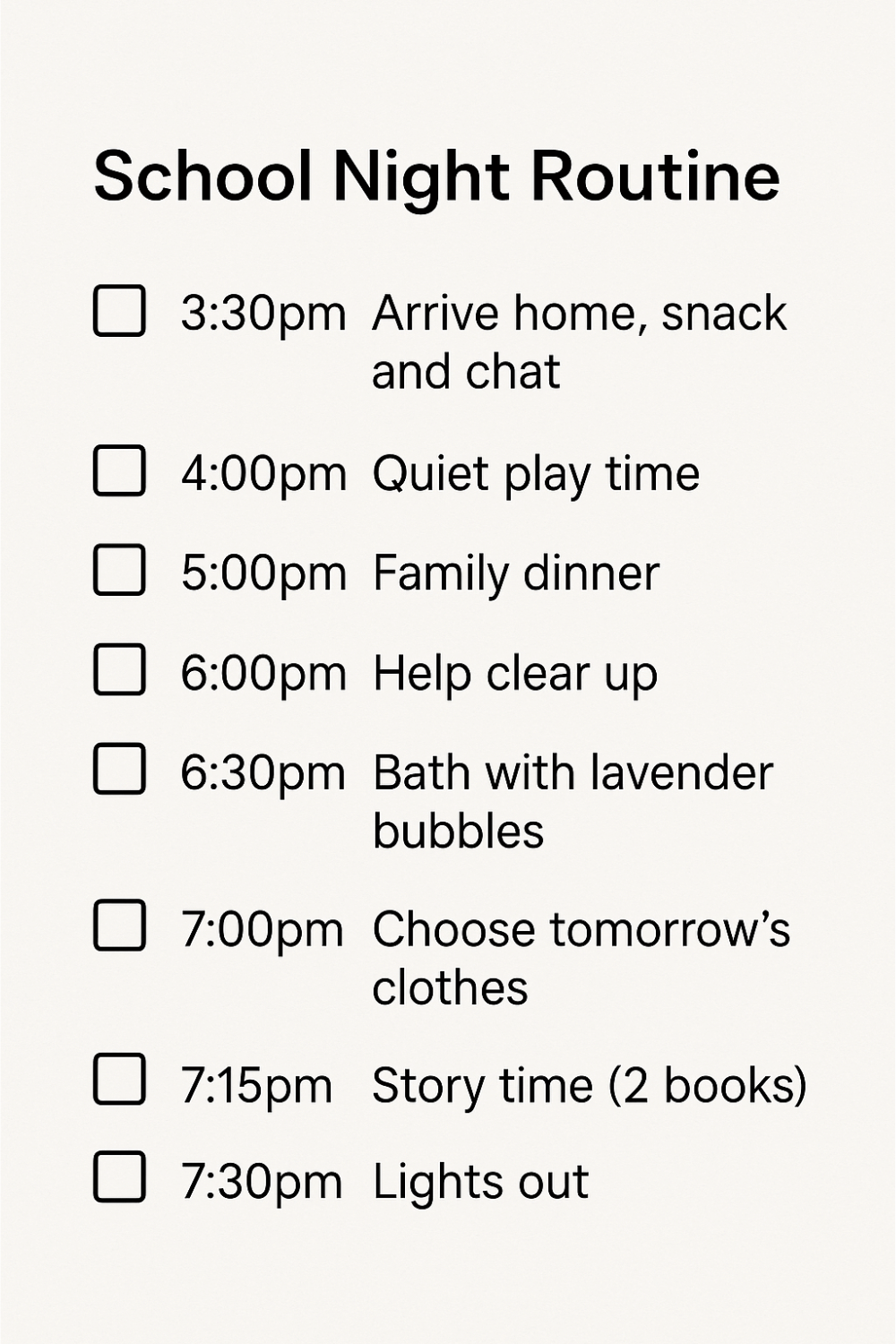
1. Emma (Age 5) Emma bounces through the door at 3:30pm.
After a quick snack and chat with Mum, she plays quietly while dinner prep happens.
At 5pm, the family eats together, then Emma helps clear plates.
Bath time at 6:30pm includes lavender bubbles and her favourite rubber duck.
She chooses tomorrow’s clothes with Dad, then they read two picture books in her cosy bedroom.
Lights out at 7:30pm comes easily after this predictable, calming routine.
Emma’s School Night Routine:
- 3:30pm: Arrive home, snack and chat
- 4:00pm: Quiet play time
- 5:00pm: Family dinner
- 6:00pm: Help clear up
- 6:30pm: Bath with lavender bubbles
- 7:00pm: Choose tomorrow’s clothes
- 7:15pm: Story time (2 books)
- 7:30pm: Lights out
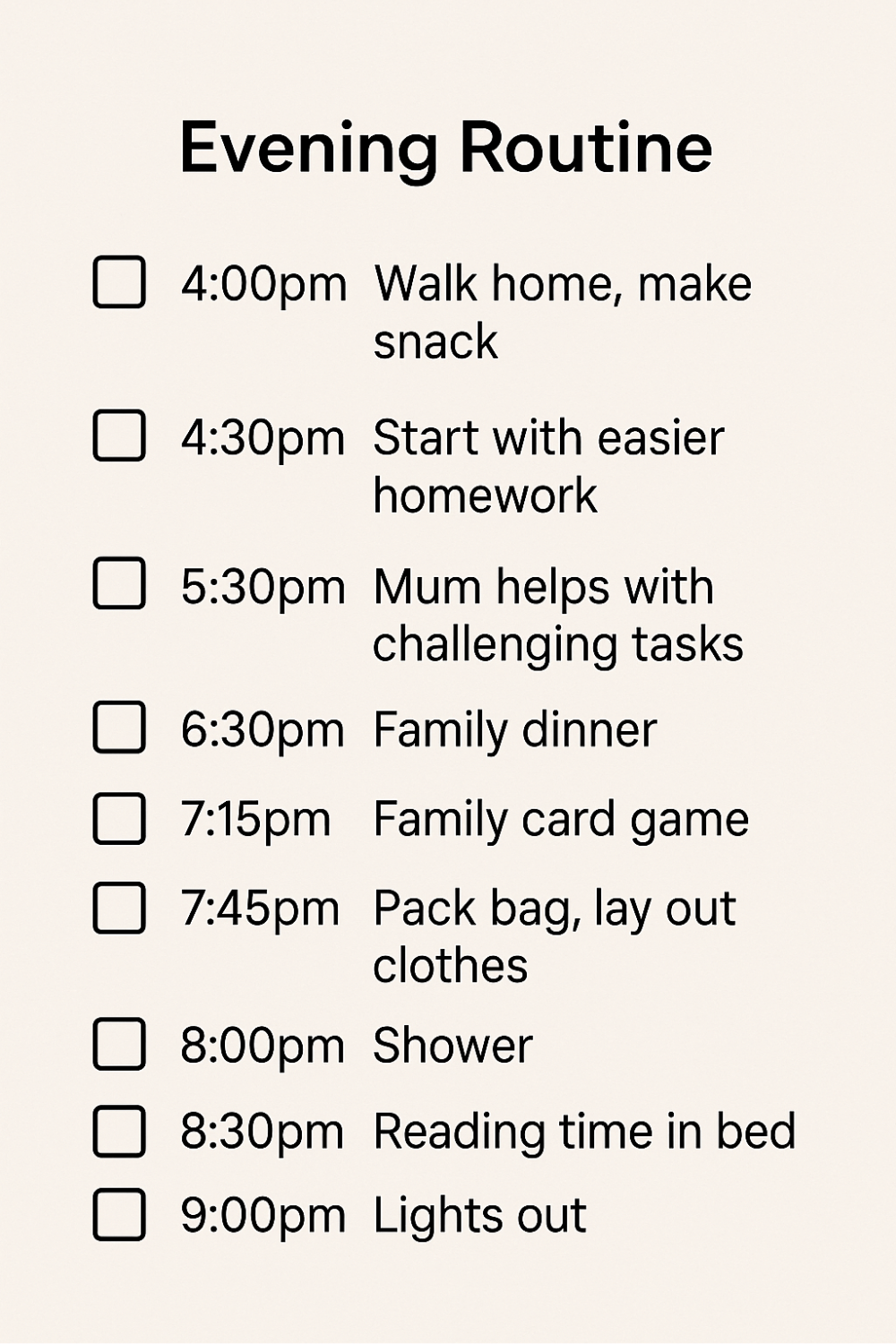
2. Oliver (Age 11) Oliver walks home from school at 4pm, feeling proud of his independence.
He makes himself a sandwich and checks his homework planner.
He completes easier tasks first, saving maths for when Mum gets home at 5:30pm to help if needed.
After dinner at 6:30pm, the family plays card games. Oliver then packs his school bag and lays out his uniform.
He showers at 8pm, then has 30 minutes reading time in bed.
Oliver’s Evening Routine:
- 4:00pm: Walk home, make snack
- 4:30pm: Start with easier homework
- 5:30pm: Mum helps with challenging tasks
- 6:30pm: Family dinner
- 7:15pm: Family card game
- 7:45pm: Pack bag, lay out clothes
- 8:00pm: Shower
- 8:30pm: Reading time in bed
- 9:00pm: Lights out
3. Chloe (Age 13) Chloe gets home at 4:30pm and immediately changes into comfortable clothes – this switch helps her move from “school mode” to “home mode.”
She has a snack while sharing highlights from her day with Mum.
Homework happens at her desk from 5-6:30pm with a break halfway through.
After dinner, she has one hour of free time for texting friends or watching YouTube. At 8:30pm, her phone goes downstairs and she reads until lights out.
Chloe’s Evening Routine:
- 4:30pm: Change clothes, switch from school
- 4:45pm: Snack while sharing day’s highlights
- 5:00pm: Homework at desk (with break)
- 6:30pm: Family dinner
- 7:30pm: Free time (texts/YouTube)
- 8:30pm: Shower and skincare
- 8:45pm: Phone goes downstairs
- 9:00pm: Reading or calm music
- 9:30pm: Lights out

4. Ryan (Age 17) Ryan gets home at 7pm after football training. He immediately eats the dinner Mum saved for him, while decompressing from the day.
From 8-9:30pm, he tackles homework and university applications.
He then has a quick shower and spends 30 minutes on social media before his “digital sunset” at 10:30pm.
Ryan reads or listens to meditation apps to quiet his busy mind before sleep.
Ryan’s School Night Routine:
- 7:00pm: Arrive home from football
- 7:15pm: Eat saved dinner, decompress
- 8:00pm: Homework/uni applications
- 9:30pm: Quick shower
- 10:00pm: Social media time
- 10:30pm: “Digital sunset” – devices away
- 10:45pm: Reading or meditation app
- 11:15pm: Lights out

Troubleshooting Common Challenges
Even with the best intentions, school night routines can face obstacles. Here are solutions to common challenges I see in my practice:
“My child resists the routine”: Start small with just one or two elements, and involve your child in creating the routine. When children have input, they’re more likely to cooperate.
“We don’t have enough time”: Look for ways to make your evening routine quicker by preparing things earlier in the day or cutting out less important activities. Even saving 10 minutes can make a big difference to how calm your evenings feel.
“Siblings have different needs”: Create individual routines within the family framework. Older children might have later bedtimes but still participate in family preparation time.
“My teenager won’t follow any routine”: Instead of forcing rules on them, work together to solve the problem. Let them experience what happens when they don’t get enough sleep (natural consequences), and ask them what would help them feel more ready for school and less tired. When teens help create the plan, they’re more likely to stick to it.

Supporting Your Child’s Sleep Success
Creating a good school night routine is important, but if your child is still struggling with sleep despite your efforts, there might be other issues to address.
Poor sleep doesn’t just make kids tired – it affects their mood, concentration, and ability to handle emotions. When children don’t sleep well, everything becomes harder for them.
In my Sleep For Success course, I help parents figure out exactly why their child isn’t sleeping well and give you specific ways to fix it. The course covers sleep science, calming an overactive mind, managing bedtime worries, and creating the right sleep environment.
You can complete the seven modules in about a week (roughly an hour per day) or go at your own pace. With better sleep, your child will start to thrive instead of just getting by.
Related Articles
Night Time Routines for Positive Teen Mental Health
Creating a Stress-Free ADHD Morning Routine For Your Child
Self Care Sunday Ideas For Children
Dr Lucy Russell is a UK clinical psychologist who works with children and families. Her work involves both therapeutic support and autism assessments. She is the Clinical Director of Everlief Child Psychology, and also worked in the National Health Service for many years. In 2019 Lucy launched They Are The Future, a support website for parents of school-aged children.
Through TATF Lucy is passionate about giving practical, manageable strategies to parents and children who may otherwise struggle to find the support they need.
Lucy is a mum to two children. She lives in Buckinghamshire with her husband, children, rescue dog and rescue cats. She enjoys caravanning and outdoor living, singing and musical theatre.
