
Self Care Sunday Ideas For Children

Self care Sunday is a wonderful way to help your child recharge both mind and body.
In this article, I’ll share practical ideas and explain the brain science behind slowing down so you can create a nurturing self care Sunday. You’ll find ideas for a gentle self care routine, enjoyable self care activities, and a simple self care checklist to support a healthy lifestyle.
I’ll also introduce my Reset Your Child’s Wellbeing Mini Course if you want to go deeper.

Why Slowing Down Helps Your Child’s Mind And Body
As a clinical psychologist and a mum, I see every week how even small changes can support a child’s wellbeing. Our children’s brains spend much of the week in “busy mode,” constantly processing information, solving problems, and managing emotions. Without regular breaks, their nervous system stays switched on, leading to fatigue and stress.
By setting aside a self care Sunday, you help your child’s nervous system move from “fight or flight” into “rest and digest.” This shift lowers stress hormones like cortisol and allows the body to repair and recharge.
Psychologically, your child’s brain benefits too. The prefrontal cortex, which is responsible for planning, focus, and emotional control, works best when it is given space to rest and reset. This means your child is more able to focus, learn, and manage their feelings in the week ahead.
TAKE THE QUIZ!
How To Build A Self Care Sunday Routine That Calms & Connects Your Child
A gentle self care routine is a proven way to help your child’s brain feel safe. Routines tell the brain what to expect, lowering anxiety and building a sense of security.
You might start with a slow morning, breakfast in pyjamas, or soft music to create a peaceful atmosphere.
When you check in with your child about how their body and mind are feeling, you are helping them strengthen their emotional awareness. This is a key skill for managing stress and relationships throughout life.
Soothing self care activities like reading, drawing, or a quiet walk outdoors gently activate the parasympathetic nervous system, which helps with calmness and healing. Creating a self care checklist together is another simple psychological tool. It brings structure and control, two things that help children feel more secure.
Sample Self Care Sunday Schedule
Here’s a sample of a wonderfully laid back schedule, but you can adapt this in any way you like!
| Time of Day | Self Care Activity |
|---|---|
| Morning | Slow breakfast in pyjamas. |
| Midday | Feelings check-in together. Calm activity like reading, drawing, or baking. |
| Afternoon | Relaxing walk outdoors. |
| Evening | Quiet time with blankets and a movie. Make a simple self care checklist for the week. Calm bedtime routine (bath, reading, low lights). |

Fun And Flexible Self Care Activities For Every Child
A successful self care Sunday is not about filling the day with tasks. In fact, the opposite! It’s about giving your child’s brain and body the right conditions to rest, recover, and connect.
The right activities can release dopamine, which boosts motivation and pleasure, and oxytocin, which supports bonding and emotional safety.
Many families enjoy being outdoors, which is proven to lower anxiety and help children feel grounded. Creative activities like art or crafts support both fine motor skills and self-expression, giving the brain a break from analytical thinking. Here are a few self care activities to try:
- A walk in the park, tuning in to the senses and calming the nervous system
- Simple crafts or drawing, which help children express emotions and focus their minds
- A cosy bath or foot soak, which activates sensory pathways linked to calm
- Movement like stretching or dance, which helps release built-up stress and boosts mood
When children help choose a self care checklist or plan, they also develop self-advocacy and independence, two psychological strengths for life.
How Self Care Sunday Builds A Healthy Lifestyle
Regular self care Sunday habits lay the foundations for a healthy lifestyle by teaching children how to meet their physical and emotional needs.
When your child learns that rest, good food, and gentle movement are part of caring for themselves, their self-esteem grows.
You could:
- Try a new healthy recipe together to introduce variety and positive associations with food
- Set up a reading nook, encouraging quiet time that boosts brain development and reduces screen stress
- Plan snacks for the week so your child feels prepared and less anxious about meals
- Talk about positives from the week, building a habit of gratitude and reflection, both linked to emotional resilience
Children who grow up seeing self care modelled at home are more likely to practise it confidently as adults.
Why A Self Care Checklist Helps Children Feel Safe
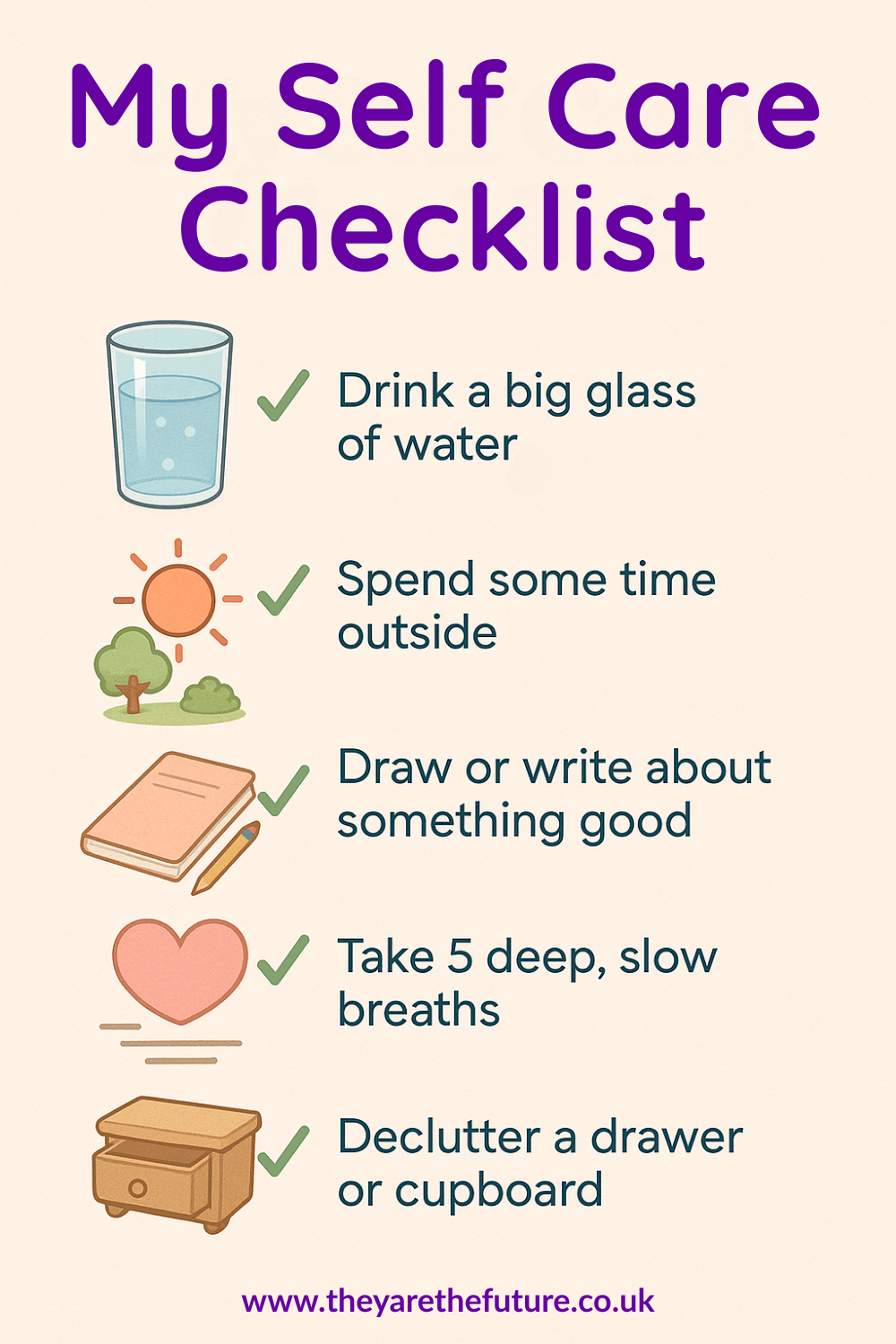
A self care checklist is a psychological safety net for many children, especially those who feel anxious or overwhelmed by change.
Visual checklists give them a sense of progress and control, both powerful antidotes to stress.
Your checklist might include:
- Drink a big glass of water, helping the body regulate energy and mood
- Spend some time outside to balance the nervous system and reset the senses
- Draw or write about something good to practise gratitude, proven to improve mood
When your child helps create and use the checklist, they build planning skills and feel more ownership of their wellbeing.
Make Self Care Sunday A Regular Part Of Family Life
Having a regular self care Sunday is a powerful psychological message: your child’s wellbeing is just as important as homework or hobbies.
Over time, these calmer days build resilience by teaching your child how to reset after stress. Their brain learns to manage emotions more effectively, their body recovers from the week, and their confidence grows.
If Sunday is busy for your family, pick any day that works and call it your self care day. The consistency is what matters most.
Reset Your Child’s Wellbeing Mini Course
If you want step-by-step support to build a calming self care routine for your child, my Reset Your Child’s Wellbeing Mini Course is the next step.
You will find practical strategies, short videos, and simple psychology tools that make family wellbeing easy to put into action. Take a look here: Reset Your Child’s Wellbeing Mini Course.

Small Steps, Big Change
A regular self care Sunday is a simple but powerful way to boost your child’s wellbeing, both physically and emotionally. It teaches them that rest and comfort matter just as much as achievement.
Over time, these habits add up to a more confident, resilient child. If you are ready for more ideas and tools, I would love to welcome you into my Reset Your Child’s Wellbeing Mini Course.
Let’s make self care a joyful and lasting part of your family’s life.
Related Articles
Boost Your Child’s Mental Health With This FREE Self-Care Menu and Guide
How to Help a Teenager With Low Self-Esteem
Help Your Child With Negative Self-Talk
Dr Lucy Russell is a UK clinical psychologist who works with children and families. Her work involves both therapeutic support and autism assessments. She is the Clinical Director of Everlief Child Psychology, and also worked in the National Health Service for many years.
In 2019 Lucy launched They Are The Future, a support website for parents of school-aged children. Through TATF Lucy is passionate about giving practical, manageable strategies to parents and children who may otherwise struggle to find the support they need.
