
7 Fun Classroom Activities to Help Children Understand Emotions
By Dr Lucy Russell, Clinical Psychologist and Founder of They Are The Future

In my opinion, learning about emotions should be as important as learning to read and write! Do you agree?
As a clinical psychologist and mum, I know that children flourish when they learn to name their feelings and understand what to do with them. That’s why I’ve put together seven fun, easy-to-use classroom activities. They make learning about emotions engaging and enjoyable.
Each activity will help children build their emotional vocabulary, recognize feelings in themselves and others, and develop healthy ways to cope. Best of all, they’re flexible enough to work with different ages and can easily be adapted for your specific group.
Whether you’re a teacher, teaching assistant, or parent looking for activities to try at home, these practical ideas will help children develop the emotional skills they need to thrive. Plus, I’ll share information about my Online Parent Course: End Emotional Outbursts, which offers additional support for families navigating emotional challenges.

Why Teach Children About Emotions?
When children understand their emotions from an early age, they develop stronger friendships, feel more confident, and are better equipped to handle life’s ups and downs. These skills boost both their happiness and success throughout life.
1. Emotion Charades: Learning Through Role-Play
Turn feelings into a fun guessing game that gets everyone involved! In Emotion Charades, children take turns acting out different emotions – like happy, scared, or frustrated – using only their faces and bodies while their classmates guess what they’re feeling. It’s a simple game that packs a powerful punch for emotional learning.
What you’ll need: Emotion cards or slips of paper with feelings written on them. You can also add puppets or masks to make it even more engaging.
Why it works: This activity gets children really looking at each other and noticing the small details – a furrowed brow for confusion, tense shoulders for worry, or a big smile for joy. As they act out and guess emotions, they’re naturally building empathy and expanding their feelings vocabulary.
The bonus: Once the game gets going, you’ll find it opens up wonderful conversations about why we feel certain ways and what we can do when big emotions show up.
TAKE THE QUIZ!
2. Emoji Matching & Memory Game
Combine the classic memory game with emotion learning for double the fun.
Create pairs of cards featuring different facial expressions or emojis – you’ll need two identical cards for each emotion. You can grab these for free in my article, which also talks you through different ways of using the emotions cards. Then play like a traditional memory game, with children flipping two cards at a time to find matching pairs. When they find a match, they talk about a time they experienced the emotion they see. It’s familiar gameplay with an emotional twist that keeps everyone engaged.
What you’ll need: Printable emoji or emotion cards in matching pairs.
Why it works: As they search for matching pairs, children are constantly looking at faces and connecting them to feeling words. It’s also great for reinforcing what they’ve already learned. The more they play, the quicker they get at spotting emotions.
The bonus: Children naturally start discussing the emotions they see, which helps them connect with each other and share their own experiences of feeling happy, sad, surprised, or worried.
3. Morning Feelings Check-In Chart
Set up a simple chart with different emotion faces, and as children arrive each morning, they clip their name or move their photo under the feeling that matches their mood.
Once everyone has checked in, spend a few minutes noticing patterns together – “I can see lots of us are feeling excited today!” or “It looks like some of us might need extra kindness this morning.”
What you’ll need: A poster or chart displaying various emotion faces, plus clothespins, magnets, or velcro dots for each child’s name or photo.
Why it works: This daily ritual gives children permission to acknowledge their feelings rather than hide them. It teaches them that all emotions are normal and that it’s okay to not feel happy every day. For teachers, it’s like having an emotional weather report that helps you understand what your class might need.
The bonus: Children start to notice and care about each other’s feelings, naturally developing empathy as they see classmates experiencing different emotions. It also opens the door for conversations about what might help when someone is feeling sad, worried, or frustrated.
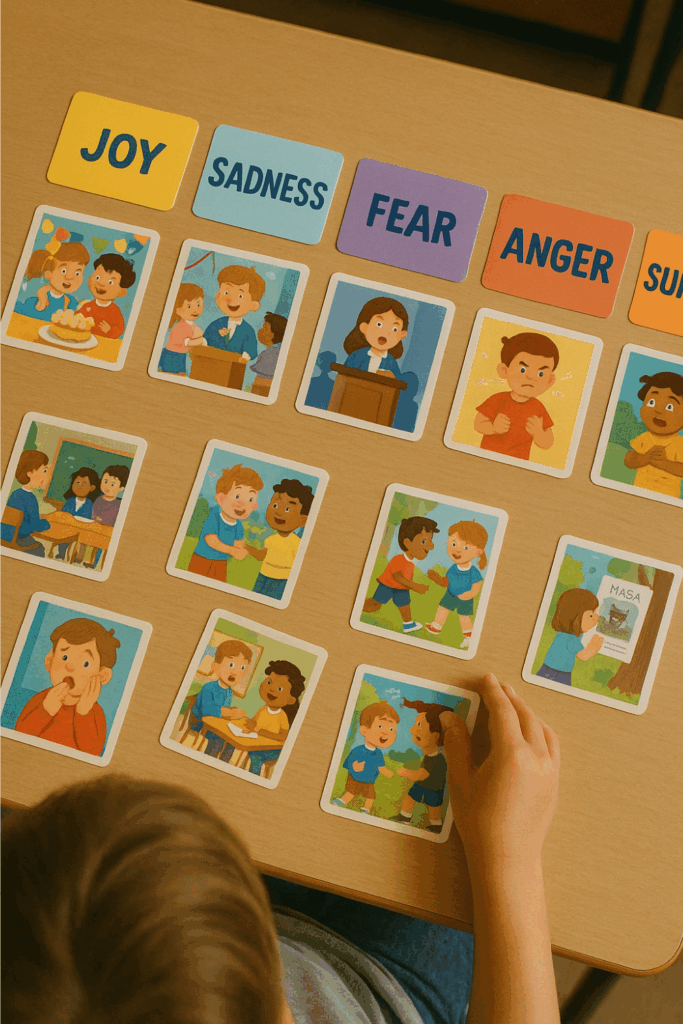
4. Emotion Sorting Activity
Help children connect real-life situations to the feelings they create.
Give small groups a collection of scenario cards or pictures showing different situations – like a child at a birthday party, someone who’s lost their favorite toy, or a student giving a presentation. Children then sort these cards under emotion headers such as joy, sadness, fear, anger, or surprise, discussing why each situation might make someone feel that way.
What you’ll need: Scenario cards or pictures (you can use photos from magazines or draw simple situations), plus header cards or posters with different emotion words.
Why it works: This activity moves beyond just naming emotions to understanding what causes them. Children start making connections between events and feelings, which is a crucial step in emotional intelligence. The group discussions that naturally happen are often the most valuable part – children share their own experiences and realize that different people might feel different things in the same situation.
The bonus: As children debate where cards should go, they’re practicing perspective-taking and learning that emotions make sense based on our experiences. It also gives them a chance to think through strategies for handling tricky situations before they encounter them in real life.

5. Colour-Your-Feeling Journals
Give children a creative way to express what words sometimes can’t capture.
Each child keeps their own feelings journal where they can draw, scribble, or colour how they’re feeling each day. There are no rules. Blue swirls might represent sadness, jagged red lines could show anger, or rainbow spirals might capture excitement. The key is letting children create their own emotional language through art.
What you’ll need: Blank notebooks or journals for each child, plus coloured pencils, markers, or crayons.
Why it works: Not every child finds it easy to put feelings into words, especially when emotions feel big or confusing. Art gives them another pathway to process and express what’s happening inside. Over time, children often develop their own consistent ways of showing different emotions, which helps them recognize patterns in their feelings.
The bonus: When children share their drawings with a partner or small group, magical conversations happen. They start to see that everyone experiences the full range of emotions, and they often discover new ways to think about or describe their own feelings. It’s also a wonderful way for quieter children to participate in emotional discussions.
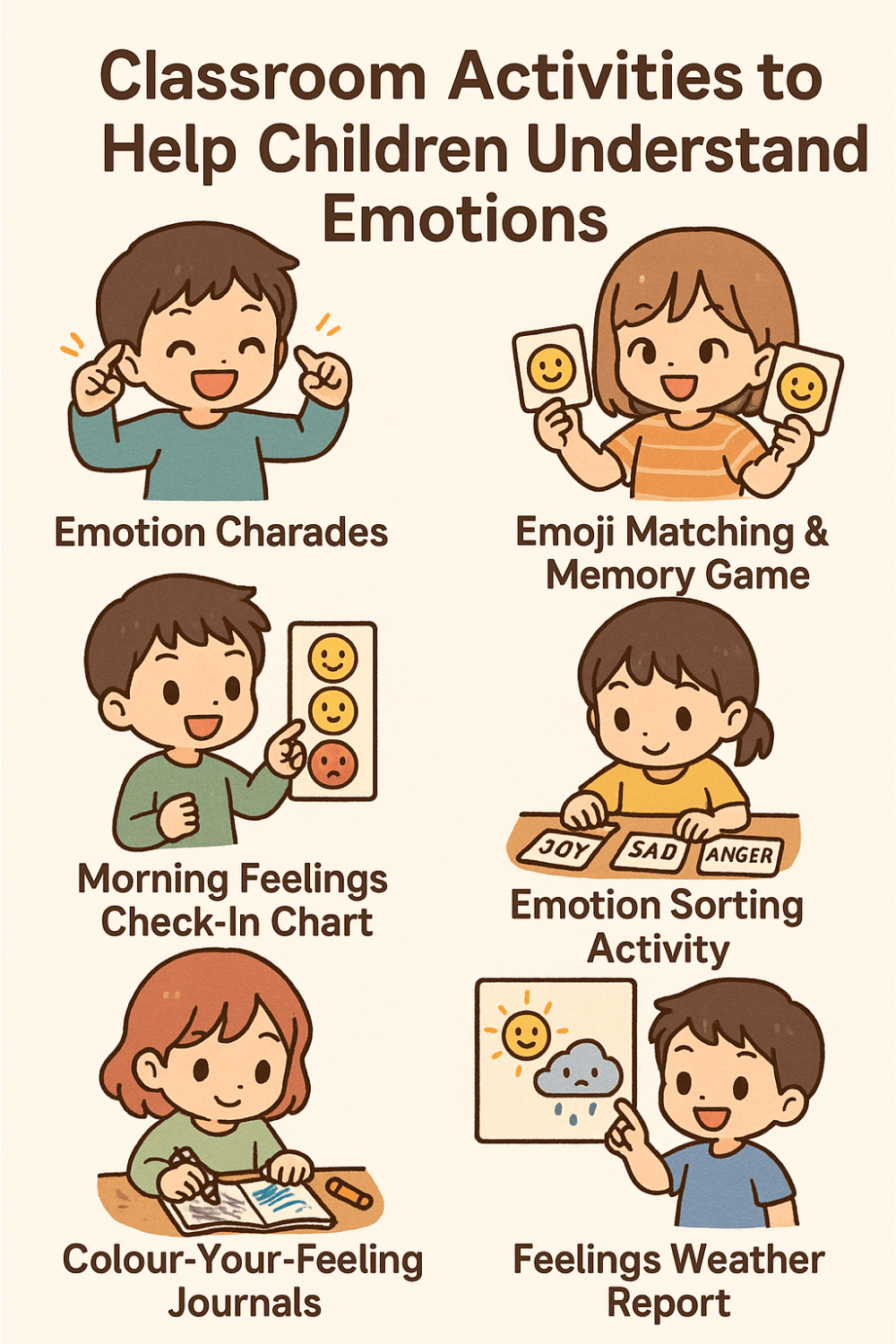
6. Feelings Weather Report
Each day, children become “weather reporters” for their emotions, describing their inner weather using meteorological terms. Are they feeling sunny and bright? Stormy with anger? A bit cloudy with confusion? They can draw their emotional weather on a whiteboard or paper, complete with weather symbols, and give a brief “forecast” to the class (but of course only if they choose to).
What you’ll need: Whiteboard or paper, markers, and a simple weather symbols chart (sun, clouds, rain, lightning, rainbow, etc.) for reference.
Why it works: Weather is something all children understand. It changes throughout the day and that’s completely normal. This activity helps children see that emotions work the same way. Just like we don’t try to stop the rain, we can learn to experience our emotions without fighting them. The weather metaphor also makes it easier for children to describe complex feelings.
The bonus: Children start to notice that emotions, like weather, are temporary. A stormy morning can turn into a sunny afternoon, and knowing this helps them ride out difficult feelings with more confidence.
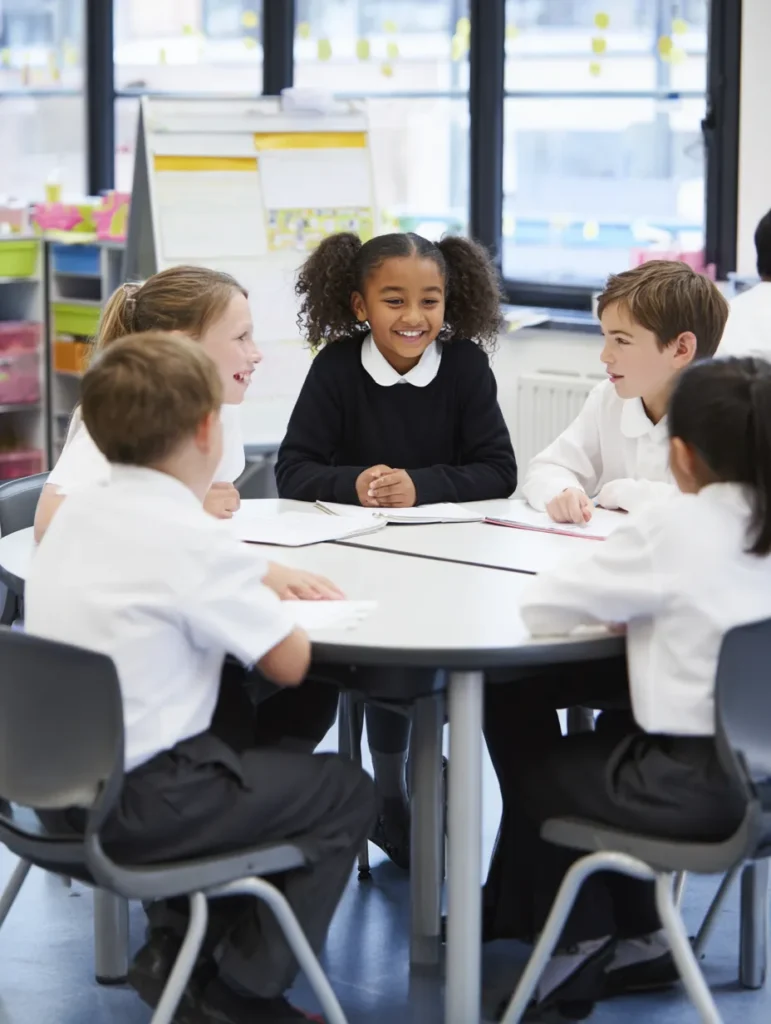
7. Quick Body Scan
Help children discover the connection between their feelings and their body.
Lead children through a simple body scan where they close their eyes (or soften their gaze) and notice how different parts of their body feel – starting from their toes and moving up to their head. Guide them to simply observe whatever sensations arise without trying to change anything or deciding if the feelings are “good” or “bad” – just noticing with curiosity, like they’re friendly detectives exploring their own body. Encourage them to breathe naturally and remind them that there’s no right or wrong way to feel during this practice. If their mind wanders or they feel restless, let them know that’s completely normal and they can gently bring their attention back to the part of the body you’re focusing on together.
What you’ll need: A quiet space, mini-whiteboards or emotion scale posters, and about 3-5 minutes.
Why it works: Children often don’t realize that emotions show up in their bodies – tight shoulders when stressed, fluttery stomachs when nervous, or heavy arms when sad. The body scan teaches them to tune into these physical clues, which is the first step in learning to manage big emotions before they take over.
The bonus: Once children can spot the early physical signs of emotions, they can use this skill throughout the day to catch feelings early and choose how to respond.
If you’re interested in bringing mindfulness to your school in a bigger way, check out the brilliant Mindfulness in Schools Project.
Support Beyond the Classroom: End Emotional Outbursts Online Parenting Course
The emotional skills children develop in the classroom need reinforcement at home to truly flourish. As a teacher, you might find that some parents are looking for additional support when it comes to managing their child’s emotions outside of school.
My on-demand mini course for parents, End Emotional Outbursts, is a powerful resource to recommend to families who want practical tools and strategies to help their child process feelings and reduce emotional meltdowns.
The course includes bite-sized video lessons, printable PDF resources, and real-life examples designed to empower parents in their journey. It can be completed in only around an hour.
Discover the End Emotional Outbursts Course here.

Related Articles
Empowering Autistic Children: Top 10 Autism Classroom Ideas For Every Teacher and Parent to Know
Conversation Starters For Kids: Ideas For Every Age And Stage
Window of Tolerance Worksheet: Children’s Emotion Regulation
Dr Lucy Russell is a UK clinical psychologist who works with children and families. Her work involves both therapeutic support and autism assessments. She is the Clinical Director of Everlief Child Psychology, and also worked in the National Health Service for many years.
In 2019 Lucy launched They Are The Future, a support website for parents of school-aged children. Through TATF Lucy is passionate about giving practical, manageable strategies to parents and children who may otherwise struggle to find the support they need.
