
Conversation Starters For Kids: Ideas For Every Age And Stage

It’s often tricky to get children and teens to open up, whether you’re a parent or a teacher. You want to help them build confidence, connect with others, and express themselves, but you might feel stuck for words.
As a clinical psychologist and mum, I understand these challenges. That’s why I’ve gathered my favourite conversation starters for kids, grouped into age-appropriate themes you can use at home or school.
These ideas are grounded in psychology and real-world experience. Each theme includes tailored suggestions for ages 5–7, 8–12, and 13–17. You’ll find practical examples, plus advice on making conversations easier and more meaningful, whatever your setting.
Why Conversation Starters Matter
Conversation starters for kids are so much more than ice-breakers. They create safe spaces for children to practise social skills, build emotional understanding, and strengthen relationships.
Whether you’re focusing on building conversation skills at home or supporting social emotional learning at school, questions that invite sharing information can help every child thrive. With regular practice, these conversations can boost self-worth and help children feel truly heard.
Feelings And Emotions
Supporting children’s emotional vocabulary is vital for self-understanding and positive mental health. Here are some ideas for each age group.
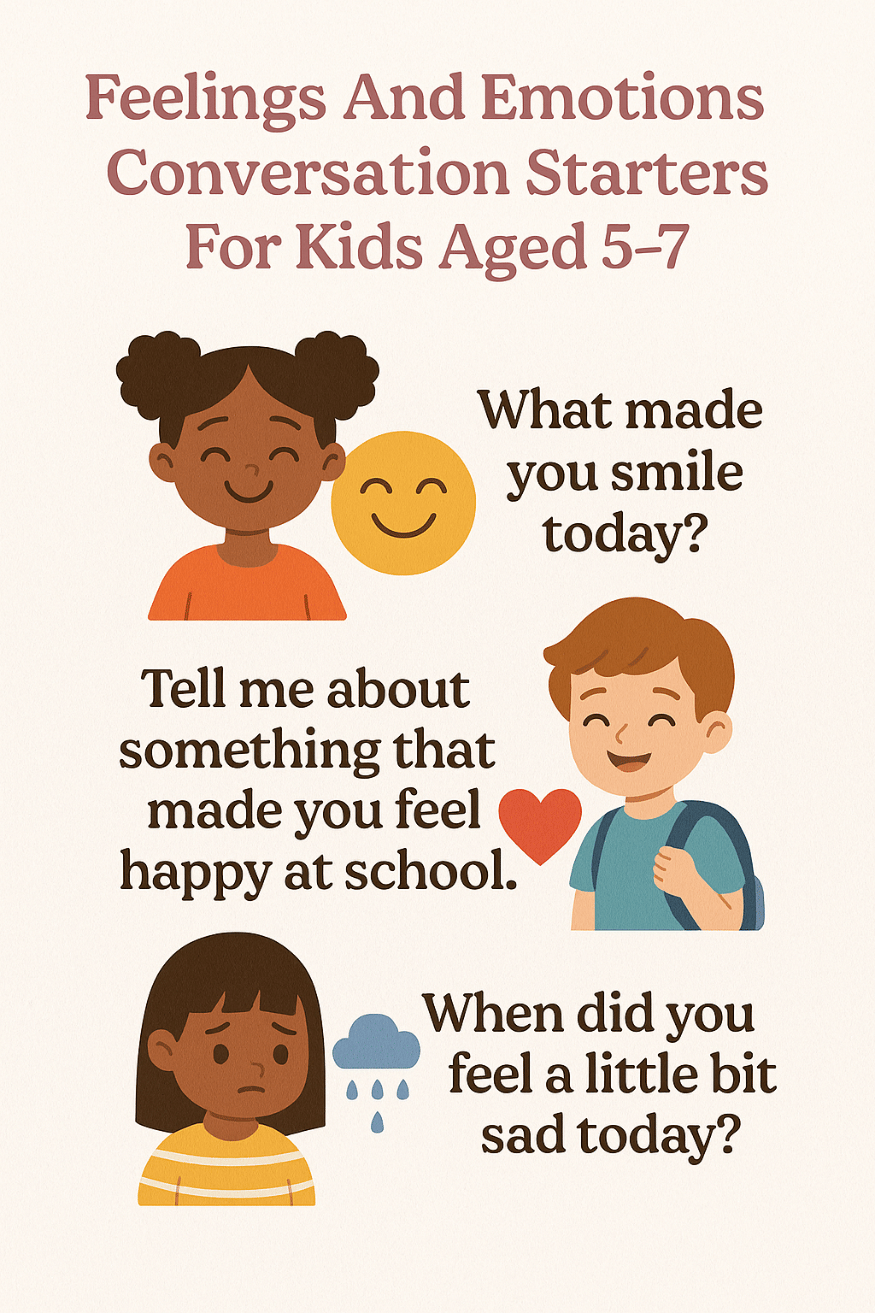
Ages 5–7
What made you smile today?
Tell me about something that made you feel happy at school.
When did you feel a little bit sad today?
Ages 8–12
Can you describe a time you felt really proud recently?
How do you feel when you try something new?
What’s something that helps when you feel worried?

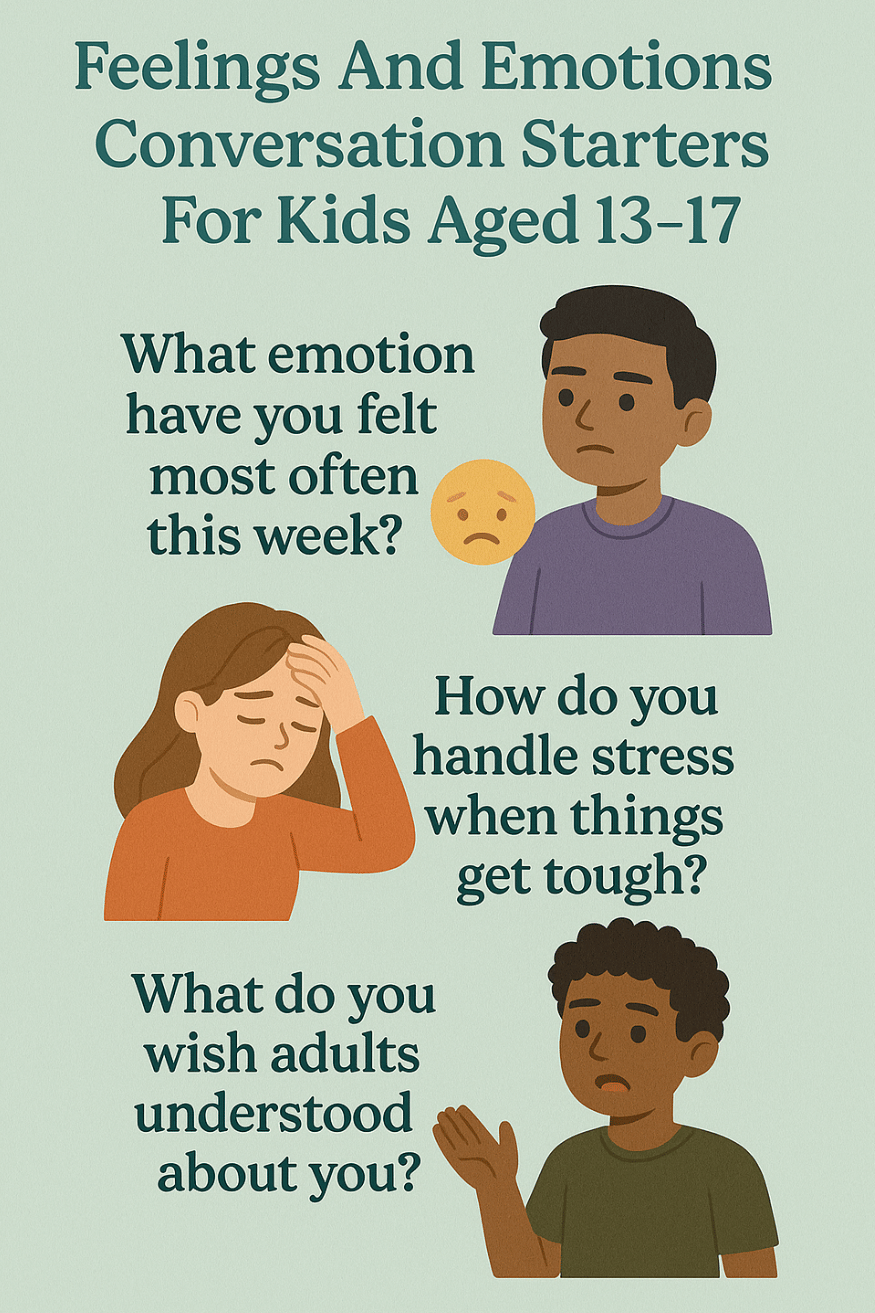
Ages 13–17
What emotion have you felt most often this week?
How do you handle stress when things get tough?
What do you wish adults understood about your feelings?
These conversation questions for kids are perfect for both families and classrooms, and help children reflect and express themselves in a safe, supportive environment.
Imagination And Creativity
Open-ended prompts are best for unlocking creativity and having fun whilst building emotional skills. Try these fun conversation starters for different ages.
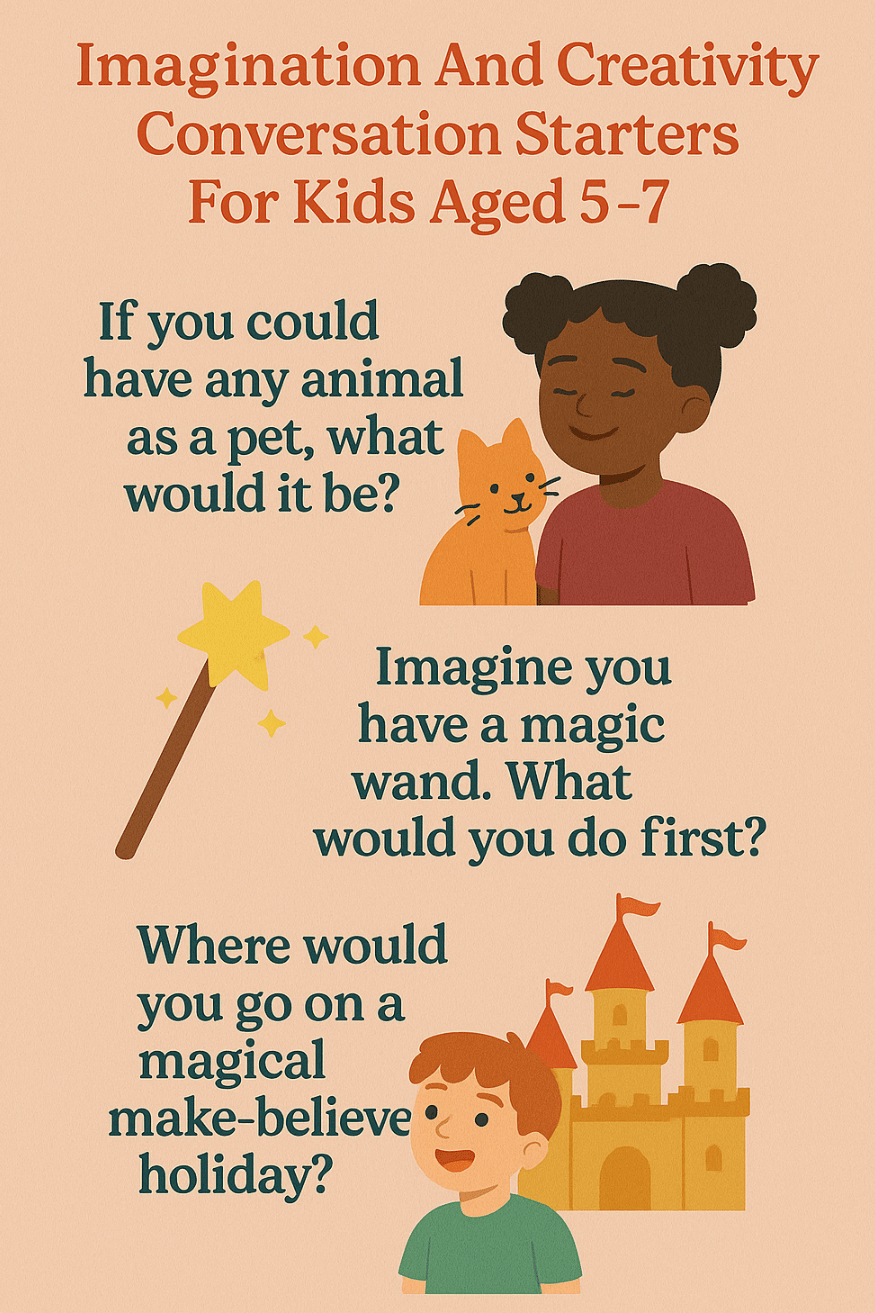
Ages 5–7
If you could have any animal as a pet, what would it be?
Imagine you have a magic wand. What would you do first?
Where would you go on a magical make-believe holiday?
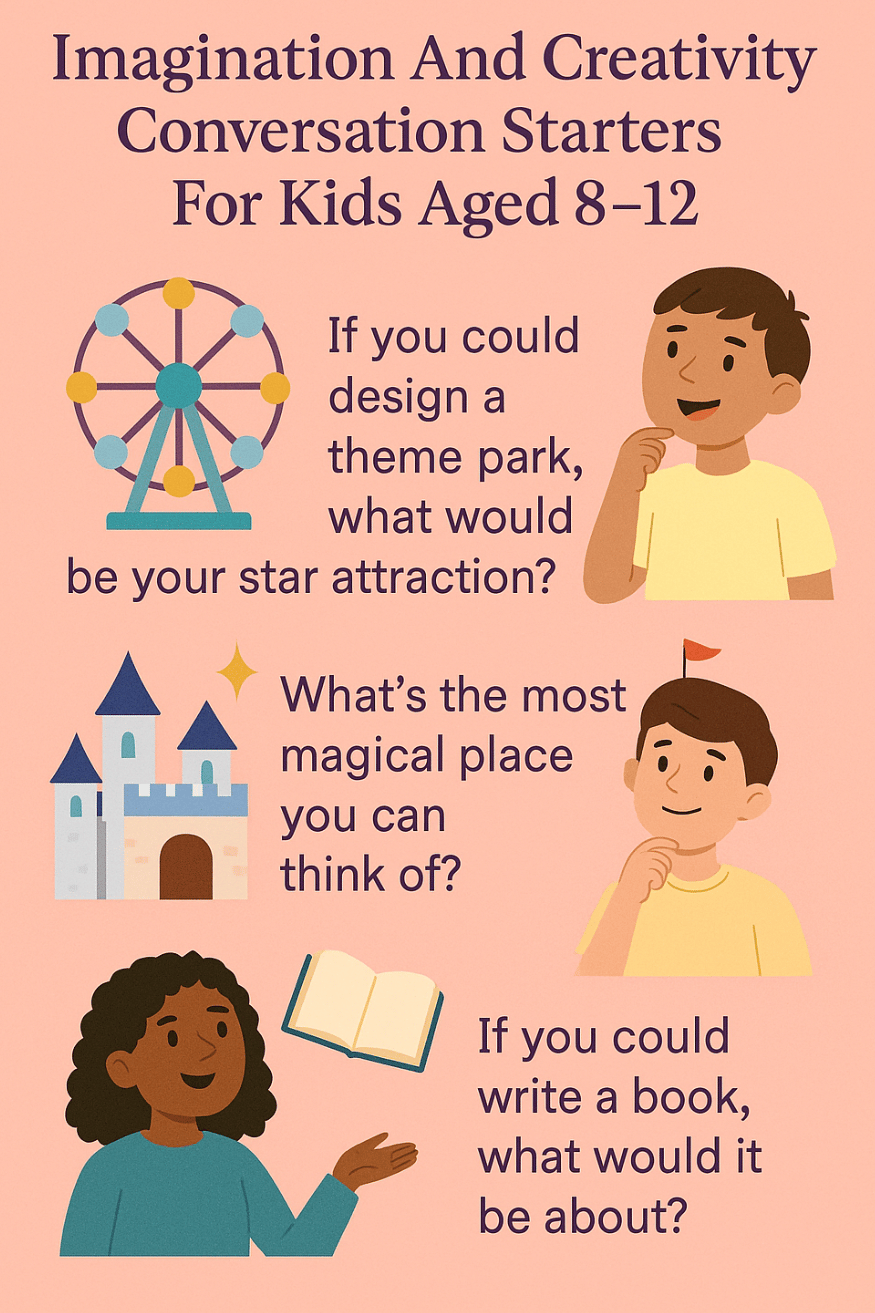
Ages 8–12
If you could design a theme park, what would be your star attraction?
What’s the most magical place you can think of?
If you could write a book, what would it be about?
Ages 13–17
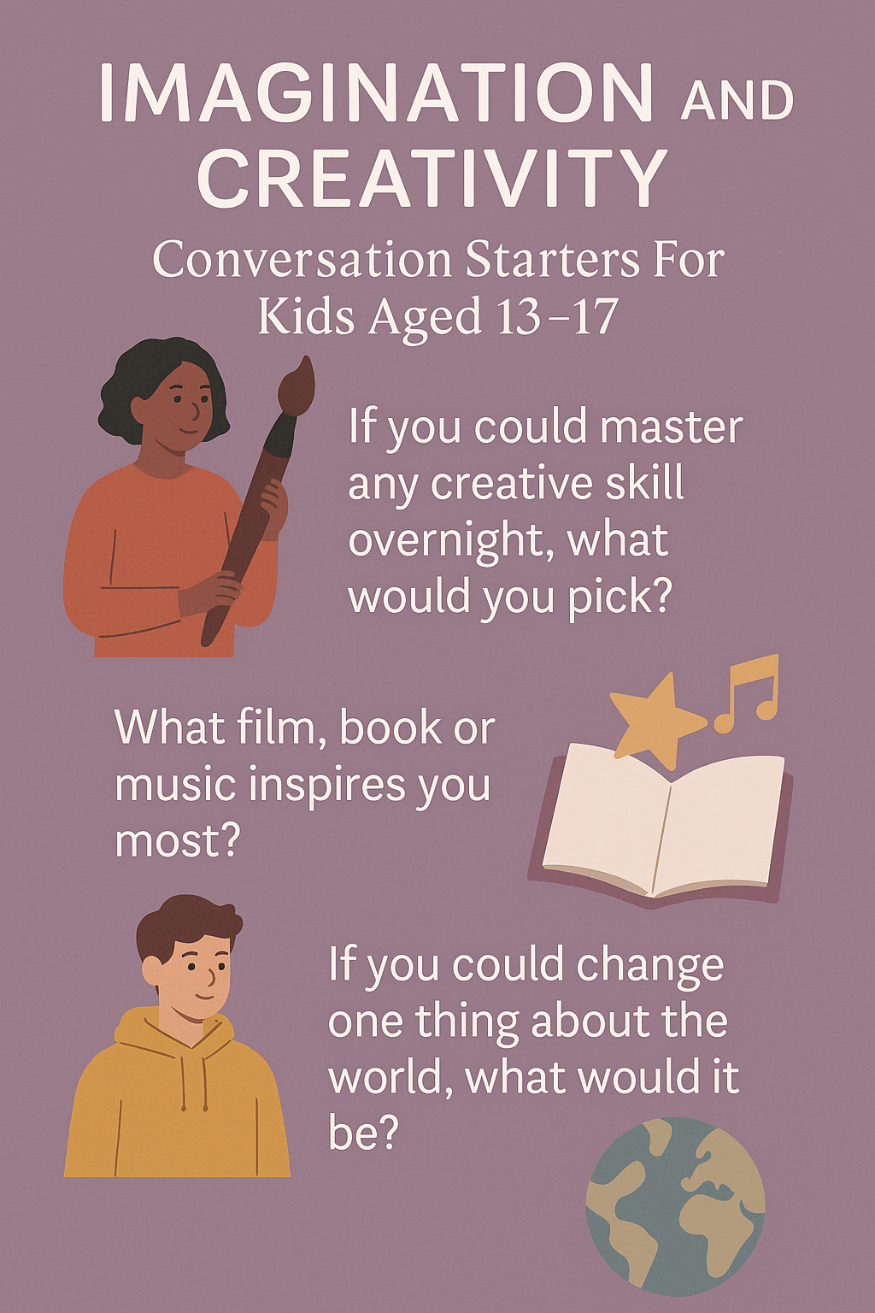
If you could master any creative skill overnight, what would you pick?
What film, book or music inspires you most?
If you could change one thing about the world, what would it be?
Use these prompts as conversation games at home or as writing warm-ups in class to encourage all children to think big and share their ideas.
Family, Friends And Relationships
These family conversation starters and friendship questions are designed for building empathy and social understanding.
Ages 5–7
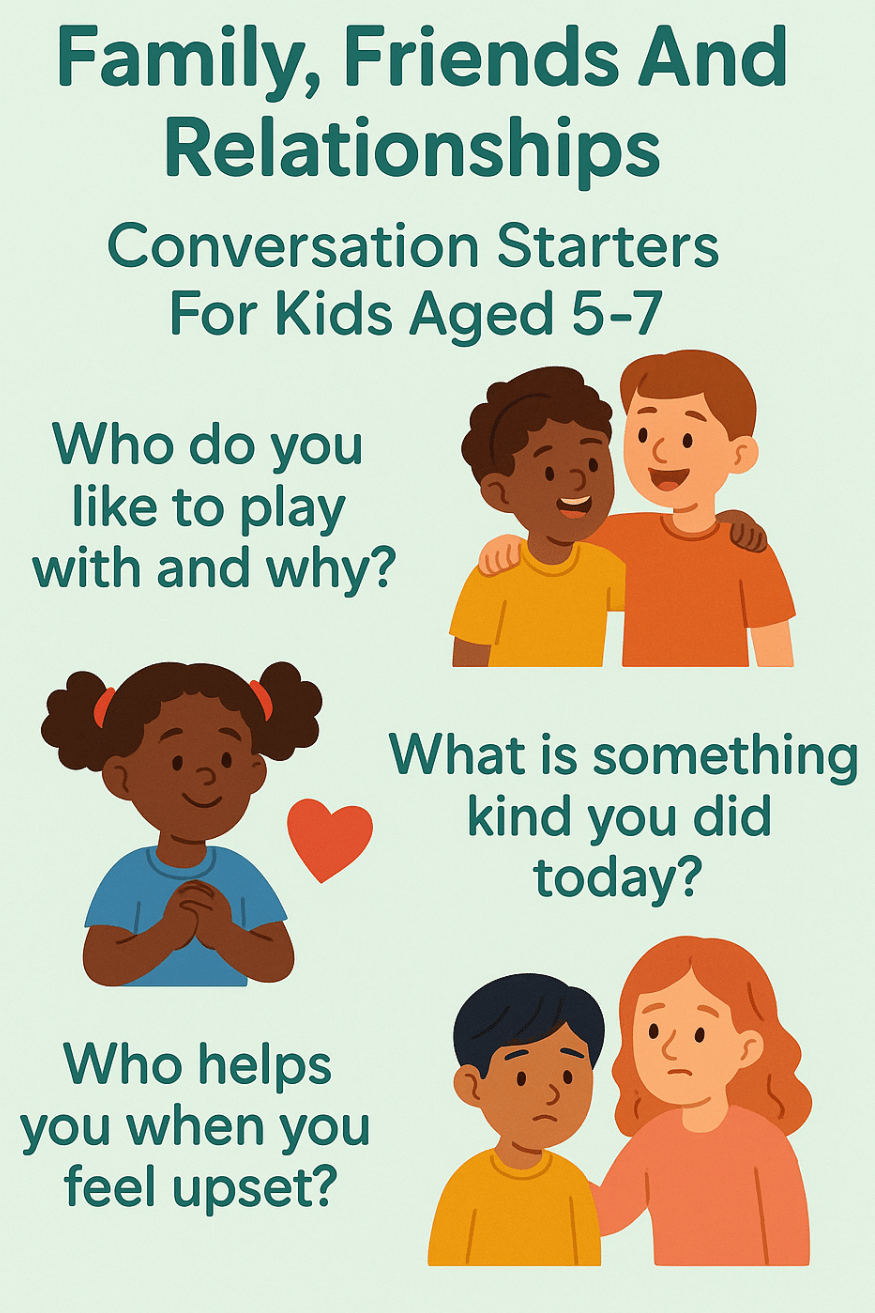
Who do you like to play with and why?
What is something kind you did today?
Who helps you when you feel upset?
Ages 8–12
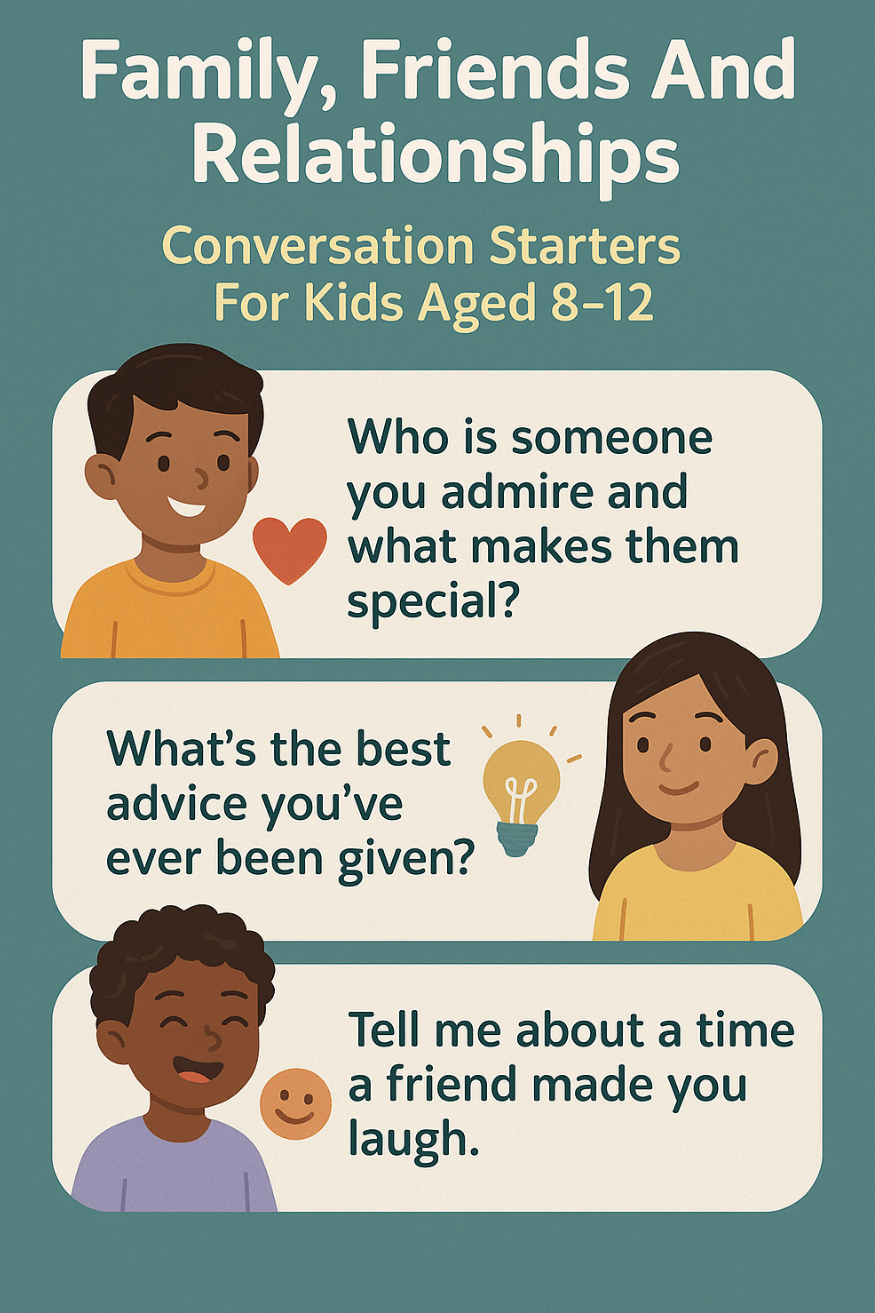
Who is someone you admire and what makes them special?
What’s the best advice you’ve ever been given?
Tell me about a time a friend made you laugh.
Ages 13–17
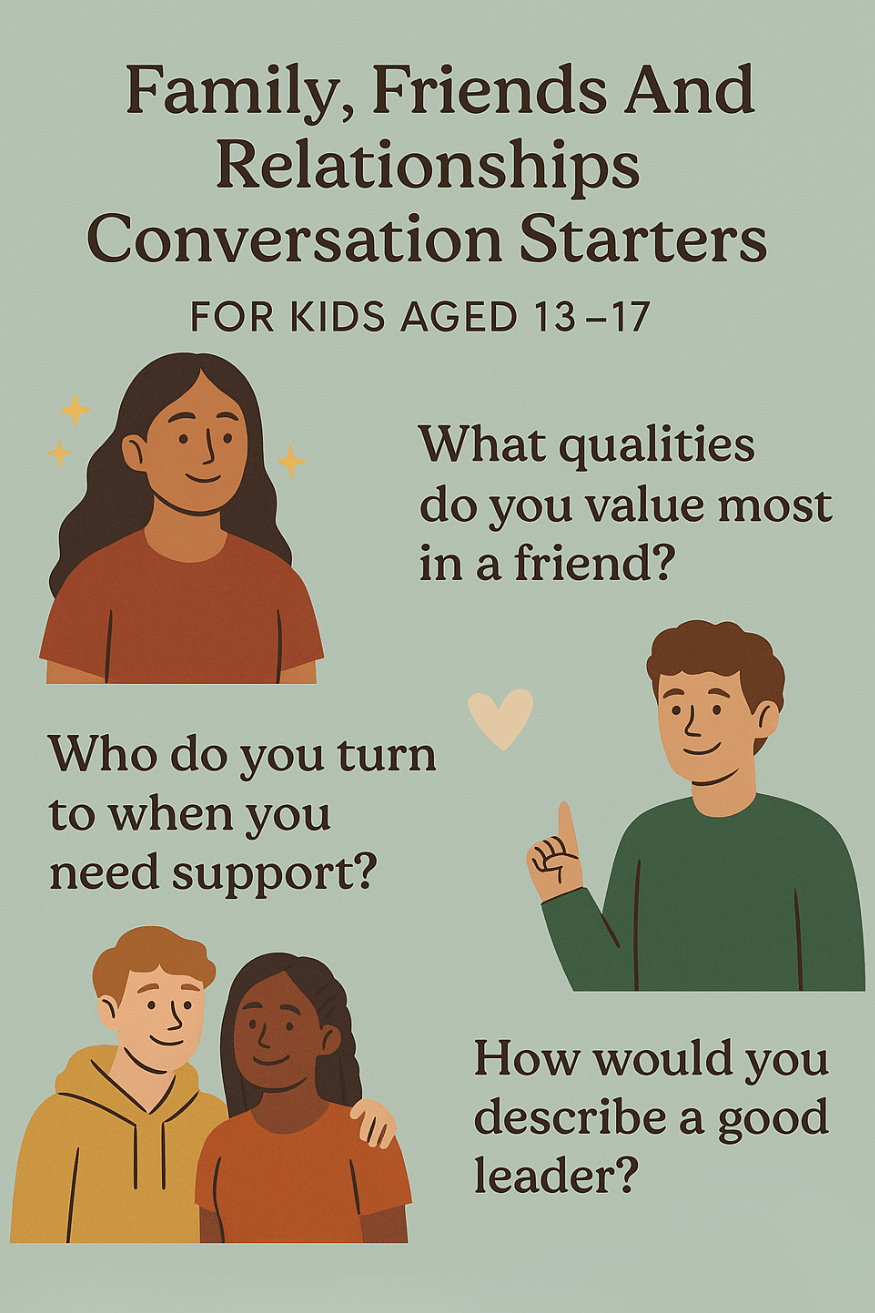
What qualities do you value most in a friend?
Who do you turn to when you need support?
How would you describe a good leader?
Conversations like these are so powerful for developing kindness and respect, and they work beautifully in group settings too.
School And Learning
Learning is, of course, about more than just results. Use these conversation starters to help children reflect on their learning and school experiences.
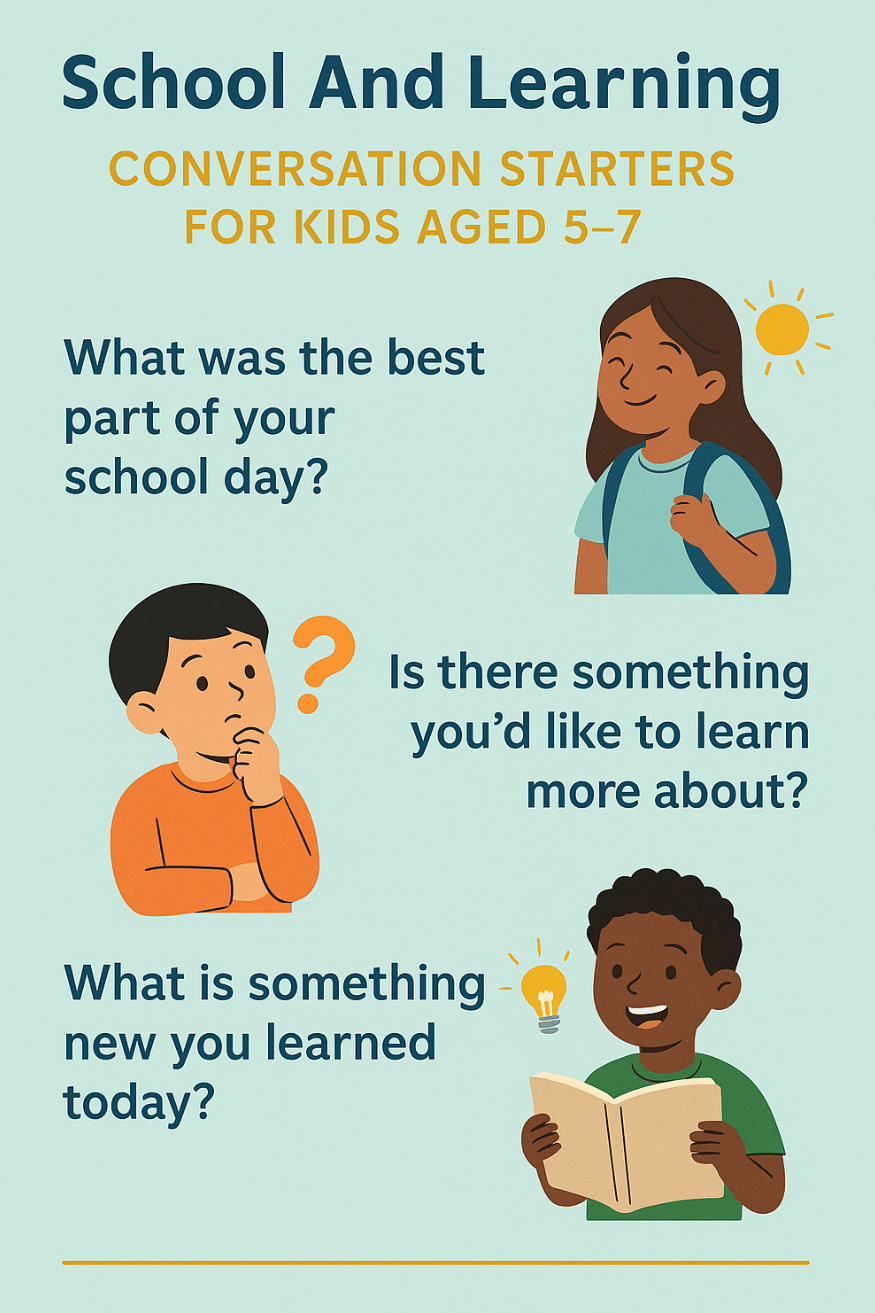
Ages 5–7
What was the best part of your school day?
Is there something you’d like to learn more about?
Can you show me something new you learned today?
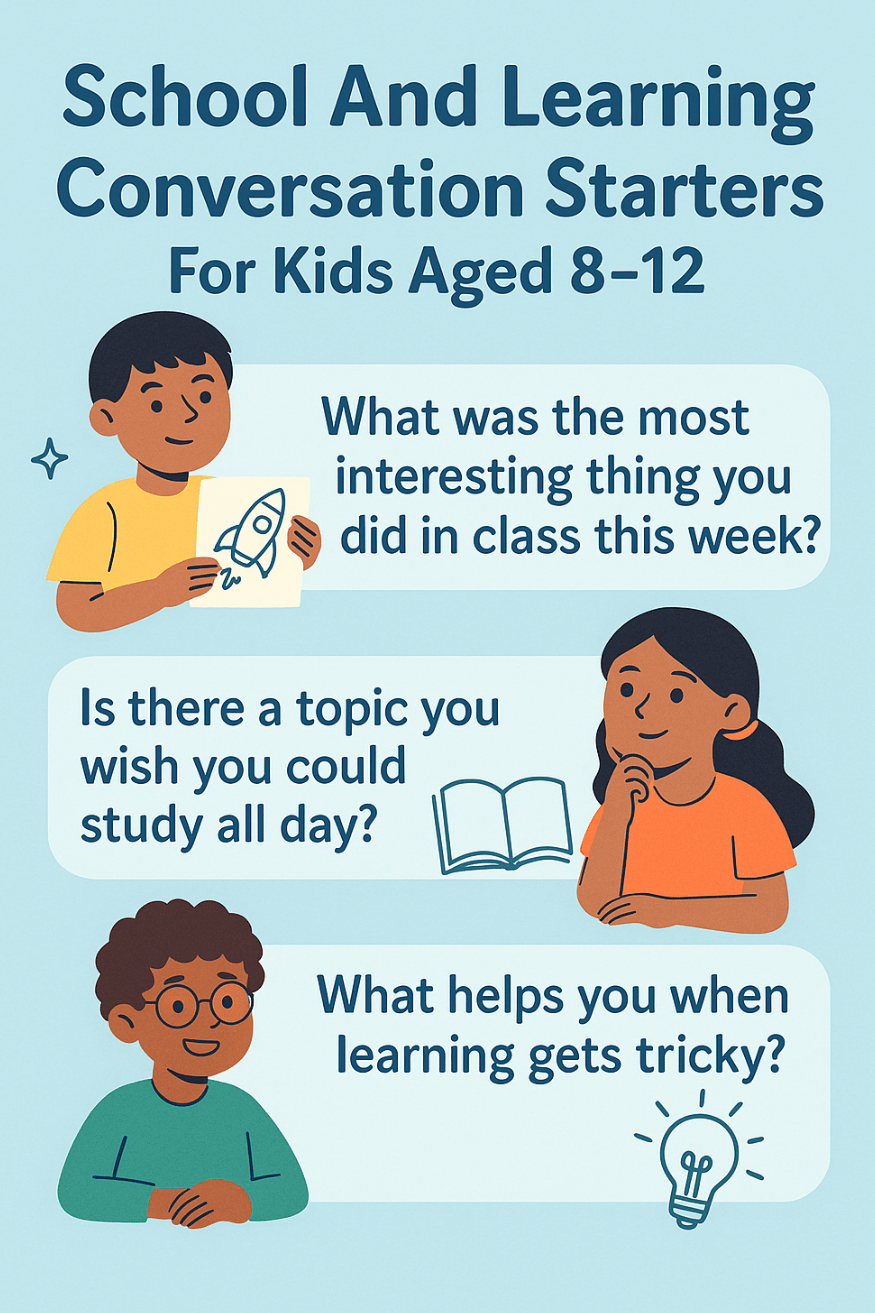
Ages 8–12
What was the most interesting thing you did in class this week?
Is there a topic you wish you could study all day?
What helps you when learning gets tricky?
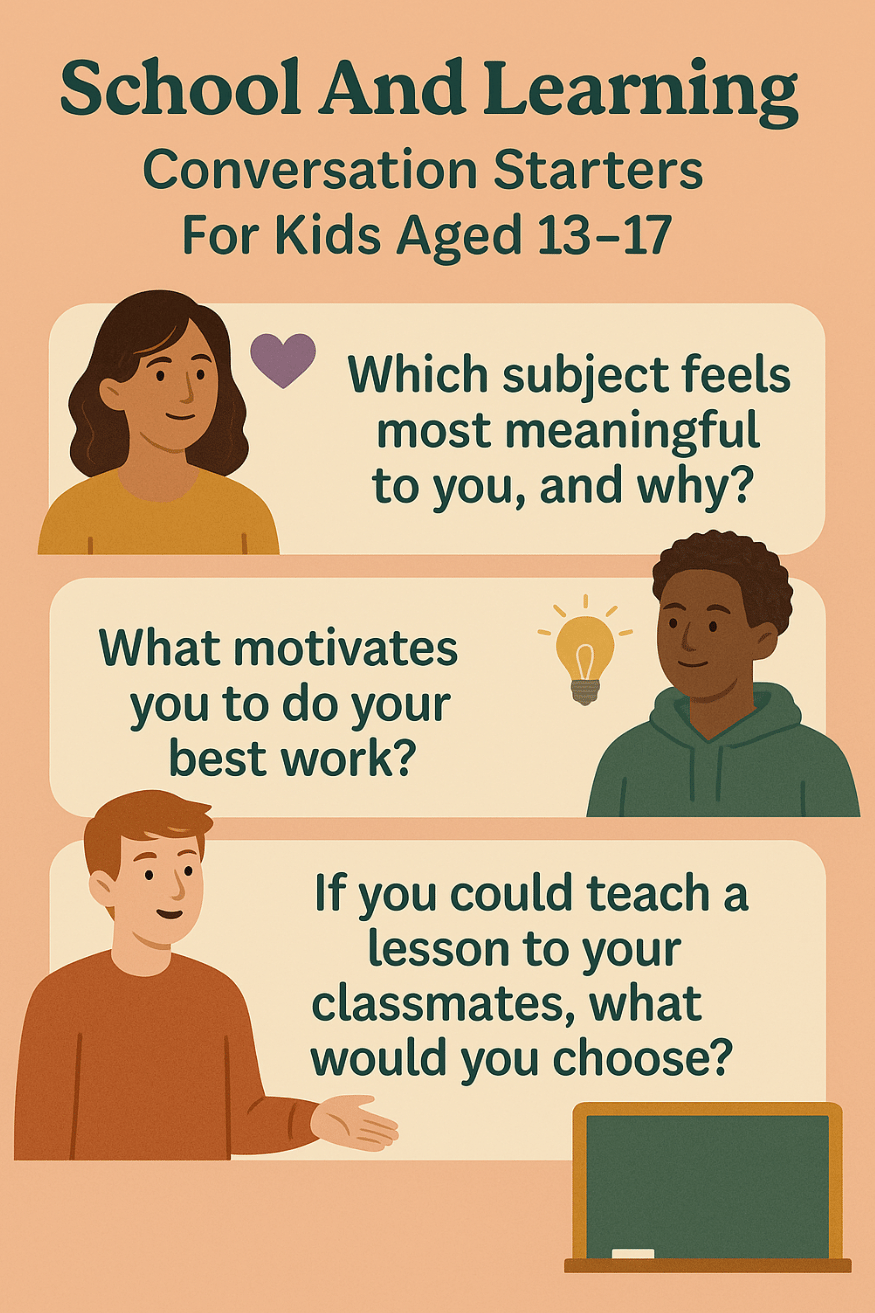
Ages 13–17
Which subject feels most meaningful to you, and why?
What motivates you to do your best work?
If you could teach a lesson to your classmates, what would you choose?
Questions like these help build confidence and open the door for children to share struggles -and celebrate progress.
Hopes, Dreams And Aspirations
Thinking about the future helps children develop purpose and resilience. These conversation starters are perfect for dreaming and goal-setting.
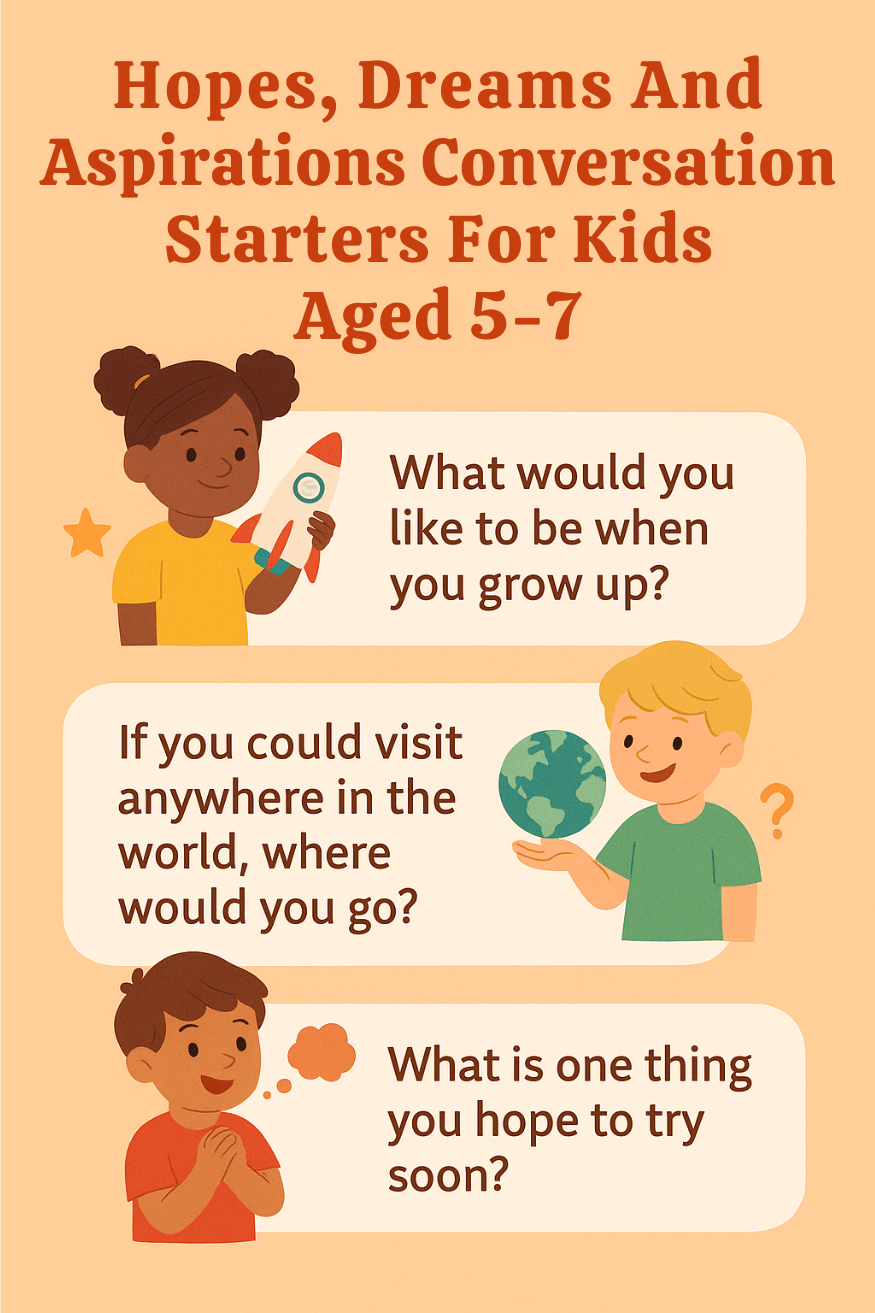
Ages 5–7
What would you like to be when you grow up?
If you could visit anywhere in the world, where would you go?
What is one thing you hope to try soon?
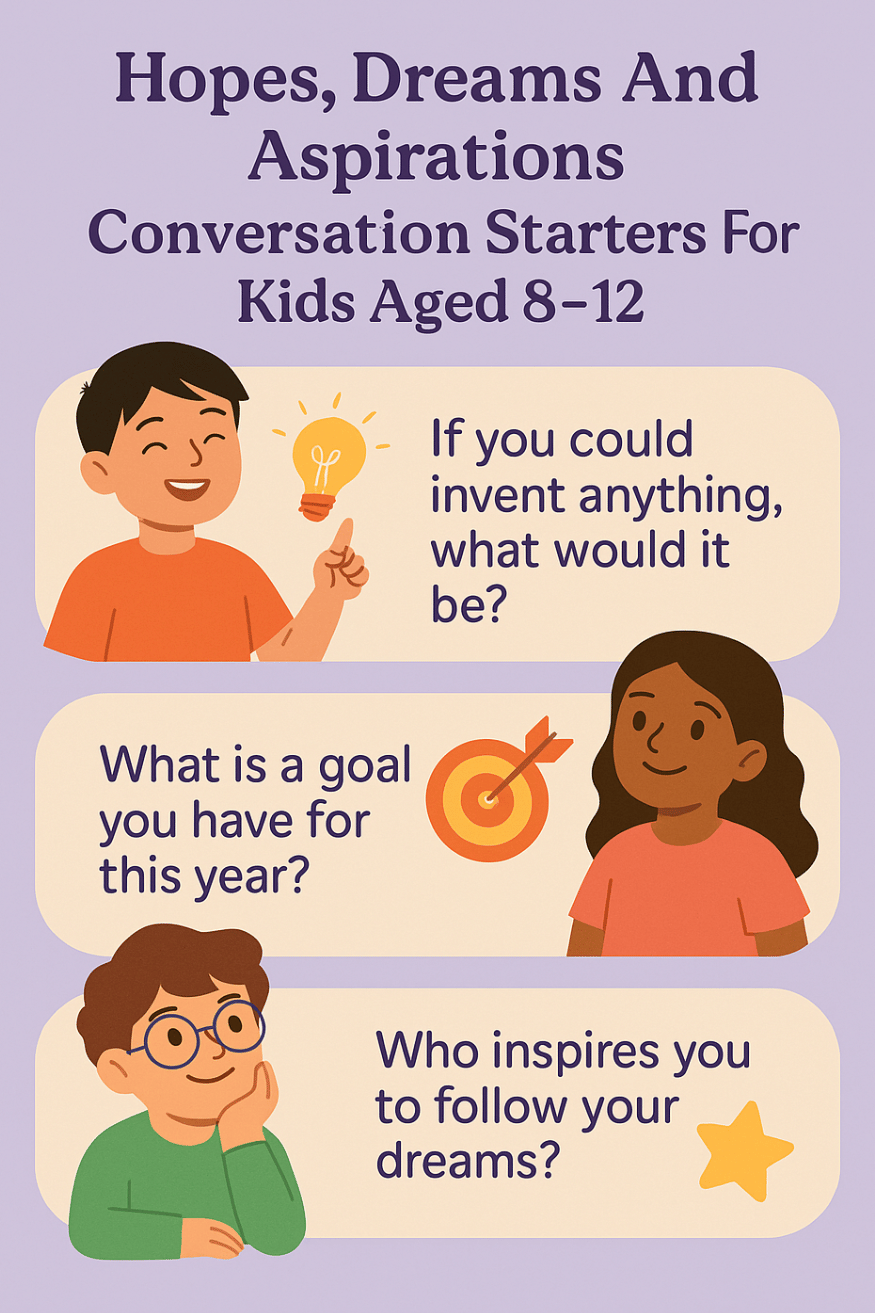
Ages 8–12
If you could invent anything, what would it be?
What is a goal you have for this year?
Who inspires you to follow your dreams?
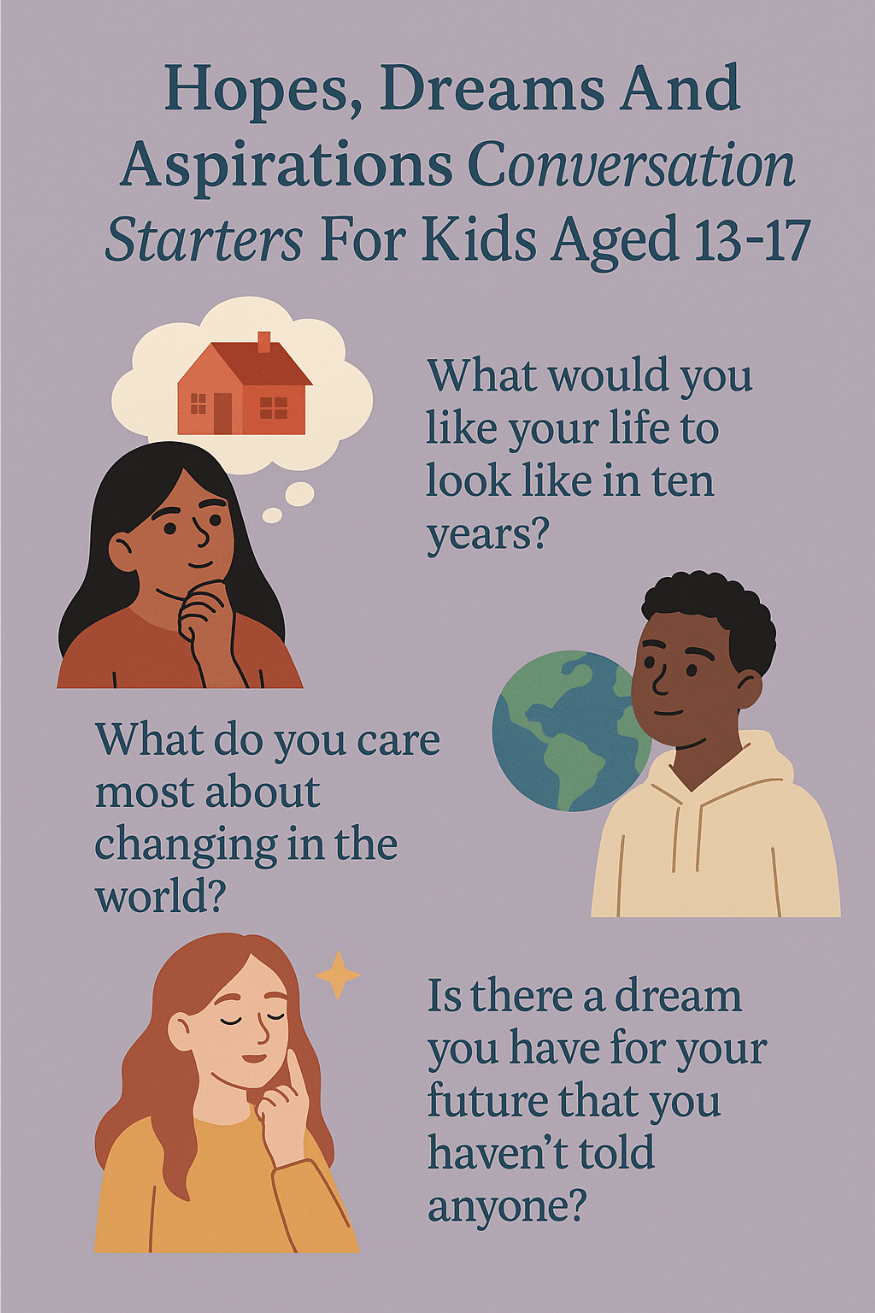
Ages 13–17
What would you like your life to look like in ten years?
What do you care most about changing in the world?
Is there a dream you have for your future that you haven’t told anyone?
Encouraging these conversations at home and in school helps children build hope and motivation, and can be the basis for thinking through the steps to achieve their goals an dreams.
Tips For Making Conversation Starters Work
Start with relaxed moments, like mealtimes, walks, or classroom circle time. Let children answer in their own way and never rush or judge their responses. Remember, good conversation starters are just the beginning. Listen with interest, follow up on their ideas, and celebrate every small step.
If you’re looking for practical ways to nurture children’s confidence and sense of self, my on-demand Self Worth Workshop offers bite-sized video lessons, expert guidance, and downloadable resources that you can use right away.
You can complete the whole thing in less than 30 minutes and keep it forever!

Whether you are supporting children at home or in the classroom, the workshop provides step-by-step tools to help children recognise their strengths, feel good about themselves, and build healthy communication. You can explore everything the workshop has to offer here.
Every meaningful conversation helps children develop emotional strength, curiosity, and trust. Try introducing a new question each day, and watch your children or students grow in confidence, connection, and self-worth.
Related Articles
When Your Child Can’t or Won’t Talk About Their Feelings
Emotions & Feelings Activities for Children
Dr Lucy Russell is a UK clinical psychologist who works with children and families. Her work involves both therapeutic support and autism assessments. She is the Clinical Director of Everlief Child Psychology, and also worked in the National Health Service for many years.
In 2019 Lucy launched They Are The Future, a support website for parents of school-aged children. Through TATF Lucy is passionate about giving practical, manageable strategies to parents and children who may otherwise struggle to find the support they need.
