
Brilliant Study Tips For A Successful Academic Year

Some days, studying feels like climbing a mountain. But there’s an art to effective studying that most young people are never taught, and it’s definitely not one size fits all. With the right approach, you can make it more manageable, and even enjoyable.
In this article I focus on the areas that make the biggest difference, including learning actively, and experimenting with strategies to keep studying fresh.
I’m Dr Lucy Russell, clinical psychologist and founder of They Are The Future. Over the past twenty plus years I’ve supported many hundreds of families, and I know that studying isn’t just about hard work. It’s about using the right strategies at the right time.

Learn Actively, Don’t Just Read
Many students tell me they revise by reading notes again and again. Sadly, that’s one of the least effective ways to learn. Learning actively means doing something with the information, not just looking at it.
Teaching Someone Else Helps YOU Learn
One of the most powerful strategies is pretending to teach someone else. Or, of course, you could actually teach someone else, such as a friend who is struggling with that subject!
When you explain your science homework out loud – even to an imaginary friend or your bedroom wall – something magical happens. You instantly spot the bits you know inside-out and the parts where you stumble.
This active approach locks information into your memory far better than reading quietly to yourself.

Flashcards Help Your Brain Hold On To Information
Flashcards are another excellent tool. If you write one idea per card and test yourself regularly, information moves from short-term to long-term memory. Shuffle them, ask a friend or family member to quiz you, or test yourself in quick bursts. It makes revision flexible and fast.
Presentations, Mind Maps and Other Imaginative Strategies Aid Learning
You might also make a short presentation for yourself, as though you’re the teacher. Or try designing a colourful mind map to show how ideas connect. Another powerful technique is turning headings into questions and answering them from memory.
If you’re a parent or teacher supporting a younger child, keep it fun and playful. They might act out a history lesson with toys, or draw a comic strip to explain a science concept. Anything that makes learning more enjoyable and memorable.
When you engage different parts of your brain – visual, creative, and logical – information sticks better. Plus, creative methods make studying more enjoyable, so you’re more likely to actually do it.

Common Study Challenges And Solutions
Studying is rarely smooth sailing. We all face hurdles like procrastination (putting it off), overwhelm, perfectionism and memory gaps.
The good news?
Each one can be tackled with simple strategies.
Procrastination is often the hardest. Have you ever put off starting because the task feels huge? The trick is to shrink it. Remove distractions, then begin with just two minutes of effort. Most of the time, once you start, you’ll find it easier to keep going.
Overwhelm can strike when there’s just too much on your plate. Write a very short list of tasks, then pick one and finish it. Crossing it off gives you a sense of progress and makes everything feel lighter.
Perfectionism is another common block. Do you ever spend ages polishing before the basics are even done? Try aiming for progress first, then refining later. “Good enough” is often more than enough to keep moving forward.
Memory gaps show up when you think you know something but can’t recall it later. The best fix is teaching the material to someone else. Explain it to a sibling, parent or friend, then check your notes together to fill in what you missed. Each time you do this, your confidence grows.
Remember: challenges are part of learning, not signs of failure. By naming the problem and testing out a solution, you’ll build resilience and belief in your own ability.

Extra Study Tips To Try: My Recommendations
Once you’ve got the basics in place, these extra strategies will keep studying fresh and effective.
When to Study: Find Your Peak Study Hours
Pay attention to when you feel most alert during the day. Some people focus best in the morning when their minds are fresh. Others hit their stride in the evening or late at night.
There’s no universal “best” time. It’s personal. Try studying at different times and notice when information sticks better and you feel less distracted. Once you find your peak hours, use them for your most important study sessions.
Stay Organized
Write down your assignments and due dates as soon as you get them. Use whatever works for you: a physical planner on the wall with colour-coding, your phone’s calendar, or a simple notebook. The key is having one place where you can see everything at a glance.
Break big projects into smaller tasks with their own mini-deadlines. Instead of “write history essay,” try “choose topic by Tuesday, outline by Thursday, first draft by Sunday.” This makes overwhelming assignments feel manageable.
If you’re helping a younger student, create a visual homework chart or weekly family calendar where they can see their assignments and activities. Make it a routine to check and update it together each day.
When you’re not scrambling to remember what’s due when, you can focus on actually learning instead of just surviving.

Keep Motivation Steady
Set small daily goals you can actually achieve. Instead of “study all day,” try “finish 10 math problems” or “read one chapter.” When you hit your goal, give yourself a small reward. A 15-minute break, your favourite snack, or a quick walk outside.
These mini-celebrations might seem silly, but they train your brain to associate studying with positive feelings. Over time, this makes it much easier to sit down and get started instead of putting things off.
Work In Productive Bursts
Don’t force yourself to sit for hours. You will be much more productive overall if you do 30 minutes of focused work followed by a five minute break. Your brain will stay fresher and sharper.
Try Different Ways Of Studying
Experiment with how you learn best. Some people need complete silence and work better alone. Others understand concepts better when they can discuss them with classmates or explain ideas out loud to someone else.
Try reading notes quietly, then switch to studying with a friend or small group. Test yourself with flashcards one day, then try teaching the material to someone else the next. Pay attention to which methods help information stick and which ones feel like a struggle.
I used to study best when laying on the floor with all my books and papers in a circle around me. I drew colour-coded mindmaps for every topic, which my brain could visualise and hold on to!
The key is building a toolkit of different approaches so you can match your study method to both the material and your mood.
Transform Exam Stress Into Exam Success
All these study strategies work brilliantly, but anxiety can still get in the way when your child has to take an exam or test. If anxiety hits, the brain can go into fight or flight mode, and this can cause the mind to go blank.
If you’ve watched your child prepare well but then freeze up during tests, you’re not alone. Test anxiety can undo weeks of good preparation in minutes.
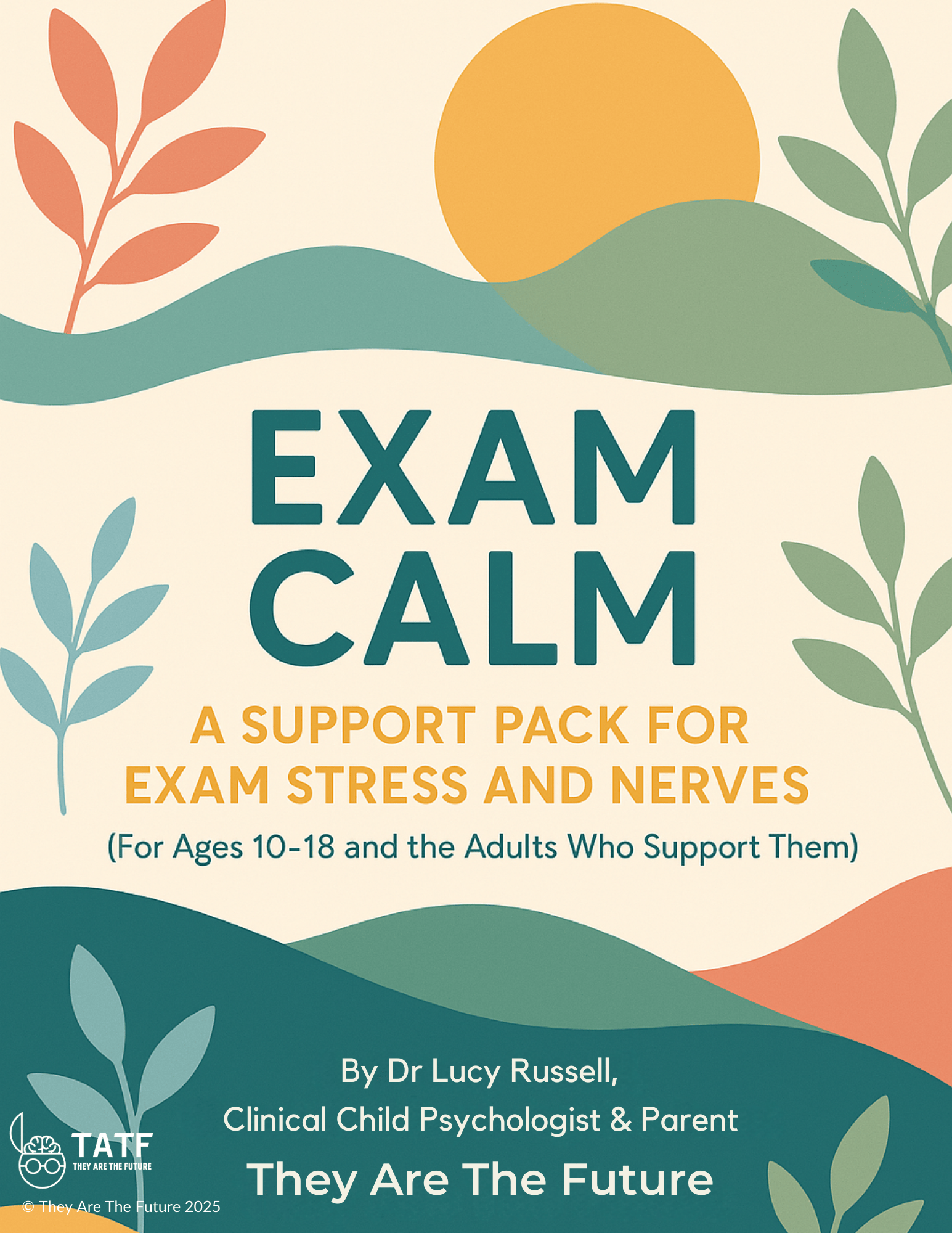
That’s why I created the Exam Calm Support Pack. It’s filled with practical techniques to help your child quiet their nerves and boost their confidence, both during revision and in the exam room itself.
As a clinical psychologist, supporting children and teens with anxiety has been the bread and butter of my work for more than twenty years, and I have shared the best science-backed strategies.
Related Articles
3 Secret Study Tips Every Parent Should Know About
School Stress: 5 Effective Ways to Support Your Child
28 Brilliant Exam Confidence Motivational Quotes for Students
Exam Day Tips: Essential Strategies for Your Child’s Success
Dr Lucy Russell is a UK clinical psychologist who works with children and families. Her work involves both therapeutic support and autism assessments. She is the Clinical Director of Everlief Child Psychology, and also worked in the National Health Service for many years.
In 2019 Lucy launched They Are The Future, a support website for parents of school-aged children. Through TATF Lucy is passionate about giving practical, manageable strategies to parents and children who may otherwise struggle to find the support they need.
