
Teach Kids How to Apologize (Even When They’re Stubborn)

Yes, you can teach children how to say sorry in a way that really means something. Not just a forced “sorry”, but an apology that shows they understand, care and want to make things right.
I’m Dr Lucy Russell, a clinical child psychologist and founder of They Are The Future. I help children understand themselves better and build strong social and emotional skills.
In this article, I’ll show you simple and practical ways to help children learn to apologize with confidence and kindness, whether you’re a parent or a teacher. If you want to help them feel good about themselves too, I’ll tell you about my Self-Worth Workshop, an easy and fun way to build their confidence from the inside out.

Why Teaching Kids to Apologise Can Be a Game-Changer
Getting your child to say sorry can feel like a battle. Maybe they refuse, or maybe they just mumble it and walk off.
But here’s the truth. Teaching children important life lessons like how to say sorry is about helping them connect with others and feel good about doing the right thing.
When your child learns how to apologise properly, they also learn:
- How their actions affect other people
- How to take responsibility without feeling ashamed
- That making a mistake doesn’t mean they are a bad person
This is what teaching ethics to kids really means. Not just following rules, but knowing how to treat others kindly and fairly.
Even better, being able to say sorry the right way is a huge social advantage.
Children who can say sorry properly are often seen as more kind, trustworthy and confident. They can fix problems in friendships. They know how to stay calm and sort things out. Other kids often look up to them and want to be around them.
In my work as a psychologist, I’ve seen how this simple skill can help children:
- Make and keep friends
- Be trusted and respected
- Feel proud of how they treat others
- Stay calmer during arguments or mistakes
Social and emotional skills like these don’t just help now. They help your child all through life.
What Is Empathy for Kids, and How Do You Teach It?
Empathy means understanding how someone else feels. But not all children pick this up easily, especially younger children or those who are neurodivergent.
You can help your child learn empathy with simple steps like:
- Asking, “How do you think they felt?”
- Saying, “Have you ever felt that way?”
You can also use books, toys or role-play games to act out situations and talk about feelings. These social emotional learning activities help your child see things from another person’s view and respond with kindness.
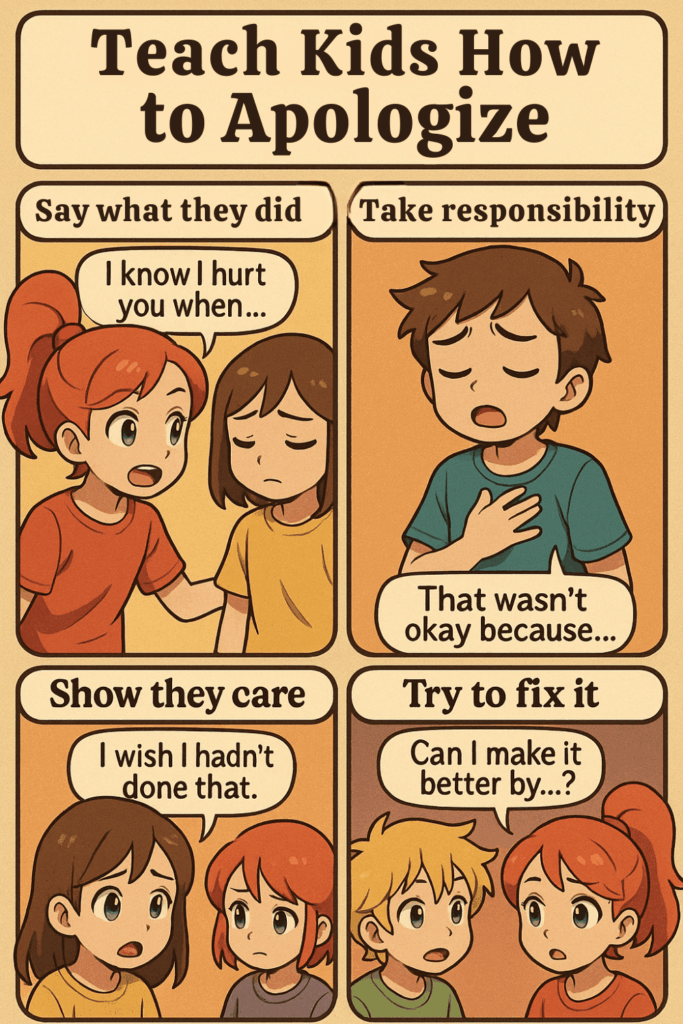
How to Apologise for Kids: A Step-by-Step Guide
If your child struggles to say sorry or doesn’t mean it when they do, break it down into these four steps:
- Say what they did: “I know I hurt you when…”
- Take responsibility: “That wasn’t okay because…”
- Show they care: “I wish I hadn’t done that.”
- Try to fix it: “Can I make it better by…?”
You can practise this with role play or storybooks. Talk about what a good apology sounds like and why it matters.
Easy Social Emotional Learning Lessons at Home
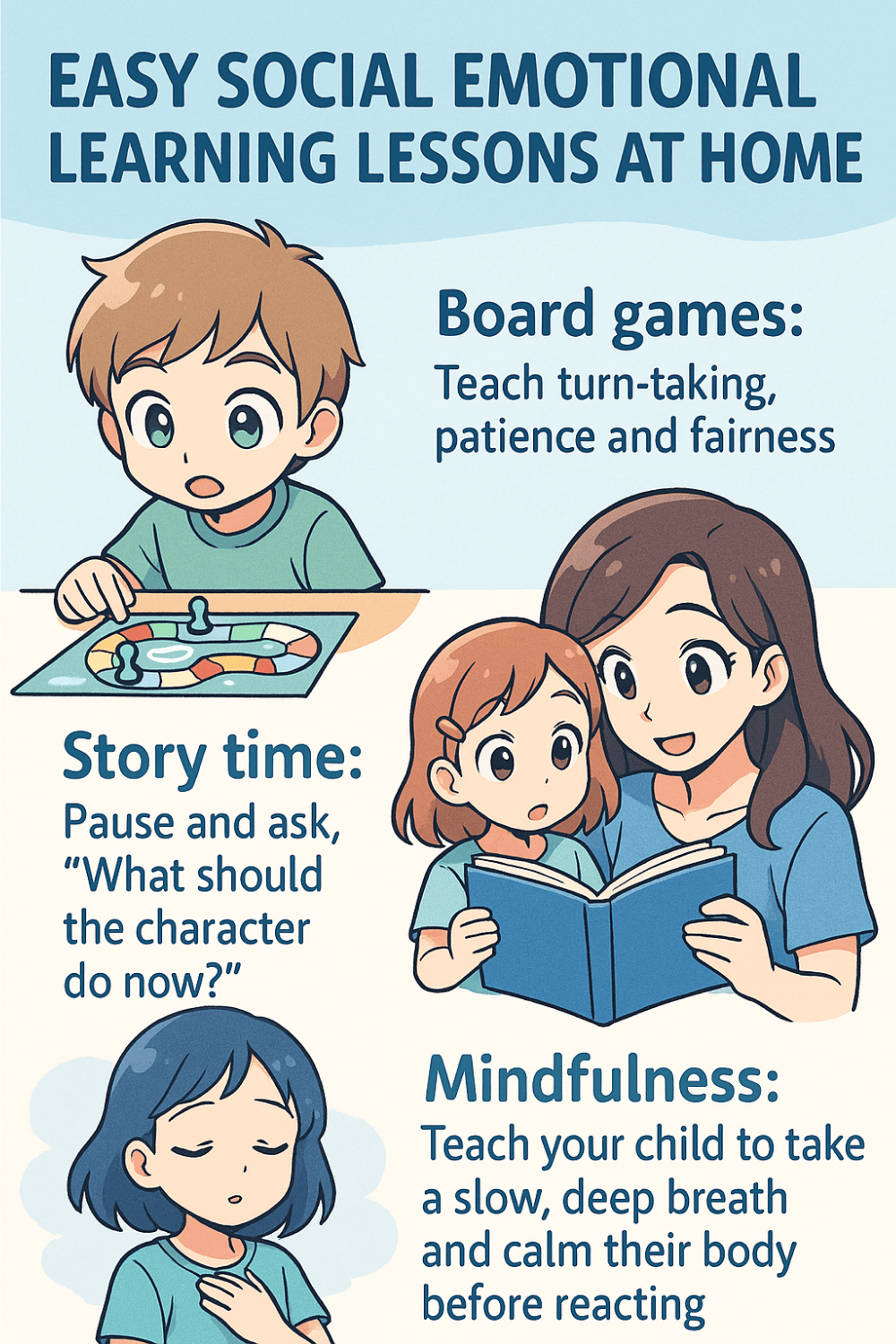
Your best tools for teaching these lessons are simple, everyday moments. These activities are great for building your child’s social and emotional skills:
- Board games: Teach turn-taking, patience and fairness
- Story time: Pause and ask, “What should the character do now?”
- Mindfulness for kids: Teach your child to take a deep breath and calm their body before reacting
These are powerful ways to teach empathy, honesty and coping skills without lectures or punishments.
Your Example Matters Most
You are your child’s biggest teacher.
When you say sorry after losing your temper or making a mistake, your child learns it’s okay to mess up, and it’s good to make things right.
Show your child how to say sorry in a kind and honest way. When you do, you help them feel safe and learn to do the same.
If apologising becomes part of everyday life in your home, your child will grow up seeing it as normal and positive.
Why Some Kids Find It Hard to Say Sorry
If your child avoids apologising, it might be because:
- They feel embarrassed or ashamed
- They don’t understand what they did wrong
- They’re scared you’ll be angry or disappointed
This is where smart parenting means slowing down. Help them understand the feelings involved first. Talk things through later when everyone is calm.
Remember, learning to say sorry is a journey. It takes time and practice.

From Apologising to Self-Worth: What Comes Next
A child who knows who they are and what matters to them is more likely to take responsibility and say sorry when needed. That’s why I created the Self-Worth Workshop, a short and fun workshop for you to watch with your 8 to 17-year-old.
In this workshop, your child will:
✔️ Discover what really matters to them (their values)
✔️ Build a strong sense of identity
✔️ Learn how living by their values makes them happier and more confident
✔️ Explore their strengths in a bonus lesson
It’s a gentle and uplifting way to help your child feel good about who they are, and learn to treat others well too.
The Self-Worth Workshop is just £15. You can watch it together as many times as you like. Click here to access the workshop

Teaching Kids How to Apologize: Small Steps Make a Big Difference
By talking about feelings, setting a good example and using everyday moments, you are already teaching kids moral lessons and building strong life skills.
Apologizing is such a powerful way to connect with others. And your child is learning how to do it one small step at a time.
Related Articles
Why Values Are Important For Children’s Mental Health (+ Free Values Cards)
What To Do If Your Child Shows a Lack of Remorse
7 Surprising Reasons Why Your Child Acts Out (And What To Do)
Dr Lucy Russell is a UK clinical psychologist who works with children and families. Her work involves both therapeutic support and autism assessments. She is the Clinical Director of Everlief Child Psychology, and also worked in the National Health Service for many years.
In 2019 Lucy launched They Are The Future, a support website for parents of school-aged children. Through TATF Lucy is passionate about giving practical, manageable strategies to parents and children who may otherwise struggle to find the support they need.
