
Why Every Child Needs Their Own Calm Space At Home (And How to Create One They’ll Love)

If your child struggles to unwind after a busy or overwhelming day, a personalized calm space could be the game-changer you did not know you needed.
This is a practical and proven way to help children regulate emotions, reduce anxiety, and feel safe.
In this article, I will walk you through step-by-step how to create a calm space for kids, even if you are short on time, budget, or space. I will also share clever sensory and decor ideas that actually work in real family life, along with tips for making sure the space truly belongs to your child.

Why a Calm Space Can Transform Your Child’s Wellbeing
Many children today live in a constant state of sensory overload. Busy school days, noisy environments, screens, and pressure to keep up all take their toll.
For autistic and ADHD children in particular, the world can sometimes feel too loud, too bright, and too fast.
A dedicated calm space for kids gives them:
- A predictable, safe spot to decompress
- Tools to manage big feelings before they escalate
- A sense of control so they can choose when and how to use it
The sense of ownership is just as important as the physical design. Involving your child in decisions builds trust and increases the chance they will use the space regularly.
I have seen children’s behaviour, mood, and sleep improve when they have access to a sensory calm down space or a small calm down corner at home that reflects their own tastes and needs.
It is not just for meltdowns. It is for everyday emotional balance. Like brushing teeth but for the nervous system!

Step 1: Choosing the Perfect Spot
Do not overthink this. You do not need a spare room or a fancy set-up. It can be a small space or corner.
Some of my favourite calm down corner small space ideas have been tucked into:
- The corner of a bedroom
- The space under a loft bed
- An alcove in the living room
- An under stairs area
Wherever you choose, aim for:
- Minimal distractions, away from the TV or heavy foot traffic
- Soft, consistent lighting. Natural light is lovely, but in the evenings calming lights work beautifully too
- A sense of privacy, even if it is just with a curtain or folding screen
Tip: Let your child be the one to test different locations. They may prefer a quieter spot than you expect or might like a corner where they can still see you nearby.
Step 2: Sensory Elements That Make The Calm Space
A sensory room for children works because it meets their nervous system where it is at. It helps them calm down instead of pushing through overwhelm.
You can create this effect at home with just a few well-chosen elements, but the key is to let your child guide you.
Lighting
- Soft lamps or dimmable fairy lights
- LED strips in calming colours, such as soft blue or warm white
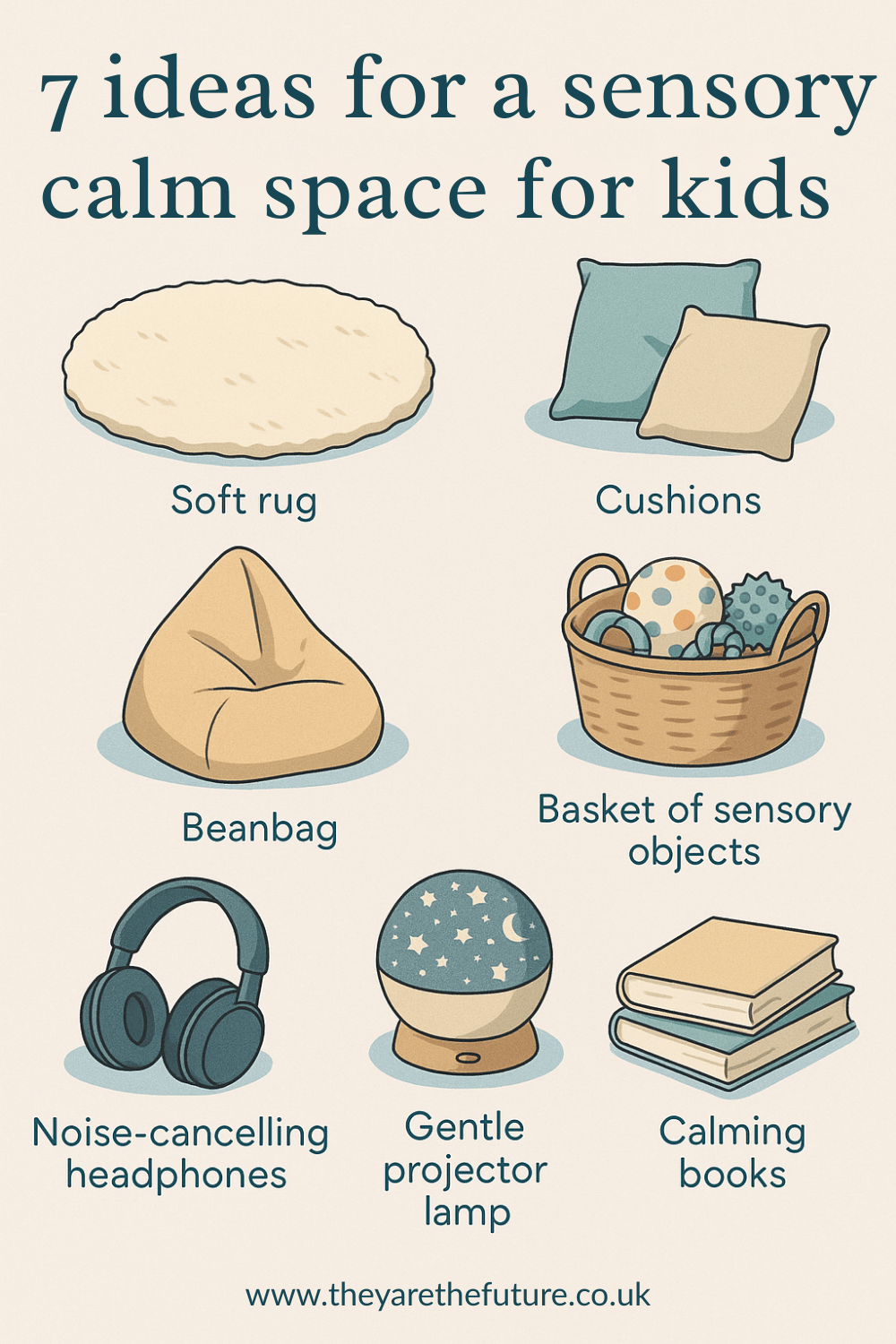
- Projector lights for a gentle moving pattern on walls or ceiling
Ask your child how they feel about different lighting options. Some children find dim light soothing, while others prefer a softly lit space where they can still read or draw.
Touch and Texture
- A soft rug for bare feet
- A mix of cushions, beanbags, and throws
- Fidget toys or a small basket of sensory objects
What you think is a cosy, soft rug might feel scratchy or uncomfortable to your child. Let them test textures before you commit. Some children prefer smooth surfaces, while others find deep, fluffy fabrics calming.
Sensory Ceiling Ideas
If you are feeling creative, hang paper lanterns, lightweight fabric drapes, or even an umbrella frame with fabric flowing down. This can add a cocoon-like feel.
Again, ask your child whether they like the idea of something above their head. Some children find it comforting, others may not.
Step 3: The Power of a Calm Colour Palette
Colours have a huge impact on mood.
For a calming corner set up, go for soft greens, blues, or muted pastels. Avoid bright reds and neons, which can overstimulate.
Nature elements can amplify calm. A small plant, a nature print on the wall, or even a jar of beach pebbles can make a difference.
If you are using a calm corner kit, swap in natural textures like cotton or jute.
Include your child in colour choices. They might surprise you by picking a shade that feels soothing to them, even if it is not a typical “calm” colour.
Step 4: Stocking the Space with the Right Tools
Every child’s simple calm down corner will look different. The most effective ones are stocked with items your child actually chooses and enjoys using.
Here are some tried-and-tested additions:
- Noise-cancelling headphones or a white noise machine
- A small weighted lap pad or blanket
- Books with calming themes or familiar favourites
- A mindfulness jar filled with glitter and water to watch settle
- A small box for comfort items such as a photo, a favourite toy, or a smooth worry stone
Invite your child to pick what goes in the space. They may prefer a particular book, a specific type of fidget toy, or a blanket with a certain weight or texture.
Step 5: Helping Your Child Actually Use Their Calm Space
A beautiful calm space is useless if it is ignored.
Many parents tell me they have set one up but their child only goes there during meltdowns. That is like only drinking water when you are severely dehydrated.
Instead:
- Introduce it during calm moments, not during crises.
- Model using it yourself. For example, “I am feeling a bit wound up, I am going to sit in the calm space for a few minutes.”
- Build it into daily routines such as before homework, after school, or before bed.
- Encourage your child to decide when they want to use it, so it becomes a place of choice, not a place they are sent to.
This regular use turns it into a proactive tool, not just an emergency fix.
Calm Spaces For Kids: The Hidden Problem Most Parents Miss
Here is where I want to gently challenge your thinking.
Many parents believe that giving their child coping tools like a calm space is enough.
But if your child’s baseline stress is constantly high because of sensory overload, unmet needs, or a lack of emotional recovery time, the calm space is like a sticking plaster, not a true fix.
In my work with families, I have found the most powerful changes happen when we combine a great calm space with small, daily adjustments to reduce overwhelm and restore balance to your child’s whole system. The most effective spaces are those children feel are truly theirs, shaped by their own choices and preferences.
That is exactly why I created my Reset Your Child’s Wellbeing mini course.

Your Next Step: Reset Your Child’s Wellbeing
If you want to go beyond managing meltdowns and help your child feel more regulated, resilient, and joyful every day, my Reset Your Child’s Wellbeing mini course will guide you step-by-step.
In under an hour, you will discover:
- The three daily shifts that lower your child’s stress levels naturally
- How to spot early signs of sensory or emotional overload before crisis hits
- Ways to adapt your home and routines so your child thrives without overhauling your whole life
It is practical, gentle, and grounded in my 20+ years as a clinical child psychologist supporting children and families.
And just like a well-designed calm space, it is something you can put into action straight away.
Join the Reset Your Child’s Wellbeing mini course here to give your child and yourself the tools to feel calm, connected, and in control again.
Related Articles
Calming ADHD Bedroom Ideas: A Parent Guide
Good Enough Parenting: Parents in the Real World
Help Your Child Thrive With Small Changes
Dr Lucy Russell is a UK clinical psychologist who works with children and families. Her work involves both therapeutic support and autism assessments. She is the Clinical Director of Everlief Child Psychology, and also worked in the National Health Service for many years.
In 2019 Lucy launched They Are The Future, a support website for parents of school-aged children. Through TATF Lucy is passionate about giving practical, manageable strategies to parents and children who may otherwise struggle to find the support they need.
