
Managing Autistic Child Behaviour at Home: A UK Parent’s Guide

When your child’s difficult behaviour is hard to understand, you may feel exhausted, worried, confused or guilty. Finding it difficult doesn’t mean you’re getting it wrong, whether your child has a diagnosis of autism (autism spectrum disorder) or is still waiting for an autism assessment.
Managing your autistic child’s behaviour at home starts with a different question. Instead of “How do I stop this?”, try asking, “What is my child finding hard right now?” Behaviour is communication, even when your child cannot explain it in the moment.
Try to move your focus towards safety, communication and helping your child cope with daily life. Many parents search for help with autism behaviour problems, but reframing behaviour as a form of communication, rather than a problem to stop, usually opens up more effective solutions.
Just a quick note here too… There’s no need to try to stop autistic traits and behaviours such as stimming, avoiding eye contact or needing solitude.
Managing Autistic Child Behaviour at Home: Start by Looking for the Need
The same behaviour can have completely different causes. Shouting might mean “this is too loud”, “I don’t understand”, “I feel ill”, or “I can’t cope with one more demand”. Many of these responses come from a mix of anxiety and frustration that your child cannot put into words.
Try using a simple ABC pattern for a few incidents, to see if you can spot any patterns:
- A is for antecedent, what happened just before.
- B is for behaviour, what you saw or heard.
- C is for consequence, what happened immediately afterwards.
Using this ABC strategy will help you spot what your child may be trying to manage. The NICE guidance on autism in under-19s recommends looking at physical health, mental health, communication, sensory factors and the environment when behaviour becomes challenging.
What Your Child May Be Communicating Through Behaviour
A child who pushes a worksheet away may not understand the instructions. A child who shouts in a busy kitchen may be overwhelmed by noise, smells and conversation. A child who refuses to leave the house may be struggling with a transition that feels far too sudden.
Behaviour is not always a conscious message. Your child is very unlikely to be planning to be difficult. Avoid assumptions such as “naughty”, “manipulative” or “attention-seeking”. Those labels can stop you seeing the problem underneath.
Pain is easy to overlook as a cause too. Consider potential sources like constipation, reflux, headaches, toothache, poor sleep, illness and medication side effects. These can all change behaviour. If something feels new, intense or out of character, speak to your GP.
Keep a Short Trigger Diary So Patterns Become Easier to See
For one week, jot down the time, place, people present, any demands that were asked of your child, sensory factors and early warning signs that they were stressed. Then record what helped and what happened next.
You may notice that difficult moments cluster around hunger, after school exhaustion, bath time, homework or leaving the house. That pattern gives you something practical to change. It also gives your GP, school or paediatrician useful information, so you’re not left trying to remember everything during a stressful appointment.
Create a Calmer Home With Sensory Support and Predictable Routines
Small changes at home can prevent a build-up of stress. Look at lighting, noise, smells, temperature, clothing textures, visual clutter and busy rooms. These things can feel like background details to you, but they may be the trickiest part of your child’s day.
Some autistic children avoid sensory input, while others seek it out through movement, chewing, pressure or sound. Your child might need both, depending on the situation. My article about understanding sensory overload and under-stimulation will help you make sense of what you’re seeing. Sensory sensitivities can shift over time, by setting, or even by day, so it’s worth revisiting what helps every so often.
Reduce Sensory Overload Before It Builds
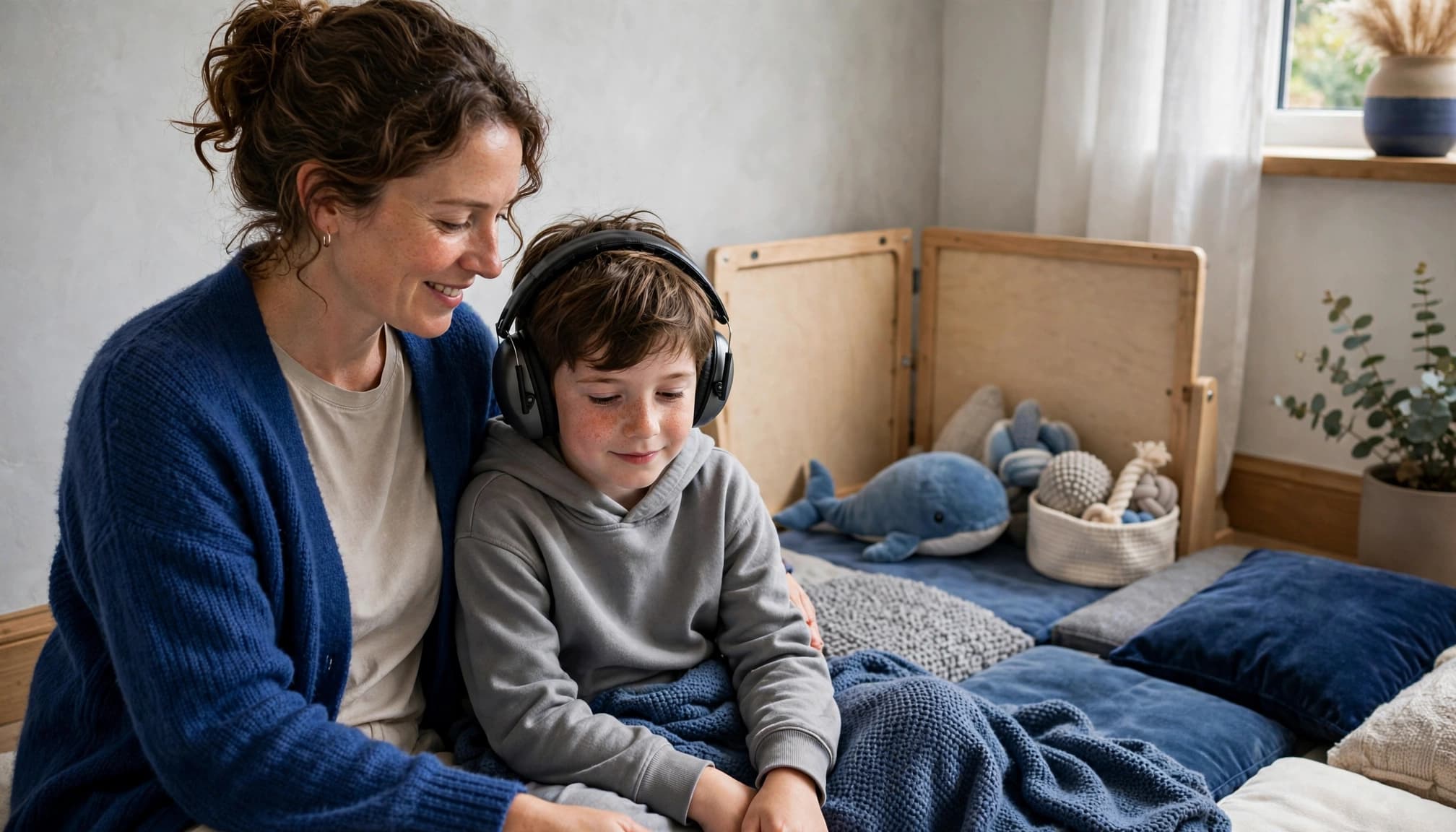
Early signs of sensory overload can be easy to miss. Your child may cover their ears, pace, repeat phrases, become unusually quiet, withdraw or move rapidly from one thing to another. Noticing this pattern is really important, because it is often the clearest early warning of difficult behaviour to come.
When you spot signs of sensory overload, reduce input where you can. Turn down lights, pause conversation, move away from noise and offer headphones or a familiar sensory item. A calm space (sometimes called a calming corner) with cushions, books or comforting objects can be helpful, and this should never be used as isolation or punishment. Left unaddressed, repeated overload can build into autistic burnout, where your child becomes exhausted, less able to cope and more prone to shutting down or escalating. Catching the early signs before burnout takes hold is one of the most protective things you can do.
A child who goes quiet is not always calm. Sometimes they are using every bit of energy to hold themselves together.
Use Visual Supports to Make the Day Easier to Understand
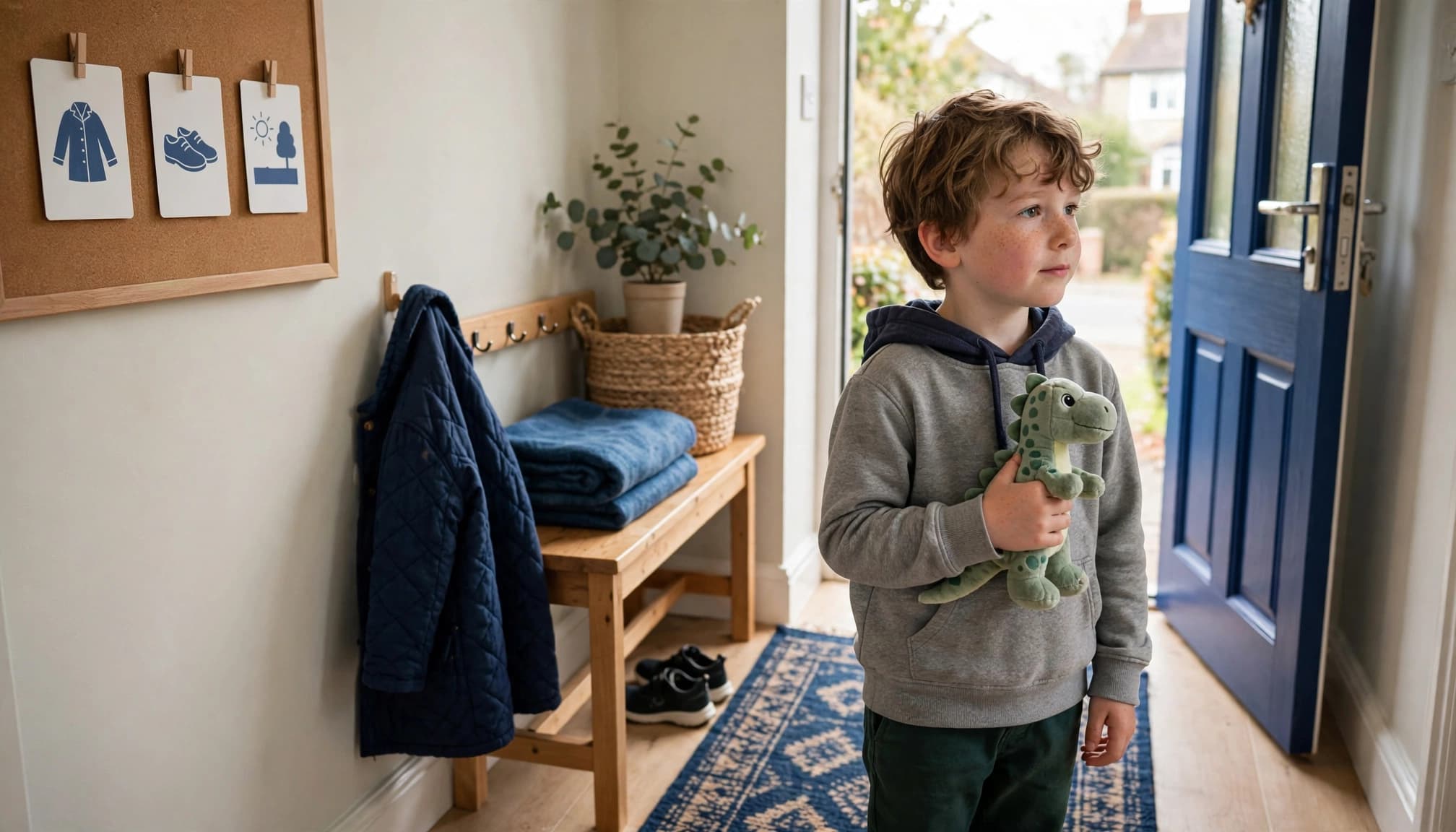
Visuals reduce the load on your child’s language processing and working memory. Try a simple timetable, “first-and-then” board, timer, written checklist or choice cards. Building these into a consistent daily routine helps your child know roughly what to expect, even on harder days. Social stories, written in simple first-person language, can also help prepare your child for a change before it happens.
For example, you might say, “First shoes, then the car,” while showing two pictures. Then pause. Give your child time to process. Repeating the instruction quickly, or adding more words, often makes the situation harder.
Use Communication and Transitions to Prevent Conflict
When your child is already stressed, long explanations can feel overwhelming. Use short sentences, one idea at a time and concrete language. A pause after your request is often more helpful than a second reminder. Difficulties are often most likely during transitions, so build in extra warning and processing time around them.
Validating your child’s feelings means letting them know you understand how they feel, even when the answer is still no. You might say, “I can see you don’t want to stop,” while keeping an important boundary, such as still needing to leave for school on time. The evidence on autism support for children and young people shows that communication difficulties and anxiety are often behind behaviour like this, so support with both can help.
What to Do When Your Child Refuses, Shouts or Becomes Stuck
Avoid arguing, threatening or repeating yourself when your child is overwhelmed. If it is safe to, reduce the demand temporarily and return to it later.
Imagine leaving for school is difficult. A visual five-minute countdown, letting them choose the music in the car, and a familiar object to carry, may make the transition feel more manageable. Once your child is calm, be curious: “Was it the shoes, the rush, or not knowing what was happening next?” Visual supports work well for almost any transition, not just leaving the house.
Teach Safer Ways to Ask for Help, Space or a Break
Teach communication when your child is regulated, not in the middle of a crisis. They might use speech, signs, pictures, a card, a gesture or a communication device.
Model short phrases to them such as “too loud”, “help please”, “break” or “not yet”. Eye contact, spoken language and instant compliance are not reliable measures of coping. A short social story can help introduce these phrases before your child needs them in the moment.
Respond Safely When Behaviour Escalates
When your child’s behaviour escalates, your job is to lower the pressure in the room and keep everyone safe. This matters most when there is physical aggression: your priority is moving people out of reach and creating space, not correcting behaviour in the moment.
Stay as calm as you can. Move siblings and breakable objects away, reduce noise and light, use few words and give your child space. Do not lecture, punish, demand an apology or force them to explain themselves while they are highly distressed.
Keeping Your Child Safe and Helping Them Recover
Do your best to keep your body language non-threatening. You might say, “You are safe,” or, “I will give you space.” Offer headphones, a favourite object, a fidget item or a weighted blanket if your child is open to them, but never force sensory equipment.
Afterwards, offer water, food, quiet or connection. Don’t demand an immediate apology. Later, look back together with curiosity. Identify possible triggers and agree one small change for next time. Even though things didn’t go to plan, you have gained some useful information.
Set Clear Expectations and Reinforce Helpful Alternatives
Your child needs clear boundaries around safety and respect, just like any other child. Broad instructions such as “behave better” are hard to understand and impossible to measure. This approach is sometimes called positive behaviour support: identifying the need behind behaviour, then teaching and reinforcing a safer way to meet it. These strategies, often called behaviour management strategies in the wider literature, work best when the whole family and school use them the same way. The same steps work well for everyday challenging behaviour, not just the harder moments.
Use clear expectations instead. “Hands stay on your own body.” “Tell me when you need a break.” “The tablet goes on the table when the timer rings.” Keep family rules few, realistic and consistent.
Praise Effort and Helpful Communication Straight Away
Notice the small steps. You might say, “You showed me your break card, that was a brilliant way to tell me,” or, “You came back after five minutes, even though it was hard.” This kind of positive reinforcement, delivered straight away, is one of the most effective ways to help new skills stick.
Make rewards meaningful to your child, but never use them to make your child hide harmless autistic behaviour. Harsh punishments often increase anxiety and mistrust. Natural, related consequences can help with safety, but they should always teach rather than shame. Consistent positive reinforcement, alongside clear expectations, is the core of positive behaviour support at home.
Make a Simple Home Behaviour Plan With Your Child
Write a one-page plan together, at a level your child can understand. I recommend keeping it practical and colourful: what usually happens right before things get hard, what helps in the moment, and what to do if things aren’t safe.
This is also a good place to note the coping skills that already work, such as a favourite fidget toy or a short walk, so everyone uses them consistently. Naming feelings out loud, little and often, helps your child build emotional regulation over time. A simple checklist or picture chart, sometimes called visual supports, can make the plan easier for your child to follow day to day.
Share it with school and other people who help care for your child if you can. Consistent adult responses can make life feel more predictable. Practical guidance on behaviour that challenges in autistic children also stresses looking at communication, health and the wider environment before treating behaviour as a problem in itself. If your child has an Education, Health and Care Plan (EHCP) or receives special educational needs support at school, ask for a meeting with the SENCO to keep school and home support strategies consistent.
Know When to Seek UK Professional and Practical Support
Home changes are a sensible first step, but seek more help if your child’s challenging behaviour increases suddenly, continues despite adjustments, or may be linked to pain, sleep, anxiety, medication or mental health.
Depending on what is driving the behaviour, your GP may also refer you to occupational therapists, speech and language therapists or a paediatrician. Getting professional guidance early, alongside mental health support if anxiety or low mood are affecting your child, can help you feel less alone with decisions that affect your whole family. Persistent challenging behaviour, especially when it affects school or family life, is a common reason families first ask for extra support.
If there is immediate risk of harm, injury to somebody else, or you cannot keep your child safe, call 999 or go to A&E. For urgent but non-emergency health advice, contact NHS 111.
What Specialist Support Like Mine Can Add
At my clinic, Everlief Child Psychology, we look at each autistic child’s own strengths, difficulties and needs. Our assessment and support include follow-up, so you can discuss strategies, see what has changed and adapt the plan together.
Not every family needs this level of input. Many parents will find a strong starting point through practical home changes, NHS advice and voluntary-sector support. Tailored behavioural support can be helpful when difficulties are severe, persistent or difficult to understand. Whatever route you take, managing your autistic child’s behaviour at home usually gets easier once you understand what is driving it.
Prepare for Appointments So Your Concerns Are Heard
Take your trigger diary, examples of what helps, information about sleep and eating, communication preferences, current medication and any health symptoms. Write down your questions beforehand. This kind of professional guidance is most useful when you go in with clear examples ready.
Ask professionals to explain the purpose, evidence and possible risks of any intervention. NHS England’s autism assessment framework is also a useful starting point when you are trying to understand local pathways, though waiting times and provision vary across the UK.
Find Support That Helps You Understand Autism and Your Child
If your child is newly diagnosed or waiting for an assessment, the Embracing Autism online course for parents, which I created with a small team of colleagues, offers you support with sensory needs, behaviour, emotional regulation, anxiety and sleep, plus the chance to ask questions of our multidisciplinary team. National and local charities also offer family support, from peer groups to practical advice, if you want to connect with others going through the same thing. If your child’s behaviour is linked to unmet special educational needs, your school’s SENCO is often the fastest route to extra help.
For a child-friendly, strengths-based way to explore autism, needs and identity, download my free printable Autism and Me activity book.
What to Try This Week
The most helpful response to difficult behaviour is to look beneath it. Reduce overload, make expectations visible, respond calmly and teach communication when your child is regulated. Positive reinforcement and positive behaviour support help new skills stick. Visual supports and social stories make expectations clearer, and coping skills grow through practice, not lectures. Managing your autistic child’s behaviour at home is rarely about a single fix. It is a set of small, repeatable choices that add up over weeks and months.
Dr Lucy Russell is a UK clinical psychologist and Clinical Director of Everlief Child Psychology. She qualified as a clinical psychologist from Oxford University in 2005 and worked in the National Health Service for many years before moving fully into her leadership and writing roles.
In 2019 Lucy launched They Are The Future, a support website for parents of school-aged children. Through TATF Lucy is passionate about giving practical, manageable strategies to parents and children who may otherwise struggle to find the support they need.
Lucy lives with her family, rescue cats and dog, and also fosters cats through a local animal welfare charity. She loves singing in a vocal harmony group and spending time in nature.
