
My Autistic Child Can’t Tell if Someone’s Joking or Being Mean: A Practical Guide for Parents

Does your autistic child come home upset because they cannot work out whether a classmate was joking or being unkind? Or do they think a child was being unkind to them when you suspect it was just a joke or misunderstanding? If so, you are seeing something very common.
Many autistic children take words at face value, missing the tone or social signals that show intent. Others feel wounded by comments that were never meant to hurt. The good news is that you can help them read these situations with more confidence.
This article draws on my course on handling teasing and mean comments. It reflects patterns I see in clinic, and no individual child is identified.
The short answer: When an autistic child can’t tell if someone is joking or being mean
- When your autistic child can’t tell if someone is joking or being mean, it is usually because reading someone’s intent from tone and social cues is much harder for them.
- Start with how the comment felt, not whether the other person was actually being mean.
- Teach the difference between playful and hurtful teasing, which comes down to intent and impact.
- Give them simple, rehearsed phrases to use when something does not feel okay.
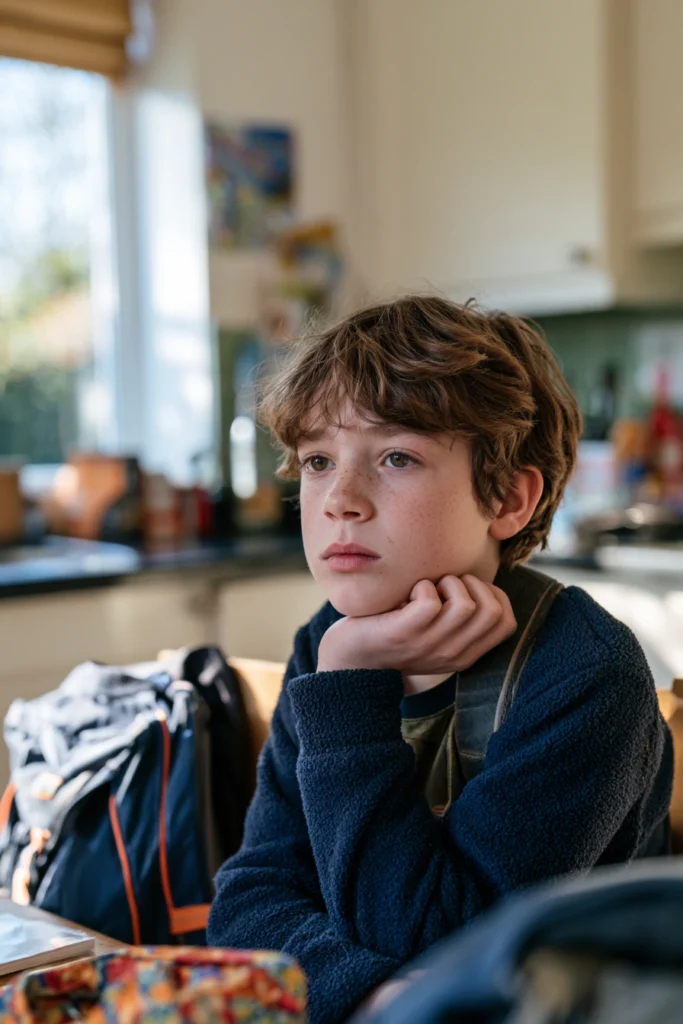
Why intent is so hard for autistic children to read: genuine comments vs jokes vs teasing
Most of us judge whether a comment is friendly or unkind by picking up tone, facial expression and context. We often do this quite naturally without having to think it through. For an autistic child, those signals can be much harder to decode. This means a mild joke can be taken as an insult. Or, occasionally, a truly unkind comment gets brushed off because the words alone seemed neutral. For example, a child might say “Sam is really good at singing”. They may mean it sarcastically, but Sam may not pick this up, taking it instead at face value.
On the flip side, a child might tell your autistic child “you’re so weird” and then say “I was just joking” when your child gets upset. Intent and impact don’t always match. Your child may also not always notice when a comment was meant unkindly. That’s why it helps to have a definition that doesn’t rely on how they responded in the moment.
A mean comment is any remark meant to make your child feel small, embarrassed or rejected, whether or not your child noticed the sting, and whether or not the other person later claims they were only joking.
Sam might not register the sarcasm at all, and the comment is still mean. Your child might feel hurt and be told to shrug it off, and the comment is still mean. Either way, it’s worth naming clearly for your child, so they can start to build their own picture of what happened.
Start with feelings, not verdicts
Rather than asking “were they being mean?”, which pushes your child to judge intent they may not be able to read, start with the feeling. Ask, “What did that comment feel like for you?” This helps your child notice their own response first, which is solid ground to build on.
From there you can gently explore intent together. Modelling calm curiosity helps, with phrases like, “That sounded upsetting. I wonder what might have been going on for them.” Your curiosity teaches your child to pause and think before reacting.
Here’s a quick video I made!
Teach the difference between playful and hurtful teasing
Teasing can be a normal, even warm part of friendship when everyone is laughing together. It tips into hurtful when it becomes one-sided, personal or repeated. I explain to parents that the difference usually comes down to two things: intent and impact.
In playful teasing, everyone feels safe and the laughter is shared. In hurtful teasing, one person has the power and the other feels uncomfortable.
A few practical ways to teach this:
- Talk about consent in joking. Jokes are only fun if everyone wants to join in. “If you are not sure, check how it feels. Are you both smiling, or does one of you look upset?”
- Play a light game like “Spot the Joke,” acting out a few made-up examples, some friendly and some unkind, and letting your child guess which is which. Keeping it playful helps them relax while they learn the cues.
- Watch a short clip from a children’s programme together, pausing to ask, “Do you think that was playful or hurtful?”
My guide on flexible thinking skills has more activities that build this kind of social insight.
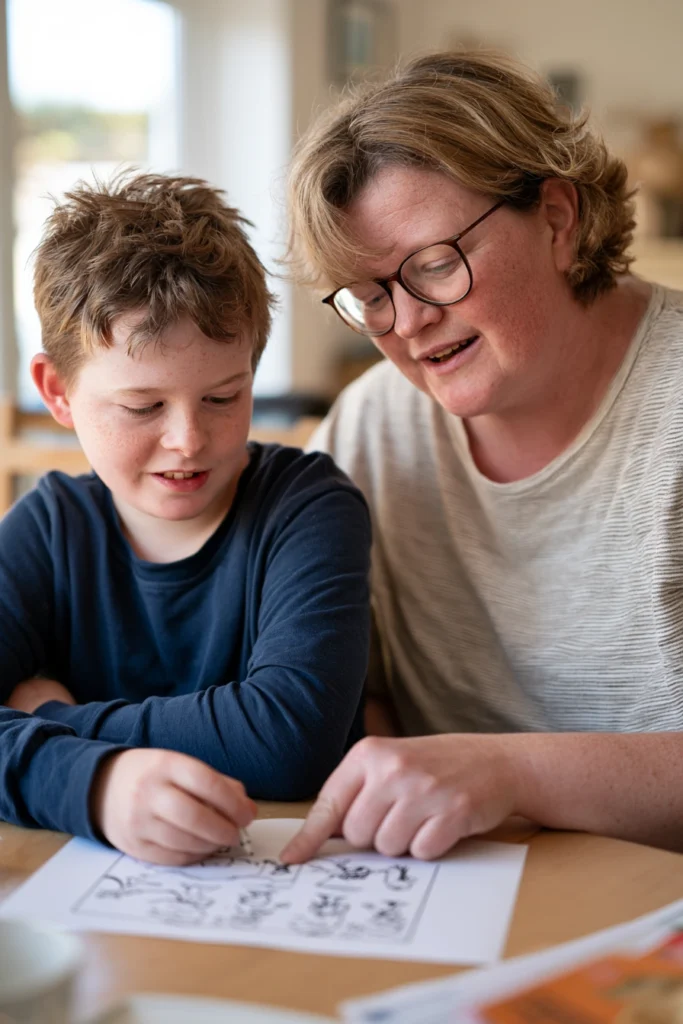
Use social stories and comic strip conversations to map out what happened
Two tools developed by educator Carol Gray can help enormously here: social stories and comic strip conversations. A social story is a short, simple description of a situation, written from your child’s point of view, that explains what happened, why, and what people were thinking or feeling. You might write one about the Sam scenario itself: what sarcasm is, why people use it, and how it can look confusing from the outside. Social stories are quite technical and it’s important to understand how to create them before you try this technique – see Carol Gray’s Social Stories website.
Comic strip conversations work well with older children after a mixed-up or confusing interaction. Using simple stick figures and speech bubbles, you draw out what was said, and add thought bubbles to show what each person might have been thinking or feeling underneath. This turns something abstract (tone, intention, subtext) into something visual and concrete, which is often much easier for an autistic child to reason about than words alone.
Give them words to use
It helps enormously to rehearse a few clear phrases in a calm moment, so they come more easily later. Simple stop signals work best, such as “That’s not funny to me,” or “Please stop now.” If words are hard in the moment, a signal like moving away works too. My guide on friendship skills will help you consider how you can help your child develop these and other social skills.
Help your autistic child to see the grey areas
One of the most valuable things you can teach is that people are not simply good or bad. Autistic children can find it safer to see situations and people in black and white, which sometimes leads them to end a friendship over a single comment or event.
It helps if you explain to your child that people sometimes mistakenly say hurtful things because they are tired, jealous or misreading a situation, which is not acceptable but does not always make them a bad friend. My guide on black and white thinking in autism explores this further, and the National Autistic Society has helpful information on social communication.
When to seek more support
If teasing is happening repeatedly, or your child is becoming anxious, withdrawn or reluctant to go to school, speak to their teacher and, if needed, your GP. Clinical psychologists (like me) and other therapists support autistic children with this kind of issue regularly, so it may be that some 1-1 sessions would help.
Dr Lucy Russell is a UK clinical psychologist and Clinical Director of Everlief Child Psychology. She qualified as a clinical psychologist from Oxford University in 2005 and worked in the National Health Service for many years before moving fully into her leadership and writing roles.
In 2019 Lucy launched They Are The Future, a support website for parents of school-aged children. Through TATF Lucy is passionate about giving practical, manageable strategies to parents and children who may otherwise struggle to find the support they need.
Lucy lives with her family, rescue cats and dog, and also fosters cats through a local animal welfare charity. She loves singing in a vocal harmony group and spending time in nature.
