
How Much Independence Is Right for a 13-Year-Old? A Psychologist’s Guide

It is one of the trickiest judgement calls of parenting a young teenager. Give too little freedom and you risk holding them back and fuelling resentment and arguments. Give too much and you worry about their safety. If you are wondering how much independence your thirteen year old is ready for, the honest answer is that it depends far more on your particular child than on their age.
Let’s take a closer look. I’m Dr. Lucy Russell, clinical psychologist and parent, and I have worked with teens and families for 20+ years.
Quick Summary: Independence for 13 year-olds
- The question is not really how much independence should I give my 13 year old in general, but how much is right for this child, at this stage.
- Independence is built gradually and incrementally, not handed over all at once.
- Young teenagers can seem grown up in some areas and much younger in others, and that unevenness is normal.
- True independence grows from feeling safe and connected, not from being pushed out before they are ready.
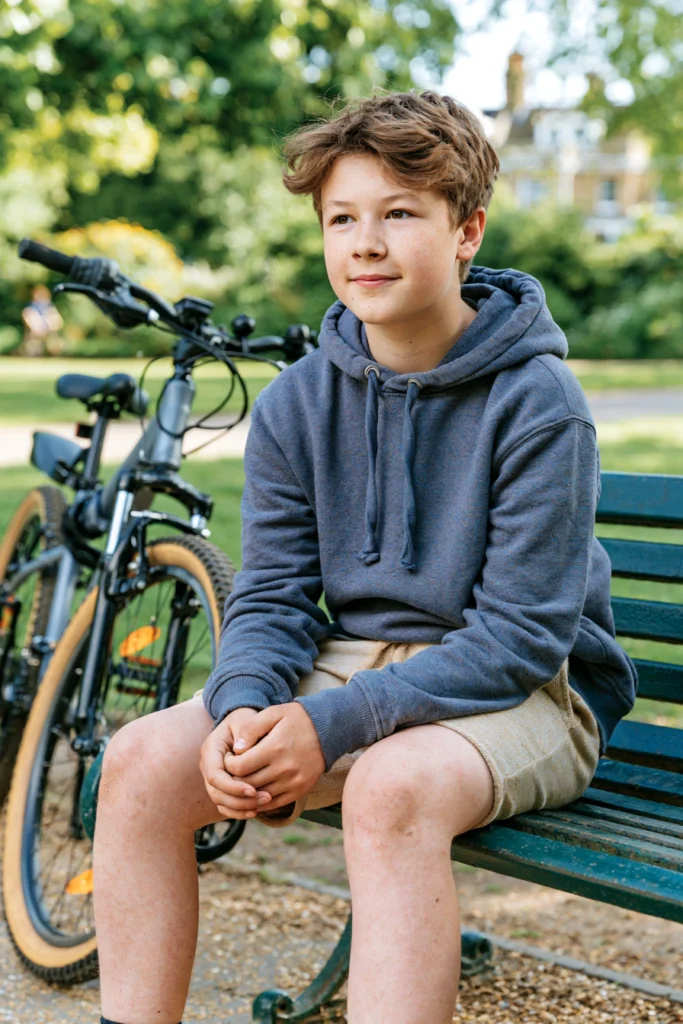
Age is a poor guide on its own
Two thirteen year olds can be worlds apart. One might happily navigate a bus route, while another finds the same thing overwhelming. Development is broad, and it is even more varied for children who are neurodivergent, who may be cognitively advanced yet need more time emotionally.
So rather than asking what a thirteen year old should be able to do, ask what your thirteen year old is ready for now. You will often find they seem remarkably mature one moment and much younger the next. That rollercoaster is completely normal, and it helps to meet them where they actually are. My guide on the teenage brain explains why adolescents can be both impulsive and surprisingly rigid at the same time.
Independence grows from safety
It can seem counterintuitive, but children explore most confidently when they feel secure. Think of a toddler at a playgroup who ventures off to play, then glances back to check you are still there. This is called a secure base – read all about it in my article about attachment.
Teenagers are not so different. When they feel safe and connected, they are far more willing to step out into the world confidently, knowing they can check back in with you if they feel unsure.
This is why your parent-child connection matters just as much at thirteen as at three. Adolescence is often described as separating from parents, but it is really about shifting how they lean on us, not stopping altogether. Most of us still turn to our own parents as adults.

Scaffold, and be clear about the limits
The most useful image here is scaffolding: helping your teen up the ladder one rung at a time, rather than expecting them to leap to the top. Give a new freedom, support it, then gradually step back as they show they can manage.
It also helps to be really clear about where the edges of a freedom are, because teens often do not know unless we say. If your teen can walk to a friend’s house, is it also fine to stop at the shop, or the park, on the way? Spelling this out prevents a lot of misunderstandings. My guide on balancing safety and independence gives you practical ways to pitch this, and the NSPCC has helpful guidance on judging what a young teen is ready for.
When you have to say no
You will not always say yes, and you should not. I recommend that you validate the desire even when you cannot grant it. Getting curious about what a freedom means to your teen, and what your no means to them, keeps the relationship intact even when they are disappointed. “I can see how much you want this, and the answer is still no for now,” respects them without giving way.
If your teen holds back rather than pushing for more independence, that might also be a worry for you too. Ask what might be getting in the way, whether that is anxiety, a missing skill, or simply not being ready, and support them from there. Building everyday life skills at home, as in my guide on independent living skills, gives them a foundation to grow from.
TAKE THE QUIZ!
When to seek more support
If independence has become a source of serious conflict, or you are worried about your teen’s safety or wellbeing, do speak to your GP or a professional who can help you think it through.
Progress will never be in a straight line, so expect some wobbles. For ongoing guidance from our clinical team on teenagers and independence, plus so much more, the resources inside my membership, Everlief Parent Club go into this in depth. Start by meeting your teen where they are, and build one step at a time.
Frequently Asked Questions
It depends far more on your particular child than on their age. Two thirteen year olds can be worlds apart in what they can confidently manage, so the better question is what your teenager specifically is ready for now, not what thirteen year olds in general should be doing. That unevenness, where they seem mature one moment and much younger the next, is completely normal.
Gradually, and in stages, not handed over in one go. Scaffolding is the most useful approach: give a new freedom, support your teen in it, then step back as they show they can manage. Being clear about the edges of that freedom (what counts as sticking to the plan, and what does not) prevents a lot of misunderstandings.
Because true independence grows from feeling secure, not from being pushed out before they are ready. Children and teens explore most confidently when they know they have a secure base to check back in with, much like a toddler glancing back at a parent during play. Adolescence shifts how a teen leans on you, it does not remove the need for connection altogether.
Say no when you need to, and validate the desire even while holding the boundary. Getting curious about what the freedom means to your teen, and what your no means to them, keeps the relationship intact even when they are disappointed. A response like “I can see how much you want this, and the answer is still no for now” respects them without giving way.
It is worth exploring rather than worrying in silence. Holding back from independence can point to anxiety, a missing skill, or simply not feeling ready yet. Building everyday life skills at home gives your teen a foundation to grow that confidence from.
Speak to your doctor or a professional if independence has become a source of serious conflict, or if you are worried about your teen’s safety or wellbeing. Progress will not be a straight line, so some wobbles along the way are expected.
Dr Lucy Russell is a UK clinical psychologist and Clinical Director of Everlief Child Psychology. She qualified as a clinical psychologist from Oxford University in 2005 and worked in the National Health Service for many years before moving fully into her leadership and writing roles.
In 2019 Lucy launched They Are The Future, a support website for parents of school-aged children. Through TATF Lucy is passionate about giving practical, manageable strategies to parents and children who may otherwise struggle to find the support they need.
Lucy lives with her family, rescue cats and dog, and also fosters cats through a local animal welfare charity. She loves singing in a vocal harmony group and spending time in nature.
