
ADHD Overstimulation in Children: What Helps

ADHD overstimulation in children happens when noise, crowds, bright lights and demands pile up faster than your child can process them. The quickest way to help is to lower the input, use few, calm words and give your child time to recover.
I’m a UK child clinical psychologist and I co-run a clinic called Everlief Child Psychology, where we support families through ADHD assessments and the follow-up support afterwards. I hear the same story from many parents: you are in the supermarket or at a birthday party, and your child goes from fine to tears or shouting before you can work out what changed.
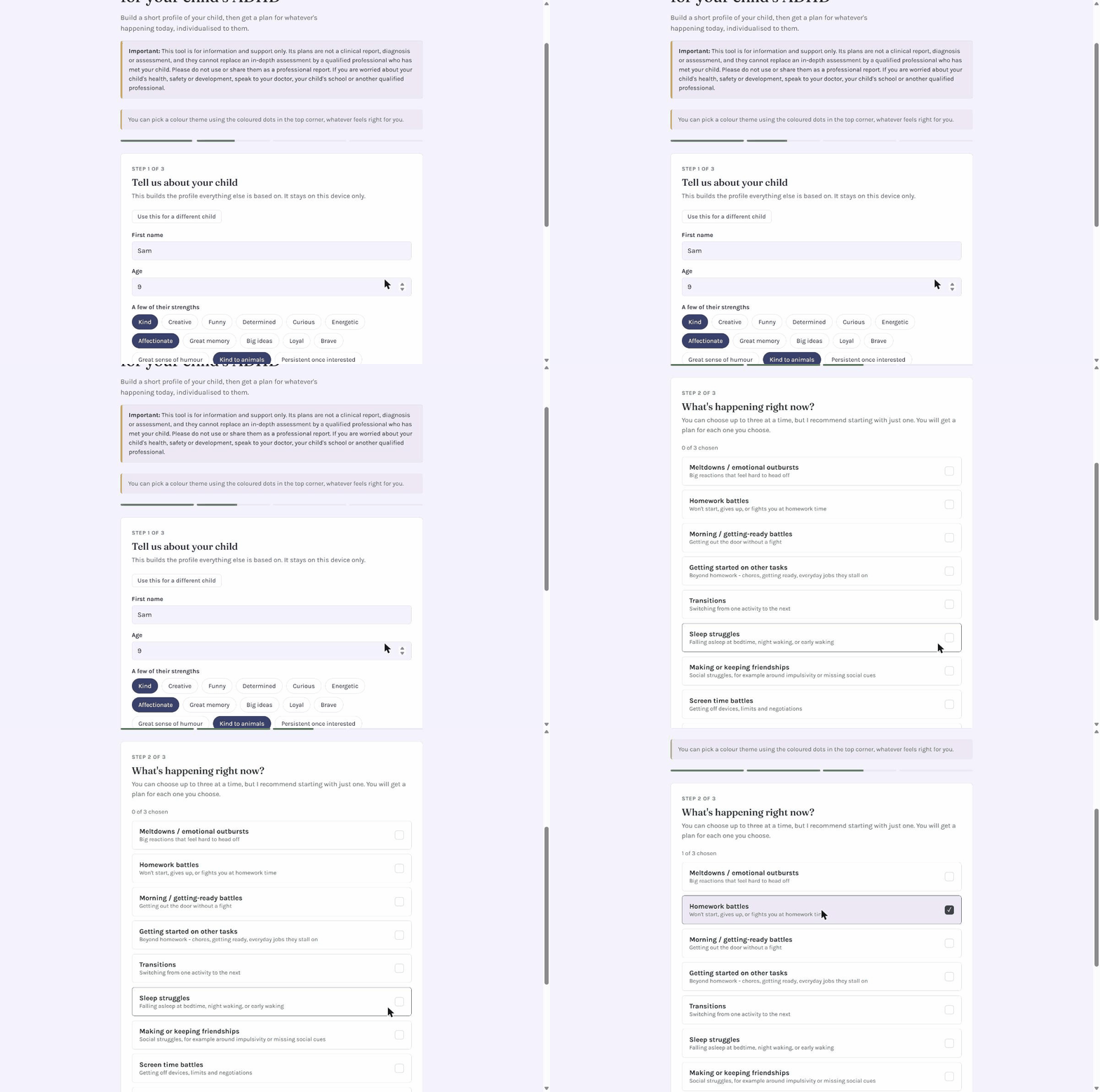
Your Child’s ADHD Action Plan: Get a personalised plan for your child with ADHD. Choose what is hardest at home, from mornings and homework to sleep, friendships and meltdowns, answer a few questions, and you receive the words to use in the moment and ideas to try next. Find out more about Your Child’s ADHD Action Plan.
Key Takeaways
- Sensory processing difficulties are more common in children with ADHD, although not every child has them.
- Restlessness, snappiness or going quiet are often early signs of sensory overload.
- Small changes at home and a shared plan with school can reduce overstimulation.
What Causes ADHD Overstimulation in Children?
ADHD affects how your child filters information. When loud noises, bright lights, strong smells and conversation arrive at once, the ADHD brain finds it hard to decide what to ignore, so your child’s capacity fills up quickly.
Jake, age 8 (not a real child, but based on many children I’ve worked with), loves football. On match days, the shouting, the whistle and the rush to find his boots build up, and by the second half he’s often arguing and refusing to play. Once his parents saw the pattern, they put some strategies in place. They arrived early, brought ear defenders for the warm-up, and agreed a calm-down spot on the bench, and match days became much easier.
Sensory processing in children usually shows up in one of three patterns:
| Pattern | What you might notice |
|---|---|
| Sensory over-responsivity (hypersensitivity) | Ordinary sounds, touch, smell, taste or light feel unusually intense |
| Under-responsivity | Your child misses sensations, such as hunger, or needs stronger input |
| Sensory-seeking | Your child looks for movement, pressure, chewing or noise |
A systematic review by Ghanizadeh (2011) found sensory processing problems were more common in children with ADHD than in other children, and linked sensory over-responsivity with higher anxiety. Children with co-morbidity (more than one diagnosis, such as ADHD and anxiety) tended to have more sensory difficulties. That fits what I see in my clinic: a worried child has less room left for noise and bustle, so ADHD overstimulation often shows up more on anxious days.

Signs of Sensory Overload in Children With ADHD
Many children show early signs before an outburst. Your child may:
- cover their ears or screw up their eyes
- pace, fidget more or flit between activities
- talk faster, repeat phrases or become silly
- become snappy, argumentative or tearful
- go quiet and withdraw
Some children also get headaches or tummy aches. If these keep coming back, ask your child’s doctor to check them.
Common sensory triggers include loud noises, flickering or bright lights, strong smells, scratchy labels and crowds. The school lunch hall often combines several of these, so it can be a flashpoint. Keep a short record for a week or two of where overload happened and what came before it, so you can spot combinations such as noise plus hunger plus tiredness. My article on whether it’s behaviour or sensory overload explains how sensory discomfort can look like refusal.
What to Do When Your Child Is Overstimulated
- Lower the input. Turn off background noise and move somewhere quieter if you can.
- Use a few calm words. Try, “I’m here. Let’s go somewhere quieter.” Save questions for later.
- Offer something familiar. Headphones or a favourite object can help. Ask before you touch.
- Give recovery time. Talk about what happened once your child is calm.
A child who goes quiet may still be overwhelmed, so keep requests small until they’re back to themselves. My guide on how to prevent meltdowns in children of all ages has more ideas for the build-up stage.
ADHD Overstimulation vs Autistic Sensory Overload
Sensory differences are common in ADHD, autism and anxiety, so sensitivity alone doesn’t point to autism. These are patterns I often notice:
| At a glance | ADHD overstimulation | Autistic sensory overload |
|---|---|---|
| Often driven by | Too much going on at once | Specific sensations feeling intense or painful, often with change |
| How it builds | Restlessness, silliness, arguing | Rising distress, withdrawal, meltdown or shutdown |
| What helps | Less input, movement breaks, short steps | Predictability and removing the specific sensation |
Many children have both, so you may see features of each. My article on ADHD vs autism explains the differences in more detail.
Reducing Overstimulation at Home and School
There are plenty of small changes you can try at home. If bright light bothers your child, blackout curtains and softer lamps can make the house feel calmer. Some children find clothing labels unbearable, so cutting them out can make getting dressed easier (this is often called tactile defensiveness, which means strong distress at certain textures or touch). A child who dislikes light touch may find firm pressure very calming, such as a tight hug they ask for or a heavy cushion on their lap. In noisy places, ear defenders or noise-cancelling headphones can take the edge off the sound. It also helps to have a quiet corner that your child chooses and can go to whenever they need to recover. I have more suggestions in my calming ADHD bedroom ideas article.
It helps to talk to school about what you have noticed, so that you, your child’s teacher and your child can plan together. In the UK, the person to speak to is the SENCO (special educational needs coordinator), and elsewhere you can ask which member of staff leads on additional needs. A few small adjustments often make a difference, such as a break card your child can use when they feel overwhelmed, planned breaks before assembly or lunch, and leaving lessons a minute early to avoid busy corridors. If your child often misses instructions in a noisy classroom, mention that too, because auditory processing (how the brain makes sense of sound) can play a part in ADHD overstimulation.

When to Ask for Occupational Therapy Support
If sensory difficulties regularly affect eating, sleep, school or learning, I recommend speaking to your child’s doctor about seeing an occupational therapist. A paediatric occupational therapist is a health professional who works with children on the everyday activities that fill their day, such as eating, dressing, playing and learning. They can look at how your child processes sensory information and agree practical goals with you, for example making it easier to eat lunch in a calmer setting. They may also offer sensory modulation support, which helps your child’s brain adjust how strongly it reacts to sights, sounds, touch and movement, turning the volume down for some children and up for others. One part of this is often a sensory diet, which is a personalised plan of movement breaks and calming activities spread through the day (here “diet” means a menu of activities). This support works best when it fits your child’s own pattern, whether they are over-sensitive to certain sensations or actively seek them out.
Frequently Asked Questions
Overstimulation isn’t one of the diagnostic criteria for ADHD, but sensory processing difficulties and sensory processing disorder are more common in children with ADHD, so many reach overload more quickly than their friends.
Sensory overload is a moment of overwhelm. Sensory processing disorder is a term some professionals use for ongoing sensory difficulties that affect daily life. A child with ADHD can have either, both or neither.
Look for a change from their usual self: more restlessness, silliness, snappiness or covering their ears, or suddenly going quiet. These signs of sensory overload often appear in busy, noisy places or at the end of a long day.
Sensory needs often change as children grow. With the right adjustments, many children learn to spot their own early signs and ask for a break.
Start With One Small Change
If all of this feels like a lot, I would suggest starting with just one thing. Think of a time in the week that you know tends to be hard for your child, such as the school run or lunch in a busy hall, and talk with your child about one small change that might help. It could be a quieter place to eat lunch or a short break earlier in the day. Small changes like these can leave more room for learning, friendships and calmer time together as a family. I would love to hear how you get on.
Dr Lucy Russell is a UK clinical psychologist and Clinical Director of Everlief Child Psychology. She qualified as a clinical psychologist from Oxford University in 2005 and worked in the National Health Service for many years before moving fully into her leadership and writing roles.
In 2019 Lucy launched They Are The Future, a support website for parents of school-aged children. Through TATF Lucy is passionate about giving practical, manageable strategies to parents and children who may otherwise struggle to find the support they need.
Lucy lives with her family, rescue cats and dog, and also fosters cats through a local animal welfare charity. She loves singing in a vocal harmony group and spending time in nature.
