
What Are the Best Morning Habits to Improve Kids’ Behaviour at Home and School?

Mornings can be chaotic when you’re juggling kids and schedules. Challenging behaviour often shows up when children feel stressed, rushed or hungry. But simple, science-backed habits like a productive morning routine, eating breakfast, and getting sunlight can help calm them and set the tone for a better day.
As a parent and psychologist, I see these small changes prevent meltdowns, improve focus, and help kids feel ready to learn. I’m passionate about sharing them so your family – or your classroom – can start the day with ease.

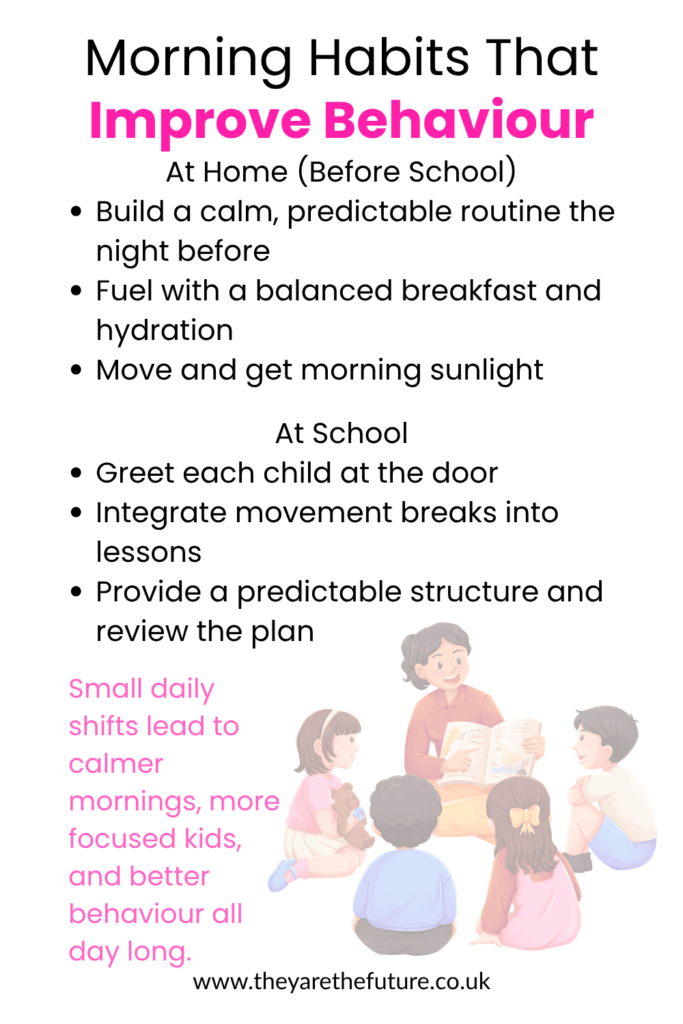
Quick Summary: Morning Habits That Improve Behaviour
Better mornings = better behaviour. Here are six proven habits to help kids thrive.
At Home (Before School)
- Build a calm, predictable routine the night before
- Fuel with a balanced breakfast and hydration
- Move and get morning sunlight
At School
- Greet each child at the door
- Integrate movement breaks into lessons
- Provide a predictable structure and review the plan
Small daily shifts lead to calmer mornings, more focused kids, and better behaviour all day long. A consistent kids schedule helps the whole family or classroom feel more grounded.
How Parents Can Improve Morning Behaviour
1. Build a Calm Routine the Night Before
You juggle many tasks before school. Planning ahead makes the morning smoother and helps your child become more independent. Try creating a daily routine that fits your family’s rhythm.
Studies show that following a predictable routine builds independence. Your child learns to manage dressing and packing without constant reminders.
Plan ahead together. Lay out clothes and pack school bags. Prepare lunches in the evening. Involving your child builds responsibility and avoids last-minute stress.
Use visual prompts. A simple checklist or picture schedule makes the routine clear. Younger children enjoy crossing off each step. Older ones can check their own progress.
Celebrate success. Praise your child for completing their routine. Recognition reinforces good habits and encourages cooperative behaviour.
Families who follow a calming morning routine often notice that children feel more in control and confident before school. These small steps set the emotional tone for the entire day.
2. Fuel With a Balanced Breakfast and Hydration
Eating a good breakfast wakes up the brain. Studies show that breakfast helps thinking, memory and focus. Children tend to perform better in reading, maths and spelling. Meals with whole grains, fruit and protein keep energy steady and help kids learn best because the grains release energy slowly, the fruit provides quick natural fuel and vitamins, and the protein supports focus and concentration.
Choose slow-release carbohydrates. Oats, whole-grain toast or muesli provide sustained energy. Add eggs, nuts or yogurt for protein and healthy fats.
Avoid sugary highs. Sugary cereals give a quick burst then crash. They can make kids irritable and unable to focus.
Start hydration early. Studies show that well-hydrated children perform better on memory tasks and tasks requiring flexible thinking. Offer a glass of water with breakfast. Keep a water bottle on the table.

3. Move and Soak Up Morning Sunlight
Moving your body helps your brain work better. One study found that 30 minutes of morning exercise combined with eating breakfast helped kids perform significantly better in a maths task. Other studies show that 15–30 minutes of activity improves focus and lifts their mood.
Encourage movement that feels fun and achievable. A quick stretch, dancing to a favourite song or a walk to school can all be part of your morning ritual. Even five minutes outdoors helps regulate energy and mood.
Good sleep makes this easier. A steady bedtime routine keeps your child’s body clock balanced, so mornings feel less like a battle and more like a natural start to the day.
To help your child settle, you can also include brief mindfulness activities in the morning, like noticing sounds outside, slow deep breathing, or a quiet moment before leaving home.

Simple Classroom Strategies for Better Behaviour
1. Greet Every Child at the Door
When you greet students as they arrive, you set expectations for the day. A large study found that greeting students increases engagement by 20 percent. It also reduces disruptive behaviour by nine percent.
Say their name and smile so that each student feels seen and valued.

2. Integrate Movement Breaks Into Lessons
Children learn better when they move. Even short bursts of movement (1-2 minutes) can be like a reset for children’s brains and can make a significant difference. Active breaks lift mood and reduce behaviour problems for children with attention challenges.
Use short “brain breaks.” Include brief bursts of movement each hour. Try yoga poses, marching in place or simple games. These activities can form part of a collection of self regulation strategies for kids that improve classroom focus.
In addition to active movement, use whole-class focus strategies like breathing or stretching between lessons. Model participation, too. When you join in, children are much more likely to engage positively.

3. Provide a Predictable Structure and Review the Day’s Plan
Keeping routines the same reduces stress and misbehaviour in classrooms. Clear instructions help kids know what to do. Of course, a consistent school night routine at home also helps mornings go smoothly because everyone is well-rested and more likely to feel balanced, so do encourage parents to work on this.
Post a visual schedule. Display the day’s activities in words or pictures. Review it each morning so students know what to expect.
Start the day with an emotional check-in. Build kids’ coping skills through activities for understanding and naming emotions, which will help prevent meltdowns.
TAKE THE QUIZ!
The Bigger Picture
When parents and teachers build positive and predictable habits together, children thrive. A structured daily routine and kids schedule create a sense of safety and predictability.
Building in small moments of calm, particularly through a calming morning routine and bedtime routine, helps children feel secure, regulated and ready to learn.
These consistent habits may seem simple, but I have seen that over time they transform behaviour, focus and emotional wellbeing.
Related Articles
School Night Routine Magic: 5 Steps to Better Kids’ Wellbeing and Peaceful Evenings
Creating a Stress-Free ADHD Morning Routine For Your Child
How Do I Communicate Better With My Autistic Child? (Free eBook for Parents)
Dr Lucy Russell is a UK clinical psychologist and Clinical Director of Everlief Child Psychology. She qualified as a clinical psychologist from Oxford University in 2005 and worked in the National Health Service for many years before moving fully into her leadership and writing roles.
In 2019 Lucy launched They Are The Future, a support website for parents of school-aged children. Through TATF Lucy is passionate about giving practical, manageable strategies to parents and children who may otherwise struggle to find the support they need.
Lucy lives with her family, rescue cats and dog, and also fosters cats through a local animal welfare charity. She loves singing in a vocal harmony group and spending time in nature.
