
A Kids Morning Routine List for Calmer School Mornings

If getting out the door feels harder than it should, you’re in good company. A clear kids morning routine list can lead to a genuinely stress-free morning, meaning fewer arguments and shouting, and a much better chance of getting out of the door on time. More importantly, it can help your child start the day feeling steadier.
When your child knows their morning habits and what happens next, they don’t have to keep guessing, resisting, or relying on you for every step. That builds independence and lowers stress for both of you. This matters even more if your child is autistic or has ADHD, anxiety, or sensory sensitivities, but a simple routine can help almost any family with children aged 5 to 17.
Why a clear school morning routine works so well
A school morning routine works because it takes pressure off your child’s brain. Instead of making lots of small decisions when they’re tired, they follow a familiar path from a morning checklist for kids. That reduces anxiety, cuts decision fatigue, and helps with emotional regulation. In plain terms, it makes the next step easier.
Routines aren’t about being strict. They’re about making school mornings less heavy.
Predictability helps your child feel calm and in control
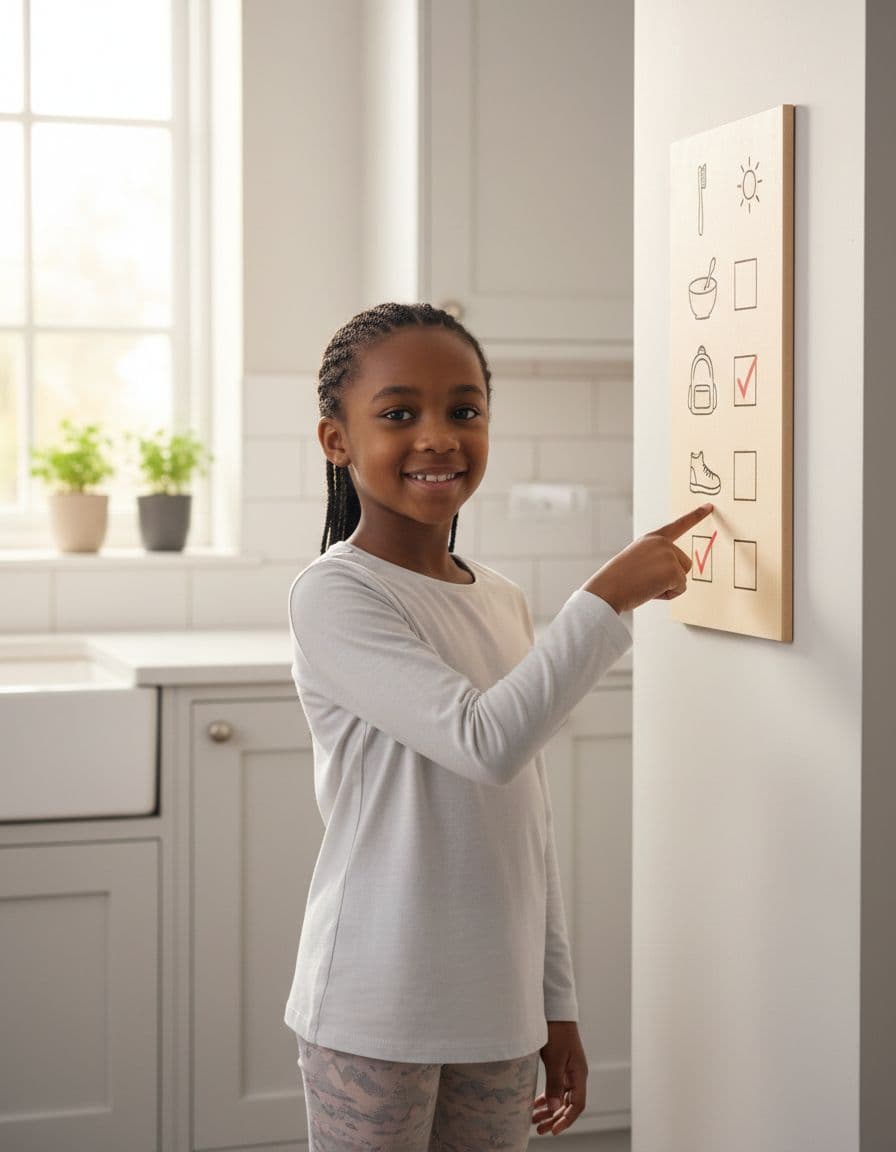
When the order stays the same, your child settles faster. Their brain learns, “First this, then that.” That simple pattern can stop mornings feeling chaotic or overwhelming. For children who worry, or who find transitions hard, visual routine charts are especially helpful because they show what’s coming next.
Recent guidance on children’s routines also points to the value of structure for stress and wellbeing, as explained in this article about Children’s Health’s advice on daily routines for kids.
Small steps build independence and cut down on nagging
Big instructions like “get ready for school” are often too vague and can overwhelm your child. Breaking them into age-appropriate tasks makes smaller steps easier to start and finish. That matters because many children struggle with task initiation, especially when they feel rushed. Over time, this approach helps build time management skills.
Take nine-year-old Esme. Before her family used a routine, mornings were full of repeated reminders and high stress for everyone. She’d get distracted between getting dressed and brushing her teeth, then everyone felt cross. Once her parents broke the routine into short, visible steps, Esme needed fewer prompts and felt proud ticking things off.
If worry is part of the picture, these ideas for dealing with morning anxiety in children can work well alongside a visual routine.
What to put on your kids morning routine list
The best routine is clear, flexible, and realistic for your child’s age and needs. You don’t need a perfect system. You need a list your child can actually follow.
A simple school morning order that works for most families
A consistent wake-up time is a great foundation. For most school mornings, this morning routine template works well:
- Wake up
- Make the bed
- Toilet
- Get dressed in school uniform
- Wash face or have a quick wash
- Eat a healthy breakfast
- Brush teeth
- Put on shoes and coat
- Collect school bag or backpack and leave
Keeping the order the same each day usually matters more than sticking to exact times. Also, a little preparation the night before helps a lot. Put clothes out, pack the school bag or backpack, pack lunch, check the lunch box, and decide on breakfast. That alone can remove several flashpoints before the day has even begun.
How to adapt the list for younger children, teens, and neurodivergent children
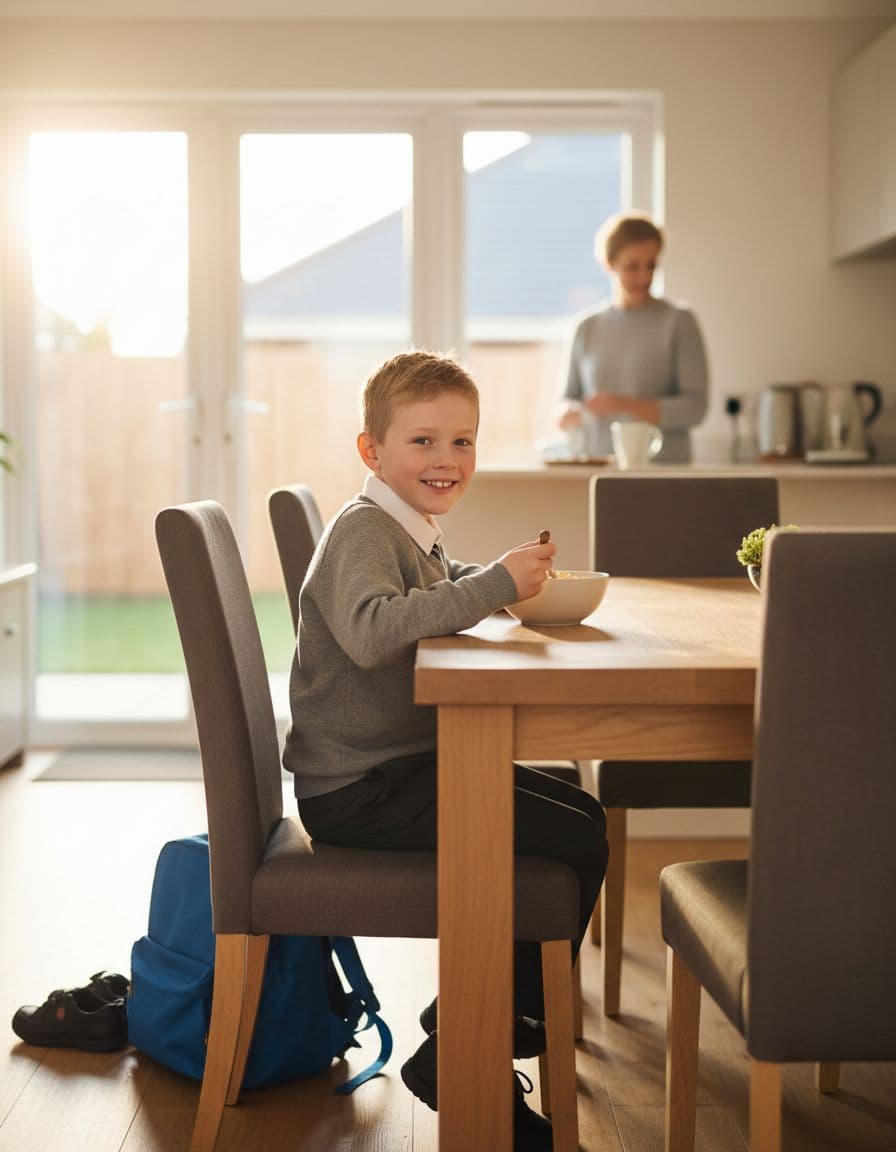
Younger children often do best with picture prompts and your support nearby. Teenagers usually prefer a simple checklist, a phone alarm, or both. Either way, the aim is the same: make the next step easy to see.
For autistic children and children with ADHD, you can make the routine kinder on the nervous system. Try fewer choices, extra transition time, sensory-friendly clothing, and a short burst of movement before breakfast or before shoes go on. Some families also find it helpful to read examples like this morning routine for kids guide and then tailor the ideas to suit their own child.
If ADHD is a big factor, you may also find this guide to a stress-free ADHD morning routine helpful.
How to make the routine stick, without turning it into a battle
Even the best morning schedule won’t work if it lives only in your head. Your child needs to see it, practise it, and feel part of it.
Also bear in mind that a smooth start often begins with a solid bedtime routine the night before.
Start small, keep it visible, and practise before you need perfection
Start with five steps, not ten. Put the daily schedule where your child can see it, such as the kitchen wall, bedroom door, or near the front door. Then walk through it together for a few days, managing distractions like screen time until morning tasks are finished.
A routine works best when your child can see it, use it, and feel some ownership of it.
Try not to change the order too often. Also, avoid filling the morning with spoken reminders. The more you talk, the more your child may tune out. A visual chart often works better because it shifts you out of the role of constant prompter.

Why the Monster Mornings planner can make mornings calmer
If you want a ready-made option, my Monster Mornings interactive routine planner lets you build a personalised visual morning routine chart in minutes using illustrated cards. It’s suitable for children aged 5 to 17 and was created with neurodivergent children, including autism and ADHD, in mind (but it’s suitable for all).
You get a printable poster, DONE cards, and step-by-step instructions. The real benefit is not the chart itself, it’s what the chart changes, including simplifying your routine, fewer reminders, more independence, and it can help advance specific skills such as hygiene habits. Your child gets a calmer start and a clearer path through the morning.
A calmer start is possible
A school morning routine list for kids isn’t about making your child perfect. It’s about making mornings more predictable, more peaceful, and easier to manage. Keep it simple, keep it visual, and shape it around your child rather than forcing your child to fit the routine. If you’re ready for a smoother school run, try building a personalised chart with my Monster Mornings planner and see what changes.
Dr Lucy Russell is a UK clinical psychologist and Clinical Director of Everlief Child Psychology. She qualified as a clinical psychologist from Oxford University in 2005 and worked in the National Health Service for many years before moving fully into her leadership and writing roles.
In 2019 Lucy launched They Are The Future, a support website for parents of school-aged children. Through TATF Lucy is passionate about giving practical, manageable strategies to parents and children who may otherwise struggle to find the support they need.
Lucy lives with her family, rescue cats and dog, and also fosters cats through a local animal welfare charity. She loves singing in a vocal harmony group and spending time in nature.
