
Autism-Friendly Haircuts for Kids: How to Prepare, and What to Ask For

A haircut can feel enormous for some neurodivergent children, particularly if they have a lot of sensory needs. The noise, touch, smells and uncertainty can quickly become too much, especially after a full school day. It goes without saying that their distress is communication, not bad behaviour.
Autism-friendly haircuts for kids aren’t about making your child tolerate the intolerable. They’re about adapting the haircut experience so your child feels safer, more understood and more in control. Small changes can make a real difference.
I’m a clinical psychologist working with families of autistic children, and this is one of the most common issues that come up. Let’s walk through it.
Key Takeaways
- Haircuts can become overwhelming because of noise, touch, smells, waiting and uncertainty.
- Prepare your child with visual guides, social stories, gradual familiarisation and a predictable routine that suits your child.
- Ask the barber or stylist for specific adjustments, such as a quiet appointment, fewer waiting demands, headphones, breaks and the option to stop.
- Offer simple choices and a clear stop signal, and prioritise your child’s regulation, safety and dignity over finishing the haircut.
- A partial haircut, a short visit or an appointment at home can still be a meaningful success and help build trust for next time.
Why Haircuts Can Feel Overwhelming
Understanding what’s underneath your child’s distress is going to help you and the hairdresser make the most useful adjustments. Autistic children and teenagers can have varied and different sensory sensitivities, and sensory processing difficulties can make ordinary sensations feel unusually intense.
For some children, a busy salon can bring many overwhelming sensations together at once, which can tip the brain into a panic and survival-focused state rather than the relaxed and calm child you’re looking for in this situation.
These experiences can be part of autism spectrum disorder, rather than a sign that your child is being difficult. The National Autistic Society’s sensory-processing guidance explains why sounds, touch, smells and visual input can become overwhelming.
Common Sensory Triggers During a Haircut
Electric clippers can feel loud and vibrate against the scalp. Scissors near the ears may feel unsafe. Loose hair around the neck can cause sensory irritation, while a scratchy barber cape, sprayed water, strong product smells and bright lights can all add to the load.
There is also the waiting, unfamiliar small talk, other customers and not knowing what will happen next. Your child may dislike some sensations but seek others. Their preferences are personal. My article about sensory processing in autism will help you understand your child’s unique sensory profile.
Notice Early Signs of Distress and Pause
Look for possible early signs that your child is reaching their limit. They may become silent, restless, tense, tearful, silly or angry. They may also struggle to answer simple questions. These aren’t a diagnostic checklist, just possible signs that the haircut is becoming too much. A teenager may mask their discomfort, then suddenly need to leave.
Pause before sensory overload develops. Reduce talking, move away from noise, take off the cape or step outside for a few minutes. You don’t need to persuade your child to push through.
A break is not a failure. It tells your child that you will listen when their body says “enough”.
Preparing for Autism-friendly haircuts for kids
Preparation can take much of the uncertainty out of the day. You don’t need a perfect plan, only a few supports that fit your child.
Make the Haircut Familiar and Predictable
Show your child a photo of the salon and the person cutting their hair, if possible. Use visual guides to show the sequence: arrive, wait, sit down, haircut, pay and leave. You can use photos, icons or real images to show them what happens next.
You could visit without having a haircut, practise sitting in a chair at home, or role-play using a clean towel as a pretend barber cape. These steps are going to help familiarise your child’s brain with the surroundings, and therefore the brain is more likely to say, “It’s okay, this is safe.” A social story can help children manage a haircut, particularly if it uses clear language and real photos. Here’s a video social story by Little Bee Library.
Use positive reinforcement for manageable steps, such as entering the salon, touching the chair or tolerating one snip. Praise effort and communication at each step, not just completing the haircut.
Choose the Right Appointment
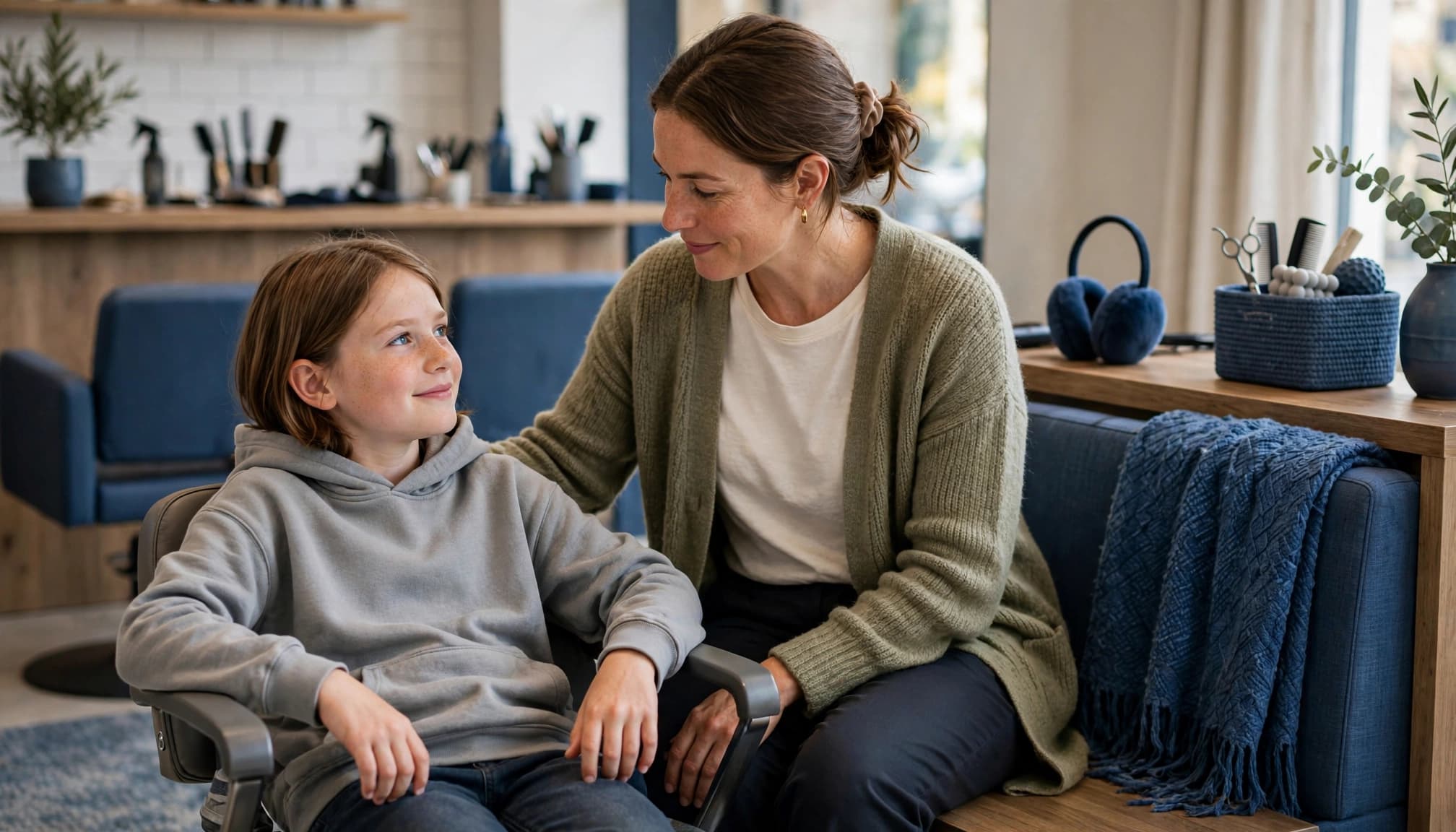
Ask for the quietest time of day, often the first or last appointment. Ask whether the provider has a private sensory room, if that would help. Keep it short if you can, and book with the same barber or stylist each time.
A familiar person, less waiting and fewer people nearby can lower the sensory load. Regular dates may also make haircuts feel more like a known routine than an unexpected demand.
What to Ask the Barber or Stylist
The label “sensory-friendly haircuts” is only a starting point. Useful adjustments should reflect your child, not a standard package.
Ask how the team supports children with special needs, without assuming every child needs the same approach. Before booking, ask whether the salon can:
- Offer a quiet slot with little or no waiting, or a private sensory room if available.
- Explain each step before it happens and use visual guides, such as photographs of the chair, scissors, electric clippers or the appointment sequence.
- Use scissors or clippers according to your child’s preference.
- Allow headphones, comfort items or videos.
- Plan short breaks and agree that you can stop at any point.
- Skip the barber cape, washing or hairdrying if these are difficult.
The National Autistic Society shares principles for reasonable sensory adjustments that apply here too: reduce unnecessary sensory demands and make expectations clear. It may help to send your requests by message to the hair professionals before the appointment, when there is less pressure.
During the Haircut: Flexibility Over Perfection
Your child’s regulation, safety and dignity matter more than a finished hairstyle. Stay calm and keep your language simple, particularly if they’re becoming overloaded.
Support Regulation with Choices and Breaks
Offer small choices: “Headphones or no headphones?” “Sit on the chair or stand beside it?” “One more snip, then a break?” Choices give your child some control without asking them to process too much.
Bring what helps them regulate, whether that’s music, a fidget, a drink or a familiar hoodie. Agree a clear signal for “stop” or “break” before you begin, then respect it straight away. Specific, immediate positive reinforcement, such as thanking your child for using their signal or returning after a break, can build trust and confidence.
For a child who enjoys predictable rewards, an optional reward system may help after a manageable step. It should never pressure a distressed child or replace listening to their communication.
A Partial Haircut Can Still Be a Success
Perhaps only the fringe gets trimmed. Perhaps your child sits in the chair for two minutes, then leaves with no hair styling or cutting involved. Both are meaningful steps.
A positive ending builds trust. It gives your child evidence that you won’t force them through distress, which can make the next attempt feel safer.
If the Salon Is Too Much
Some children and teenagers with special needs may find a hair salon overwhelming, even after thoughtful adjustments. In-home services like a mobile sensory stylist may reduce unfamiliar sensations for children with sensory sensitivities. You could also spread the haircut across several short visits, whether barber visits or in-home services.
Ask other parents about a local barbershop, and check your council’s Local Offer and SEND directories for special educational needs support. The National Autistic Society sensory haircut directory may also help you find specialized providers. Availability and approach vary, so ask about noise, waiting, tools, breaks, stopping arrangements and whether there is a private sensory room before booking.
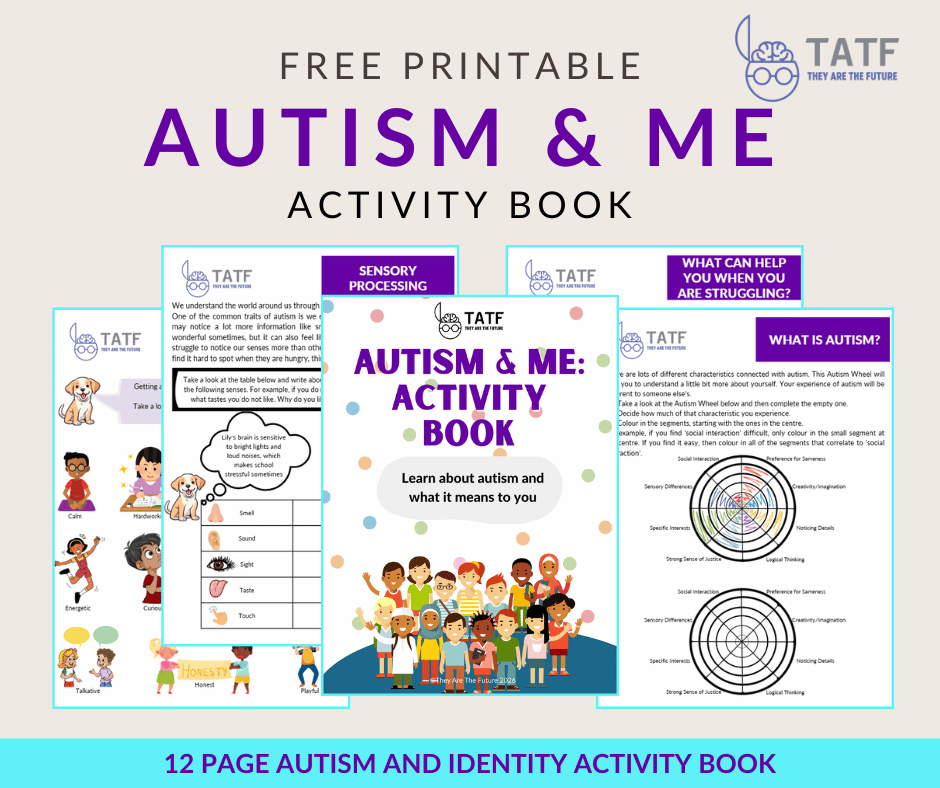
For children who are exploring what autism means to them, my free printable Autism and Me activity book may offer a gentle way to talk about strengths, needs and helpful adjustments.
If sensory needs, behavioural challenges or other difficulties are affecting many of your child’s daily routines, the Embracing Autism online course for parents – a course I run with four fantastic colleagues – offers wider support around understanding autism, sensory differences, emotional regulation and anxiety.
Frequently Asked Questions
Use photos, visual guides or a simple social story to show what will happen. You could also visit the salon without having a haircut, practise sitting in a chair or role-play the experience at home.
Ask about a quiet appointment, minimal waiting, a familiar stylist and the option to use scissors or clippers according to your child’s preference. You can also ask about headphones, comfort items, breaks, skipping the cape or washing, and stopping at any point.
Pause and reduce the sensory demands rather than asking your child to push through. Use the agreed stop or break signal, move somewhere quieter and leave if needed; finishing the haircut is less important than safety and trust.
No. Sitting in the chair briefly, allowing one snip or trimming only the fringe can all be meaningful steps towards a successful haircut next time. A positive ending can help your child feel safer about trying again.
Consider a mobile stylist, a haircut at home or several short visits. Local parent groups, your council’s Local Offer and SEND directories, and the National Autistic Society’s sensory haircut directory may help you find suitable support.
Getting A Haircut For Your Autistic Child: The Best Way Forward
Try not to measure a successful haircut by how much hair ends up on the floor or how it looks at the end. Measure it by the level of trust and emotional safety your child felt. This is going to be what makes it easier next time, and the time after that.
Prepare what you can, ask for clear adjustments and be willing to pause. Each small adjustment can make the next haircut feel more manageable.
Dr Lucy Russell is a UK clinical psychologist and Clinical Director of Everlief Child Psychology. She qualified as a clinical psychologist from Oxford University in 2005 and worked in the National Health Service for many years before moving fully into her leadership and writing roles.
In 2019 Lucy launched They Are The Future, a support website for parents of school-aged children. Through TATF Lucy is passionate about giving practical, manageable strategies to parents and children who may otherwise struggle to find the support they need.
Lucy lives with her family, rescue cats and dog, and also fosters cats through a local animal welfare charity. She loves singing in a vocal harmony group and spending time in nature.
