
Autism and Staring: Why Your Autistic Child Stares and What Helps

If your autistic child stares into space, at people or at lights, you may be wondering what is going on in their mind and whether you need to worry, or do something about it. This article on autism and staring is about autistic children who stare (it is not about other people staring at autistic children), and I hope it helps you feel more confident about what you are seeing.
In my experience, most staring in autistic children is harmless. It usually means your child is thinking, processing, feeling overloaded or absorbed in something that interests or calms them, and only a small number of brief spells need a doctor’s check.
I lead Everlief Child Psychology and in my clinic I often hear parents ask about staring, so I will explain the common reasons and how to tell the difference.
Why Does My Autistic Child Stare into Space?
Many parents tell me their child seems to switch off in the middle of a conversation and give a blank stare. Often an autistic stare is your child’s way of coping with a heavy processing load, giving themselves time to take in a question or instruction without the effort of eye contact. Sometimes it is simply a child in deep focus, thinking hard, tired or worried.
After too much noise, light or effort, many autistic people zone out. If your child stares after a noisy or busy day, sensory overload is a possible cause.
Staring is not a meltdown or shutdown in itself, though one can follow, so I recommend reading my article on whether it’s behaviour or sensory overload to help you respond to what your child needs.
Why Does My Autistic Child Stare at Lights, Spinning Things and Washing Machines?
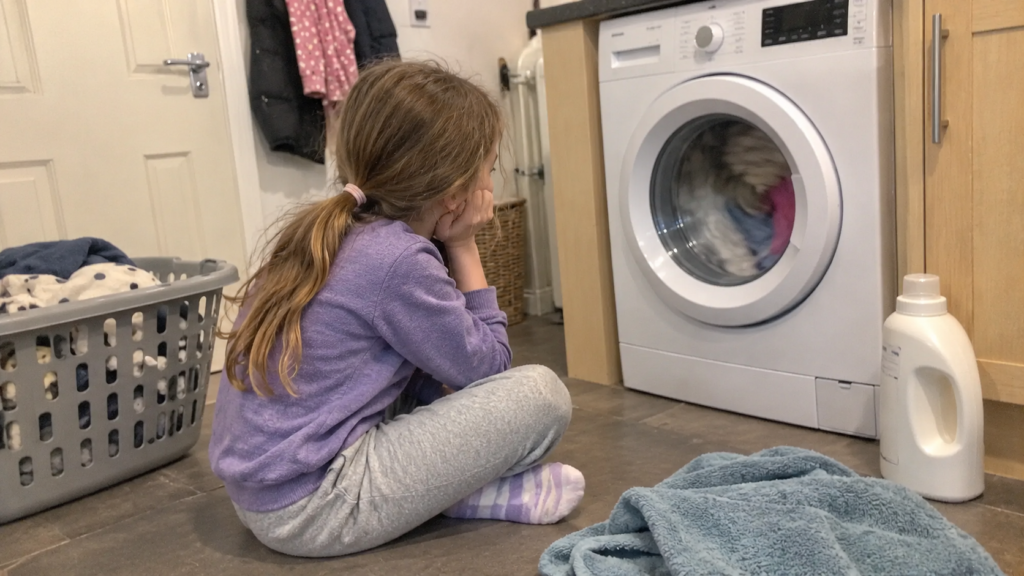
If you have ever found your child watching a washing machine drum or watching spinning lights for ten minutes or more, you are in good company. Some autistic children are drawn to lights, fans, spinning wheels and anything that moves in a repeating pattern, because it feels predictable and calming.
Parents often search for “autism staring at lights” and wonder whether it matters. An autistic stare at lights is usually visual stimming, a form of stimming (repeated actions that feel good or calming) that brings enjoyable visual input, and safe watching does not need interrupting. My article on sensory processing differences explains more.
Why Does My Autistic Child Stare at People?
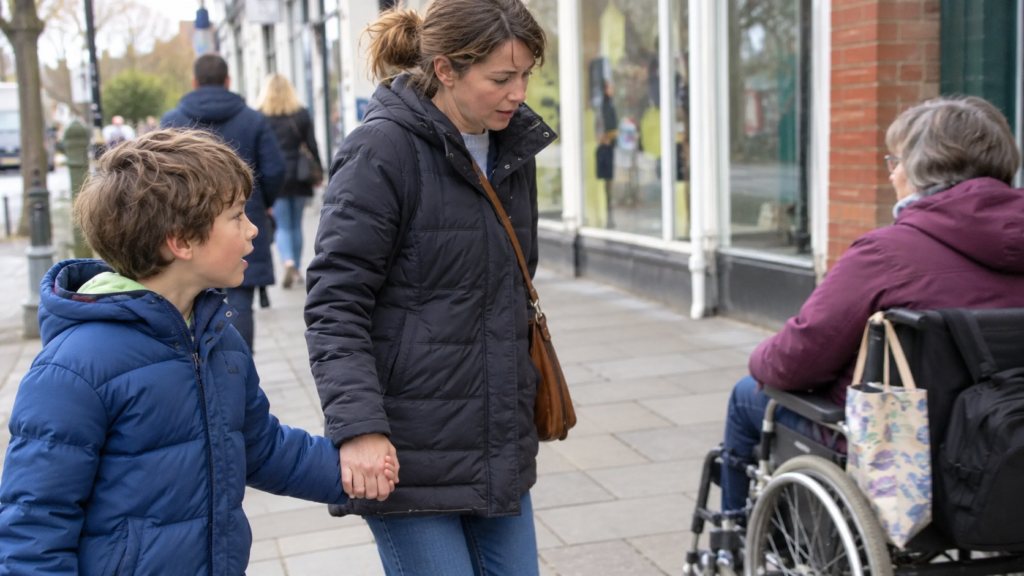
An autistic child staring at people may be studying faces and expressions to learn how others behave, or they may simply be fascinated by someone’s face or voice. They may not yet realise that a long look can feel uncomfortable to another person, and you can explain this kindly while treating their curiosity as natural.
Some autistic children avoid eye contact (this is called gaze aversion or eye avoidance) while others use intense eye contact or look for a long time, so eye contact avoidance and staring can both be part of how your child watches the world. Both are natural variations, and I explain more in my article on autism and eye contact, because making eye contact is only one way to show listening or connection.
Staring Spells: When a Doctor Should Check
Many staring spells are non-epileptic spells, which are not seizures. A small number are absence seizures, brief seizures without shaking. Johns Hopkins Medicine describes episodes lasting about 15 seconds that start and stop suddenly, after which your child returns to normal. Mayo Clinic describes about 10 seconds, sometimes up to 30, with a vacant stare, eyelid fluttering or lip smacking, usually without confusion afterwards.
Staring spells can look very like everyday staring, so I have put the main differences in the table below (the middle column is based on what I see in my clinic, and the last column draws on Johns Hopkins Medicine and Mayo Clinic).
| What you notice | Everyday staring (focus, overload or interest) | Spell needing a doctor’s check |
|---|---|---|
| How long it lasts | Focus or overload varies | Often about 10 to 15 seconds |
| Response to their name | May respond after processing time | May not respond |
| How it starts and stops | Often linked to activity or surroundings | Sudden start and stop |
| Other signs | Absorbed or withdrawn | Possible eyelid or mouth movements |
| Afterwards | May need recovery time after overload | Usually resumes immediately |
This comparison is a guide to what you might notice, not a diagnostic test.
I recommend seeing your child’s doctor if your child does not respond to their name or a finger snap during a spell. Frequent spells can affect learning and concentration and can go unnoticed for years.
Your child’s doctor may refer them to a neurologist for tests such as a painless EEG (a test of brain activity). Please call your local emergency number for any seizure lasting more than five minutes.
Autism and Staring: What Helps When Your Autistic Child Stares
If you are worried about your child’s staring, I suggest keeping a few phone notes about when it happens, what came before it and whether your child responds, so you can share them with school or your child’s doctor.
When it happens, say your child’s name, then wait and give them time to come back. If it looks like overload, reduce noise and bright light, and ask for their attention without insisting on eye contact.
If your child stares at people in public, it helps to know that many children do this, especially when someone looks different from the people they see every day (for example, a person with a visible disability). I would normalise it, and a social story (a short, personalised story that explains a social situation) can help your child understand what to do instead.
If your child is too young, or unable for any other reason, to learn social rules through social stories, you can gently distract them or divert their attention. It also helps to tell their teacher what you have noticed, so that staring in class is not mistaken for daydreaming.
Support While You Work This Out
Questions about autism come up again and again, and it helps to have somewhere to turn. Everlief Parent Club is my membership for parents of autistic or ADHD children, with practical, clinically grounded help from our child psychologists on autism, behaviour and everyday family life.
For £9.99 or US$12.99 a month (you can cancel anytime) you will find a searchable library of webinars and Q&As from our child psychologists, short courses from me, and a members-only Printables Library with more than 30 worksheets, activity books and cards. I would love you to come and take a look.
Frequently Asked Questions
Staring alone cannot confirm or rule out autism, and it is only one of many possible early signs of autism, including in toddlers. An autism assessment looks at your child’s wider development, communication, sensory experiences and everyday needs.
Many autistic children enjoy watching lights, fans and other repeating movements, because it feels predictable and calming. It is usually visual stimming, and safe watching can carry on.
An autistic child staring at people may be studying faces and expressions to learn how others behave, or may simply be fascinated by someone’s face or voice. They may not yet realise that a long look can feel uncomfortable to another person, and you can explain this kindly while treating their curiosity as natural.
Staring at lights, a washing machine or into space is usually harmless and does not need stopping, so I recommend responding to your child’s needs and reducing overload where you can. Staring at someone who looks very different from your child is not always harmless, because the person may feel uncomfortable, so it helps to step in kindly by gently diverting your child’s attention and using a social story. If your child does not respond during a spell, please ask their doctor for advice.
Please see your child’s doctor if your child does not respond to their name or a finger snap during a spell. Frequent spells can affect learning and concentration and can go unnoticed for years, so a doctor may refer your child to a neurologist for a painless EEG (a test of brain activity). Call your local emergency number for any seizure lasting more than five minutes.
Next Steps If You Are Worried About Your Child’s Staring
I hope this has helped you feel more confident about what your child’s staring means. Stay curious about what it is telling you, and if you would like more support, I would love to welcome you to Everlief Parent Club.
Dr Lucy Russell is a UK clinical psychologist and Clinical Director of Everlief Child Psychology. She qualified as a clinical psychologist from Oxford University in 2005 and worked in the National Health Service for many years before moving fully into her leadership and writing roles.
In 2019 Lucy launched They Are The Future, a support website for parents of school-aged children. Through TATF Lucy is passionate about giving practical, manageable strategies to parents and children who may otherwise struggle to find the support they need.
Lucy lives with her family, rescue cats and dog, and also fosters cats through a local animal welfare charity. She loves singing in a vocal harmony group and spending time in nature.
