
Teenage Behaviour Contracts: What They Are, How to Use Them & Free Template

As a clinical psychologist who works with teenagers and families every day, I am often asked about teenage behaviour contracts. Do they work? When should you use one? And how do you avoid the common pitfalls?
The answer is that a behaviour contract can be a useful tool, but only when it is carefully used in the right way, at the right time, and with your teenager fully on board.
Free Teenage Behaviour Contract Template
If you would like a ready-to-print template to work from, get my free teenage behaviour contract below. It includes a worked example to help you get started.

What Is a Teenage Behaviour Contract?
Whether you call it a teenage behaviour contract, a parent-child contract, a behaviour contract for teens, or simply a written agreement, the idea is the same. It is a document that sets out a specific expectation or goal, agreed between a parent and teenager together as a collaborative process.
It is not a punishment. It is not something you hand to your teen and ask them to sign. It works only when both sides feel heard, respected, and genuinely committed.
A good teenage behaviour contract covers:
- The specific behaviour being addressed
- Clear expectations of what success looks like
- Rewards and consequences agreed in advance
- A review date
Relationship First, Contract Second
Before you think about drawing up a teenage behaviour contract, it is worth stepping back and asking a more fundamental question: how is your relationship with your teenager right now?
Teenage behaviour contracts are not a first resort. They sit within a much broader foundation of mutual respect, trust, and open communication. If that foundation is solid, a contract can be a useful additional tool when a specific behaviour has become entrenched. If that foundation is shaky, a contract will almost certainly fail, and may make things worse.
In my clinical work, I always encourage parents to start with the relationship. Spend time with your teenager without an agenda. Listen to them properly. Make sure they feel genuinely heard. Alongside this, having household rules and clear expectations that are already understood and accepted by everyone in the family makes a huge difference.
You’ll find more ideas for building a stronger relationship with your teenager on my parenting teenagers support page, along with free worksheets and practical guides.
A teenage behaviour contract is most likely to succeed when it sits on top of all of this, as a specific, time-limited response to an ongoing issue that you have not been able to resolve through conversation alone. It is a collaborative process, not a management tool. And it will only work if your teenager respects you enough to engage with it honestly.
TAKE THE QUIZ!
What Is the Best Age to Start a Behaviour Contract?
Teenage behaviour contracts work best from around age 11 or 12 upwards, when young people have sufficient brain development to understand accountability and engage meaningfully in the process.
Age is not the only factor, though. Some younger children with strong verbal reasoning can engage well with a simple contract. And some older teenagers may not be ready if the parent-teen relationship is strained or trust has broken down. Before reaching for a contract, ask yourself: is my teenager capable of meeting this expectation? Are we in a place of mutual respect? If the answer to either question is no, start there first.
When to Use a Behaviour Contract
Teenage behaviour contracts are most useful when there is a repeated pattern of problem behaviours affecting family life, when a new responsibility is being introduced such as a mobile phone contract or managing screen time limits, or when your teenager needs clear expectations made concrete.
Do not use a behaviour contract for vague goals. “Behave better” will not work. You need to describe the target behaviour in a single, clear sentence.

When Not to Use One
If your relationship with your teenager is very strained right now, hold off. Conflict resolution and connection come first. A behaviour contract will also not work if your teen is not yet capable of meeting the expectation. Brain development in teenagers is still very much in progress, and it is easy to overestimate what they can manage independently.
How to Create a Behaviour Contract That Works
Step 1: Hold a Family Meeting
Start with a calm family meeting when no one is stressed. Frame it as a team effort, not a done deal.
Step 2: Agree on One Specific Goal
Focus on a single measurable goal. Contracts that try to address several specific behaviors at once almost always fail.
Step 3: Build in Rewards and Consequences Together
Discuss positive reinforcement openly. What will your teenager earn privileges for? What are the logical consequences if the contract is not met? Keep natural consequences in mind too. Not everything needs a contract. Reserve contracts for situations where the stakes are higher or the pattern is entrenched.
Do not rely too heavily on external rewards. The long-term goal is internal motivation and self-regulation, not compliance.
Step 4: Write It Down Together
The free behaviour contract template above gives you a simple framework. Fill it in together, making sure your teenager contributes to the wording. Include your own commitments too. Boundary setting goes both ways, and this is one of the things that makes contracts succeed.
Step 5: Sign It
A signature makes it feel real and signals commitment on both sides.

How Long Should a Behaviour Contract Last?
Two to four weeks is a good starting point. Build in a review date from the beginning. At the review, celebrate what has gone well, adjust what has not, and decide together whether to continue or wind the contract down. As your teenager matures, revise accordingly. Adolescent independence grows over time and your approach should grow with it.
What to Do If Your Teenager Refuses to Sign
If your teenager refuses, it usually means they do not feel heard, the expectation feels unfair, or the parent-teen relationship needs more work. Go back to the conversation, ask what they would need to feel comfortable signing, and listen properly. If they are still unwilling, a contract is not the right tool right now. Focus on connection and listening first.
What to Do If the Contract Breaks Down
Expect some bumps in the road. Stay calm, refer back to the written agreement, ask your teenager what got in the way, and renegotiate if needed. Consider revoking privileges only if this was agreed in advance and the behaviour has directly affected someone else. A contract breakdown is not a failure. It is information.
Two Examples of Behaviour Contracts in Action
Emilia’s Mobile Phone Contract
Emilia is starting secondary school and needs a phone for her bus journey. Before term starts, she and her parents draw up a mobile phone contract together, agreeing on rules around where the phone is kept at night and what the consequence will be if the rules are not followed. Emilia helps write the contract and signs it alongside her parents.

Matthew’s Chores Agreement
Matthew dislikes chores and tends to avoid them. With exams approaching, his mum reduces the chore list but wants to keep some household rules in place. Together they agree a simple, specific list with clear expectations. Because Matthew has been involved in setting the terms, he is much more willing to follow through.

Ready to Go Deeper?
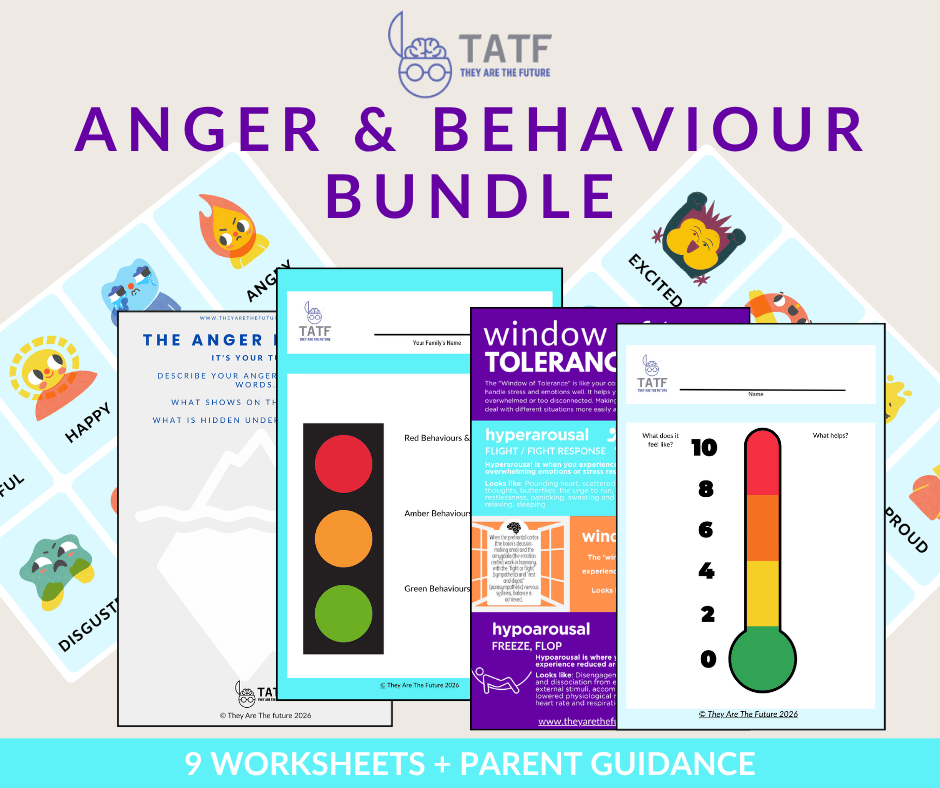
If problem behaviours and conflict are a regular feature of life with your teenager, my Anger and Behaviour Bundle is designed to help. It includes nine practical worksheets, each sitting inside its own mini course with full parent guidance, covering everything from understanding what drives anger to concrete strategies for calmer, more confident parenting. Available worldwide for just £17 (about $23 USD).
Explore the Anger and Behaviour Bundle
Summary
Teenage behaviour contracts work best when they are collaborative, specific, and used at the right moment. When the conditions are right, a well-constructed parent-child contract can genuinely shift a stuck pattern, rebuild communication, and help your teenager develop the self-regulation and accountability they will carry into adulthood.
If you have not already grabbed the free teenage behaviour contract template, you can get it below and start the conversation with your teenager today.
Dr Lucy Russell is a UK clinical psychologist and Clinical Director of Everlief Child Psychology. She qualified as a clinical psychologist from Oxford University in 2005 and worked in the National Health Service for many years before moving fully into her leadership and writing roles.
In 2019 Lucy launched They Are The Future, a support website for parents of school-aged children. Through TATF Lucy is passionate about giving practical, manageable strategies to parents and children who may otherwise struggle to find the support they need.
Lucy lives with her family, rescue cats and dog, and also fosters cats through a local animal welfare charity. She loves singing in a vocal harmony group and spending time in nature.
