
Signs of Autism in Teens: What Parents Need to Know

Many young people reach their teenage years with undiagnosed autism, as traits often become more apparent during the high-pressure transition to secondary school. As a clinical psychologist specialising in autism, I will guide you through the key indicators and signs of autism in teens, explain why they are frequently missed, and outline how to support your teenager – with or without a formal autism diagnosis.
Signs of autism in teens often hide through masking and camouflaging, but surface under the demands of secondary school life. Watch for extreme internal stress, sensory sensitivities, social fatigue, and difficulty understanding or naming emotions.
Autism traits in autistic girls (in particular) often get covered up through camouflage; early parent insight helps prevent social burnout and longer-term mental health difficulties for your teen.
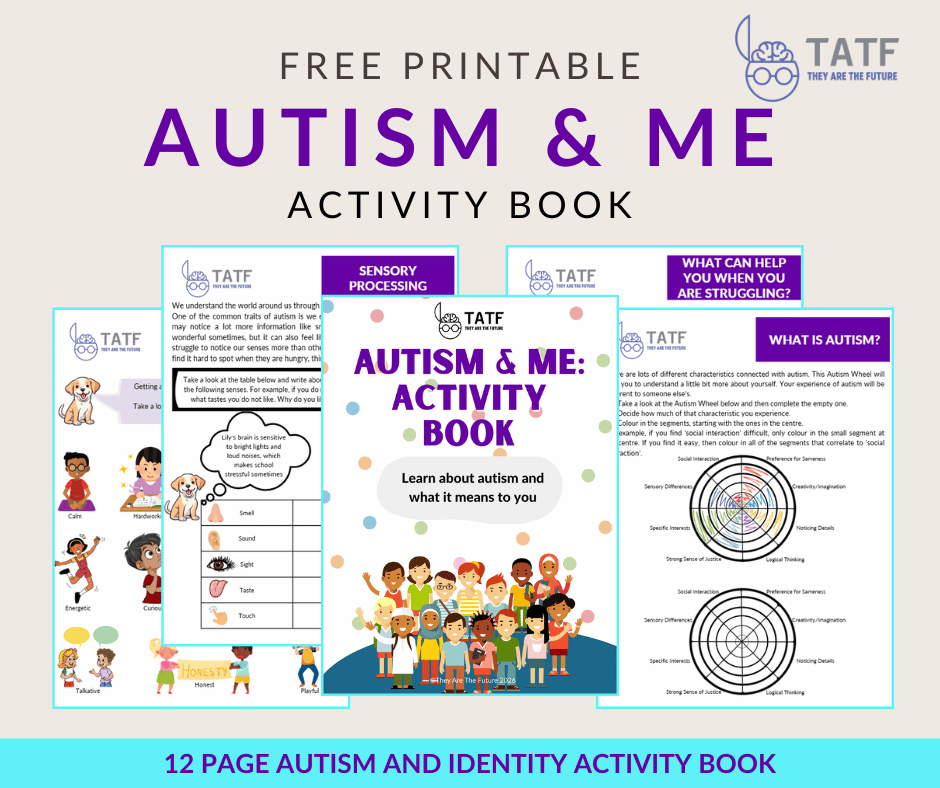
What are the Main Symptoms of Autism in Teens?
In my service we explain autism as a difference rather than a disorder. This difference can bring many strengths as well as difficulties, and many of the difficulties are caused by the way the world is designed rather than a fault within the autistic individual.
The key traits of autism spectrum disorder are:
- Social communication: Reading and using non-verbal communication like body language and facial expressions, and generating two-way conversation.
- Social interaction: Making inferences and predicting what might happen next in a social situation.
- Repetitive behaviours, rigid routines, and restricted interests: Focusing deeply on specific hobbies or performing habitual movements.
- Sensory processing differences: Such as sensitivity to sounds, textures, or lights.
If a teen is autistic, there will usually have been early signs in childhood. But these can be so subtle that nobody notices them at the time, and they only make sense when you look back.
Though autism is a lifelong condition, the signs are more obvious when a person is under stress, which is why many children fall under the radar during primary school but their autistic traits become more noticeable under the increased demands of secondary school.

Why Do Signs of Autism in Teens Often Go Unnoticed?
The early teenage years can be a perfect storm for the emergence of signs of autism in teens. Traits that were mild or hidden through masking and camouflaging in childhood often begin to surface during adolescence for several reasons:
- Puberty: Navigating significant hormonal changes and identity exploration.
- Academic pressure: Managing increased workload and complexity through high school, including demands on executive functioning.
- Increasing peer gap: Struggling to keep up as social relationships become more complex, requiring mastery of unwritten social rules, social cues, and subtle nuances like sarcasm and irony.

The 5 Most Common Hidden Signs of Autism in Teens
1. They Appear Fine in Class But Are Only Just Coping
The most common hidden autism sign I see in my practice is that a teenager seems fine in class, but their stress levels are extremely high.
Common classroom challenges include perfectionism, slower processing speed, executive functioning difficulties, difficulty filtering background noise, problems with abstract language like sarcasm and irony, and struggling with open-ended or unstructured tasks. If group work is required, the additional social communication demands can push some teens toward school refusal (EBSA).
2. They Mask Their Sensory Difficulties
Sensory processing differences vary for every teen, but adults around them are often completely unaware. If twenty people brush past you in a corridor and you have a sensitive startle response to light touch, your nervous system will become overloaded within minutes. A scratchy school blazer or shoes that feel too tight can cause constant high stress.
To cope, some teens use stimming or repetitive behaviours as a natural self-regulation tool, yet this often goes unnoticed. Sometimes the teen themselves is unaware of their limits until they experience meltdowns.
3. They Appear Socially Skilled But Struggle Underneath
Many teens I work with appear to fall into one of three groups.
The first group has a close circle of friends with whom they can relax, but find interactions outside that group exhausting due to challenges reading social cues.
The second group has people they spend time with but desperately craves deeper connection.
The third group finds nearly all interactions stressful, needs significant personal space, struggles with unwritten social rules, and experiences social burnout easily.
In all three groups, teens may feel a sense of social isolation and find it difficult to connect emotionally with others. You can read more in my article: Autism And Relationships: Supporting Young People.

4. They Find It Hard to Describe and Understand Their Emotions
Some autistic teens have difficulty understanding and describing emotions and also have less body awareness of the accompanying physical sensations. This is part of something called interoception, which directly impacts emotional regulation. It means that autistic teens can be highly stressed without fully realising it until they reach meltdowns or break down completely.
5. Anxiety, Depression and Mental Health Difficulties
If life is constantly socially demanding and sensory information is overwhelming, this can cause chronic mental health difficulties. Teenagers with autism are more likely to experience anxiety and depression than their neurotypical peers, as well as social withdrawal.
Chronic stress is also a risk factor for physical ill-health. Read my article: Autism And Anxiety: Supporting Children In An Imperfect World.

What To Do If You Spot Signs of Autism in Your Teen
Start by documenting specific examples of your teenager’s challenges, particularly those relating to social communication, sensory processing differences, and restricted interests. Then book an appointment with your GP or paediatrician to share these observations and formally request a referral for professional evaluation. Early intervention makes a significant difference, even for older teenagers.
Should you seek an autism diagnosis?
On balance, most teens benefit from the empowerment that comes with an assessment. Be cautious about the idea of high-functioning autism or “mild” autism, as it can be misleading. A teen may be very good at masking, meaning their signs appear mild externally but take a significant toll on their mental health internally through sensory sensitivities, anxiety and depression, and emotional exhaustion.
When discussing a potential diagnosis with your child, start the conversation with curiosity and validation rather than labels. Focus on how it might explain their experiences and unlock better support.
Keep the dialogue open and collaborative, ensuring they understand that being autistic is a difference in the way they experience the world rather than something that needs fixing. It can be helpful to frame the potential assessment as a tool for self-discovery, that can reduce their stress and help them thrive in environments that better match their needs.

Top Tips for Supporting a Teen With Signs of Autism
- If there are traits, treat as autism. There is nothing to be lost by assuming a child is autistic if you have observed autism signs. This allows you to adjust your perspective and support their specific needs without waiting for a formal autism diagnosis.
- Look below the surface. By the time children become teens, they are often masters of masking and camouflaging their social difficulties. They may nod when they don’t understand an instruction or laugh at a joke they don’t follow just to fit in. Always look for signs of exhaustion, which indicate their energy has been drained by masking.
- Look beyond the stereotypes. Don’t dismiss the possibility of autism because a teen makes eye contact, reads body language, or has friends. Many autistic teens have learned to perform these actions with great effort, and the cost is invisible.
- Encourage rest and downtime. Autistic teens almost always need more rest than neurotypical peers to recover from overstimulation, which can lead to social withdrawal. Provide a time-out card for school, ensure quiet spaces for soothing activities, and allow 1-2 hours of downtime after school before any academic demands.
- Be flexible. If a child has slow processing speed, dropping a GCSE subject to provide free time for decompression can be transformative.
- Be subtle. Respect your teen’s desire not to stand out. If they won’t use noise-cancelling headphones in public, work together to find more discreet strategies to manage sensory sensitivities.
- Be consistent. Home and school need to be aligned. A dedicated key member of staff who communicates regularly with parents and reviews a one-page profile of the teen’s needs is invaluable.
- Build your knowledge. Useful resources include the National Autistic Society, Ambitious about Autism, and Autistica.
While a formal diagnosis can certainly help trigger specific legal protections and school support systems, it is not always a prerequisite for receiving help. Many schools are willing to implement reasonable adjustments and accommodations if they recognize a student’s needs and the difficulties they are experiencing.
If you suspect your teenager is struggling, I strongly advise you to start by discussing these challenges with the school’s Special Educational Needs Coordinator (SENCO) or pastoral lead immediately. Taking a proactive approach allows you to secure support based on your child’s observed needs rather than waiting for the lengthy process of a formal clinical diagnosis.

Spotlight on Signs of Autism in Teen Girls
Autistic girls are frequently expert maskers. Their repetitive behaviours and restricted interests may seem mainstream, though the intensity with which they pursue them often stands out. Social burnout, anxiety and depression, and school refusal are particularly common in undiagnosed autistic girls.
Case Study: Hannah (Aged 14)
Hannah was quiet, had friends, and was academically successful. Beneath the surface, she struggled with social communication and felt overwhelmed by unwritten social rules. She relied on rigid routines to manage her environment. Her internal struggle with sensory sensitivities and emotional regulation was invisible until a professional evaluation provided the clarity she and her family needed.
Frequently Asked Questions
What are the 3 main signs of autism spectrum disorder?
Differences in social communication, repetitive behaviours or restricted interests and rigidity of thinking, and sensory processing differences.
How do you know if a teenager is autistic?
Keep a diary over several months of signs of autism you have spotted and discuss them with your GP, requesting a referral for professional evaluation.
What does autism look like in a teenager?
There is no single presentation. It ranges from the highly sociable but socially exhausted, with challenges in social interaction and eye contact, to the withdrawn and anxious.
What is high-functioning autism in teenagers?
High-functioning autism is no longer an accepted medical term. Autism spectrum disorder is multidimensional; a teen may be strong in one area but struggle significantly in others.
Is there a teenage autism test?
There is no single test. A formal assessment usually involves clinical interviews such as DISCO or ADOS 2, occupational or speech therapy assessments, and school observations.
What is the timeline for receiving an autism diagnosis for a teen?
There is no fixed timeline for receiving an autism diagnosis, as the process varies significantly depending on local service availability and waiting lists. A formal assessment typically involves a series of clinical interviews and observations, which can take several months from the initial GP referral to the final diagnostic report.
Summary
Understanding the subtle signs of autism in teens is the first step toward providing the right support for your child. By looking beyond the stereotypes and acknowledging the challenges of masking and camouflaging, you can create a safer, more nurturing environment for your teenager.
If you notice signs of autism in your teen, seeking a professional evaluation can have a profound impact on their mental health and be a transformative step toward empowerment.
If you would like expert guidance on understanding and supporting your autistic teenager, my Embracing Autism parent course is designed specifically for parents like you. It brings together five autism specialists to give you the knowledge, strategies, and confidence to support your child in a way that truly makes a difference.
Dr Lucy Russell is a UK clinical psychologist and Clinical Director of Everlief Child Psychology. She qualified as a clinical psychologist from Oxford University in 2005 and worked in the National Health Service for many years before moving fully into her leadership and writing roles.
In 2019 Lucy launched They Are The Future, a support website for parents of school-aged children. Through TATF Lucy is passionate about giving practical, manageable strategies to parents and children who may otherwise struggle to find the support they need.
Lucy lives with her family, rescue cats and dog, and also fosters cats through a local animal welfare charity. She loves singing in a vocal harmony group and spending time in nature.
