
Autism Strengths: Celebrating What Autistic Children Do Best

Autism strengths are often overlooked in a world that often focuses on what autistic children find difficult. But in my clinical work at Everlief Child Psychology, I see every day how much neurodivergent individuals have to offer.
This article explores the most significant autism strengths, explains the science behind them, and offers practical guidance for parents and teachers who want to take a genuinely strengths-based approach.

Why Autism is Best Understood as a Difference, Not a Disorder
Autism is classified as autism spectrum disorder under the DSM-5 criteria, but many professionals, including me, argue that this term is unhelpful.
The social model of disability offers a more useful lens. It suggests that the difficulties autistic adults and children face are often caused by a world designed for neurotypical people, rather than by anything “wrong” with the autistic brain.
Neurodiversity, the idea that neurological differences are natural variations of the human brain, is an idea I actively promote in my practice. When we embrace it, we stop trying to “fix” autistic children and start asking how we can better support them to thrive.

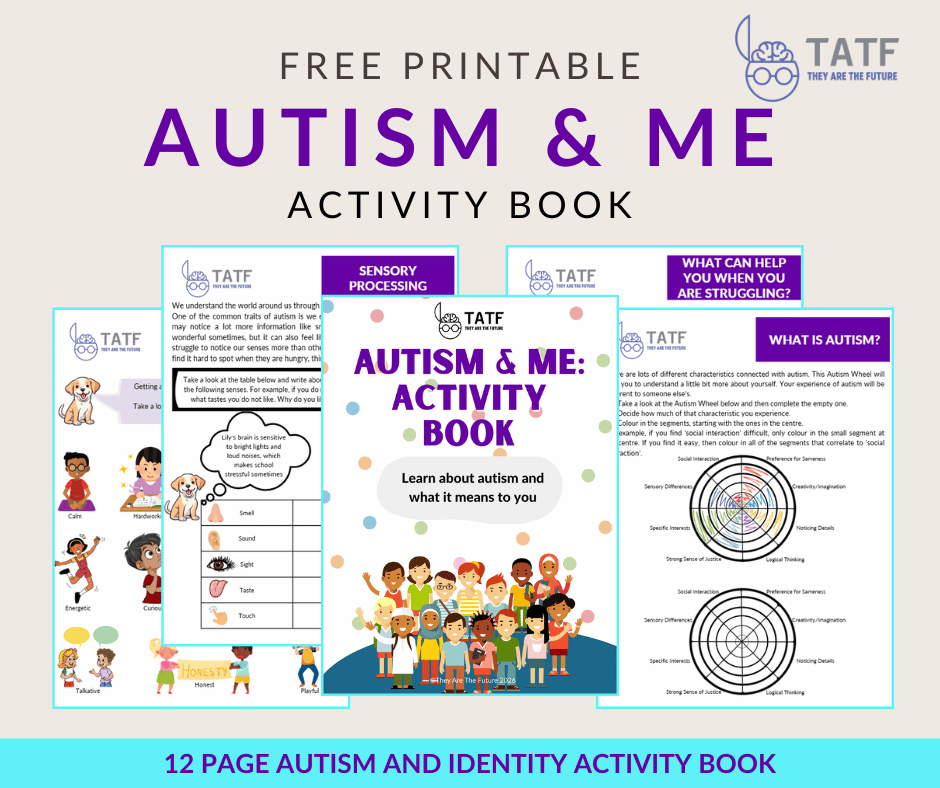
The Main Autism Strengths
Not every autistic person will have every strength listed here. Autism is a spectrum, and individual profiles vary enormously. But the following autism strengths appear consistently in research and in my clinical experience.
1. Hyperfocus and Special Interests
One of the most well-documented autism strengths is the ability to hyperfocus deeply on special interests and focused interests. Research suggests that autistic brains may process attention, motivation, and interests differently, which can make special interests especially powerful and absorbing.
The benefits of hyperfocus include:
- Building skills that can translate directly into career opportunities
- Developing genuine expertise in a chosen field
- Sustaining effort on complex tasks over long periods
- Finding deep purpose and satisfaction through focused interests

Case Study – Adam
Adam is thirteen and passionate about computer programming. From the age of nine, his hyperfocus on coding led him to develop his own mobile applications. At school he struggles with the standard curriculum, but in his area of special interests he is exceptional. His autism strengths in this area have transformed his confidence and self-worth.
2. Attention to Detail
Many autistic children and adults have a remarkable ability to notice details that others miss. This strength in attention to detail is an asset in fields requiring precision: science, engineering, mathematics, art, and drama among them.
Autistic adults with strong attention to detail often excel at:
- Producing work of exceptional accuracy and quality
- Spotting errors in complex data or written work
- Noticing inconsistencies that others overlook
Autistic Strengths Case Study – Ella
Ella is fifteen and passionate about acting. Day-to-day social situations can feel overwhelming for her, but on stage she comes alive. She picks up on tiny details in her characters that other actors her age simply miss, making her performances genuinely memorable.
The scripted, structured nature of theatre also suits Ella perfectly, giving her a sense of control that does wonders for her confidence.
3. Pattern Recognition and Systems Thinking
Many neurodivergent individuals have a natural gift for pattern recognition and systems thinking: the ability to identify underlying structures and rules within complex information. This strength underpins excellence in mathematics, computing, music, and science.
Systems thinking also helps some autistic people:
- Spot logical flaws and inefficiencies in processes
- Create order and structure in complex environments
- Excel in roles requiring analytical rigour
4. Excellent Memory
Many autistic people have an excellent memory, particularly for factual information related to their focused interests.
Theories suggest this may relate to differences in how the hippocampus encodes and stores information, as well as the repetitive behaviours and information-gathering that many autistic people engage in naturally, which reinforces memory and factual learning.

5. Visual Learning and Spatial Reasoning
Research has found that many autistic people are strong visual learners who process information through spatial and visual channels rather than verbal ones.
Studies suggest differences in the posterior regions of the brain, including areas responsible for visual processing, may give autistic people superior visual search abilities and spatial reasoning skills.
This means many autistic children thrive when:
- Cognitive advantages in visual processing are actively supported in the classroom
- Information is presented visually rather than verbally
- They do tasks involving maps, diagrams, or spatial puzzles
6. Logical Thinking
Autistic people often have a strong ability to reason logically, make connections between seemingly unrelated concepts, and cut through ambiguity to find clear solutions. This strength in logical thinking can shine in mathematics, coding, science, and systems design, but it also helps in everyday life: from organising routines to navigating complex information.
Research supports the idea that autistic brains process information in detailed, systematic ways that support logical thinking and problem solving.
7. Creativity and Unique Perspective
The unique perspective that comes with processing the world differently can fuel genuine creativity. Autistic people often question norms that others accept without question. Greta Thunberg is one of the most high-profile examples of an autistic person whose unique perspective has led to a profound global impact.
In art, design, writing, and technology, the ability to think differently from the majority is not a weakness. It is often the source of the most original and meaningful contributions.
Creativity in autistic people often emerges through:
- Deep immersion in areas of special interests
- Vivid imaginations and distinctive sensory experiences
- Willingness to challenge conventional thinking

8. Honesty and Integrity
Many autistic people have a strong, instinctive commitment to honesty and a clear sense of right and wrong. In fact, many autistic children I work with simply find deception illogical: the concept does not make sense to them.
This honesty connects closely to a strong sense of social justice. Many autistic people are passionate about fairness and are not afraid to speak up when something is wrong. This can be an enormous strength in education, the workplace, and wider society.
9. Loyalty and One-to-One Connection
Although social communication in groups can be challenging, many autistic children and adults excel in one-to-one relationships. When they connect with someone they trust, they are often deeply loyal, attentive, and committed.
It is worth knowing about the double empathy problem: research shows that when autistic and non-autistic people struggle to communicate, it is rarely one person’s fault. The difficulty tends to be mutual, and autistic people are not simply “bad at communicating.”
10. Stimming as a Strength
Stimming, which refers to repetitive behaviors used for self-regulation, is often misunderstood as problematic. In reality, stimming helps many autistic people manage their sensory processing needs, reduce anxiety, and maintain focus. It can also be the route through which physical skills develop. Many of the autistic children I work with develop genuine mastery in movement-based activities through repeated, joyful practice.

Autism Strengths in the Classroom
For teachers, understanding autism strengths transforms how you support autistic children. Practical approaches include:
- Offering visual learning resources wherever possible
- Allowing focused interests to be incorporated into projects and assessments
- Providing structured tasks with clear rules rather than open-ended ambiguity
- Recognising attention to detail and logical thinking as assets
- Creating quiet spaces that respect sensory processing differences
Autism Strengths in the Workplace
Employment rates among autistic adults remain significantly lower than they should be, largely because workplaces are not yet well designed for neurodivergent individuals.
Yet the cognitive advantages many autistic people bring, including hyperfocus, pattern recognition, attention to detail, systems thinking, logical thinking, and excellent memory, are exactly the skills many employers most need.
Supporting autistic adults in the workplace means removing barriers, not lowering expectations.

The Importance of a Formal Autism Diagnosis
A formal autism diagnosis through diagnostic evaluation gives autistic children access to support, reasonable adjustments, and a framework for understanding themselves. Importantly, it also opens the door to a strengths-based conversation.
My diagnostic reports always include a detailed strengths profile alongside any areas of difficulty, and I write a personal letter to every child I assess celebrating their individual autism strengths.
If you would like expert guidance on understanding and celebrating your autistic child’s strengths, my Embracing Autism parent course brings together five autism specialists to give you practical strategies and deep understanding. It is designed for parents who want to move beyond the diagnosis and truly help their child thrive.
You might also find my free strengths cards a useful starting point for identifying and celebrating your child’s individual strengths today.
A Final Word: Celebrate Neurodiversity
Neurodiversity is not just a concept for clinicians. It is a framework for how we raise and educate children. When we genuinely embrace the idea that neurodivergent individuals bring a unique perspective that enriches all of us, we create schools, families, and workplaces that work better for everyone.
Autism strengths can be significant, and they deserve to be at the centre of every conversation about autism.
Great Resources
Dr Lucy Russell is a UK clinical psychologist and Clinical Director of Everlief Child Psychology. She qualified as a clinical psychologist from Oxford University in 2005 and worked in the National Health Service for many years before moving fully into her leadership and writing roles.
In 2019 Lucy launched They Are The Future, a support website for parents of school-aged children. Through TATF Lucy is passionate about giving practical, manageable strategies to parents and children who may otherwise struggle to find the support they need.
Lucy lives with her family, rescue cats and dog, and also fosters cats through a local animal welfare charity. She loves singing in a vocal harmony group and spending time in nature.
