
ADHD Brain Fog in Children: What Helps When Your Child Zones Out

ADHD brain fog in children is that slowed-down state where your child zones out, takes a long time to answer and loses the thread halfway through a task. It is usually a sign that their brain is overloaded or tired, and the most helpful response is to lower the demands, protect sleep and break tasks into very small steps.
I’m a UK child clinical psychologist and I lead Everlief Child Psychology, where we support families through assessments and the follow-up afterwards. Brain fog comes up often in my clinic, and there is a lot you can do to help.
Key Takeaways
- ADHD brain fog in children shows up as zoning out, slow processing and forgetting what they were doing, and is worse when your child is tired, stressed or bored.
- Sleep, food, physical activity and the amount of mental load in the day all affect how much brain fog your child has.
- Small changes (shorter tasks, written steps, movement breaks and calm wind-down time) usually help your child feel clearer.
Your Child’s ADHD Action Plan
If your child has ADHD, or you strongly suspect it, I created Your Child’s ADHD Action Plan to give you a clear plan for whatever is hardest right now, from homework to focus, with words to use in the moment and a one-page summary for school. It is for parents of children aged 5 to 17.

NewA new tool from me, Dr Lucy Russell
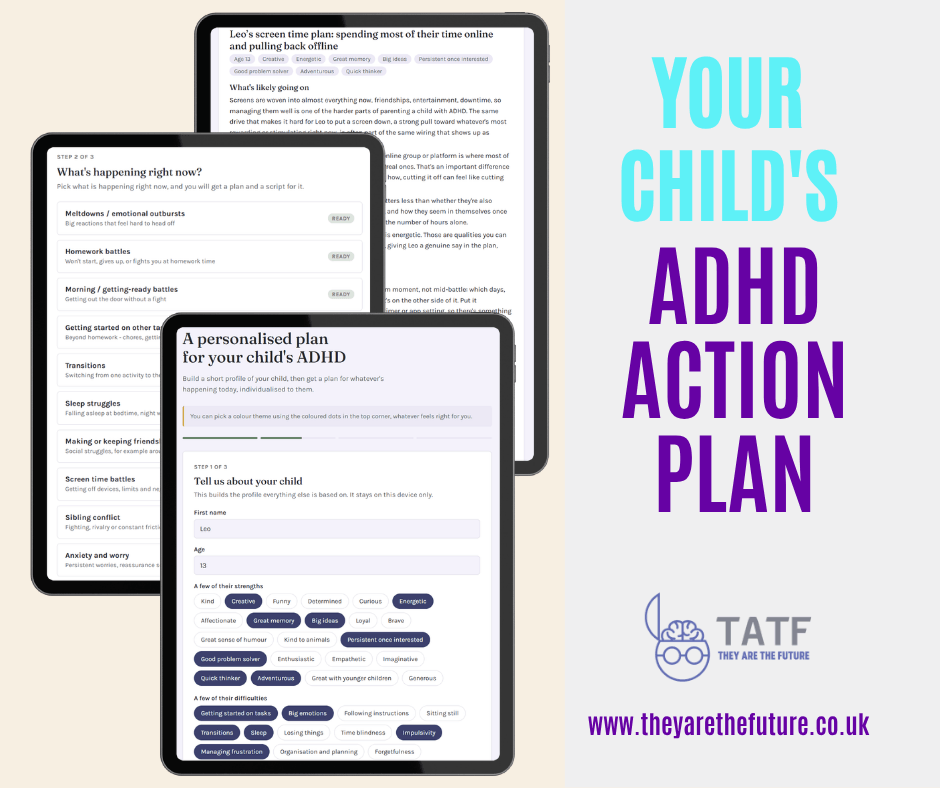
Your Child’s ADHD Action Plan
Tell my new online tool about your child and what’s happening today. In about two minutes you get a plan built around them: what’s likely going on, what to say in the moment and what to try next time.
Early access price: £17 ($21 USD). One payment, lifetime access.
What ADHD Brain Fog Looks Like in Children
Children rarely say “I have brain fog”. They are more likely to say “my head feels fuzzy”, “I can’t think” or “I don’t know” when you ask a simple question. Older children may seem to zone out or do things like doom scrolling on social media.
Felix, age 10 (not a real child, but based on many children I’ve worked with), would gaze into space after busy school days and take ages to answer. He would start getting changed for football, then be found ten minutes later with one sock on, looking lost. When we talked it through, Felix described his brain fog as his head being “full of cotton wool” by the end of the day.
Common symptoms of brain fog in children include:
- Zoning out or staring into space, especially in long lessons or conversations
- Slow processing speed, needing questions repeated or taking a long pause before answering
- Losing track of instructions after the first step
- Mental tiredness, irritability or tearfulness, particularly after school
- Finding it hard to get started on homework, even when they want to do it

Why ADHD Can Cause Brain Fog
Brain fog is not an official ADHD symptom, but it is a common experience for children with ADHD, and there are clear reasons for it. ADHD affects executive function, the set of brain skills we use to plan, start tasks, follow instructions and keep attention on one thing. One of these skills is working memory, which is the ability to hold information in mind while you use it (for example, remembering the first part of an instruction while you carry out the second). When working memory is stretched, your child can lose their train of thought or forget what they were about to do, which can look and feel like a mental fog.
Attention is also affected by how the brain uses dopamine, a chemical messenger that helps with motivation and focus. In ADHD, dopamine works differently, so tasks that feel dull or effortful take far more concentration to get through. Over a school day, all of this effort adds up, and by the afternoon your child’s brain is often tired. That mental tiredness is often what brain fog feels like. You can read more in my article on inattentive ADHD in kids.
What Makes ADHD Brain Fog Worse
Several things tend to make ADHD brain fog worse:
| What makes brain fog worse | What you might notice | What helps |
|---|---|---|
| Poor or late sleep | Seeming dazed in the morning, slow to get going | A consistent wind-down and bedtime routine |
| Mental overload | Zoning out late in the school day | Short breaks and fewer instructions at once |
| Low interest or boredom | Drifting off during homework | Small, timed chunks of work |
| Stress or worry | Freezing, “I don’t know” answers | Calm reassurance and time to talk |
| Lots of screen time | Mentally flat and irritable after gaming | Screen-free time before homework and bed |
Sleep is one of the biggest factors I see. Many children with ADHD find it hard to switch off at night, so they start the day already tired, and good sleep hygiene (habits such as a calm, dark room and the same bedtime each night) makes a big difference to memory and focus. If bedtime is difficult, my guide to why an ADHD child won’t sleep explains what is often going on.
Is It Brain Fog or Inattentive ADHD?
The two overlap. In my experience, inattention is part of a child’s everyday profile, while brain fog tends to come and go. If some days are much “foggier” than others, look at what changed: sleep, a busy week or a worry at school.
Brain fog can happen with or without an ADHD diagnosis. Poor sleep, stress and a recent illness can all bring it on, and after an illness it usually improves as your child recovers. Doctors do not yet know exactly what causes brain fog, although one theory is that low-level inflammation (the body’s immune response) plays a part, and tiredness can make it worse (you can read more in this NHS hospital guide to brain fog for young people). The questions below explain when to see a doctor about brain fog.

What Helps With ADHD Brain Fog in Children
Start with one or two of these ideas that fit your family.
- Protect sleep. A calm bedtime routine helps your child’s brain recover overnight, and my ADHD sleep routine guide walks you through one.
- Give one instruction at a time. Say it calmly and check your child has heard it. A short written or picture list helps with longer tasks.
- Break tasks into small chunks. Ten minutes of homework followed by a short movement break often achieves more than an hour at the table.
- Build in physical activity and snacks. A few star jumps or a quick walk gives a small dopamine lift, and a snack and a glass of water after school help too.
- Use co-regulation. Your calm voice and steady presence help your child’s nervous system calm down, and nervous system regulation comes before clear thinking.
- Plan recovery time. After a busy day, quiet time often helps brain fog lift.
- Talk to school. Share what helps at home with the class teacher or SENCo (special educational needs coordinator), who may not see how foggy your child feels by the afternoon. My article on helping your child focus in school has more ideas.
Frequently Asked Questions
Brain fog is not one of the official diagnostic criteria for ADHD, but many children with ADHD describe these symptoms, and parents see them often.
Children describe brain fog as a fuzzy, heavy or slow feeling in their head, as if their thoughts are stuck in treacle. They may forget what they were about to say.
Share what helps at home, such as one instruction at a time and short movement breaks, and ask whether your child could have a checklist for multi-step tasks and extra time to answer.
Speak to your child’s doctor if the symptoms are new, sudden or getting worse, or come with headaches, low mood, very low energy or problems sleeping. A doctor can check for other causes of cognitive dysfunction, such as low vitamin D levels, inflammation after an illness or long COVID. If your child already takes ADHD medication, including stimulant medications, mention the brain fog too, as the timing of doses can play a part.
Start With One Small Change This Week
Choose one idea, such as a calmer bedtime or ten-minute homework chunks, and try it for a week. Notice when your child seems clearer, because that shows you what to try next. Small, steady changes usually make the biggest difference to brain fog.
Dr Lucy Russell is a UK clinical psychologist and Clinical Director of Everlief Child Psychology. She qualified as a clinical psychologist from Oxford University in 2005 and worked in the National Health Service for many years before moving fully into her leadership and writing roles.
In 2019 Lucy launched They Are The Future, a support website for parents of school-aged children. Through TATF Lucy is passionate about giving practical, manageable strategies to parents and children who may otherwise struggle to find the support they need.
Lucy lives with her family, rescue cats and dog, and also fosters cats through a local animal welfare charity. She loves singing in a vocal harmony group and spending time in nature.