
8 Calming Things I Can Say to Myself When I Feel Anxious (Free PDF!)

Everyone experiences anxiety at times. Whether you’re a child or an adult, anxious feelings can take over your body and thoughts before you even realise it.
Learning gentle calming strategies can help you regain control and find peace again.
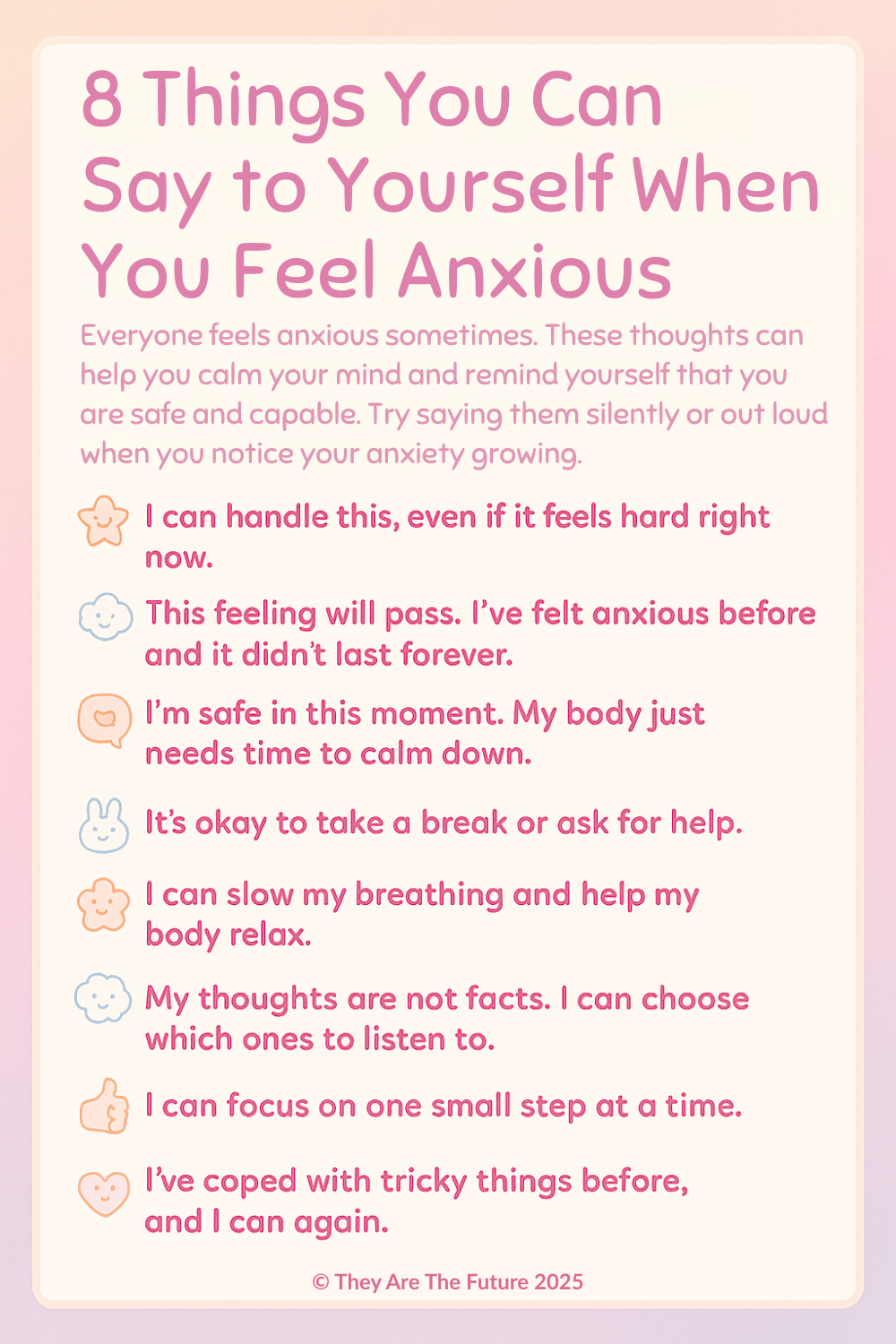
These eight statements come from my free printable worksheet, designed for children aged eight and up, but they’re just as powerful for parents and teachers. It’s a lovely resource for classrooms, calm spaces, or therapy rooms where emotional regulation and mental health for kids are being supported in everyday life.
Simple Self-Calming Phrases for Kids and Adults
- I can handle this, even if it feels hard right now
- This feeling will pass. I’ve felt anxious before and it didn’t last forever
- I’m safe in this moment. My body just needs time to calm down
- It’s okay to take a break or ask for help
- I can slow my breathing and help my body relax
- My thoughts are not facts. I can choose which ones to listen to
- I can focus on one small step at a time
- I’ve coped with tricky things before, and I can again
These phrases support emotional regulation, mindfulness, and resilience. Great for children and adults alike.

1. I can handle this, even if it feels hard right now
When your brain tells you something is too difficult, this phrase helps you challenge that thought. It activates your logical brain and reduces your stress response. It’s a simple example of self talk for kids that also works beautifully for adults.
2. This feeling will pass. I’ve felt anxious before and it didn’t last forever
No feeling lasts forever. Reminding yourself of that helps you ride the wave of anxiety instead of fighting it. This is one of the best coping skills for anxiety because it encourages calm patience.
3. I’m safe in this moment. My body just needs time to calm down
When your brain’s alarm system switches on, it floods your body with stress hormones. Reminding yourself that you’re safe helps your body return to balance. Having a calm down corner or calm space for kids can make this even easier, giving a visual and physical reminder that safety and calm are possible.
4. It’s okay to take a break or ask for help
Sometimes the bravest thing is to pause. Taking a short break, stretching or talking to someone trusted helps your nervous system settle. These everyday relaxation techniques are easy to practise at home or school.
5. I can slow my breathing and help my body relax
Breathing slowly through your nose and exhaling through your mouth helps activate your body’s rest system. This kind of breathing is often taught in mindfulness activities for kids and adults alike. It’s a quick way to feel calm and steady.
6. My thoughts are not facts. I can choose which ones to listen to
Anxious thoughts can sound convincing, but that doesn’t make them true. Learning to notice and question them is a key part of stress management for children and adults. Over time, this habit supports better mental health for kids and grown-ups too.
TAKE THE QUIZ!
7. I can focus on one small step at a time
Anxiety can make tasks feel overwhelming. When you take things step by step, your brain feels safer and more organised. This approach also supports positive behaviour management because calm, focused thinking leads to calmer actions.
8. I’ve coped with tricky things before, and I can again
Remembering past challenges helps you recognise your own resilience. This simple reflection builds confidence and self-belief. It’s one of the most powerful calming strategies for anxious moments.

Grab My Free Worksheet: 8 Things You Can Say to Yourself When You Feel Anxious
8 Things You Can Say to Yourself When You Feel Anxious is a gentle printable to build confidence, calm and self-awareness.
It fits beautifully alongside teaching children coping skills for anxiety or mindfulness activities for kids, helping children and adults alike practise healthy self-talk every day.
Here it is!
What’s something helpful I can say to myself when I feel anxious?
Try saying: “This feeling will pass. I’ve felt anxious before and it didn’t last forever.” It’s a gentle reminder that the tough moment you’re in won’t last forever and that you’ve gotten through it before.
Can kids really learn to calm themselves down?
They sure can. Simple phrases like “I’m safe in this moment” help kids name what they’re feeling and find their way back to calm. It doesn’t have to be complicated, just consistent and kind.
Why does everyone talk about breathing when you’re anxious?
Because it works. Slowing down your breath tells your body you’re safe. It helps turn off that panicky feeling faster than almost anything else.
How can teachers support anxious kids in the classroom?
One powerful way is to create a calm space, somewhere quiet with visuals, breathing prompts, and gentle affirmations. It gives kids a break and helps them reset without feeling like they’re in trouble.

Your Next Step For Parents: Reset Your Child’s Wellbeing
If you want to go deeper and help your child feel more regulated, resilient, and joyful every day, my Reset Your Child’s Wellbeing mini course will guide you step-by-step.
In under an hour, you will discover:
- The three daily shifts that lower your child’s stress levels naturally
- How to spot early signs of sensory or emotional overload before crisis hits
- Ways to adapt your home and routines so your child thrives without overhauling your whole life
It is practical, gentle, and grounded in my 20+ years as a clinical child psychologist supporting children and families.
And just like a well-designed calm space, it is something you can put into action straight away.
Join the Reset Your Child’s Wellbeing mini course here to give your child and yourself the tools to feel calm, connected, and in control again.
Related Articles
Window of Tolerance Worksheet: Children’s Emotion Regulation
7 Fun Classroom Activities to Help Children Understand Emotions
Intrusive Thoughts Worksheet PDF Printable and Guide
Dr Lucy Russell is a UK clinical psychologist who works with children and families. Her work involves both therapeutic support and autism assessments. She is the Clinical Director of Everlief Child Psychology, and also worked in the National Health Service for many years.
In 2019 Lucy launched They Are The Future, a support website for parents of school-aged children. Through TATF Lucy is passionate about giving practical, manageable strategies to parents and children who may otherwise struggle to find the support they need.
