
Is Toe Walking a Sign of Autism? Why Children Do It and When to Get Help

If you’ve noticed your child walking on tiptoes, you may have heard that toe walking and autism can be linked. Toe walking is common in autistic children, but on its own it doesn’t mean your child is autistic, and many children who toe walk need no treatment at all.
I’m a UK child clinical psychologist and Clinical Director of Everlief Child Psychology, where we support families through autism assessments and follow-up. Here I’ll explain why children toe walk and how to tell whether to keep an eye on it or seek advice.
Autism and Toe Walking: How Common Is It?
The NHS (in this toe walking leaflet) reports that around 1 in 5 autistic or ADHD children toe walk. Estimates vary between studies, so treat this as a rough guide.
Many autistic children walk with their heels down. Some children also toe walk whilst learning to walk, and the pattern may fade as they grow.
Is Toe Walking a Sign of Autism?
Toe walking on its own isn’t enough to identify autism (also referred to by its official name: autism spectrum disorder). A team of professionals look at your child’s wider development, including communication (such as a speech delay), social interaction, repetitive behaviours, sensory sensitivities and how everyday life is going at home and school.
Your child’s history helps the clinician understand other possible explanations, including habit, tight calves or a short Achilles tendon (the tendon at the back of the ankle). When no cause is found, clinicians use the term idiopathic toe walking.
If you have broader concerns, you can discuss an autism assessment for your child with your family doctor or paediatrician. Depending on where you live, assessment may be available through public health services, or privately if you are financially able to.
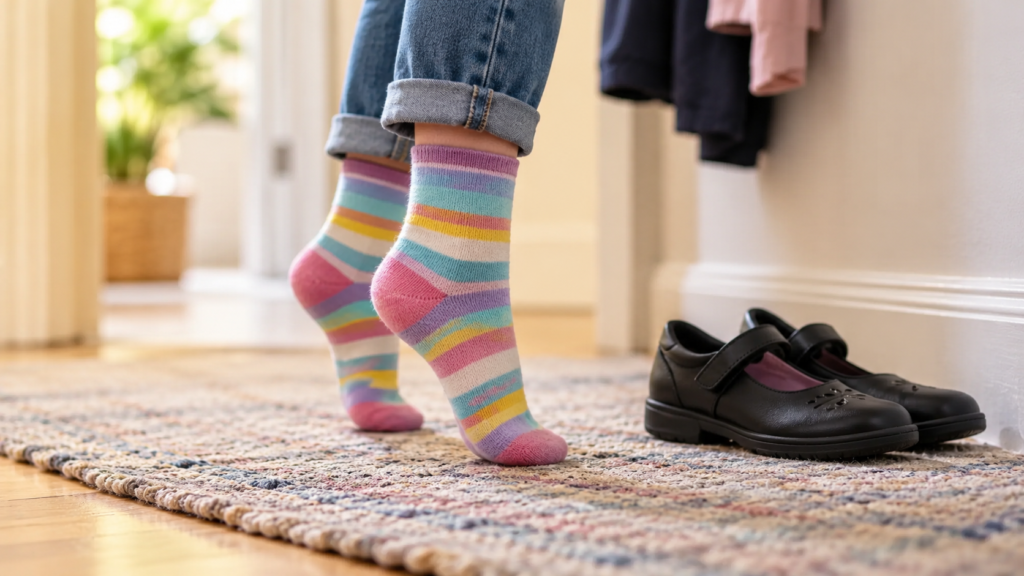
Why Autistic Children Walk on Their Toes
For your child, toe walking may change how movement or contact with the floor feels. Possible explanations involve several senses.
Proprioception tells you where your body is, such as knowing where your feet are without looking. Walking on tiptoes may provide stronger feedback through the feet and calves.
Your vestibular system (your sense of balance and movement) helps you stay steady whilst turning. Differences in this system may affect how your child shifts their weight.
Touch plays a part too. Your child may avoid the feeling of a cold floor under their whole foot, or seek a particular sensation through their toes.
Habit and tight calf muscles can also play a part, so the reason varies from child to child.
My article on sensory processing differences in autism explains more. If you can see sensory needs showing up in other parts of your child’s day too, my 33-page guide, What is Sensory Processing? A Guide for Parents, explains all eight senses (including the hidden ones), why your child reacts the way they do, and simple strategies for home and school.
Does Toe Walking Need to Be Fixed?
Toe walking doesn’t always need treatment. Support may help when it affects your child’s growth, development, movement or comfort, or causes pain.
Use this as a starting point for deciding what to do.
| Usually fine to keep an eye on | Time to see a doctor |
|---|---|
| Occasional toe walking with easy heel contact. | Pain or difficulty putting heels down. |
| Comfortable walking and usual activities. | Frequent falls or difficulty with activities. |
| Both feet move similarly, without discomfort. | Toe walking on one side only. |
The aim is for your child to move comfortably and join in with everything they enjoy.
When to See a Doctor About Toe Walking
Your family doctor or paediatrician is your starting point. A paediatrician (a doctor who specialises in children’s health) is often the key professional, checking for any underlying cause.
Seek prompt advice from a healthcare professional for pain, frequent falls, one-sided toe walking or difficulty placing the heels down. Changes in activities your child previously managed also need attention.
An assessment usually includes questions about when the toe walking started, watching your child walk, and checking their flexibility and strength.
Occupational therapy can help with sensory needs and everyday activities, and an occupational therapist may suggest exercises too. A children’s physiotherapist (physical therapy is the term used in some countries) can assess how your child walks, check their muscle tone and calf tightness, and recommend stretching exercises.
If toe walking begins suddenly after your child previously walked with heels down, arrange an assessment too.
How to Help a Child Who Toe Walks
Start by noticing patterns. Does toe walking happen barefoot, on certain surfaces or when your child is tired? Record any pain, falls or changes in what they can manage.
Choose well-fitting, supportive shoes that your child finds comfortable. Follow the exercises recommended after assessment, such as practising heel-to-toe walking, and keep any reminders about heels low-key.
Physiotherapy usually involves stretching and strengthening, and early intervention helps because stretching is easier before the muscles become very tight. If your child’s calf muscles are very tight, specialists may suggest splinting, ankle-foot orthotics (supports worn with shoes) or serial casting (a series of casts that slowly stretch the calf muscles).
You can also give your child the same kind of body feedback in other ways, such as jumping, climbing or carrying heavy shopping. My list of stim toys you already have at home has more ideas.
Frequently Asked Questions
Is toe walking autism, or could it be something else?
Toe walking is seen in many children, both neurodivergent children and those who aren’t. Often there’s no clear cause. Occasionally it’s linked to conditions affecting the muscles or nerves, such as cerebral palsy or muscular dystrophy, which is one reason a paediatrician checks your child’s muscle tone and strength.
Do autistic children grow out of toe walking?
Some children stop toe walking as they grow, while others continue, and an autism diagnosis can’t tell you which way it will go. Calf muscles can feel tighter during a growth spurt, so it helps to keep an eye on flexibility, comfort and what your child can manage.
Is toe walking a sign of ADHD or autism?
Toe walking can occur alongside either condition, and some children have both. You would need a broader developmental assessment to understand whether autism, ADHD or neither explains your child’s wider experiences.
Can special shoes help with toe walking?
Supportive footwear may help some children, and specialist shoes or inserts are best chosen after an individual assessment. Your child’s physiotherapist or occupational therapist can advise on what suits them.
Focus on Your Child’s Comfort and Movement
Your child’s comfort and ability to join in everyday life are your best starting points. Seek assessment when movement becomes painful, restricted or harder to manage.
To learn more about your child’s sensory needs, my guide What is Sensory Processing? A Guide for Parents is a good next step.
Dr Lucy Russell is a UK clinical psychologist and Clinical Director of Everlief Child Psychology. She qualified as a clinical psychologist from Oxford University in 2005 and worked in the National Health Service for many years before moving fully into her leadership and writing roles.
In 2019 Lucy launched They Are The Future, a support website for parents of school-aged children. Through TATF Lucy is passionate about giving practical, manageable strategies to parents and children who may otherwise struggle to find the support they need.
Lucy lives with her family, rescue cats and dog, and also fosters cats through a local animal welfare charity. She loves singing in a vocal harmony group and spending time in nature.
