
A Calmer Exam Morning: Practical Support for Parents and Teachers

The morning of an exam can be one of the most stressful times for children and teenagers. For some, anxiety may have been building for days or weeks. But it is often in those final few hours, just before leaving home or walking into school, that it peaks.
As parents and teachers, our role is not to eliminate stress but to support children to manage it.
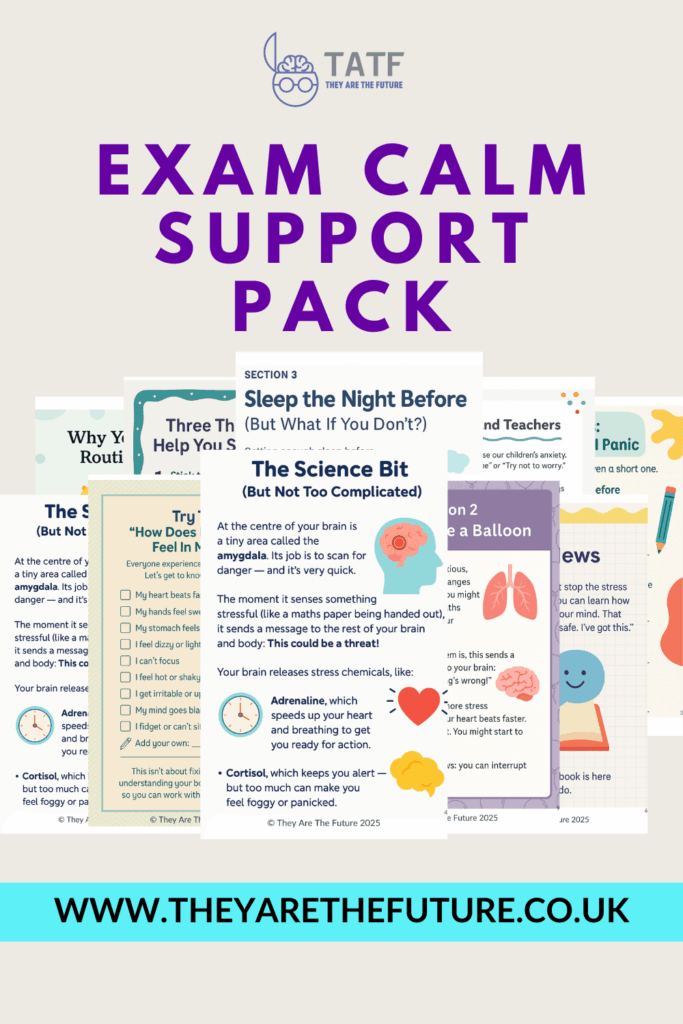
In this article I’ll share some practical tools from my Exam Calm Support Pack, including visual worksheets and calming strategies to guide children through exam day. You’ll also find helpful ways to reflect afterwards and begin to look beyond the exam itself.

Exam Morning: A Key Moment for Anxiety
Children often experience the strongest physical signs of anxiety in the morning. There may be nausea, a racing heart, or shaky hands. These sensations can feel overwhelming, especially if the morning is rushed or chaotic.
One of the most helpful things you can do is remove pressure wherever possible. If your child is doing exams this year, try to:
- Prepare things the night before: clothes, bag, snacks, water bottle
- Agree how they’re getting to school and who’s taking them
- Avoid rushing or criticism. Speak calmly, gently and kindly
You could say something like:
“You’ve done what you can. I’m proud of you.”
That one sentence models reassurance and unconditional support.
Inside the Exam Calm Support Pack, there’s a worksheet children can use to create their own Calm Morning Plan. It helps them think through practical steps like what time to wake up, how they’ll get ready, and what calming tools they’ll use. Creating this plan in advance gives children a sense of control and stability.
Exam Morning Calm Plan
Worksheets like the one below, contained in the pack, will help give your child the best possible chance of facing exam day confidently and succesfully. It’s really helpful to simplify life by following a checklist, as this can reduce overwhelm leading up to the exam.

In the Moments Before the Exam
Even with the calmest morning, nerves can surge as a child enters the exam room. They may feel frozen, light-headed or unable to think clearly. That’s why one section of the Exam Calm Support Pack focuses on nervous system calming techniques for the minutes before the exam starts.
Here are three that I recommend:
- Balloon Breathing – Imagine blowing up a balloon in your tummy as you breathe in slowly. Then let the air out even slower
- Tense and Release – Squeeze your hands into fists under the table. Hold for a few seconds, then relax them
- Quiet Phrase – Silently repeat something simple like “One step at a time”. This acts like a mental anchor
There’s a printable visual tool in the pack showing these steps. Children can keep it in their revision space or visualise it as they sit down in the exam room.
If Panic Hits in the Exam
Panic doesn’t always wait until the end of the test. It can appear suddenly, in the middle of a question.
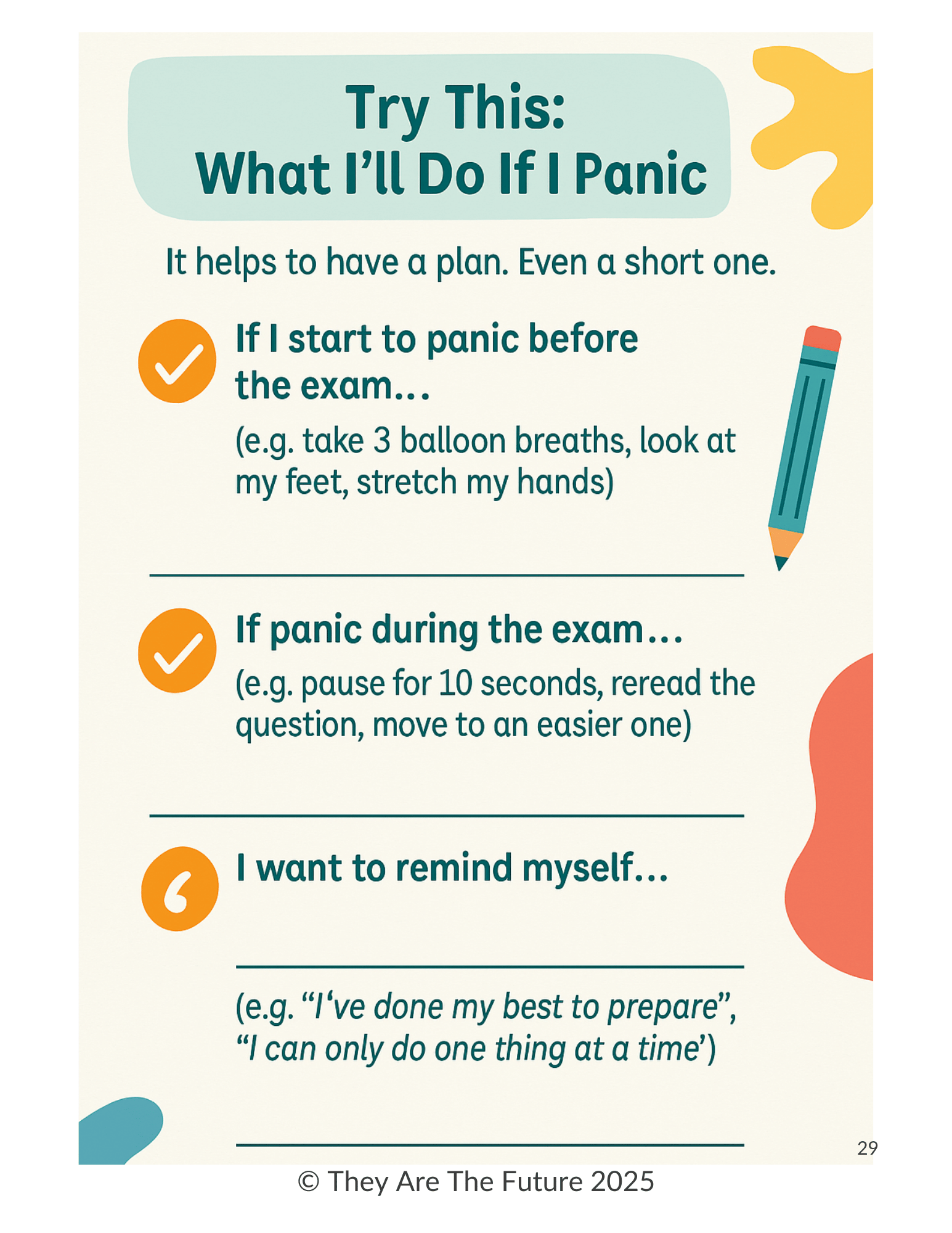
In the Exam Calm Support Pack, I include a worksheet to help children plan ahead for this possibility. The idea is to rehearse a simple script and a set of actions so they feel prepared.
Here’s what I recommend if panic strikes:
- Pause for 10 seconds: Sit still, place a hand on your tummy
- Balloon breath: Breathe in slowly and deeply. Then breathe out even slower
- Look again: Read the question like it’s brand new
- Move on if needed: Start with any question. You don’t have to answer in order
These small physical actions are incredibly powerful. They will help reset the nervous system far more effectively than trying to think your way out of panic.
The worksheet in the pack is called What I Will Do If I Panic. It is designed to be practical and empowering, helping children feel a sense of readiness.
After the Exam: What Now?
Once the exam is over, children are often left with a mix of emotions. Relief, worry, and sometimes shame or regret. They may focus only on what they think went wrong.
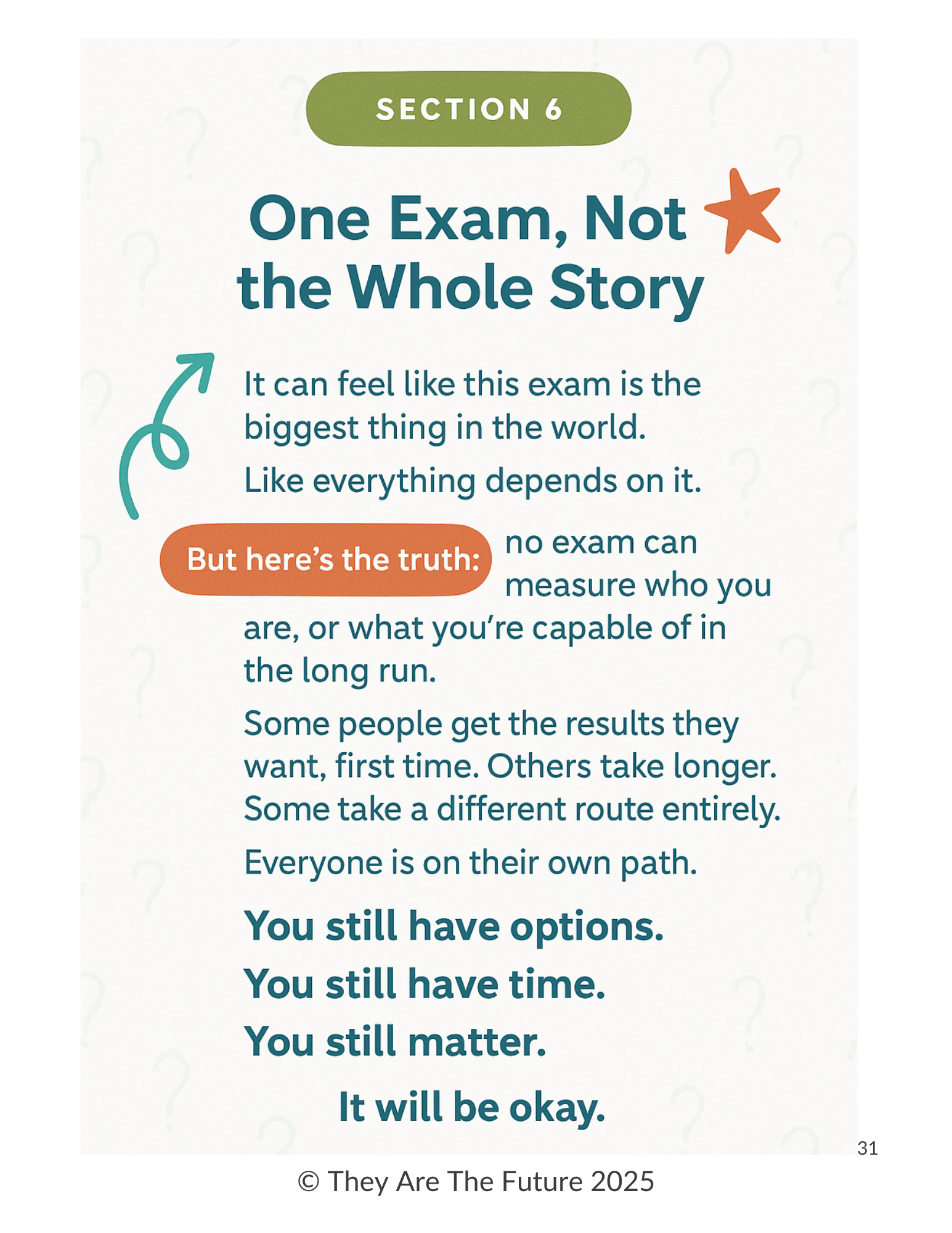
This is a time when your words matter. Remind them that one exam doesn’t define them. Encourage them to zoom out and reflect on the bigger picture.
The Exam Calm Support Pack includes a final worksheet called Looking Beyond the Exam. It helps children reflect on:
- What kind of life they want to build
- What they enjoy learning or doing
- One thing they are proud of, no matter how the exam went
This worksheet can help shift your child’s focus from fear to possibility.
It’s Just One Chapter, Not the Whole Story
Exams can feel all-consuming. On the day itself, it can seem like everything is riding on that one hour. But in the long run, no exam measures a child’s worth, creativity or potential.
Many people take an indirect path to the life they want. That is not failure. It is human.
By offering children the tools to manage their stress, and by reminding them of the bigger picture, we are helping them grow into resilient and hopeful young people.
The Exam Calm Support Pack was created to guide children through each of these key moments.
Before, during and after the exam.
It is full of calming strategies, affirmations, reflection tools and printable resources. All written by me, Dr Lucy Russell, Clinical Psychologist, and grounded in evidence-based techniques that really work.
You can get the Exam Calm Support Pack here and support your child to feel steady, prepared and confident, whatever the exam outcome.
Related Articles
Is Your Child’s Worry More Than Just a Phase? Recognize the Signs of Anxiety
Performance Anxiety in Children: How to Transform Fear into Confidence
Childhood Anxiety: Finding the Sweet Spot Between Push and Protect
Dr Lucy Russell is a UK clinical psychologist who works with children and families. Her work involves both therapeutic support and autism assessments. She is the Clinical Director of Everlief Child Psychology, and also worked in the National Health Service for many years.
In 2019 Lucy launched They Are The Future, a support website for parents of school-aged children. Through TATF Lucy is passionate about giving practical, manageable strategies to parents and children who may otherwise struggle to find the support they need.
