
How Decluttering Your Child’s Room Can Calm Their Mind (And Yours)

A clutter-free space can boost your child’s mood, improve focus, lower stress, and even build confidence. It’s not just about tidiness, it’s also about creating a calm, positive space where your child can thrive emotionally and mentally.
As a clinical psychologist and mum of two (one of whom has always struggled with clutter), I’ve seen the same scenario play out in homes across the UK as well as my own. Toys piled high, wardrobes overflowing, and floors lost under layers of stuff. And with it, more overwhelm and higher stress levels for everyone.
It’s such a relief to have a clear-out and get things organized. Everyone feels lighter!
Clearing the chaos isn’t just good for your home, it’s also a little-known way to calm your child’s mind and improve their overall wellbeing.
Let me show you how.

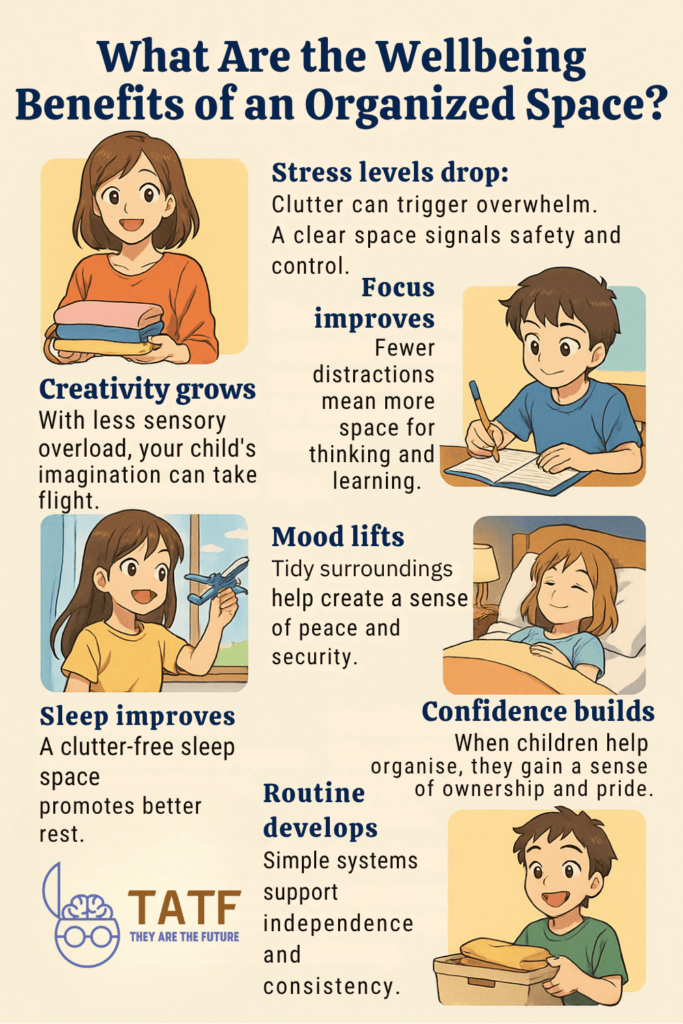
What Are the Wellbeing Benefits of an Organised Space?
When your child’s room feels calm and ordered, their brain does too. Here’s what happens:
- Stress levels drop: Clutter can trigger overwhelm. A clear space signals safety and control.
- Focus improves: Fewer distractions mean more space for thinking and learning.
- Creativity grows: With less sensory overload, your child’s imagination can take flight.
- Mood lifts: Tidy surroundings help create a sense of peace and security.
- Sleep improves: A clutter-free sleep space promotes better rest.
- Confidence builds: When children help organise, they gain a sense of ownership and pride.
- Routine develops: Simple systems support independence and consistency.
In fact, organising change for children, especially in their personal spaces, can significantly boost their emotional resilience. A well-structured space supports everything from self-regulation to independence.
Why Do Kids Struggle With Clutter?
Many children, especially those who are neurodivergent, find it genuinely difficult to manage clutter. Their brains may process information differently, making it hard to filter, sort or prioritise what to keep and what to let go.
This is where we shift the focus. It’s not about changing your child, it’s about supporting them with systems that suit how they think and feel. Whether it’s visual cues like labelled boxes or chore lists for kids by age, the right structure can be life-changing.
7 Simple Hacks to Make Decluttering Easy (And Even Fun!)
Looking for practical kids organisation hacks? Start with these parent-approved strategies.
1. The Two-Basket Trick
One basket for “keep”, one for “let go”. Start small, just one drawer or toy box. Clear categories make decisions easier.
For teens: Encourage them to sort clothes, school supplies or tech gadgets. Ask questions like, “What do you actually use?” or “Which of these outfits still feel like you?”
2. Use Pictures, Not Just Words
Label boxes with photos of what belongs inside. Perfect for pre-readers and visual learners.
For teens: Swap photos for stylish printed labels or even personalised tags. Let them design their own system, it’s their space, after all. This visual cue system also helps create consistency with small bedroom organisation.
3. Set a 10-Minute Timer
Short bursts feel doable. Race against the clock together to add an element of fun.
For teens: They might prefer working solo, so use a productivity app or playlist timer to keep them focused without feeling nagged. Bonus tip: Add a clean up song to make it more fun!
4. Play Their Favourite Songs
Create a clean up song playlist. Music boosts mood and makes tidying feel less like a chore.
For teens: Hand over the playlist-making to them. Let them choose the vibe, chilled for a drawer sort or energetic for a full-room blitz.
5. Rotate Toys
Too many options can be overwhelming. Store some toys out of sight and rotate them weekly to keep things fresh.
For teens: Apply this idea to clothes, books or hobbies. Help them curate seasonal wardrobes or rotate favourite items so their space feels lighter. These kinds of small shifts make a big difference in kids bedroom organisation.
6. Make It a Game
Turn sorting into a treasure hunt: “Can you find five blue things to put away?” Little challenges work wonders.
For teens: Shift this to challenges with a reward, for example, “Tidy your desk before tea and we’ll watch your favourite show together.” Make it collaborative, not a battle. Over time, this nurtures kid responsibility in a natural way.
7. Let Them Be the Designer
Give your child a say. Ask how they’d like their space to look. Feeling in control increases motivation and pride.
For teens: Hand them the reins. Support them to rearrange furniture, choose colours or plan a new layout. Their room should feel like a safe haven, not just a storage space. Empowering them to own their small kids bedroom space encourages independence.
How Do I Adapt Decluttering Tasks to Different Ages?
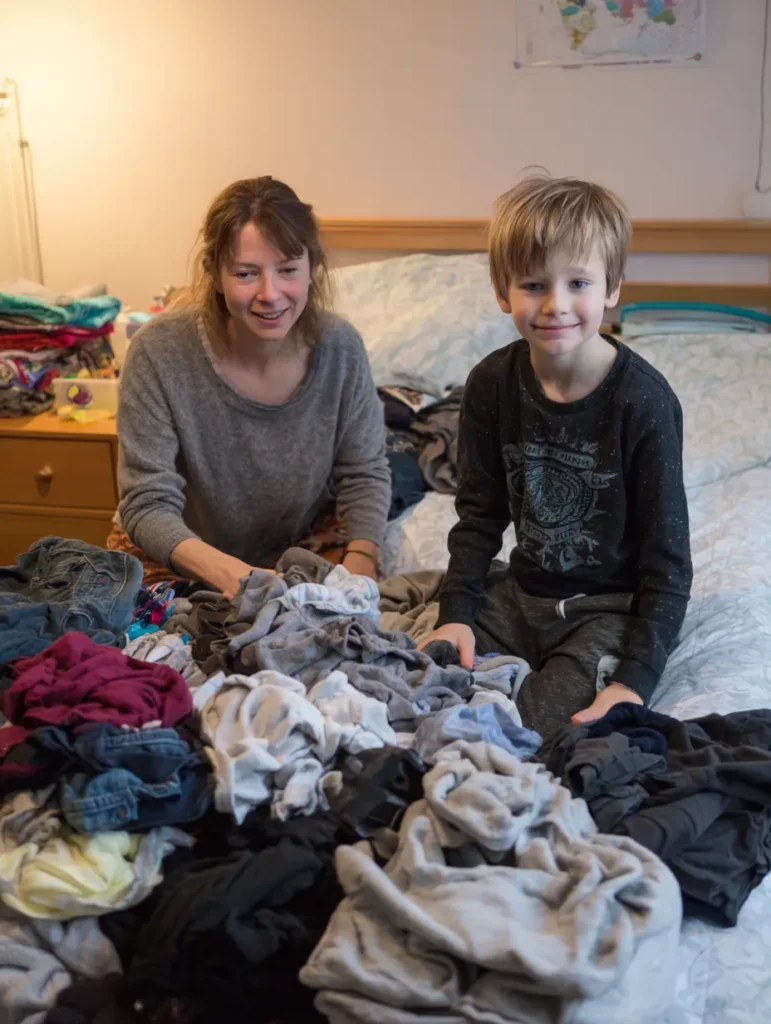
You don’t need to do it all yourself, and you shouldn’t. Children of all ages can get involved in ways that suit their abilities. The right chore list for kids and a consistent family schedule make a huge difference.
- Preschoolers can fold small clothes or match socks. They can sort books or toys into piles.
- Primary school children can organise their bookshelf or drawer.
- Teens can manage their whole room with support to break it into manageable chunks, and with some help to get started.
Using age-appropriate chores for each child, why not draw up a family chore chart to build these habits into your weekly rhythm?
Low-Cost DIY Storage Ideas That Work When Decluttering
You don’t need fancy furniture or a Pinterest-perfect room. Here are a few affordable kids room organization DIY solutions we love:
- Shoe organizers for small toys or art supplies
- Pegboards for frequently used items
- Hanging organizers for behind doors
- Old jars or tins for craft bits and bobs
If you’re trying to figure out how to organise a kids room, these hacks are a great place to start. They also help with organizing kids’ toys tips, organizing kids’ books tips, and organizing kids’ belongings tips without overwhelm.
TAKE THE QUIZ!
Decluttering Your Child’s Room: How Do You Keep It Up Long-Term?
Consistency, not perfection, is the goal.
Make decluttering part of your weekly rhythm. Try a regular “reset” time on a Sunday, for example. Keep it short. You might even keep a small donation box in the hallway so your child can add items they’ve outgrown or no longer use.
And don’t forget to model it yourself. Let your children see you clearing out your own things, they learn far more from watching than from lectures.
Most importantly, approach it with warmth and connection. This is about creating a space where your child feels safe, calm and in control.
By showing your child how to be more organised, actually you’re not just reducing the impact of a messy house. You’re giving them tools that will serve them for life.
The Natural Next Step: Reset Your Child’s Wellbeing
If this article resonates with you, and you’re craving a fresh start for your child’s emotional wellbeing, I invite you to join me in my three-day mini-course: Reset Your Child’s Wellbeing.
In just 3 days of bite-sized videos (plus a printable pdf workbook), I’ll guide you through practical ways to reduce stress, improve connection and create simple, lasting change at home.
This course will help you build habits and environments that support positive mental health without overwhelm.

Related Articles
Clutter and ADHD in Teens: Tips For Your Child
Make Your Home a Mental Health Haven for Your Child
Calming ADHD Bedroom Ideas: A Parent Guide
Dr Lucy Russell is a UK clinical psychologist who works with children and families. Her work involves both therapeutic support and autism assessments. She is the Clinical Director of Everlief Child Psychology, and also worked in the National Health Service for many years.
In 2019 Lucy launched They Are The Future, a support website for parents of school-aged children. Through TATF Lucy is passionate about giving practical, manageable strategies to parents and children who may otherwise struggle to find the support they need.
