
5 Ways to Help Your Child Cope With Big Life Changes

For any child, big life change can bring uncertainty, but it can also be a chance to help your child grow in resilience and confidence. With the right support, your child can learn to use effective coping strategies that help them handle change more smoothly and feel more secure along the way.
When we talk about a “big life change,” we mean any significant shift that disrupts a child’s sense of normalcy. This can include major events like moving house, a divorce, starting a new school or school year, the arrival of a new sibling, or experiences of illness or bereavement.
Navigating change is a vital life skill. At first when they are building this skill, children may respond with irritability or regression because they are experiencing uncertainty and insecurity. But with you along side them following these 5 steps, they will gradually adjust to the new normal.
Most children do best when life has consistent routines, a sense of control, and enough predictable structure to know what comes next. There is no universal timeline for adjusting to a major transition, as every child processes change at their own pace. Patience and consistent support are essential as your child navigates these shifts and begins to feel secure once again.

1. Tell your child what is happening in simple, honest words
Children cope better when they are not left guessing. Consider these strategies to help your child navigate information:
- Give early warning when possible, but consider your child’s anxiety levels first. If they are anxious, sensitive or neurodivergent, use your own knowledge of your child to determine when to share the information. Many autistic children need more time to adjust to transitions, but can also become highly anxious if they have too much time to prepare for a change.
- Use age-appropriate language and share only the level of detail your child can manage.
- Expect your child to ask repeated questions over time while their brain gradually processes what is happening.
Open communication helps a child feel safe and understood during a major transition. This makes emotional regulation easier.
2. Protect the routines that make life feel familiar
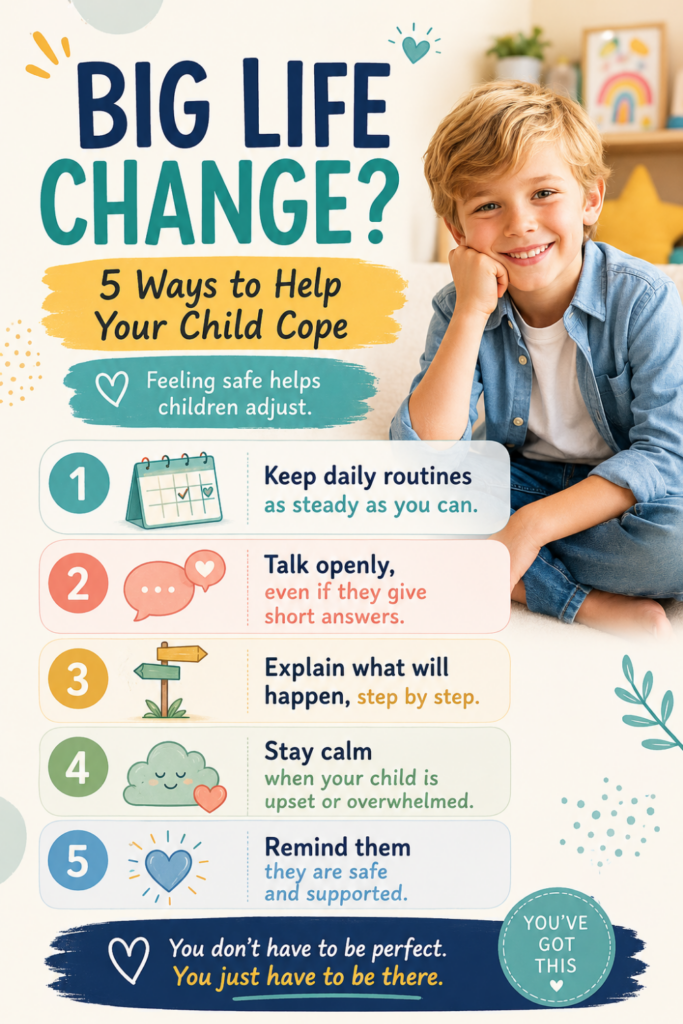
When life feels unsettled, ordinary routines become anchors. Keep bedtime routine, mealtimes, school runs and after-school activities as familiar as possible. You do not need perfection, only enough consistent routines that your child knows what comes next.
Small constants help too, the same breakfast, the usual bedtime story, the same favourite hoodie on school days. These daily rituals support your child’s sense of security and stability, strengthen their mental health, and can ease stress and anxiety during change.
3. Give your child small choices so they feel some control
Even tiny decisions can reduce the helplessness that children often feel when they are faced with big changes. Let your child choose which toy to pack, what clothes to lay out, or where to put books in a new room. Keep choices short and manageable.
Here’s a fictional example: Nine-year-old Cameron struggled when his parents went through separation. What helped? Choosing a wash bag, duvet cover and shelf for his football books in both homes. Those small choices gave him a foothold and helped build a sense of control and building confidence in his new environment.
4. Use preparation to make the change feel less scary
Preparation helps your child picture what is coming. For example, look at photos, visit the new place, mark dates on a simple calendar, or practise the new routine together. This is especially helpful for school moves, house moves and new family arrangements.
If you think your child will struggle to understand and process the change, try a short social story – a structured system for explaining social rules or changes in a concrete and manageable way.
A simple feelings chart can also help children name what they are feeling when big emotions show up.
5. Make space for feelings
Some children talk. Some draw, play, cry or go quiet. Try not to rush in and make the feeling disappear. Validating feelings is important, and it must be at your child’s pace.
Watch for irritability, tears, tummy aches, clinginess or sleep changes. Those can be signs of stress and anxiety, or (temporary) regression in their development. These normally resolve themselves in time, but it may be worth speaking to your family doctor who can organise an appropriate referral to specialist services if needed.
One-on-one play and extra “special time” with your child – whatever their age – can help children feel connected and safe while they process change, and it gives you another way to notice their emotional state.
Big Life Changes and Your Child: My Final Thoughts
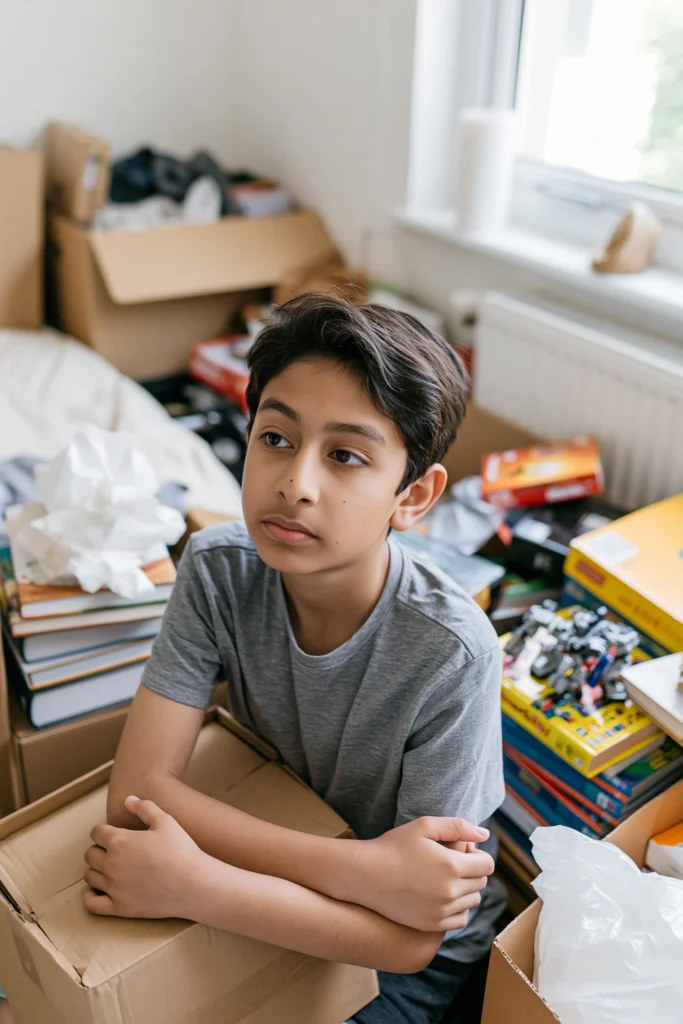
Your child does not need a perfect parent. You help most by staying steady, honest (within limits) and emotionally available.
When you reduce fear for your child, keep routines where you can, and help your child feel safe in their body and mind, they will gradually adjust. Hard change can still be hard, but children usually find their feet again with the right mix of growing resilience, coping strategies, and social support.
One final mention: don’t forget parental self-care. Supporting your own mental health is absolutely crucial, because children always feel more secure when the adults around them are cared for and grounded.
Dr Lucy Russell is a UK clinical psychologist and Clinical Director of Everlief Child Psychology. She qualified as a clinical psychologist from Oxford University in 2005 and worked in the National Health Service for many years before moving fully into her leadership and writing roles.
In 2019 Lucy launched They Are The Future, a support website for parents of school-aged children. Through TATF Lucy is passionate about giving practical, manageable strategies to parents and children who may otherwise struggle to find the support they need.
Lucy lives with her family, rescue cats and dog, and also fosters cats through a local animal welfare charity. She loves singing in a vocal harmony group and spending time in nature.
