
Moral Values for Children: How to Raise a Kind, Resilient Child

If you are thinking carefully about the kind of person your child is growing into, you are already doing something important. Teaching moral values for children is not a one-off conversation. It is something that happens in small moments, every day, in the way your family lives and the example you set.
The good news is that children are remarkably receptive to values-based learning from an early age. What you teach them now will shape how they treat others, handle difficult situations, and navigate the world as they grow.
In this guide I am sharing the seven moral values I believe are most worth focusing on, and how to bring each one to life in a practical way at home.
Why Teach Our Children Moral Values?
We can start teaching our children moral values from an incredibly young age. You will be helping them cultivate a reliable moral compass that becomes part of their personality as they mature.
Teaching young children essential moral values can help set them on the right path towards:
- Improving decision making
- Respecting others regardless of class, creed, or religion
- Developing self-discipline
- Contributing towards society
- Building resilience
- Respecting themselves
- Conflict resolution
- Supporting good mental health
- Fostering character development
By supporting your child to develop these traits, you will be influencing the development of positive character traits in them, such as kindness, humility, and empathy.
Key Takeaways
- Leading by example: Children learn moral values primarily through observing your actions and everyday behaviour rather than through lectures alone.
- Values as a lifelong process: Developing a strong moral compass is not a one-off task but a continuous journey that evolves alongside your child’s developmental stages.
- Prioritising empathy and connection: Teaching children to understand others’ emotions and perspectives is fundamental for building healthy relationships and fostering resilience.
- Focusing on intrinsic worth: Encouraging values like gratitude and compassion over material success helps children build a sense of purpose and long-term well-being.
The True Meaning of Teaching Good Moral Values
The true meaning of good moral values refers to the framework that society uses to distinguish between right and wrong. When we talk about moral values for children, we are looking at the essential principles – like kindness, empathy, and integrity – that help them navigate social complexities.
While the concept of common morality provides a foundation for how we behave, there is huge scope for individual interpretation. This is why respecting the perspectives of others, especially in difficult situations, remains so important for long-term social and emotional development.
The first step is to identify the specific moral values for children you want to instil. The second step involves determining the best approach to achieve this. I have set out three examples of values you might consider and how to encourage them:
- Character building. Assign household chores and specific roles that help your child develop a sense of identity and personal strength.
- Justice and fairness. Ensure that family rules are applied consistently to everyone, helping children understand the importance of equity.
- Responsibility. Teach your child to take ownership of their actions and understand the impact they have on others.

Age-Appropriate Moral Development
When considering how to teach these values, it is helpful to look at developmental stages. For toddlers, the focus should be on simple acts of sharing and caring within their daily play.
As children enter their primary school years, you can shift the focus toward developing empathy and understanding the feelings of others.
By the time they reach their teenage years, your guidance should support them in making complex ethical decisions independently.
Values Cards for Teaching Values
My colleague Dr Lucy Russell has created a beautiful set of values cards for teaching children values. Read the article and grab your free set of cards here.
Moral Values for Children: Which Are The Most Important?
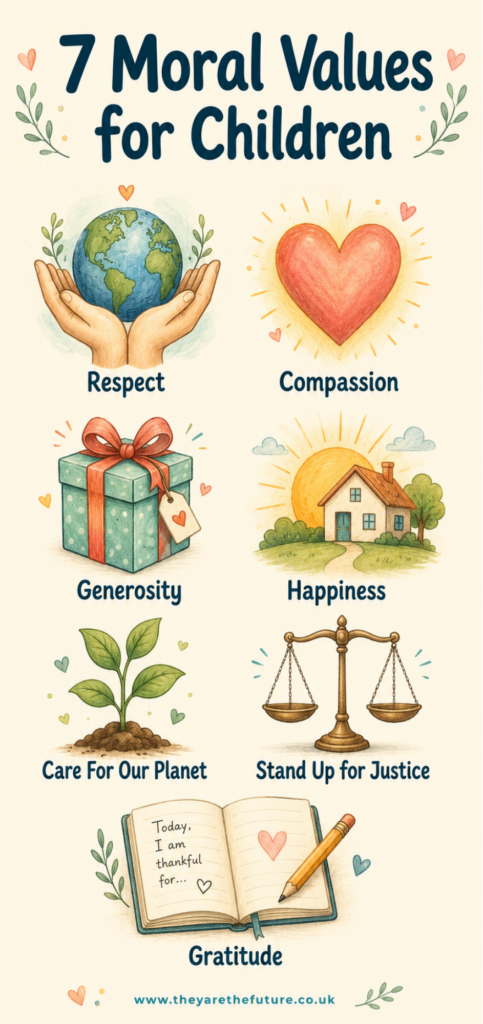
I’m going to share with you my 7 most important moral values for children, based on my experiences as a mum of three and counsellor.
1) Respect Others’ Perspectives
I come from a generation who were brought up to respect their elders. There is nothing wrong with that, but there is so much more to the concept of respect.
Today, we need different approaches to teaching our children from an early age what it truly means to respect others.
In my clinic, I sometimes hear teens telling me that they will show an adult respect if they show them some respect, as though it is a transaction. Sadly, this approach can lead to a stalemate where no one benefits.
The truth is that respecting different opinions, beliefs, and morals is an ongoing process. It takes conscious effort and a sense of cooperation. As a parent, you are in the perfect position to be an ideal role model for your children. Children tend to learn far more from what they see than what they are told.
Social media, TV, and film can play a valuable role in setting out moral values for children, but you will need to select the material they have access to very carefully. Respecting a difference of perspective is vitally important when building relationships.

2) Have Compassion For Others
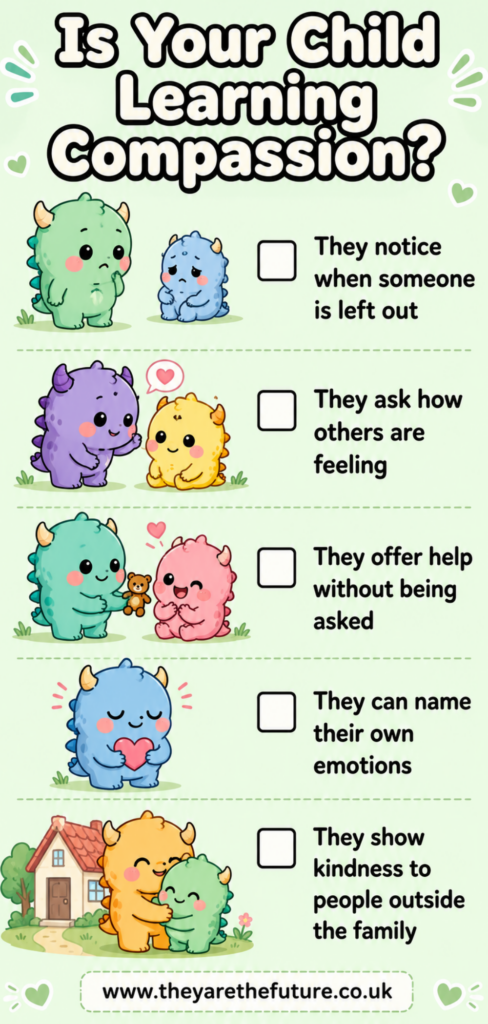
I believe that one of the most important moral values you can teach your child is compassion for others. Compassion plays a key role in human connection and building healthy relationships.
Is it already one of the personality traits your child possesses? We can teach empathy and compassion by modeling behavior ourselves and highlighting these virtues in others.
Teaching Empathy
To raise an empathetic child, start by teaching emotional vocabulary. If your child can express their own emotions and understand what those feelings mean, they will be better able to recognise emotions in others and show empathy and compassion.
Watching films and reading books with empathy themes is a great way to teach this value. You can use these stories as opportunities to discuss real-life situations and talk about feelings. In fact, giving feels good. What happens to us when we show compassion for someone else? We not only validate them, we validate ourselves and who we are in that moment of human connection.
3) Be Generous Towards Others
To help nurture a generous child, involve them in learning the importance of giving, sharing and caring for others from a young age. Developing a spirit of generosity involves teaching them that giving is a source of joy.
Your child can show they care by taking the time to make things by hand, perhaps a cake for a neighbour or a handmade bracelet for a friend. They can show they are willing to share by taking the lead and offering their time or possessions to others.
They might also show care and respecting others by sticking up for a friend at school or giving someone a hug if they are sad.
4) Happiness is More Important Than Money
Society sends children powerful messages about success, and most of them are tied to money, status, and achievement. As parents, we can offer a different perspective. The research on happiness is consistent: strong relationships and a sense of purpose matter far more to long-term wellbeing than material wealth.
Financial security has its place, but it is rarely what people reflect on when they describe a meaningful life. A practical way to teach this value is to talk openly with your child about what brings your family genuine happiness.
Make a list together of moments and experiences that have mattered, such as a walk, a conversation, or a meal. Returning to that list when life feels pressured can help your child build an internal compass that is not driven by what others have.

5) Look After Our Planet
Children who feel connected to the natural world tend to grow into adults who care about it. That sense of connection is something we can nurture from an early age, though it requires perseverance to keep those habits consistent.
Start small and make it tangible. Younger children respond well to hands-on involvement, whether that is growing something from seed, picking up litter on a local walk, or choosing to repair something rather than replace it.
Older children and teenagers can engage with bigger questions about where our food comes from and what choices we can make as a family. The most powerful thing you can do is let your child see you making thoughtful choices about how you live.

6) Ignoring Injustice is as Bad as Committing It
One of the harder moral lessons to teach is that staying silent in the face of unkindness is a choice.
In our modern world, honesty and integrity are often underrated. Children often feel pulled between doing what they know is right and not wanting to stand out. When your child tells you about something unfair they have witnessed at school, let’s say bullying of a younger child, resist the urge to immediately provide the solution. Instead, ask questions about how it made them feel and what options they had. This builds honesty and integrity more effectively than a lecture. It foundations for their personal development and the well-being of society.
A useful phrase to share is this: you do not always have to be the loudest voice, but you can always choose not to look away. Small acts of courage, such as a kind word or sitting next to someone who is alone, are where good character is built. When faced with a moral dilemma, our child needs support to make ethical decisions that align with their own moral compass.
7) Gratitude Helps Everyone and Makes Us Happier
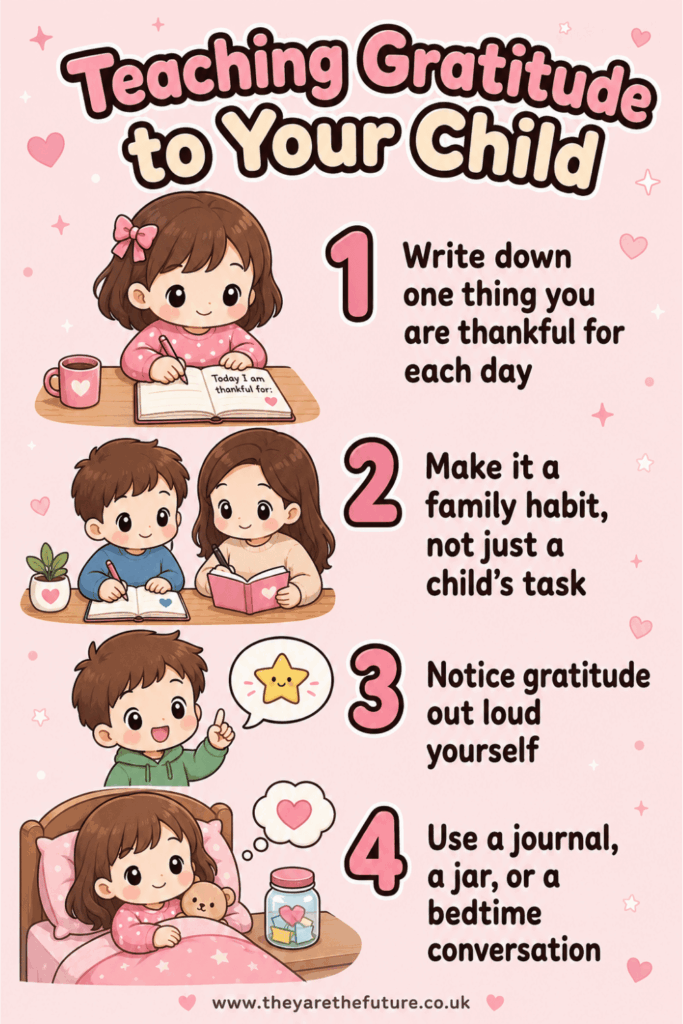
Practicing gratitude is thought to play a significant role in contributing to increased happiness. The development of this positive emotion can enhance self-esteem, improve mental health, and lead to better relationships.
Teaching your child to be thankful is a great way to develop positive values. One of the best ways to practice this is by using a gratitude journal. Each day, they can write down one or more things they are thankful for, whether it is a friendship, a good result, or a kind teacher.
How to Know if Your Child is Learning
You might wonder how to measure the success of these lessons. The best way to know if your child is taking on these values is to watch their daily actions. When you see them spontaneously helping others or navigating a disagreement with fairness, you are seeing their developing moral compass in action. These small, observable shifts in behaviour are the greatest signs that your guidance is taking root.
Moral Values For Children: Inclusion and Empathy – The Compassionate Bus Driver
Mr Cody the school bus driver is a pillar of the school community and well liked by the pupils who ride his bus each day. He has been driving the school bus for 15 years, picking up children from diverse backgrounds. He is committed to ensuring their safety, but of equal importance is the sense of community and social relationships he fosters on the bus. Mr Cody always smiles at each child, individually asking how they are doing. He is genuine and wants each pupil to know they are a person, not just a number on a list.
Noticing Others in Their Hour of Need
One day, Mr Cody noticed a new pupil boarding the bus. She looked nervous and was hesitant about sitting with the other children. Mr Cody sensed her discomfort and invited her to sit upfront, reassuring her that everyone was friendly. Other children on the bus noticed this kindness and followed his example, making her feel welcomed from her very first day.
Compassionate Conflict Resolution
On one homebound journey, a disagreement broke out between two pupils. Mr Cody addressed it immediately, encouraging the children to take turns talking and listen patiently. The ensuing conversation led to a resolution.
This approach diffused tension and taught the pupils the importance of communication in conflict resolution. Mr Cody’s commitment to instilling moral values has established the school bus as a place of fun, inclusion, and learning. This is a fictional example of the power of moral values, where small steps towards helping others do the right thing make a genuine difference.
Frequently Asked Questions
At what age should I start teaching moral values?
You can begin introducing basic concepts like kindness and sharing from an early age through daily play and interactions. As your child matures, the conversation naturally shifts toward more complex topics like justice, integrity, and independent decision-making.
How can I model moral values effectively?
Children are highly observant and will follow your behaviour, so the most effective method is to live according to the values you wish to instil. Whether it is how you speak to others, your reaction to stress, or how you treat the planet, your daily actions set the primary example for your child.
What should I do if my child witnesses an injustice?
Instead of providing a lecture or solving the problem for them, encourage your child to reflect on how the situation made them feel. Ask open-ended questions to help them explore their options, which builds their internal integrity and empowers them to make ethical choices independently.
How can I measure if my child is learning these values?
The best indicator is observing your child’s spontaneous behaviour in their everyday life. When you notice them acting with fairness, showing unprompted kindness, or navigating a conflict with empathy, you can be confident that these core values are taking root.
Moral Values For Children
By teaching the most important values in a child, such as honesty, respect, responsibility, empathy, and gratitude, we can provide them with the character development that helps shape their personality. It is through these daily lessons that we help children distinguish between right and wrong, ensuring they build a robust moral compass to guide them through life.
We can support our children in making good decisions, fostering forgiveness, and building positive, healthy relationships. As we work to inculcate moral values alongside active community involvement, we encourage true personal growth. By laying these strong foundations, we influence our children’s lives for the better, empowering them to become compassionate, resilient, and well-rounded individuals.
Hayley Vaughan-Smith is a Person-Centred Counsellor accredited by the National Counselling & Psychotherapy Society. She is the founder and counsellor at The Ridge Practice in Buckinghamshire, and counsellor at Everlief Child Psychology.
Hayley has a special interest in bereavement counselling and worked as a bereavement volunteer with Cruse Bereavement Care for four years.
Hayley is mum to 3 grown up girls, and gardening and walking in nature is her own personal therapy. Hayley believes being in nature, whatever the weather, is incredibly beneficial for mental health well-being.
