
How to Spot an Autism Friendly School

If you’re looking for a mainstream school for your autistic child, whether after a diagnosis, a house move, a change of phase, or any other reason, you may be wondering what “good” actually looks like.
I have worked with autistic families and schools for twenty one years. The best schools will understand how autism affects your child specifically, will make practical adjustments where possible, and will create an environment where your child feels safe and ready to learn. These are things you can actually assess, if you know what to look for.
One common challenge is that autistic children often mask their difficulties at school, holding everything together during the day at a high cost to their wellbeing. A child can appear to be managing well on the surface while they are working extremely hard underneath just to cope.
In this article, I’ll cover the signs that a mainstream school is genuinely autism-friendly, the questions worth asking at a school visit, what to observe in the classroom environment, and how to interpret what you see and hear.
Key Takeaways
- Look for flexibility in uniform, breaks, transitions, routines, and work adjustments to remove barriers whilst helping your child to achieve their potential, and to feel safe enough to learn.
- Staff who create emotional safety through calm, predictable support, understanding masking and hidden stress signs, and responding sensitively to distress rather than just managing behaviour.
- Ensure the school grasps your child’s specific sensory needs (including proprioception, vestibular, and interoception), assesses individualised profiles, provides safe spaces, visual supports, and encourages belonging and inclusivity to prevent bullying.
- Seek openness to solutions, regular home-school communication, and a real willingness to work with you, using the parent checklist on visits.

Flexibility in an autism-friendly school
An autism friendly school will make adjustments to suit your child’s day-to-day needs without drawing attention to them. This applies whether your child has a formal diagnosis of autism (sometimes called autism spectrum condition, ASC or ASD), an education health and care plan (EHCP), or no paperwork at all.
Whatever your child’s specific special educational needs (SEND), good adjustments remove avoidable barriers so they can cope, think, and learn.
Can they adapt uniform, break times, and support transitions if needed?
Ask about the small things. Can your child swap a scratchy jumper for a softer one, or wear smart black trainers instead of formal shoes if they feel unbearable? Is there a quiet or structured option at break and lunch instead of the overwhelming playground? Can they come in a few minutes early to avoid the crush of corridors? Every child is different. What specific adaptations would help your child feel safe and ready to learn?
Some of the adaptations you want may not all be possible. Schools are under a lot of pressure and have many children with individual needs to support. But you are looking for that openness to think flexibly and consider solutions outside the box.
Moving between lessons is another big one. Some children need a little help getting from A to B, especially in a busy secondary school. If change is a sticking point for your child, my guide on support for school transitions and anxiety will help you think through what to ask.
Does the school adjust work, routines, and expectations when needed?
Good schools use practical supports without a fuss. That might mean visual timetables, a warning before changes, shorter tasks, extra processing time, a reduced or personalised curriculum, or some flexibility around homework and non-essential extras.
Staff who create emotional safety
A nurturing environment is essential for emotional safety. This applies to all ages from reception right up to sixth form.
Many autistic children spend the school day on high alert. If your child’s nervous system is braced for the next surprise, affecting their social emotional and mental health needs, learning is much harder.
Nurture in school means more than being nice. A low arousal environment provides calm adults, predictable contact, and someone noticing stress before it spills over. Many autistic children also have a co-occurring diagnosis of ADHD, which requires similar calm support.
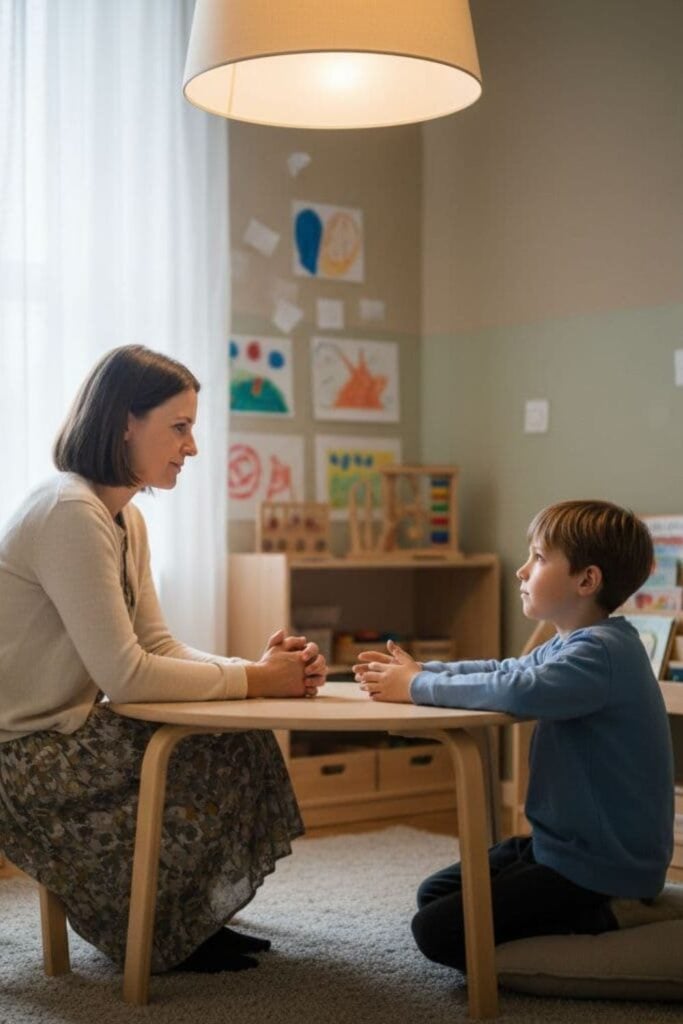
Will your child have safe adults they can trust?
One or two key adults can make an enormous difference. Your child may benefit from someone who greets them in the morning, talks them through their timetable, or notices when they’re having a wobble.
In my clinical work, I often see children cope better at school simply because one adult “gets” them. That relationship can be the anchor for the whole day.
How does the school respond when your child is distressed?
This is the question many parents forget to ask, and it is one of the most important ones. You need to know what happens on the hard days, not only the good ones.
Ethan (not his real name) was twelve when his parents first came to see me. He appeared absolutely fine at school, but was having significant outbursts at home most afternoons. Once school put in place early entry (allowing him to arrive before the crowds and noise of the main rush), a brief morning check-in, and a calm exit plan for when he was overwhelmed, things shifted for the better.
Ask how staff respond to shutdowns, meltdowns, and panic, not only how they manage behaviour in general. What you are looking for is low-demand, calm support: a quiet space, a trusted adult, and time. Asking a dysregulated child to make choices, face consequences, or explain their behaviour in the moment will almost always make things worse.
Signs the school really understands autism
Autism spectrum disorder doesn’t look one particular way. Every autistic child has a different profile of strengths and needs. A good school understands that the quiet child can be struggling just as much as the child who can’t hide it. They will think creatively with you about helpful and specific adaptations.
Do staff understand masking and the hidden signs of stress?
A child who seems compliant may be exhausted, perfectionistic, withdrawn, or constantly people-pleasing. This is particularly common in autistic girls. Those are often red flags, rather than proof that everything is fine.
For a wider framework, Autism Central’s guide to finding the right education placement highlights the things that matter most, including staff training, layout and group size.
Do staff understand sensory needs, including the “hidden” senses?
Sensory needs are rarely simple. Your child might avoid noise but seek movement. They might hate bright lights yet chew sleeves or lean heavily into people.
Ask whether staff understand proprioception, your child’s sense of body position; vestibular processing, how they experience movement and balance; and interoception, how they notice signals like hunger, pain or needing the toilet. These “hidden” senses affect attention, regulation and behaviour more than many schools realise, and an unsuitable environment can worsen communication difficulties and challenges with social skills.
Is support based on your child, not a one-size-fits-all plan?
Look for individual profiles, regular home-school communication, and plans that change as your child grows. The best schools stay curious and are open to discussing various evidence-based approaches, such as social stories or Lego-Based Therapy groups, if requested by parents. They don’t assume every autistic pupil needs the same strategy.
Practical support that helps your child cope and belong
Support isn’t only academic. Your child also needs the school day to feel manageable.
Is there a safe space your child can use when school feels too much?
A good safe space might be a welfare room, SEN base, sensory room, or a calm corner with a trusted adult. It should be low-noise, predictable, and easy to access without shame or friction.
If the space feels like isolation or punishment, it isn’t a safe space. Ask how your child would use it, who would be there, and how they would return to class.
Does the school use visual supports and clear communication?
Clear communication lowers anxiety. That can mean visual timetables, symbol support, simple instructions, maps, photo cues, or help finding the right classroom at the right time. The SENCO plays a key role in coordinating these visual supports to ensure they meet your child’s needs.
Ask too about belonging. How do they prevent bullying? Do they teach understanding of difference, or only react after something has gone wrong? Do they have small social emotional groups your child could join? If your child has significant special educational needs (SEND), can the SENCO work with you as parents to implement therapeutic provision, such as speech and language therapy and occupational therapy? These services are often detailed within an Education Health and Care Plan (EHCP).
A quick parent checklist for your school visit
These questions help you decide if a particular mainstream school suits your child, or if specialist schools, a special school, or independent specialist schools might better match their primary diagnosis and specific needs.
Take this with you when you visit or phone. You can also compare your notes with BeyondAutism’s school visit questions.
- How flexible are you with uniform, homework, and changes to routine?
- What happens at break and lunch if my child finds those times hard?
- Who would be my child’s safe adult each day?
- How do staff notice masking and hidden stress?
- What do you do if a child is overwhelmed, shuts down, or melts down?
- Where can my child go if the day becomes too much?
- How do you support sensory needs, including movement and body awareness?
- How do you prevent bullying and help children feel they belong? How might you support my child to make meaningful friendships?
No school gets everything right. You’re looking for openness, understanding, and a real willingness to work with you.
To apply for a state-funded school, you must contact your local authority’s admissions department to begin the process. For private or independent institutions, you should follow their specific direct application procedures.
In either case, I suggest arranging a visit to discuss your child’s individual needs with the SENCO to ensure the school’s culture and support system are a good match for your child.

Frequently Asked Questions
What should I look for in an autism-friendly mainstream school?
Focus on flexibility for day-to-day needs like uniform swaps, quiet break options, and transition support, alongside staff who provide emotional safety and understand masking. The school should offer practical aids if needed, such as visual timetables, safe spaces, and individual adjustments rather than rigid policies. Openness to solutions and curiosity about your child’s needs indicate a potentially good fit.
How can I tell if staff understand hidden signs of stress in autistic children?
Ask if they recognise masking, where a compliant child might be exhausted or people-pleasing, and spot red flags like withdrawal or perfectionism. Good staff notice stress before it spills over and respond with low-arousal support, not confrontation. They also grasp sensory needs beyond noise and lights, including proprioception, vestibular processing, and interoception.
What happens when my child is distressed or overwhelmed?
Probe how the school handles shutdowns, meltdowns, or panic with calm, low-demand strategies like a quiet exit plan or check-in, avoiding sanctions or public intervention. A trusted adult should be available daily to anchor the day and help settle, if needed. This creates safety, preventing home explosions after masking during the school day.
Is a safe space essential, and how should it work?
Yes, a low-noise, predictable welfare room, SEN base, or calm corner with a trusted adult is vital for when school feels too much, accessible without shame. It shouldn’t feel like punishment or isolation. Ask how your child would use it and return to class. Combined with other individualized support strategies such as visual supports, it helps your child cope and belong.
Final thoughts
The best school for your child is not the most polished one. It’s the one with enough flexibility and enough nurture to help your child feel safe, understood and included.
Policies are important, but staff attitude and school culture matters just as much. Trust what you see, trust the answers you get, and trust what your child tells you after the visit.
Your local authority plays a key role in supporting school placements, especially when considering long-term goals like the transition into adulthood and provision at post-16 level to work towards independent living. For some children with complex health needs, a residential school, special school, or specialist schools setting may offer more intensive support than mainstream can provide.
Dr Lucy Russell is a UK clinical psychologist and Clinical Director of Everlief Child Psychology. She qualified as a clinical psychologist from Oxford University in 2005 and worked in the National Health Service for many years before moving fully into her leadership and writing roles.
In 2019 Lucy launched They Are The Future, a support website for parents of school-aged children. Through TATF Lucy is passionate about giving practical, manageable strategies to parents and children who may otherwise struggle to find the support they need.
Lucy lives with her family, rescue cats and dog, and also fosters cats through a local animal welfare charity. She loves singing in a vocal harmony group and spending time in nature.
