
Grounding Exercises for Kids: Free Printable PDF and Parent Guide

Children feel things intensely. Whether it is worry, anger, overwhelm or sadness, big feelings can be hard to manage alone.
Grounding exercises for kids are short, sensory-based techniques that bring a child’s attention back to the present moment when emotions run high.
In this guide you will find 15 of the best grounding activities for kids, plus a free grounding exercises for kids PDF you can print and start using straight away.
These techniques are among the most effective mental health resources I know of for everyday family life.
Get Your Free Grounding Exercises for Kids PDF
Grab your free resource before we dive in.
My grounding worksheet for kids summarises all 15 techniques in a format you can print and keep at home or school. It also works brilliantly pinned up in a calming corner so your child (or pupils in your class) can find it when they need it most.
Key Takeaways
- Grounding exercises are a powerful way to for children to regulate emotions and build resilience.
- Engaging the senses is important in many effective grounding techniques.
- Trying out a variety of grounding exercises ensures kids find suitable strategies for managing their emotions.
What Are Grounding Exercises?
Grounding is a set of calming strategies for kids that shift attention from overwhelming thoughts and emotions to the five senses and the present moment. The aim is not to push difficult feelings away, but to give children a choice about where to put their attention, so they can sit with those feelings until they pass.
When a child feels anxious or overwhelmed, their nervous system shifts into threat mode. You might find my guide to the fight or flight response helpful if you would like to understand this at a deeper level.
Grounding works by sending calming sensory input to the brain, signalling: “You are safe.” This is mindfulness for kids in its most practical form. By engaging body awareness and the senses, children learn to manage emotions rather than being swept away by them.
Grounding exercises for kids with anxiety are particularly effective, and if your child is prone to panic attacks, grounding should be one of the first coping skills they learn.
But the benefits go further: regular practice builds children’s self-regulation skills, strengthens focus and concentration, helps them with stress management, and contributes to emotional regulation over time. These techniques sit at the heart of social emotional learning and are used widely in schools, therapy rooms, and occupational therapy settings.
Grounding Exercises for Kids: Engaging the Five Senses
Most grounding activities for kids work through sensory grounding, using one or more of the five senses to anchor children in the here and now.
Visual grounding is one of the easiest to use anywhere. Ask your child to find an object and describe it in detail: colour, texture, shape, temperature. For example: “A silver photo frame, cold to touch, with patterns carved into it. Inside is a photo of us on holiday.” That depth of focus pulls their attention firmly into the present moment.
Sound works just as well. Ask your child to close their eyes and map the sounds around them: birds, a car passing, footsteps upstairs. Tuning into hearing is one of the simplest calming strategies for kids you can use on the spot.
Touch is particularly powerful. A gentle body squeeze, working from feet to shoulders, combines body awareness with the calming effect of deep pressure.
Activities that engage the muscles and joints through squeezing, pushing or resistance are what occupational therapists refer to as heavy work activities. This “heavy work activities” approach is widely used in occupational therapy to regulate the nervous system.
Smell and taste can also be used: a slow, mindful snack or a moment of noticing scents outdoors can bring a child back to the present quickly and easily.
15 Grounding Activities for Kids
1. A-B-C Around the Room
Ask your child to spot objects beginning with each letter of the alphabet. Works indoors or outdoors and needs no equipment.
2. Belly Breathing
Deep breathing exercises are one of the most powerful tools you can teach a child. Slow, deep belly breaths activate the parasympathetic nervous system and send a clear signal to the brain: “I am safe.” Ask your child to place one hand on their belly and one on their chest, breathe in so the belly rises first, then breathe out slowly. Even a few rounds can shift the body out of threat mode.
3. Counting Colours and Shapes
Ask your child to count every colour and shape they can see around them. A simple visual grounding game that works as a quiet reset in any setting and as a whole-group classroom management tool.
TAKE THE QUIZ!
4. Five Senses Scavenger Hunt
Sometimes called the 5-4-3-2-1 grounding technique, this fits naturally into social emotional learning programmes and works brilliantly in groups. Five things to see, four to touch, three to hear, two to smell, one to taste. Work through the list slowly. The printable grounding worksheets in the free PDF above make it easy to use independently.
5. Finger Breathing
Your child traces the outline of their hand with a finger, breathing in as they trace up each finger and out as they trace down, around five seconds each way. A hands-on version of deep breathing exercises that younger children often find easier than sitting still.
6. Mindful Stretching
Simple stretches with full attention on how the body feels: reaching up, bending down, shaking out the arms. A movement-based approach that supports self-regulation skills and body awareness with no equipment needed.

7. Nature Walks
Gentle movement combined with mindfulness for kids. Encourage your child to notice the texture of bark, the smell of grass after rain, the sound of birds. Each observation brings them further into the present moment and further from worried thoughts.
8. Object Identification
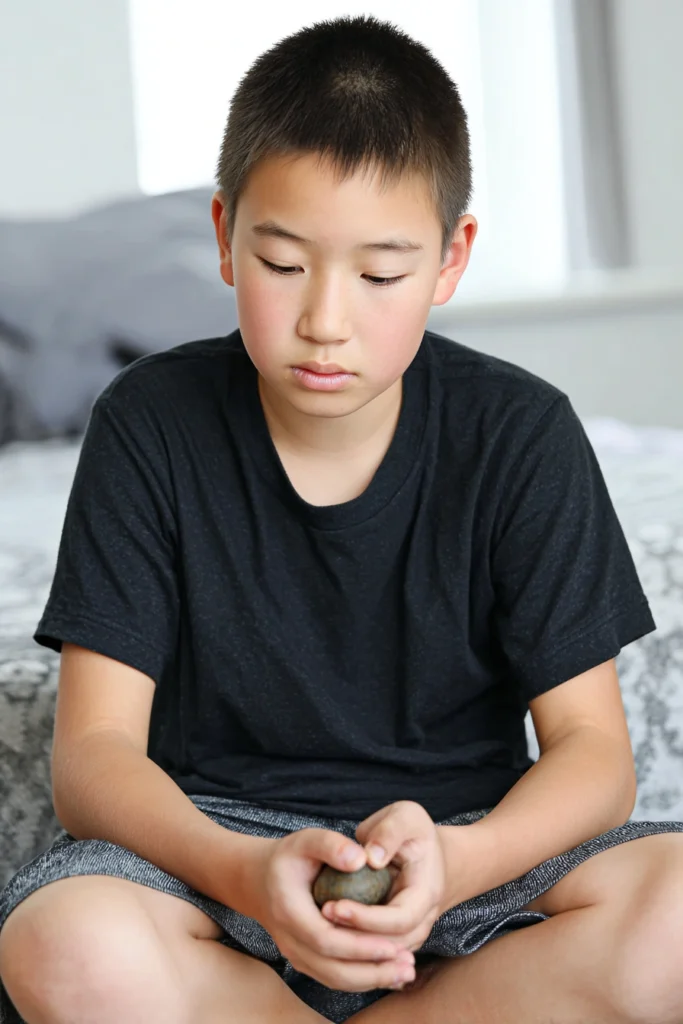
Pick up any object and ask your child to describe it in as much detail as possible: texture, weight, temperature, colour, smell. Portable sensory grounding that can be done anywhere.
9. Cloud Watching
Lie outside together and describe the clouds. What shapes can you see? Are they moving quickly or slowly? This quiet, shared activity encourages mindfulness for kids without it feeling like a formal exercise. “That one looks like a sea-lion!” is exactly the right level of engagement.
10. Progressive Muscle Relaxation
Progressive muscle relaxation involves tensing and releasing different muscle groups, working up from the feet. It is one of the most effective grounding exercises for kids with anxiety, particularly before a stressful event or after something difficult.
How to practise:
- Find a quiet space to sit or lie down
- Take a few slow, deep breaths to settle in
- Starting with the toes, squeeze tightly for five seconds, then fully release
- Move slowly up the body: feet, legs, stomach, hands, arms, shoulders, neck, face
- Finish with slow breaths, noticing the calm
Progressive muscle relaxation builds body awareness and helps children notice where they hold tension, an important first step in learning to release it.emselves firmly grounded in the present moment. A moment that is full of taste and free from stress.

11. Quiet Visualisation
Ask your child to close their eyes and picture somewhere they feel safe and calm: a beach, a forest, a favourite room. Guide them gently: what can they see? What does the air smell like? What sounds can they hear? A good wind-down calming strategy before bed.
12. Sound Mapping
Eyes closed, your child builds a mental map of all the sounds around them: close, distant, unexpected. This builds focus and concentration alongside the grounding effect and works well for children who find movement-based exercises difficult.
13. Texture Touch Exploration
Exploring different surfaces through touch: smooth, rough, soft, cool, warm. A tactile sensory input exercise that supports body awareness and is a staple of occupational therapy for children who benefit from heavy work activities.
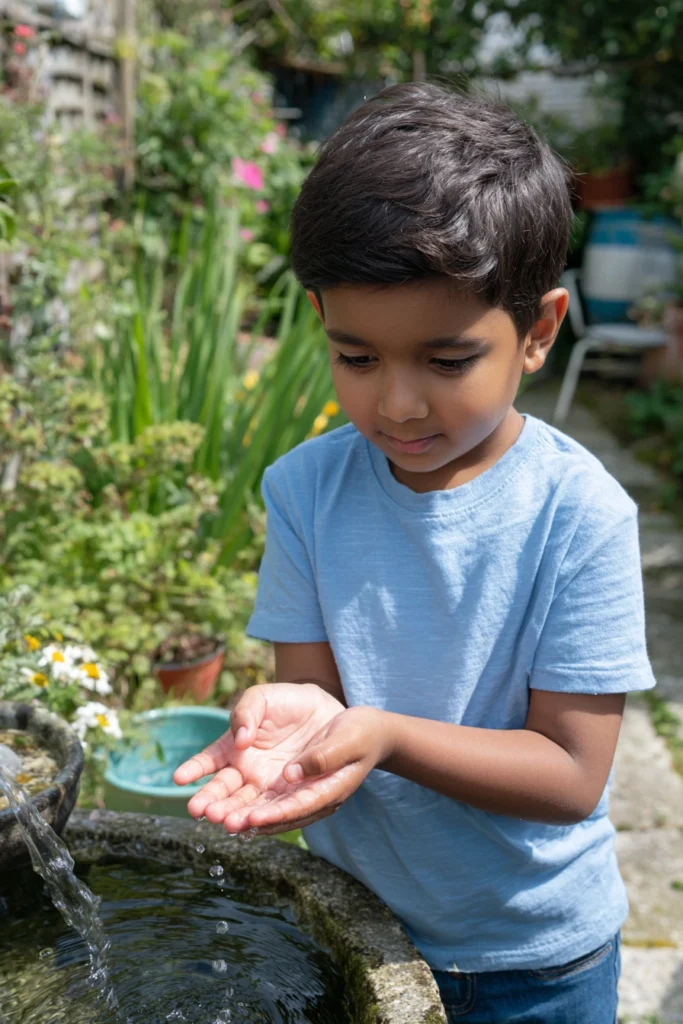
14. Water Play
Running fingers through water, splashing in a puddle, or washing hands mindfully. A naturally calming sensory input activity that works for all ages, teenagers included.
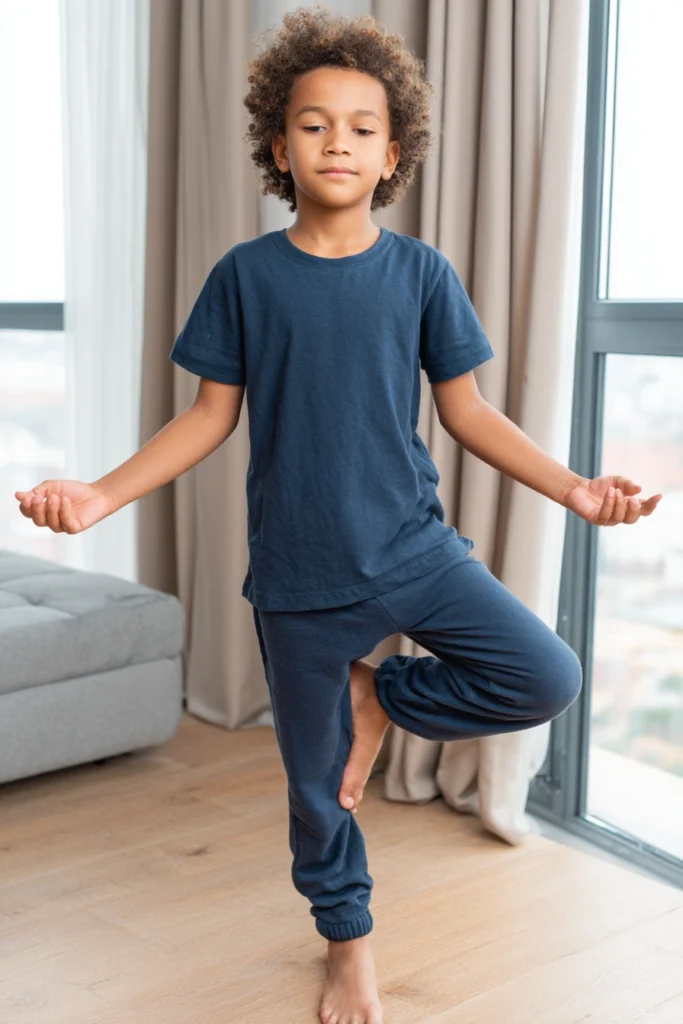
15. Yoga for Kids
Simple yoga poses such as tree pose or downward-facing dog build body awareness, balance, and focus and concentration. The slow breathing involved supports the nervous system and makes yoga one of the most well-evidenced grounding activities for kids in the social emotional learning literature.
Teaching Grounding: Practical Tips for Parents
The most important rule: practise when your child is calm, not only when they are struggling. Coping skills become reliable through repetition.
Create a calming corner for your child. A comfortable space at home with soothing items your child has chosen, like a soft blanket, a stress ball, a scented item, and my printable grounding worksheet on the wall.
Build a routine. Two minutes of belly breathing after breakfast or before bed, done consistently, builds a strong habit over time.
Model it yourself. When you are stressed, name it, then show your child what you do about it.
Keep communication open. Reassure your child that anxiety in children is common, that all big feelings pass, and that they have tools to help. If your child often seems angry rather than anxious, it’s important to think about what is could be going on beneath the surface.
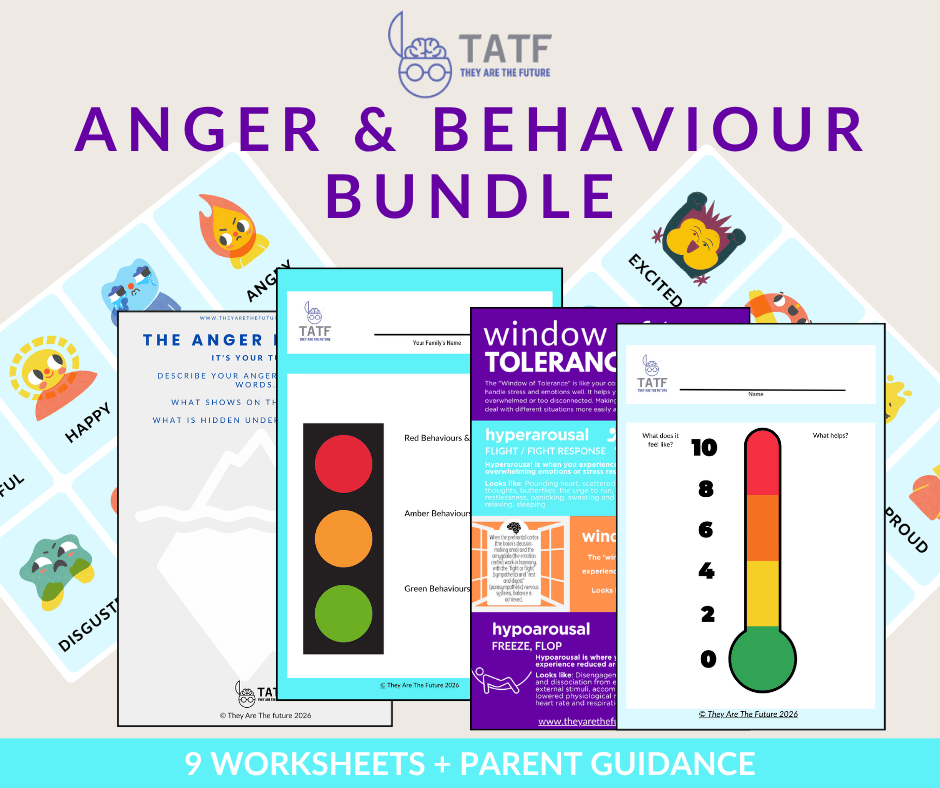
Anger & Behaviour Bundle
This bundle includes nine practical worksheets, each with clear guidance to help you use them confidently with your child. You will find tools covering the anger thermometer, anger iceberg (what sits underneath the outburst), the stress cup (understanding your child’s pressure build-up), the window of tolerance, traffic lights behaviour management strategy, grounding strategies, and more.
Each worksheet comes with a short lesson walking you through how to use it, so you are never left wondering where to start. Everything is created by me, Dr Lucy Russell, child clinical psychologist with over 20 years of experience, and designed to feel manageable in real family life.
The Anger and Behaviour Bundle is currently available for £17.
👉 Get the Anger and Behaviour Bundle here
Frequently Asked Questions
Can children with autism use these grounding techniques?
Yes. Many grounding techniques for kids with autism work particularly well because they focus on concrete sensory experiences rather than abstract emotional language. Tactile and movement-based exercises, heavy work activities, and activities that offer strong sensory input are especially popular in autism support settings and occupational therapy. Displaying a grounding worksheet for kids in a calming corner also helps children know what to do without needing verbal reminders.
Are these exercises suitable for children with ADHD?
Yes. Grounding exercises for kids with ADHD tend to work best with movement or strong sensory input. Active techniques such as yoga, nature walks, finger breathing, and progressive muscle relaxation engage children with ADHD more effectively than still, quiet exercises. Start with shorter sessions and build gradually.
At what age can children start learning grounding techniques?
Most children aged four and upwards can access simple versions. Finger breathing and texture touch exploration work well for younger children. Older children and teenagers can use the full range, including progressive muscle relaxation and visualisation.
Can grounding exercises be used in the classroom?
Absolutely. The Five Senses Scavenger Hunt, counting colours and shapes, and group progressive muscle relaxation all work well with a class. A calming corner with my printable grounding worksheet available will give individual children a structured way to self-regulate, and many of these activities fit naturally into classroom management and social emotional learning programmes.
How long does it take for grounding techniques to work?
Some techniques, particularly deep breathing exercises or progressive muscle relaxation, can bring noticeable calm within minutes. Others, like visualization, become more effective with regular practice.
A daily grounding routine is the most reliable way for children to develop lasting self-regulation skills and emotional regulation.
Dr Lucy Russell is a UK clinical psychologist and Clinical Director of Everlief Child Psychology. She qualified as a clinical psychologist from Oxford University in 2005 and worked in the National Health Service for many years before moving fully into her leadership and writing roles.
In 2019 Lucy launched They Are The Future, a support website for parents of school-aged children. Through TATF Lucy is passionate about giving practical, manageable strategies to parents and children who may otherwise struggle to find the support they need.
Lucy lives with her family, rescue cats and dog, and also fosters cats through a local animal welfare charity. She loves singing in a vocal harmony group and spending time in nature.
