
Resources to Help Children Understand Autism

Learning about autism can help your child understand themselves, a sibling, or a classmate with more confidence and understanding. The best resources to help children understand autism don’t need to lead to one big, serious conversation.
Autism spectrum disorder is the clinical term, but I always encourage parents to explain it through how their child experiences the world. Autistic brains work differently, and those differences can bring strengths as well as difficulties. For children aged 5 to 17, I find that many short, calm conversations are often easier to take in than one formal “talk,” and consistent parent and caregiver support makes those conversations easier to start.
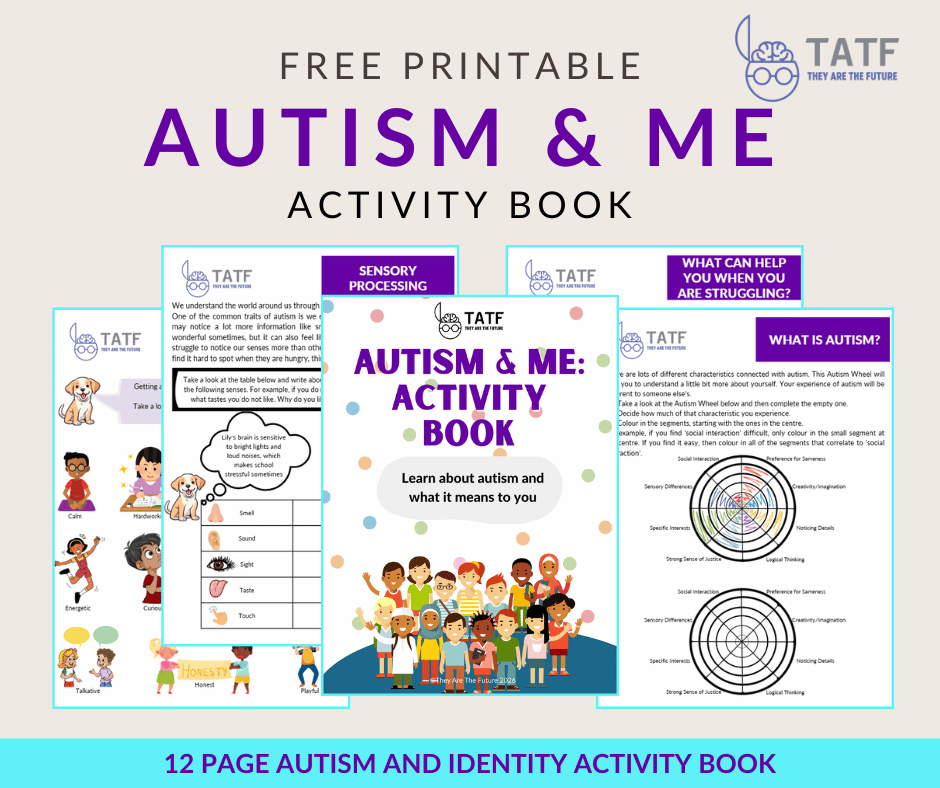
If you’re looking for free autism resources to start explaining autism to your child, my popular free Autism & Me activity book is a great place to start.

Start With Simple, Neuro-Affirming Conversations About Autism
You can explain autism in everyday language: “Some brains take in the world differently. That can make some things easier and some things harder.” Keep the focus on understanding, not fixing.
Autism can affect communication, sensory differences, routines, friendships and interests. It can also bring deep focus, honesty, creativity, a strong memory or detailed knowledge. Every autistic person has their own pattern of strengths and support needs.
Use Many Small Conversations Instead of One Serious Talk
Pick a quiet moment, in the car, at bedtime, or while drawing together. Start by asking what your child already knows. Younger children often find pictures and familiar examples easier to follow than a lot of spoken explanation. Teenagers may prefer a walk, drive, or more generally a conversation that doesn’t involve constant eye contact.
You might say, “Your brain works differently to some people’s brains. What feels easy for you? What feels hard?” Then return to the subject when it comes up naturally. My free Autism and Me Activity Book helps children and teens to identify their strengths and difficulties, and to understand what autism means for them.
Choose Language That Builds Self-Understanding and Respect
Many people prefer “autistic person,” while others prefer “person with autism.” I’d suggest following your child’s preference, and staying open to that changing over time.
Autism awareness means learning the basic facts. Autism acceptance goes further. It means adapting environments and challenging exclusion, supporting peer acceptance, bullying prevention and inclusive classrooms when siblings, classmates and school staff understand how to offer practical respect. Try to avoid labels like “mild” or “severe.” They often hide what a child actually needs help with. Neurodivergent-affirming support means noticing both strengths and practical needs.
Resources to Help Children Understand Autism: Books, Printables and Trusted Guidance
Preview autism resources before you share them. Some older books and videos use outdated language, or focus almost entirely on difficulties. A good resource gives your child words for their own experience, without suggesting every autistic person is alike.
All Cats Are on the Autism Spectrum
Children’s books about autism can be a calm way to begin, and Kathy Hoopmann’s All Cats Are on the Autism Spectrum is one I’d recommend for younger children, siblings and families starting the conversation. Kathy uses cat photographs and short text to explore sensory sensitivities, communication and social differences.
Read it together, then connect one page to real life. You might ask, “Do loud hand dryers feel difficult for you too?”
Helpful YouTube Videos About Autism
Short videos can work well when your child prefers watching to reading. The NHS video We are autistic shares real autistic people’s experiences and is best watched together, with space to pause for questions.
The National Autistic Society’s What is Autism? is a good starting point for older children. Teenagers may prefer the National Autistic Society’s YouTube channel and its Know Yourself materials, which include videos and worksheets written for autistic young people.

Printable Free Autism Resources for Personal, Strengths-Based Learning
My free Autism and Me activity book is a 12-page printable for children who have recently been diagnosed. It helps your child explore what autism means for them specifically, including their own strengths and difficulties, rather than working through a fixed checklist of traits.
Try a few pages at a time. Listen to their answers without correcting them or pushing for more. What they share can point you towards helpful adjustments, such as movement breaks, ear defenders, clearer plans, or time alone after school.
UK Autism Support
This site, They Are The Future, contains a wide range of autism articles and guides, covering everything from sensory differences to school support. If your child has recently been diagnosed and family life feels overwhelming, Embracing Autism is a course I run with my specialist clinical colleagues, and it’s perfect for parents who are just starting out in terms of understanding what their child’s diagnosis means for them, and feeling a little lost or overwhelmed.
The NHS autism help and support page signposts families to Child Autism UK and Autism Central. Your GP, school, local autism team or council may also know about local groups and family support.
The National Autistic Society has practical information on communication, sensory differences, education and mental health. Some pages are written mainly for adults, so read them first and adapt the key messages for your child.
The Curly Hair Project is another good resource, created by Alis Rowe, an autistic person who offers workshops, training and information for autistic individuals and their families.
How to Choose the Right Autism Resource for Your Child’s Age and Needs
The best resources aren’t always the most detailed ones. Think about reading age, communication style, emotional readiness, and whether your child is learning about themselves or someone else.
For Younger Children, Begin With Pictures and Familiar Examples
Picture books, photographs and drawing activities tend to work well. Link ideas to things they already know, a noisy assembly, a sudden change of plan, a favourite interest, or needing a movement break.
Keep explanations concrete at this age. Medical terms can wait. Your child needs enough to feel understood, not a lesson that overwhelms them.
For Teenagers, Make Space for Identity, Choice and Honest Questions
By the time your child reaches their teenage years, conversations often turn to masking (working hard to hide or hold back their autistic traits so they can fit in), friendships, sensory needs, how school is going, puberty and body changes, and their mental health. As they get older, this naturally extends into the transition to adulthood too, including independence, further education, work and healthcare planning. I recommend regularly offering them the chance to reflect privately on how their autism affects these areas of their life, as well as talk things through with you.
Ask what they actually want to know, and whether they’d rather read about it, watch something, write it down or talk it through with you. A resource is doing its job when it helps your child name a need, ask for support, or feel more understood.
Frequently Asked Questions
Should I tell my child they are autistic?
If your child has a diagnosis, clear and accurate information usually supports their self-understanding. Keep it age-appropriate, and return to it over time. A diagnosis should be part of their story, not the whole story.
What if my child becomes upset when we talk about autism?
Pause and acknowledge the feeling. You could say, “This feels like a lot right now. We can come back to it another day.” Their being upset doesn’t mean you’ve done harm.
Can a child learn about autism before an assessment?
Yes. You can talk about different brains, sensory needs and ways of communicating without predicting an outcome, and you don’t need to wait for a formal diagnosis or a full review of their developmental milestones before you start.
How can I help siblings understand autism?
Give siblings simple, honest explanations and space for their own feelings too. Explain what helps their brother or sister, without making them responsible for managing everything.
An Accurate Starting Point
You don’t need perfect words or one perfect resource. Your child needs accurate, age-appropriate information about autism, and permission to recognise the support they deserve.
A good book or printable, combined with everyday conversation and practical adjustments, can be enough to begin. The free Autism and Me activity book is an easy first step when your child is ready.
Dr Lucy Russell is a UK clinical psychologist and Clinical Director of Everlief Child Psychology. She qualified as a clinical psychologist from Oxford University in 2005 and worked in the National Health Service for many years before moving fully into her leadership and writing roles.
In 2019 Lucy launched They Are The Future, a support website for parents of school-aged children. Through TATF Lucy is passionate about giving practical, manageable strategies to parents and children who may otherwise struggle to find the support they need.
Lucy lives with her family, rescue cats and dog, and also fosters cats through a local animal welfare charity. She loves singing in a vocal harmony group and spending time in nature.
