
Autistic Teenagers and Puberty in Girls (Parent Guide)

If you’re feeling worried, a bit lost, or simply not sure where to start as your daughter heads into puberty, that’s a really common place for parents to be. For autistic teenagers and particularly when we’re thinking about puberty in girls, physical changes, periods and big feelings can all feel like a lot to take in.
Autism (autism spectrum disorder) is a neurodevelopmental condition, and no two teenagers go through developmental transitions in quite the same way.
Biological maturation, physical development and her own pubertal timing can all make this stage feel unpredictable. With the right parental support, a bit of preparation can go a long way towards steadier emotional regulation and better mental health during puberty, simply by taking the surprise out of periods, privacy, eating worries and knowing when to ask for professional help.
Key Takeaways
- Start talking about puberty and periods early. Clear language, visual supports and small, repeated chats help take away the guesswork.
- Sensory sensitivities, pain, communication differences and any change to routine can make puberty and menstrual care feel like a lot for teen girls, so it helps to practise predictable, sensory-friendly routines before she needs them.
- Protect her privacy, her consent and her emotional wellbeing with direct scripts, calm spaces and a couple of trusted adults she can turn to. Distress, shutdowns or meltdowns aren’t deliberate misbehaviour, so try not to read them that way.
- Keep an eye out for eating difficulties, severe distress, big weight loss or changes in how she’s coping day to day, and reach out for professional help promptly if you’re worried.
- Respect gender diversity and your teenager’s own preferences, and get in touch with your GP about unusually early or delayed puberty, very painful or heavy periods, or anything that’s affecting her everyday life.
Autistic teenagers and puberty in girls: why the changes can feel overwhelming
Breast development, body hair, body odour, periods and a whole new set of emotions can all turn up close together, which is a lot for anyone. Pubertal timing varies hugely from one girl to the next, including for girls with autism spectrum disorder. The pace of hormonal changes is different for every teenager.
All of this can make puberty feel a bit frightening. If your teenager finds uncertainty hard to sit with, her own body can suddenly feel like it’s out of her control. And when daily routines shift because of it, emotional regulation often gets harder.
Sensory sensitivities add another layer on top. Blood, cramps, smells, dampness, sticky pads, tight bras or even the sound of a pad’s adhesive strip peeling open can feel unbearable to her (not her overreacting, just her senses picking up more than most people’s do). Pain and unfamiliar body sensations can chip away at emotional regulation too.
It’s worth remembering that distress like this isn’t bad behaviour. It can show up as irritability, avoiding school, anxiety, withdrawing, meltdowns or shutting down. Predictable explanations, visual information and easing off on demands for a while can all help her cope.
The Chelsea and Westminster NHS guide on puberty and periods for girls with additional needs is a helpful one to bookmark, with clear, practical information to help you start these conversations early.
How changing body shape can affect body image and anxiety
Her hips might widen, and clothes that used to fit just stop working. Breasts and body hair can feel uncomfortable, embarrassing or even frightening, especially once other people start to notice.
Social communication and communication differences can make it harder for her to explain what’s uncomfortable or to respond when someone comments on her body. Struggling with social skills in the moment can also affect developing peer relationships, particularly when classmates notice the changes or start asking personal questions.
Some teenagers use social camouflaging – also known as masking – at school, holding it together or hiding how distressed they feel until they’re safely home. Over time, this can take a toll on mental health and raise the risk of autistic burnout.
Where you can, give her concrete information before the changes happen rather than after. Correct anatomical words, simple diagrams, social stories and a visual calendar all help. Some teenagers prefer a brief chat in the car, while others need something written down that they can go back to and reread.
Listen closely to what she says, how she behaves and what she seems to prefer. Try not to assume that discomfort with her changing body points to a particular body-image worry, or tells you anything definite about gender diversity. If gender diversity (for example, queustioning her female identity) is part of her experience, use the language she uses for herself and follow her lead.
Watch for eating difficulties when puberty feels frightening
Keep an eye out for things like new food rules, skipped meals, eating less than usual, losing weight, getting upset around mealtimes, or saying she wants her body to stop changing. In my experience, this is often about control. When a girl’s body feels like it’s changing without her permission, changing what she eats or how much she exercises can feel like a way of taking some of that control back. Sometimes there’s a quiet, almost hopeful idea underneath it too, that if she eats less or moves more, she might be able to slow the changes down, or even stop them altogether. Sensory difficulties around food and textures can add to this as well, and together these things can throw out daily routines and affect adaptive functioning more broadly, so it’s rarely just about how she looks.
None of this automatically means she has an eating disorder. But if you’re worried about sudden weight loss, her eating less on purpose, or real distress around food, trust your instinct and speak to your GP.
Preparing for periods with less sensory stress
For a teenager with autism spectrum disorder, it helps to start menstrual preparation in small steps, rather than waiting until her first period arrives. Explain menstrual challenges such as bleeding, pain, leaks and product-related distress in whatever way she understands best, whether that’s words, pictures, YouTube videos, all all of those.
Understanding sensory issues in teenagers can help you work out what’s likely to make menstrual care harder for her. Sensory sensitivities and interoception differences (reading internal body signals) can shape how she experiences texture, wetness, pain or her own bodily signals, so don’t assume she’ll notice blood or cramps the way another teenager might.
Make menstrual care predictable and sensory-friendly
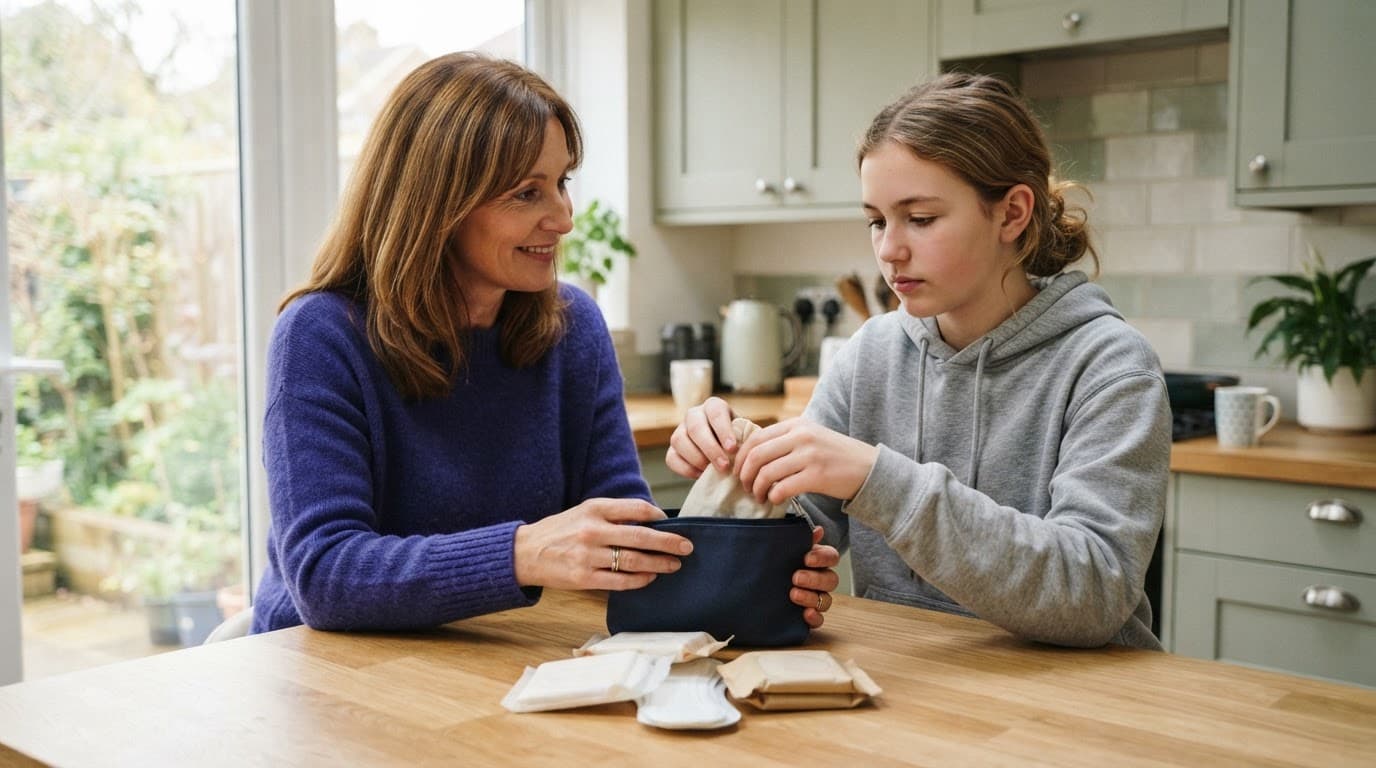
Let her see, touch and smell pads or period underwear well before she actually needs them. Try out different products together, always with her consent and never under pressure. Some teenagers get on better with period underwear, while others dislike the feeling of wetness and prefer pads they can change often.
A simple visual sequence can help:
- Notice blood, then head to the bathroom.
- Change the product, wrap it and pop it in the bin.
- Wash hands, and tell a trusted adult if she needs help.
Where communication differences make spoken instructions hard to follow, try pictures, written prompts or simply showing her. Practise the sequence during ordinary daily routines, so it’s already familiar by the time she needs it for real.
A visual checklist, labelled storage and phone alerts can take some of the planning load off her executive functioning. Keep spare underwear and supplies in a few familiar places, such as home and her school bag.
Create a calm plan for the first period and school days
A simple calendar or app such as Luna can help you track bleeding, pain, mood, sleep and sensory overload. Cycles are often irregular at first, so try not to read too much into that early on. Agree together who she can ask for help, where products are kept, and what happens if clothing gets stained.
Pack a small emergency kit with products, wipes, spare underwear and leggings. If it feels helpful for her, ask staff in her educational settings about a private toilet, flexible uniform options and somewhere quiet she can go to recover. Predictable supplies and a calm space to retreat to can support emotional regulation when things start to feel like too much.
A period plan works best when she’s had a chance to practise it on an ordinary day, rather than figuring it out for the first time under stress.
Support privacy, consent and emotional wellbeing
Puberty education should cover private body parts, safe touch, consent and how to ask for help. Teach her the difference between public and private body parts, conversations and kinds of help. Use whatever language she’s chosen for herself.
Respect gender diversity when you’re talking about bodies, privacy and consent. If you want to understand this area better, I can recommend Young Minds’ guide to gender identity for parents.
Where communication differences make this harder, visual supports, role-play and direct scripts can all help. Practise saying “No”, “Stop”, “I need help” and “I want to tell my trusted adult”. Build the social skills she needs to move away and report anything that feels unsafe. Talk through comments, teasing or pressure within peer relationships too, and make sure she knows to tell someone straight away if anybody asks to see or touch her private areas.
Around her period, ease off on demands wherever you can. Predictable routines, sensory breaks, comfortable clothes and calm recovery time will all help her to manage.
Know when symptoms or distress need medical advice
For an autistic teenage girl, communication differences can affect how well she’s able to describe her symptoms, so it’s worth watching for signs yourself too. Contact your GP if periods are very painful or heavy, or last more than seven days. Also get advice if she feels faint, unusually tired, is missing school, or is struggling with self-care and everyday activities. These are all signs that could point to reduced adaptive functioning and may need extra support.
Severe sensory distress, significant weight loss or escalating food restriction all need prompt support, so don’t wait if you’re seeing these. During developmental transitions like this one, rising anxiety, low mood, withdrawal or other internalising symptoms can take a real toll on your daughter’s mental health.
Frequently Asked Questions
Yes. Short, calm conversations before her first period give her time to take it all in. You don’t need one big talk. Small, repeated explanations are usually much easier for her to absorb.
Start by finding out what actually feels wrong. It could be texture, smell, tightness, fear of leaks, or anxiety about inserting anything at all. If social communication is difficult for her, offer visual choices or another direct way for her to explain what’s bothering her. A GP, pharmacist or school nurse can also help you work through suitable options.
Pain, disrupted sleep and sensory discomfort can affect emotional regulation and eat into your autistic teenager’s capacity to cope. You might notice more anxiety, shutdowns, irritability or changes in social skills, especially when school is already demanding a lot from her. It doesn’t mean her periods have changed her underlying abilities, just that she’s got less in the tank.
Use calm, direct language and repeat it often in small chunks rather than all at once. Explain the difference between public and private, that she’s allowed to say no, and that safe adults only help when it’s needed and she knows about it.
Final Thoughts: Autistic teenagers and puberty in girls
For autistic teenagers and puberty in girls, a bit of preparation really can turn a frightening unknown into a manageable routine. Start the conversations early, put predictable support and the right products in place, and keep an eye on eating and wellbeing to help protect her emotional regulation.
Practical, hands-on parental support can give your teenager more control and confidence as her body changes, while still recognising gender diversity and her individual needs. For wider guidance on autism, sensory processing and emotional regulation, you will find my team’s Embracing Autism online course for parents helpful.
Dr Lucy Russell is a UK clinical psychologist and Clinical Director of Everlief Child Psychology. She qualified as a clinical psychologist from Oxford University in 2005 and worked in the National Health Service for many years before moving fully into her leadership and writing roles.
In 2019 Lucy launched They Are The Future, a support website for parents of school-aged children. Through TATF Lucy is passionate about giving practical, manageable strategies to parents and children who may otherwise struggle to find the support they need.
Lucy lives with her family, rescue cats and dog, and also fosters cats through a local animal welfare charity. She loves singing in a vocal harmony group and spending time in nature.
