
Why Is My 10 Year Old Daughter So Moody and Emotional?

Struggling with mood swings, emotional outbursts or anger in your 10-year-old daughter?
This stage of preteen development is full of intense emotional and behavioural shifts – and while it can be completely normal, it can also feel completely overwhelming.
In this article, I’ll guide you through what’s really going on in your daughter’s body and brain, why her emotions can seem so unpredictable, and how you can help her build emotional regulation in ways that strengthen your relationship – rather than wearing it down.

10-Year-Old Girls and Mood Swings: What’s Going On?
One minute she’s laughing with you over breakfast. The next, she’s slamming her bedroom door because you asked her to put on socks.
Sound familiar?
Around age ten, many girls experience a surge of hormones as puberty begins – and with it, a wave of new emotional experiences that can feel intense and, at times, overwhelming.
This isn’t just about hormones (though those are absolutely part of the picture). Your daughter is in the middle of a profound period of brain development and cognitive growth. Her prefrontal cortex – the part of the brain responsible for reasoning, decision-making, and emotional regulation – is under construction and will continue developing well into her twenties.
At the same time, her limbic system – the emotional centre of the brain – is fully switched on. That means her emotional responses are dialled up high, but her ability to regulate them is still catching up.
These neurological changes are a completely normal part of preteen development, but they often show up as what you might see as irrational behaviour, mood swings, or emotional outbursts.
And there’s more. She’s likely becoming more aware of her social world – navigating peer relationships, trying to figure out where she fits in, and dealing with the pressures of school and friendships. This social change, combined with increased academic expectations and shifting family dynamics, adds fuel to the emotional fire.
At this age, girls can start to feel grown-up emotionally, but they don’t yet have the skills to manage those feelings. That mismatch can create a lot of frustration – for them, and for you.
In our clinic, Everlief, we often see families at this very stage. You’re not imagining it – this is a time of huge behavioural shifts.
Your daughter may be juggling:
- Uncertainty in peer relationships
- New expectations at school
- Greater awareness of complex topics like climate change, inequality, or family dynamics
- Changing sleep patterns, nutritional needs and physical activity levels
Each of these factors can affect her ability to stay regulated and calm.
10-Year-Old Girls and Emotional Outbursts: Why They Happen
Emotional outbursts in ten-year-old girls are often triggered by more than just what’s happening in the moment. If your daughter seems to be overreacting, it’s likely that multiple stressors are building beneath the surface.
Emotional Regulation is Still Under Construction
At this age, emotional regulation isn’t automatic. Your daughter is learning – often through trial and error – how to manage intense feelings. Her emotional intelligence is developing, but not yet refined.
When a preteen is upset, her brain might default to a “fight, flight or freeze” response. That’s why she may lash out verbally, slam doors, or dissolve into tears – behaviours that may look like disruptive behaviour or attention-seeking actions, but are usually signs of emotional overwhelm.
The Role of Sleep, Nutrition and Screens
Poor sleep can have a huge effect on your child’s ability to cope. Sleep disturbances are incredibly common at this stage due to changing body clocks, screen time, and increased anxiety.
A lack of good quality sleep can:
- Lower resilience
- Increase irritability and moodiness
- Make it harder to concentrate
- Heighten physical symptoms like headaches
Likewise, nutritional impacts – such as skipping breakfast or eating high-sugar snacks – can lead to spikes and crashes in blood sugar, which can lead to emotional swings.
And then there’s screen time effects. Too much device use can overstimulate the nervous system, reduce physical movement, and interfere with healthy routines – especially around sleep.

Academic and Social Pressures
Ten is often the age when academic pressures start to heat up. Children are expected to take more responsibility for their learning, which can trigger stress management difficulties and anxiety symptoms, especially if your daughter is already prone to perfectionism or comparison.
Meanwhile, social changes bring a new layer of complexity. Peer dynamics can shift quickly. Cliques may form. Children become more sensitive to inclusion and exclusion, and small incidents can feel huge.
Growing Self-Awareness and “Big Life Questions”
This is also an age where children begin to wrestle with big ideas – identity, fairness, and mortality. These are normal parts of cognitive and emotional growth, but they can be unsettling.
If your daughter is neurodivergent – for example, if she’s autistic or has ADHD – this period of change may feel even more intense. Emotional expression and regulation may look different, and common parenting strategies may need to be adapted.
So often, what looks like defiance is actually a child trying to communicate their distress. It’s our job to look beneath the surface.

Is This Behaviour Normal in a 10 Year-Old, Or Should I Be Worried?
Most of the time, big emotions and outbursts at this age are part of normal development. Your daughter is learning how to deal with strong feelings, new experiences and the world around her. It’s natural for her to have days – or weeks – where she seems more moody, sensitive or reactive.
But as a parent, it’s also natural to worry. How do you know if what you’re seeing is just part of growing up – or something more?
Here are a few things to watch for. These may be signs that your daughter is struggling and needs more support.
When to Look Closer
- Ongoing low mood that doesn’t seem to lift
- Frequent emotional outbursts that affect her daily life
- Anger that turns into aggression – shouting, hitting or breaking things
- Signs of anxiety or panic attacks
- Negative self-talk or low self-worth
- Avoiding school or social situations she used to enjoy
- Trouble coping with everyday expectations at home or school
If your daughter is showing any of these signs, or if something just doesn’t feel right to you, trust your instincts.
You know your child better than anyone. If something is making you pause, it’s worth paying attention to.

What Might Be Behind It?
Sometimes there’s a clear reason – like a fall-out with a friend, bullying, or too much pressure at school. Other times, there may be an underlying issue such as:
- ADHD or autism, especially if undiagnosed
- Early signs of depression or anxiety
- Big changes at home, such as divorce or a bereavement
In these cases, it can be helpful to talk to your GP and ask for a referral to a child clinical psychologist or therapist.
If you’re unsure, start with a simple conversation. Ask how she’s feeling, listen without judgement, and let her know she’s not in trouble. Keep the door open.
Parenting Strategies for Emotional Regulation in Preteens
When your child is going through emotional outbursts, your response as a parent can make a huge difference. Not in fixing the problem straight away – because this stage isn’t about quick fixes – but in building long-term skills and trust.
The aim isn’t to stop your daughter from ever feeling angry or sad. It’s to help her learn how to cope with those feelings and express them safely. This is where your role as a calm, steady guide is so important.
The strategies below are based on everything we know from child psychology, parenting research, and years of working with families. Hayley’s experience – both as a counsellor and as a mum to three daughters – shines through in every one.
Use these as a toolkit. You won’t get it right every time, but small steps, repeated often, create big change over time.
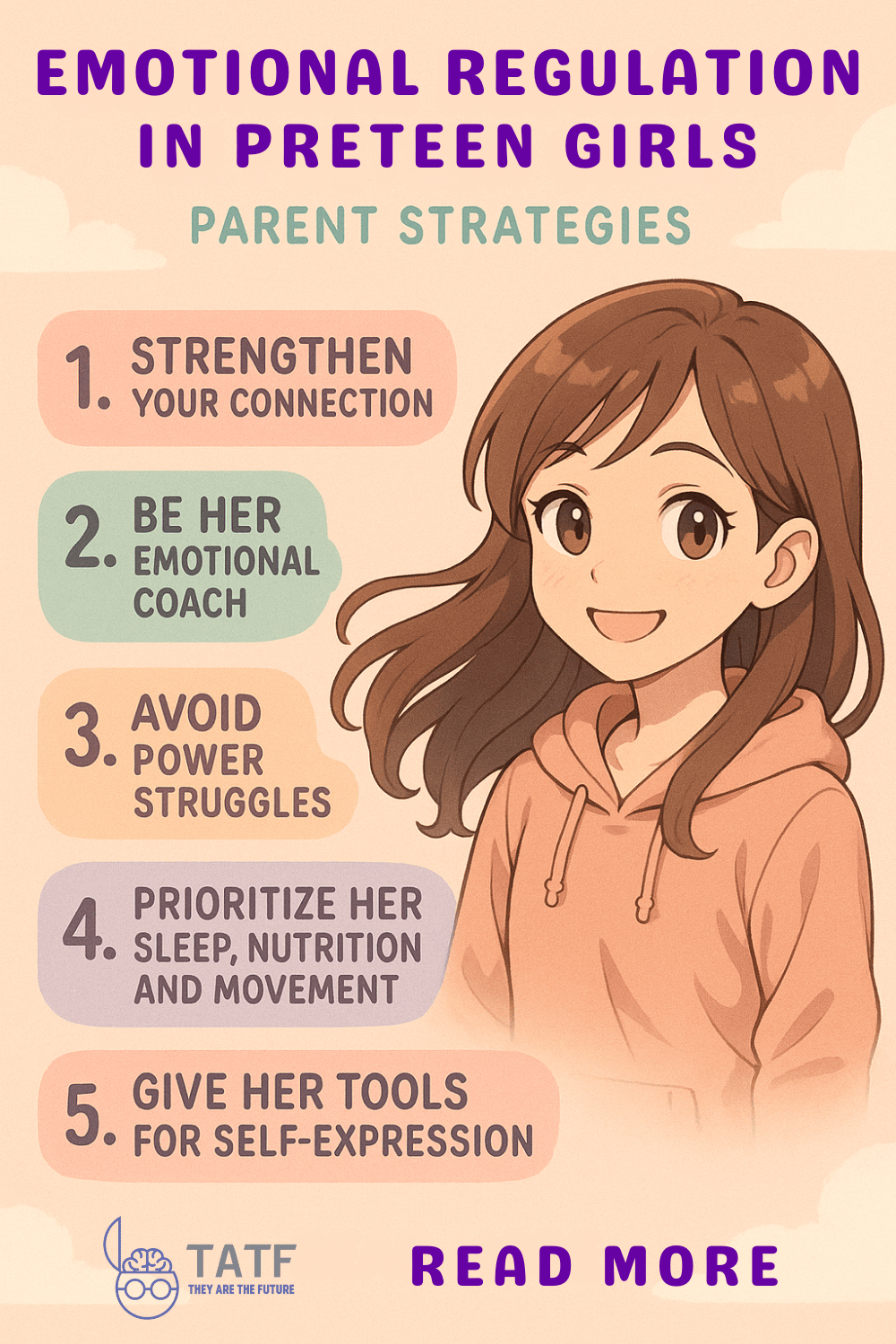
1. Strengthen Your Connection
Before you try to correct behaviour, focus on connection. Your relationship is the foundation for all other changes. Look for small moments during the day to connect – in the car, over a meal, before bed. These are chances to build communication skills, offer empathy, and show you’re on her side.
2. Be Her Emotional Coach
Your daughter might not know what she’s feeling – let alone how to handle it. Help her name emotions: “It sounds like you’re feeling frustrated,” or “You seem worried about tomorrow.” This builds her emotional intelligence over time. Don’t jump in to fix – guide her to think about coping mechanisms like walking away, writing it down, or asking for help.
3. Avoid Power Struggles
Arguments and defiance often come from a need for control. You can reduce disruptive behaviour by offering simple choices and keeping clear boundaries. Ask yourself: “Is this battle worth it?” Save your energy for the things that really matter, like safety, kindness, and respect.
4. Sleep, Nutrition and Movement: The Basics That Matter
Tired, hungry or under-stimulated kids are more likely to lose control of their emotions. Focus on positive reinforcement for small wins like eating a good breakfast, moving their body every day, and getting enough rest. If needed, create a calming wind-down routine that includes breathing exercises, stretching or a warm bath.

5. Give Her Tools for Self-Expression
Many preteens bottle things up. Encourage safe ways to let things out, like keeping a private journal, doing art, or taking time to be alone. Try mindfulness practices together – even five minutes a day can make a big difference.
6. Manage Screen Time Without Constant Battles
Too much screen time can affect mood, sleep, and relationships. Set simple, consistent limits and stick to them. Explain why it matters, rather than just saying “because I said so.” Create tech-free zones or times, especially before bed, to support a healthy routine and better sleep.
7. Respect Her Growing Need for Privacy
This is the age when your daughter starts to pull away a bit – and that’s okay. Let her have some space to talk to friends, decorate her room how she wants, or make small decisions for herself. It shows trust and builds her self-worth.
8. Take Care of Yourself Too
If you’re running on empty, your patience will run out fast. Parental self-care is not a luxury – it’s essential. Whether it’s a walk on your own, a chat with a friend, or taking a moment to breathe before responding, looking after your own emotional health helps you support your child better.

When Your Daughter’s Outbursts Are Taking Over: What You Can Do Next
If emotional outbursts are becoming a regular part of family life and you’re finding it hard to know how to respond, it might be time to take the next step.
You could begin with a conversation with your GP or your child’s school. They may be able to refer you to services that can help. However, waiting lists can sometimes be long, and you might want something you can start using right away.
That’s where our short course, End Emotional Outbursts, comes in.
This online course is for parents of 7–13-year-olds who are struggling with emotional and behavioural outbursts. It’s designed to give you practical, down-to-earth tools you can start using in your home, even if you only have ten minutes a day.
You’ll learn:
- Why children have meltdowns and what’s happening in their nervous system
- What’s filling (or overflowing) your child’s “emotional cup”
- Simple steps to reduce outbursts and help your child feel calmer and more in control
You get immediate access to five bite-sized video lessons and PDF guides, delivered straight to your inbox. Most families complete it in under a week – and many see a difference in that time, but you get lifetime access so you can take as long as you need.
Parents often tell us this course helped them feel more confident, reduced rows and conflicts at home, and gave their child tools they’ll use for life.
👉 Click here to join End Emotional Outbursts – just £30 for lifetime access.
Final Thoughts: Supporting Your 10-Year-Old Through Big Emotions
If your daughter’s emotions feel all over the place right now, you’re not imagining it – this is a time of huge change. Hormonal shifts, brain development, and the growing demands of school, friendships and independence all collide around this age, often showing up as emotional outbursts, mood swings, or attention-seeking behaviour.
It’s hard. But it’s also an opportunity.
This stage offers a chance to teach your child the emotional and behavioural skills she’ll use for life – and to deepen your connection as you guide her through it.
Whether you try one of the parenting strategies in this article, make small changes to your daily routine, or decide to take a next step like our short course End Emotional Outbursts, you’re doing something important.
You’re showing up with empathy and intention – and that makes all the difference.
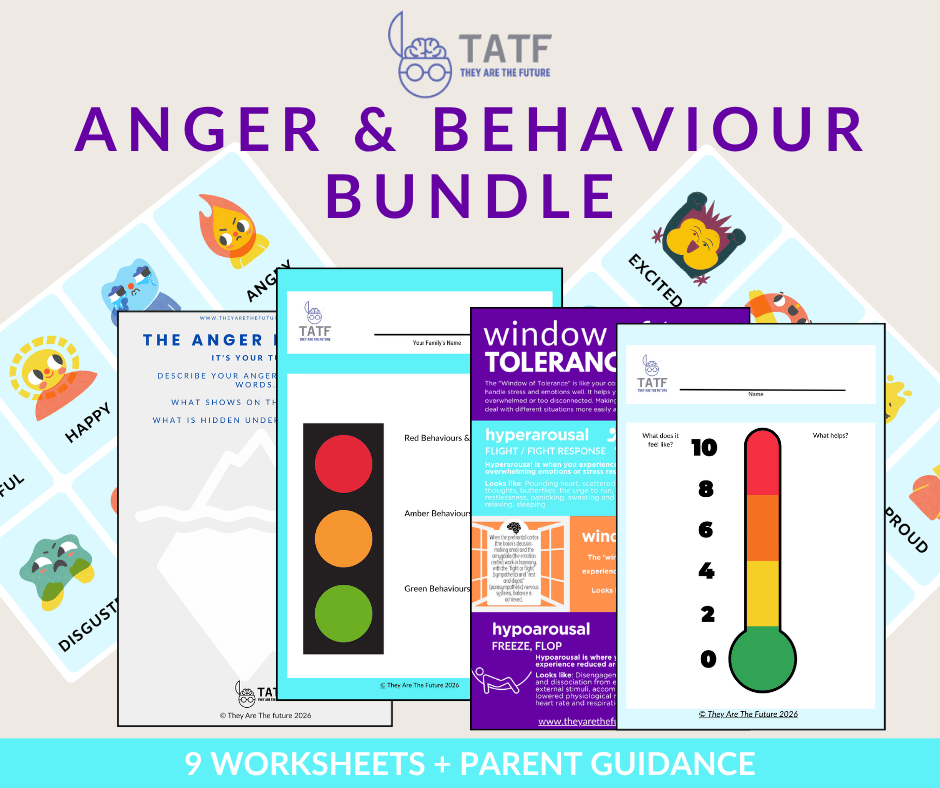
Anger & Behaviour Bundle
This bundle includes nine practical worksheets, each with clear guidance to help you use them confidently with your child. You will find tools covering the anger thermometer, anger iceberg (what sits underneath the outburst), the stress cup (understanding your child’s pressure build-up), the window of tolerance, traffic lights behaviour management strategy, grounding strategies, and more.
Each worksheet comes with a short lesson walking you through how to use it, so you are never left wondering where to start. Everything is created by me, Dr Lucy Russell, child clinical psychologist with over 20 years of experience, and designed to feel manageable in real family life.
The Anger and Behaviour Bundle is currently available for £17.
👉 Get the Anger and Behaviour Bundle here
Hayley Vaughan-Smith is a Person-Centred Counsellor accredited by the National Counselling & Psychotherapy Society. She is the founder and counsellor at The Ridge Practice in Buckinghamshire, and counsellor at Everlief Child Psychology.
Hayley has a special interest in bereavement counselling and worked as a bereavement volunteer with Cruse Bereavement Care for four years.
Hayley is mum to 3 grown up girls, and gardening and walking in nature is her own personal therapy. Hayley believes being in nature, whatever the weather, is incredibly beneficial for mental health well-being.
